
No products
Product successfully added to your shopping cart
There are 0 items in your cart. There is 1 item in your cart.
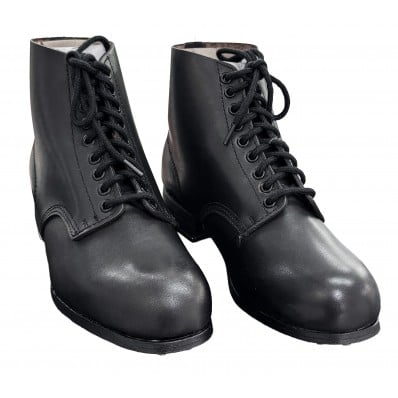
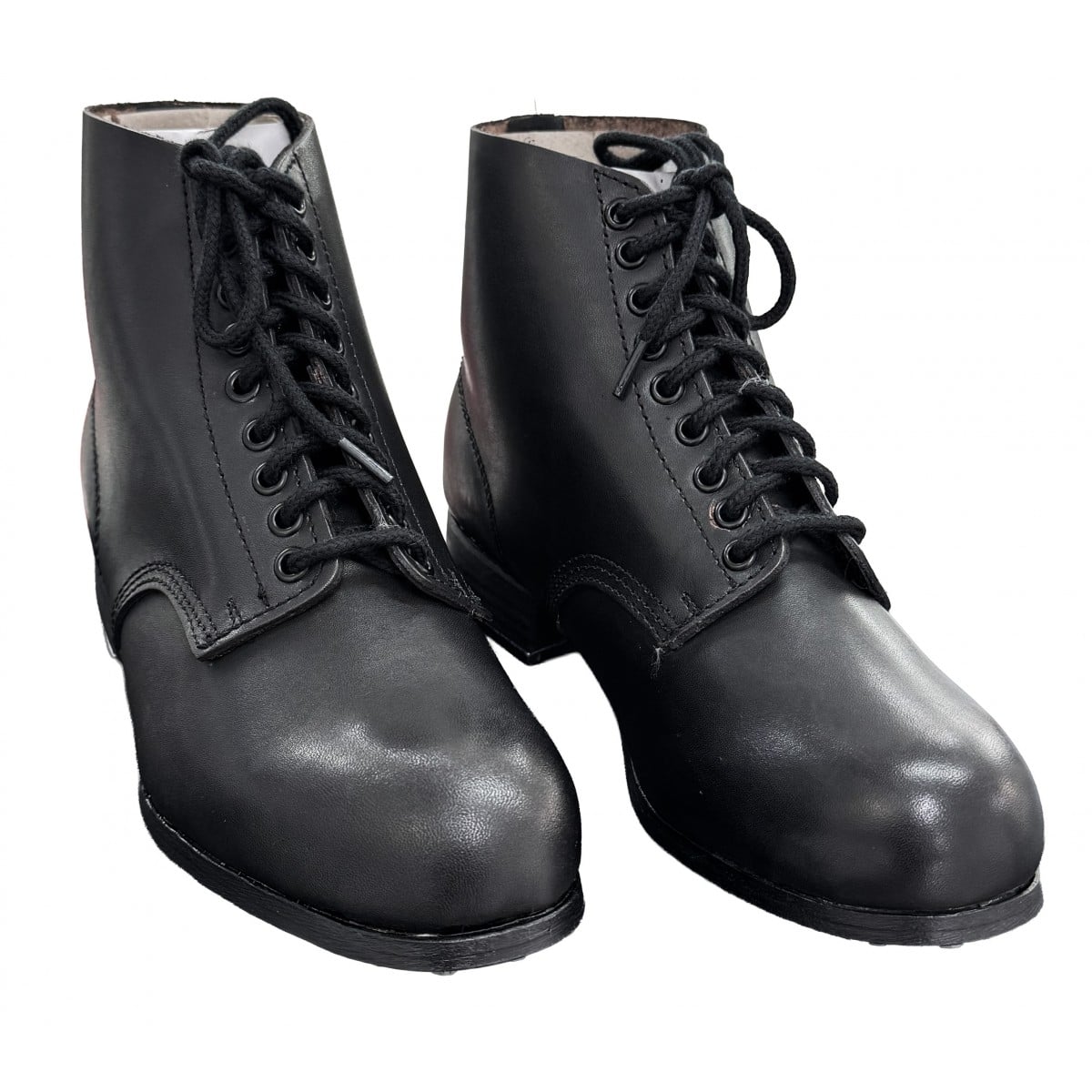
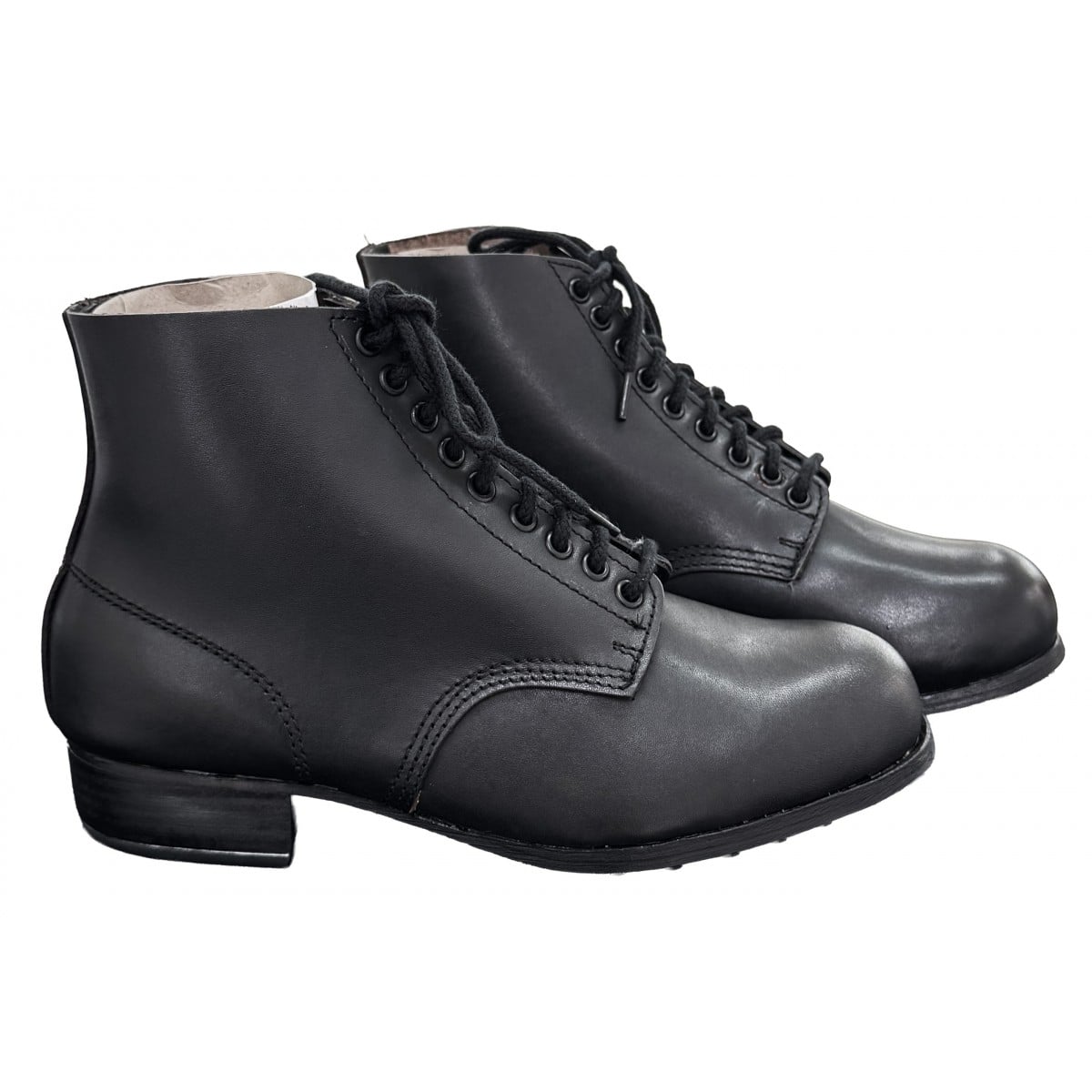
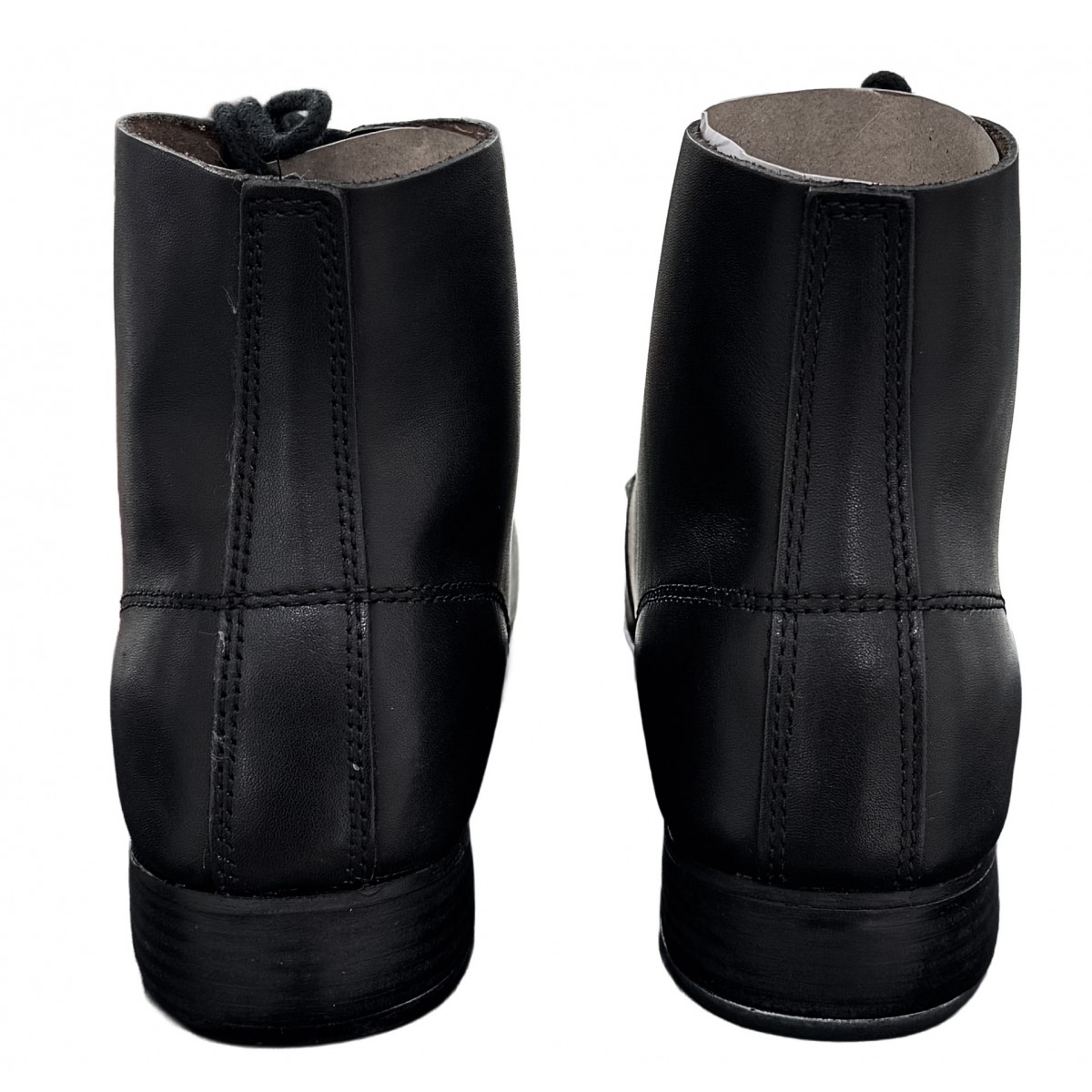
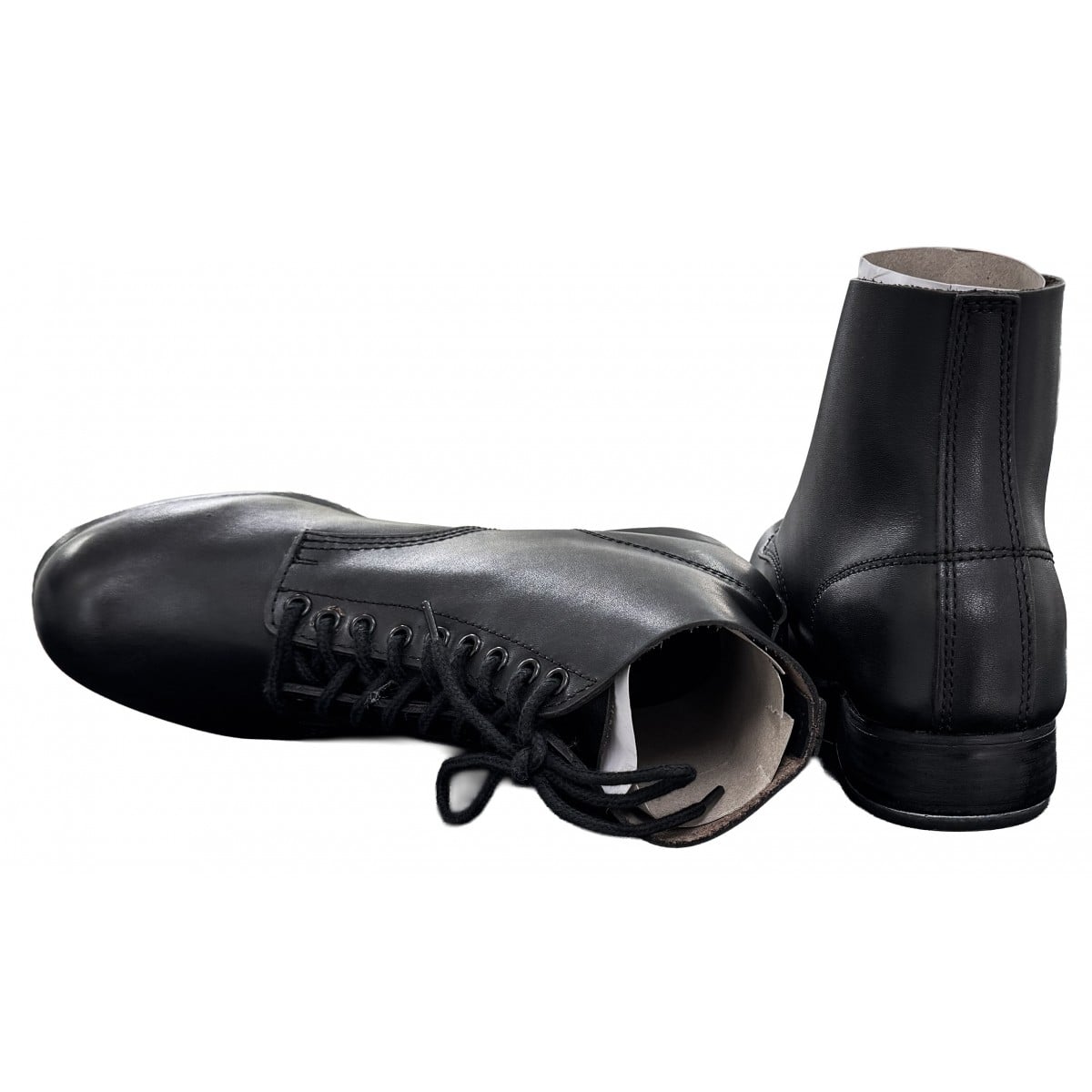
M43 Ankle Boots
New
M43 Ankle Boots, a late-war development of the German Schnürschuhe, featuring an ankle-high cut, lace-up closure and durable hobnailed soles. Worn with Gamaschen gaiters, these boots increasingly replaced the more material-intensive marching boots as leather shortages and simplified wartime production became major concerns.
- Satisfied or refunded: we guarantee 100% secure protection on your purchases
- Free return: return your order free of charge within 30 days from receipt
- Secure payments: pay securely online with PayPal or credit cards

More info
The M43 Ankle Boots, known in German as Schnürschuhe, represent one of the most characteristic developments in German military footwear during the later years of the Second World War. Their increasing importance directly reflects the transition from comparatively material-intensive pre-war equipment towards clothing and footwear increasingly shaped by raw-material conservation and simplified manufacture.
The iconic image of the early-war German soldier is closely associated with the tall Marschstiefel, or marching boot. Ankle-height lace-up boots, however, had already formed part of German military issue before the outbreak of the war.
From 1937, recruits were issued a pair of Schnürschuhe primarily for basic training, fatigue duties and other activities where unnecessary wear on the more expensive tall boots could be avoided.
Once the war began, the amount of leather required for military footwear became an increasingly important consideration.
Tall marching boots required substantially more leather and manufacturing work than ankle boots. As the armed forces expanded, conserving even relatively small quantities of material on each pair became increasingly important.
Beginning in 1940, the use of Schnürschuhe with field dress was progressively expanded. Gamaschen, or gaiters, were introduced to cover the gap between the low boot and the trouser leg.
By 1941, lace-up ankle boots were increasingly authorized for combat troops and issued to new recruits in place of tall marching boots.
By 1943, the combination of Schnürschuhe and gaiters had become extremely widespread.
The version now commonly identified as the M43 represents one of the simplified late-war developments of a type of footwear that had already existed for several years.
Construction was progressively rationalized to reduce both material consumption and manufacturing effort.
One of the most obvious developments was the increasingly low ankle-height upper, reducing the quantity of leather required for each pair.
The boots were secured through a conventional lace-up closure, allowing the wearer to adjust the fit around the foot and ankle.
Original examples show variation in the number and arrangement of eyelets and lace hooks, depending upon manufacturer and production period.
Such differences are entirely consistent with wartime manufacture. Numerous factories were involved in footwear production and construction standards evolved as the availability of materials changed.
Different leather finishes could also be used. Smooth and rough-out surfaces are documented on various wartime examples, sometimes combined within the same boot.
The sole was one of the most distinctive features of German military footwear.
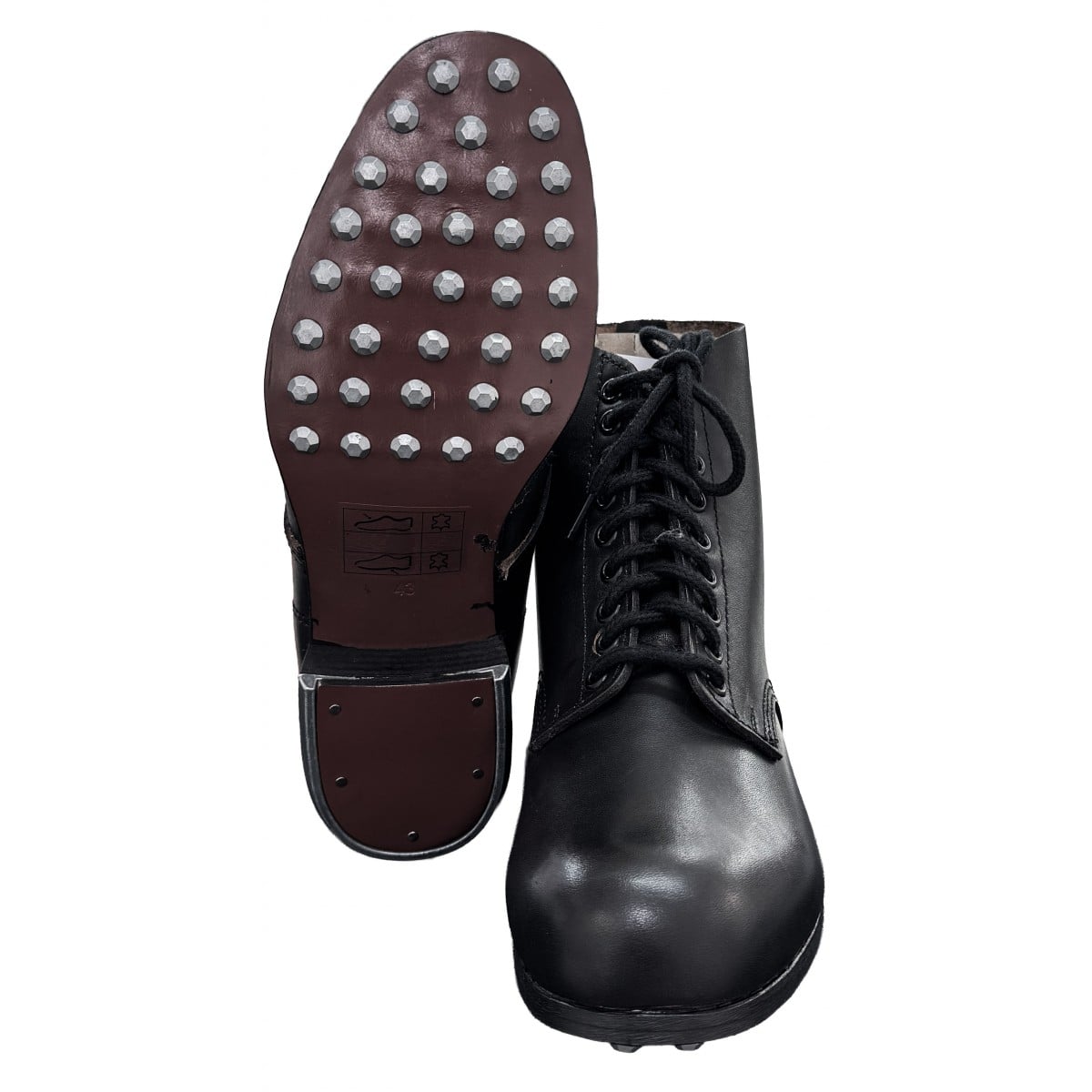
Heavy leather soles were commonly reinforced with numerous metal hobnails, which significantly reduced wear and provided additional durability on many types of ground.
The heel could be protected with a metal heel iron, while additional reinforcement could also be fitted around the toe area depending on the particular production variant.
These features considerably extended the working life of the footwear and allowed heavily worn soles to be repaired within the military supply system.
Metal fittings were not without disadvantages. Hobnailed footwear could become slippery on smooth stone, concrete or icy surfaces, while metal components also conducted cold through the sole during severe winter conditions.
The ankle boots were typically worn together with Gamaschen gaiters.
The gaiters wrapped around the upper boot and lower leg, helping keep dirt and debris from entering the footwear and holding the trouser leg securely in position.
They became particularly suited to the increasingly common late-war combination of tapered Keilhose trousers and ankle boots.
From an economic standpoint, the system offered an obvious advantage. A short ankle boot required substantially less leather than a tall Marschstiefel.
Protection around the lower leg could instead be provided by a relatively inexpensive cloth gaiter, saving valuable leather across millions of pairs of military boots.
This change progressively altered the appearance of the German soldier.
The familiar early-war silhouette of straight trousers tucked into tall black boots increasingly gave way to the typical 1943-1945 combination of tapered trousers, lace-up boots and gaiters.
Tall marching boots did not disappear immediately. Existing serviceable footwear continued to be worn and remaining depot stocks were still issued when available.
It was therefore entirely possible to see men wearing Marschstiefel and Schnürschuhe within the same unit during the later stages of the war.
The designation “M43” should also be interpreted with some caution. Lace-up ankle boots were not first created in 1943.
The underlying type had already been issued for several years. The modern M43 designation is mainly useful for distinguishing simplified late-war patterns from earlier forms.
Further simplifications appeared during 1944, including changes to the upper, stitching and sole construction. Some of these later forms are now classified by collectors as M44 ankle boots.
The M43 Ankle Boots therefore tell a much broader story than their relatively simple appearance might suggest. A type of footwear initially associated mainly with training and fatigue duties gradually became one of the standard forms of combat footwear used by German forces.
Historical curiosity: the famous image of the German soldier wearing tall black jackboots belongs primarily to the earlier part of the war. By 1943, lace-up ankle boots worn with gaiters had become extremely widespread. The reason was largely economic rather than stylistic: shortening the leather upper of each boot saved only a limited amount of material individually, but across millions of pairs it represented an enormous saving of strategically important leather.
Data sheet
| Material | Upper: 100% Suede (Cow) Sole: 100% Cowhide Insole: 100% Cowhide Shoelace: 100% Cotton- studded sole for better hold on bottom - 9-hole-lacing |
30 other products in the same category:

Customers who bought this product also bought:
Field and Personal Equipment
- Germany
- Uniforms
- Medals, Orders and Decorations
- Badges and Pins
- ID Tags
- Arm Shields
- Helmets
- Helmet Decals
- Visor Caps and Hats
- Cap and Helmet Badges
- Collar Tabs Badges
- Collar Tabs, Shoulder Boards and Epaulettes
- Arm Bands
- Division Cuff Titles
- Buckles And Belts
- Buttons For Uniforms
- Stamps
- Gorgets
- Rings
- SS Honour Ring in 925 Silver - Collector's Set
- Poletops
- Flags
- Daggers and Knives (Ornamental)
- Field Marshal Batons
- Field and Personal Equipment
- Service Watches
- Presentation Cases
- Documents and Award Letters
- Busts, Eagles, Lighters and Miscellaneous
- Croatian and Ustasha Militaria
- Denazified Articles
- Commemorative Necklaces
- Spare Parts, Small Parts and Accessories
- Italy
- Medals and Decorations
- Brevets And Badges
- Battle Shields and Tags
- Gorgets
- Visor Caps and Hats
- Cap and Helmet Badges
- Helmets Decals
- Friezes for Collar Tabs
- Collar Tabs, Shoulder Boards and Epaulettes
- Buckles
- Belts
- Buttons For Uniforms
- Rings
- Poletops
- Italian Resistance
- Keyrings
- Wallshields
- Daggers and Knives
- Flags
- Busts and Eagles
- Souvenirs
- Commemorative Necklaces
- Imperial Germany
- Soviet Union
- Other Countries