
No products
Product successfully added to your shopping cart
There are 0 items in your cart. There is 1 item in your cart.
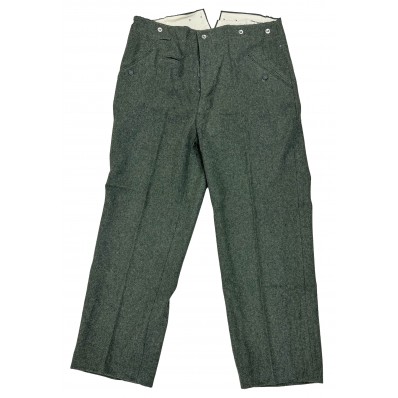
M40 Field Trousers
New
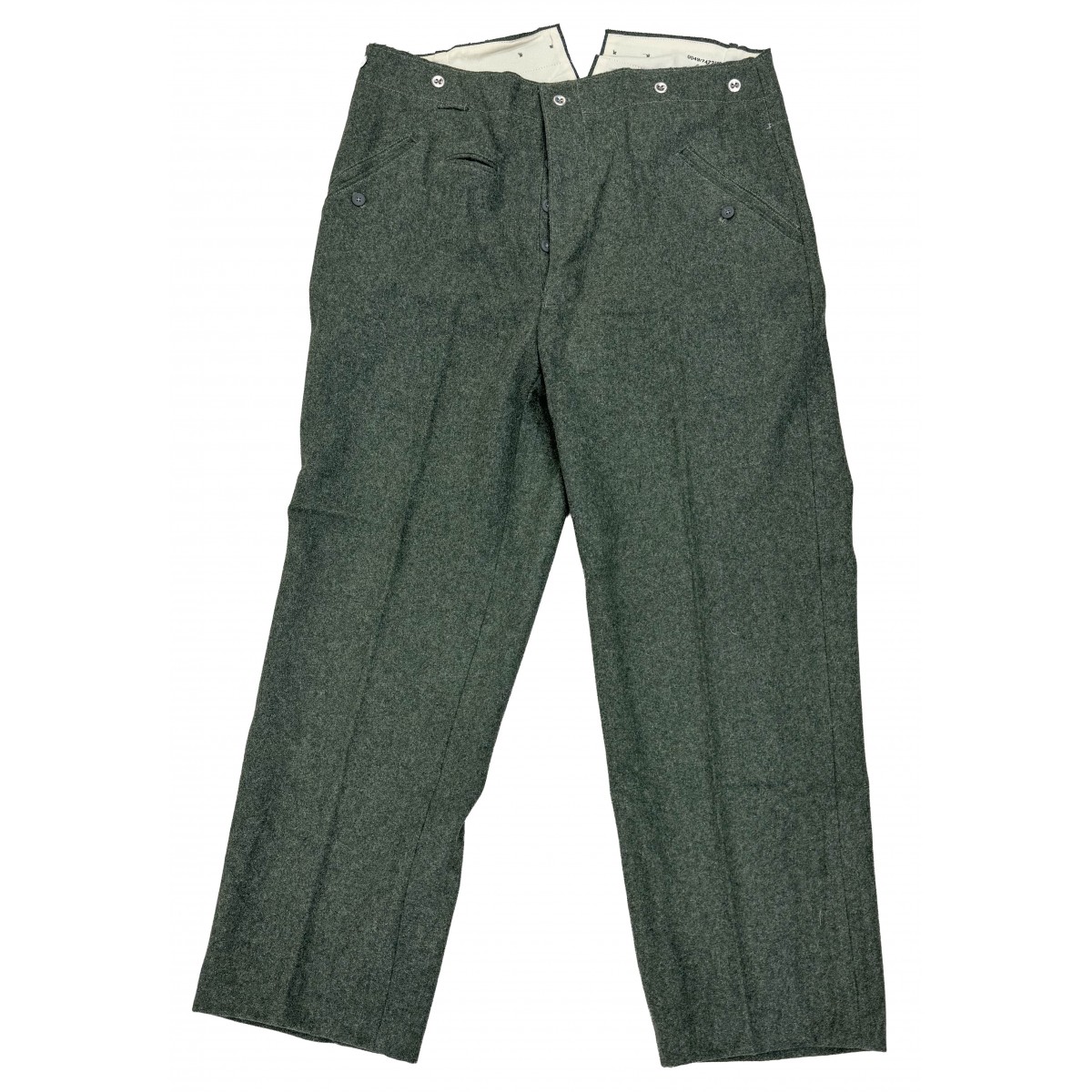
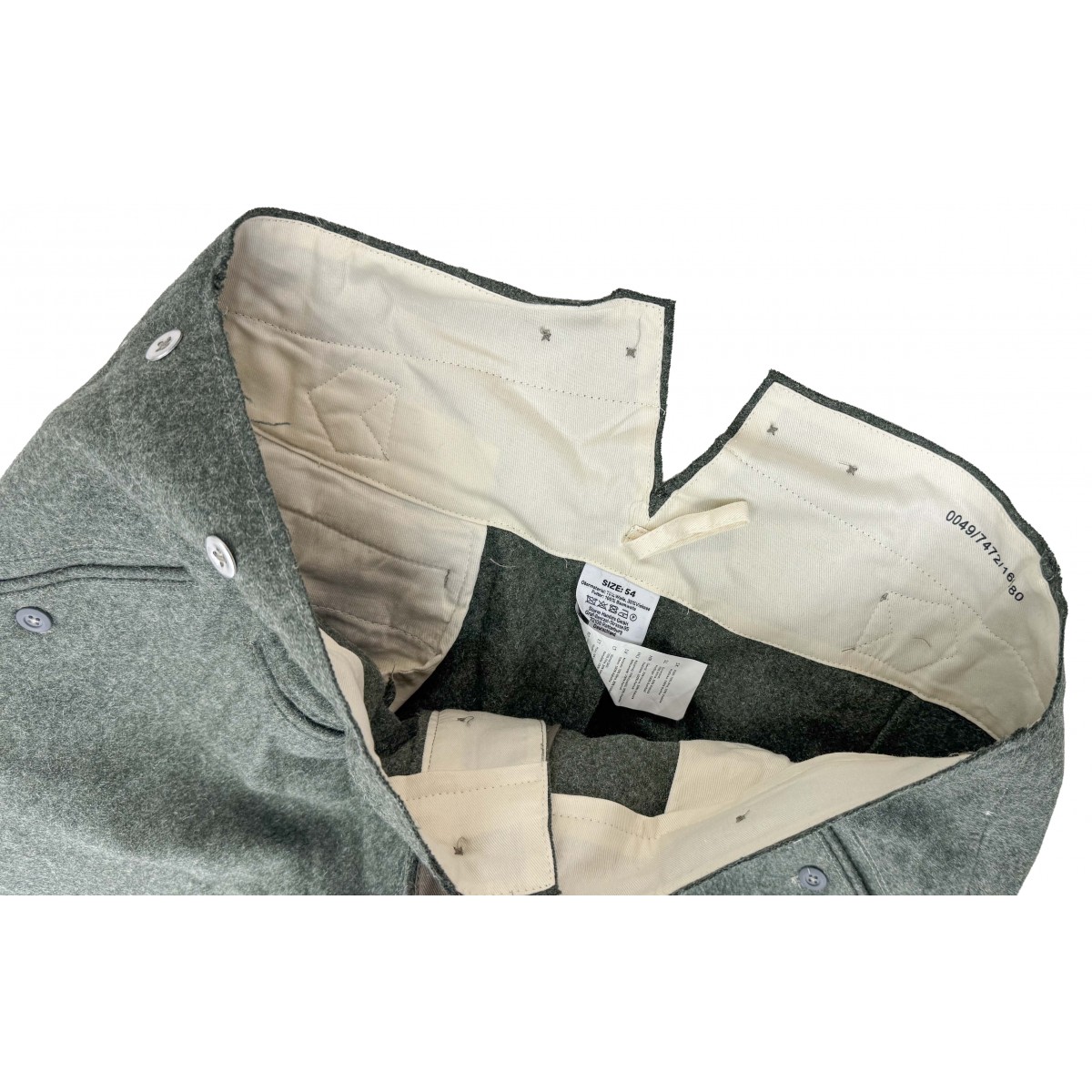
M40 Field Trousers of the Heer featuring the characteristic high-rise waist, straight-cut legs, button fly and attachment buttons for braces. Introduced in field grey in 1940, they gradually replaced the earlier stone-grey trousers and became a characteristic component of German field dress during the Second World War.
Warning: Last items in stock!
- Satisfied or refunded: we guarantee 100% secure protection on your purchases
- Free return: return your order free of charge within 30 days from receipt
- Secure payments: pay securely online with PayPal or credit cards

More info
The M40 Field Trousers were introduced by the Heer in 1940 as part of the progressive standardisation and rationalisation of German field clothing. They provide an interesting example of how wartime uniform development did not always involve the creation of an entirely new garment.
The principal difference from the earlier field trousers concerned the colour of the cloth rather than a radical alteration of the cut. Earlier trousers had traditionally been manufactured in stone grey, or steingrau, producing a noticeable colour contrast with the field-grey Feldbluse. In 1940, production began to shift towards trousers made from field-grey cloth, bringing the upper and lower parts of the field uniform into closer visual alignment.
Using similar field-grey cloth for both tunics and trousers also simplified procurement and wartime production. The general construction of the trousers, however, remained closely related to the earlier pattern.
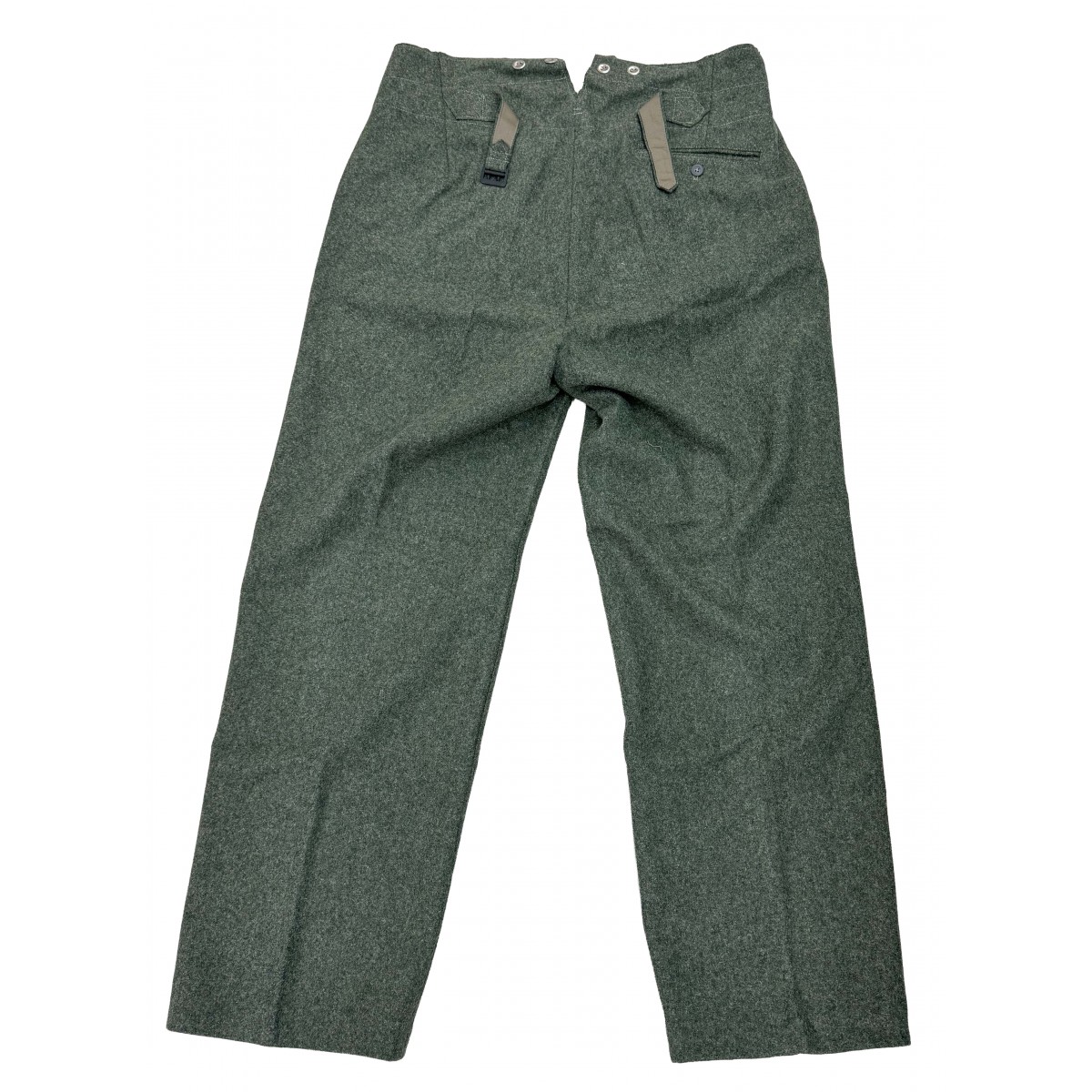
The trousers featured a characteristic high-rise waist, with the waistband extending noticeably higher at the rear than at the front. This was typical of military and civilian tailoring of the period and helped keep the garment securely positioned beneath the field tunic during movement.
A distinctive central notch was incorporated into the rear of the waistband. Immediately below it was a rear adjustment strap and buckle, allowing the waist circumference to be tightened within a limited range without altering the garment itself.
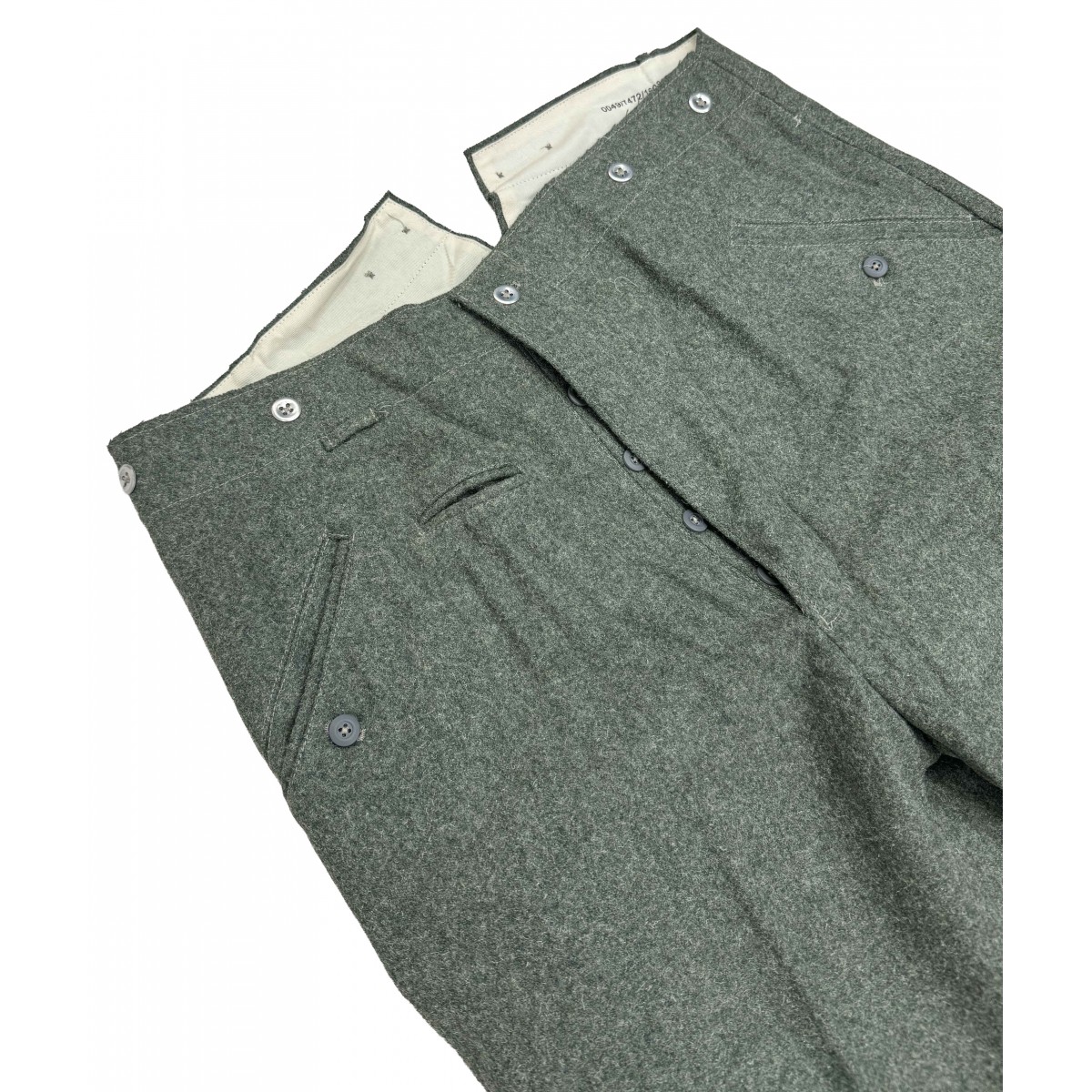
The principal means of supporting the trousers was a pair of braces. A total of eight brace buttons were positioned around the waistband. The M40 was therefore designed around the contemporary system of braces rather than the conventional trouser belt and belt loops familiar from most modern clothing.
The front was secured by a traditional button fly. The upper section provided sufficient room for movement and allowed additional undergarments to be worn during cold-weather service.
Two angled slash pockets were positioned at the hips. These could normally be secured by individual buttons, helping prevent their contents from being lost during physical activity.
A small watch pocket was positioned to the right of the fly. Historical examples frequently show a small metal ringfitted immediately above this pocket, providing a convenient attachment point for a watch chain or similar small item.
At the rear, a single button-fastened pocket was normally positioned on the right side. The overall pocket arrangement was practical and relatively unobtrusive, reflecting the functional character of field clothing.
The legs were straight and comparatively generously cut, without the pronounced taper towards the ankle seen on later wartime trousers. This shape was particularly suitable for wear with the tall Marschstiefel, or marching boots, as the lower sections of the trouser legs could be tucked into the boot shafts.
Historical M40 trousers were predominantly manufactured from field-grey uniform cloth. Different materials could be used for pocket bags, waistband linings and internal reinforcement. Surviving originals consequently display considerable variation in shade, texture and finishing depending on manufacturer and production period.
Buttons could also vary. Metal examples were common, while other materials appeared as wartime production conditions changed. Repairs carried out during service could further result in a single surviving garment carrying several different types of buttons.
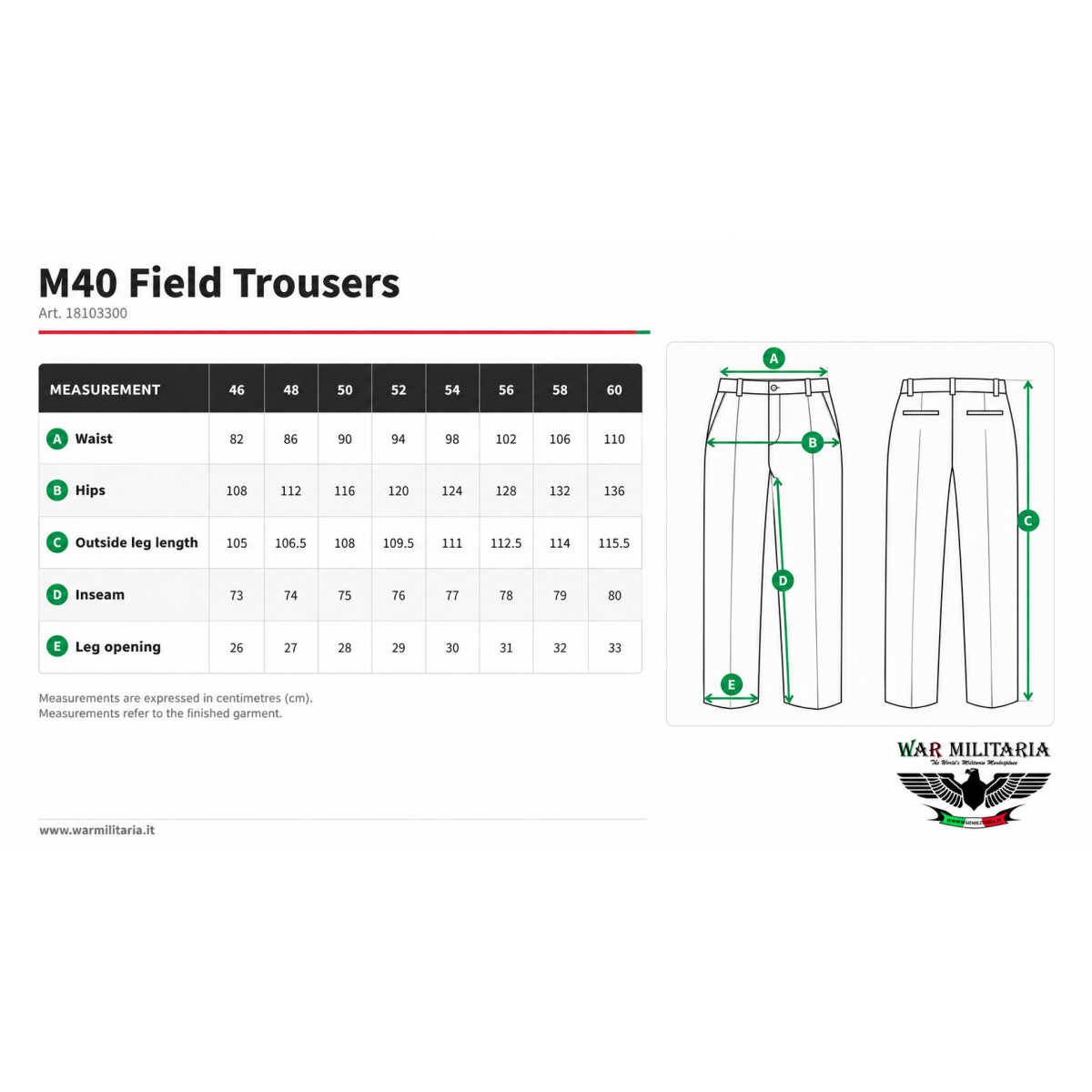
Depot-issued trousers frequently carried size markings, manufacturer information and clothing-depot acceptance stamps internally. German military sizing relied on a series of different body and garment measurements rather than a single modern commercial size, allowing clothing depots to match garments more accurately to individual soldiers.
The M40 Field Trousers could be worn with several generations of Feldbluse. The introduction of a new uniform pattern did not result in the immediate withdrawal of older garments. Serviceable clothing continued to be issued, worn and repaired for as long as it remained usable.
This was particularly true of the earlier stone-grey trousers. Although field-grey trousers were introduced in 1940, substantial stocks of the earlier type remained available in Army clothing depots and continued to appear for years afterwards.
As ankle boots and gaiters became increasingly common, the traditional wide, straight leg became less suitable for the changing field uniform. Later trousers therefore adopted narrower lower legs and additional adjustment features. This development is particularly evident in the M43 Field Trousers, whose tapered construction differed noticeably from the older M40 silhouette.
Historical curiosity: the introduction of the field-grey M40 trousers did not suddenly transform the appearance of the German Army. Large stocks of stone-grey trousers were still available and continued to be issued. A soldier could therefore wear a newer Feldbluse together with noticeably older stone-grey trousers, producing combinations that are frequently visible in original wartime photographs. This is an important reminder that actual field uniforms were often far less standardized than modern illustrations suggest.
Another fascinating detail is the small watch pocket and metal ring. Originating in traditional men's tailoring from the age of the pocket watch, this feature survived in the uniform of an army that was becoming increasingly mechanized, making it a small but distinctive link between older civilian tailoring traditions and twentieth-century military clothing.
Data sheet
| Material | Upper: 70% Wool, 30% Viscose Lining: 100% Cotton |
17 other products in the same category:

Customers who bought this product also bought:
Uniforms
- Germany
- Uniforms
- Medals, Orders and Decorations
- Badges and Pins
- ID Tags
- Arm Shields
- Helmets
- Helmet Decals
- Visor Caps and Hats
- Cap and Helmet Badges
- Collar Tabs Badges
- Collar Tabs, Shoulder Boards and Epaulettes
- Arm Bands
- Division Cuff Titles
- Buckles And Belts
- Buttons For Uniforms
- Stamps
- Gorgets
- Rings
- SS Honour Ring in 925 Silver - Collector's Set
- Poletops
- Flags
- Daggers and Knives (Ornamental)
- Field Marshal Batons
- Field and Personal Equipment
- Service Watches
- Presentation Cases
- Documents and Award Letters
- Busts, Eagles, Lighters and Miscellaneous
- Croatian and Ustasha Militaria
- Denazified Articles
- Commemorative Necklaces
- Spare Parts, Small Parts and Accessories
- Italy
- Medals and Decorations
- Brevets And Badges
- Battle Shields and Tags
- Gorgets
- Visor Caps and Hats
- Cap and Helmet Badges
- Helmets Decals
- Friezes for Collar Tabs
- Collar Tabs, Shoulder Boards and Epaulettes
- Buckles
- Belts
- Buttons For Uniforms
- Rings
- Poletops
- Italian Resistance
- Keyrings
- Wallshields
- Daggers and Knives
- Flags
- Busts and Eagles
- Souvenirs
- Commemorative Necklaces
- Imperial Germany
- Soviet Union
- Other Countries