
No products
Product successfully added to your shopping cart
There are 0 items in your cart. There is 1 item in your cart.
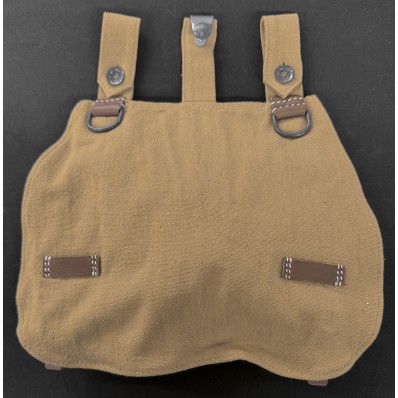


Bread Bag Tan
New
WWII German bread bag in tan canvas, with brown leather details and reinforcements, front flap, buttons, rear belt loops and metal rings. Used to carry rations, bread, eating utensils, tobacco, personal items and small field accessories, often together with the Feldflasche and Kochgeschirr.
Warning: Last items in stock!
- Satisfied or refunded: we guarantee 100% secure protection on your purchases
- Free return: return your order free of charge within 30 days from receipt
- Secure payments: pay securely online with PayPal or credit cards

More info
WWII German Bread Bag in Tan Canvas with Brown Leather – Brotbeutel for rations and field accessories
The German Brotbeutel, or bread bag, was one of the most common items of individual equipment used during the Second World War. Although its name refers directly to bread, its everyday function was much broader. It carried rations, bread, eating utensils, tobacco, personal belongings, cleaning items, hygiene articles and small field accessories needed during marching, service and daily military life.
The tan canvas version has a light shade close to sand, khaki or natural cotton fabric, consistent with the wide colour range seen on German textile equipment. The body is made from strong cotton canvas, designed to withstand friction against the belt, uniform and other equipment. Brown leather details reinforce the points most exposed to tension and wear, including loops, tabs, attachments and stress areas.
The construction follows the standard Brotbeutel layout: single main compartment, front closing flap, buttons, rear belt loops and metal rings for a shoulder strap or additional equipment. These features allowed the bag to be worn directly on the belt or integrated into a broader carrying arrangement.
The Brotbeutel was often used together with the Feldflasche and Kochgeschirr, forming part of the soldier’s light field load linked to food, water and daily essentials. Its simple, roomy shape made it adaptable to individual needs, allowing the wearer to carry items not suited to ammunition pouches or larger packs.
The combination of tan fabric and brown leather gives the bag a lighter appearance than feldgrau, olive or blue Luftwaffe versions. Leather parts could darken with use and show creases, pressure marks and abrasion around the most heavily stressed points. These areas included belt loops, tabs and attachment points.
From a technical perspective, the bag combined the flexibility of canvas with the strength of leather at structural points. Rear belt loops kept it stable on the equipment belt, metal rings increased carrying options, and the flap helped protect the contents from dust, dirt and accidental loss during movement.
Collector’s note: despite its name, the Brotbeutel was never limited to bread alone. In daily use it served as a general-purpose field bag for items the soldier wanted close at hand: spoon, shoe grease, cloth, tobacco, letters, small tools and rations. This practical versatility made it one of the most widely used accessories in German field equipment.
30 other products in the same category:

Customers who bought this product also bought:
Field and Personal Equipment
- Germany
- Uniforms
- Medals, Orders and Decorations
- Badges and Pins
- ID Tags
- Arm Shields
- Helmets
- Helmet Decals
- Visor Caps and Hats
- Cap and Helmet Badges
- Collar Tabs Badges
- Collar Tabs, Shoulder Boards and Epaulettes
- Arm Bands
- Division Cuff Titles
- Buckles And Belts
- Buttons For Uniforms
- Stamps
- Gorgets
- Rings
- SS Honour Ring in 925 Silver - Collector's Set
- Poletops
- Flags
- Daggers and Knives (Ornamental)
- Field Marshal Batons
- Field and Personal Equipment
- Service Watches
- Presentation Cases
- Documents and Award Letters
- Busts, Eagles, Lighters and Miscellaneous
- Croatian and Ustasha Militaria
- Denazified Articles
- Commemorative Necklaces
- Spare Parts, Small Parts and Accessories
- Italy
- Medals and Decorations
- Brevets And Badges
- Battle Shields and Tags
- Gorgets
- Visor Caps and Hats
- Cap and Helmet Badges
- Helmets Decals
- Friezes for Collar Tabs
- Collar Tabs, Shoulder Boards and Epaulettes
- Buckles
- Belts
- Buttons For Uniforms
- Rings
- Poletops
- Italian Resistance
- Keyrings
- Wallshields
- Daggers and Knives
- Flags
- Busts and Eagles
- Souvenirs
- Commemorative Necklaces
- Imperial Germany
- Soviet Union
- Other Countries