
No products
Product successfully added to your shopping cart
There are 0 items in your cart. There is 1 item in your cart.
M40 Field Tunic
New
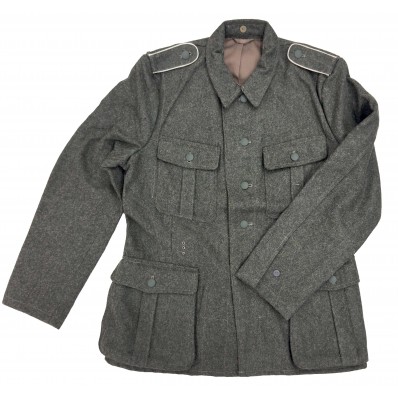
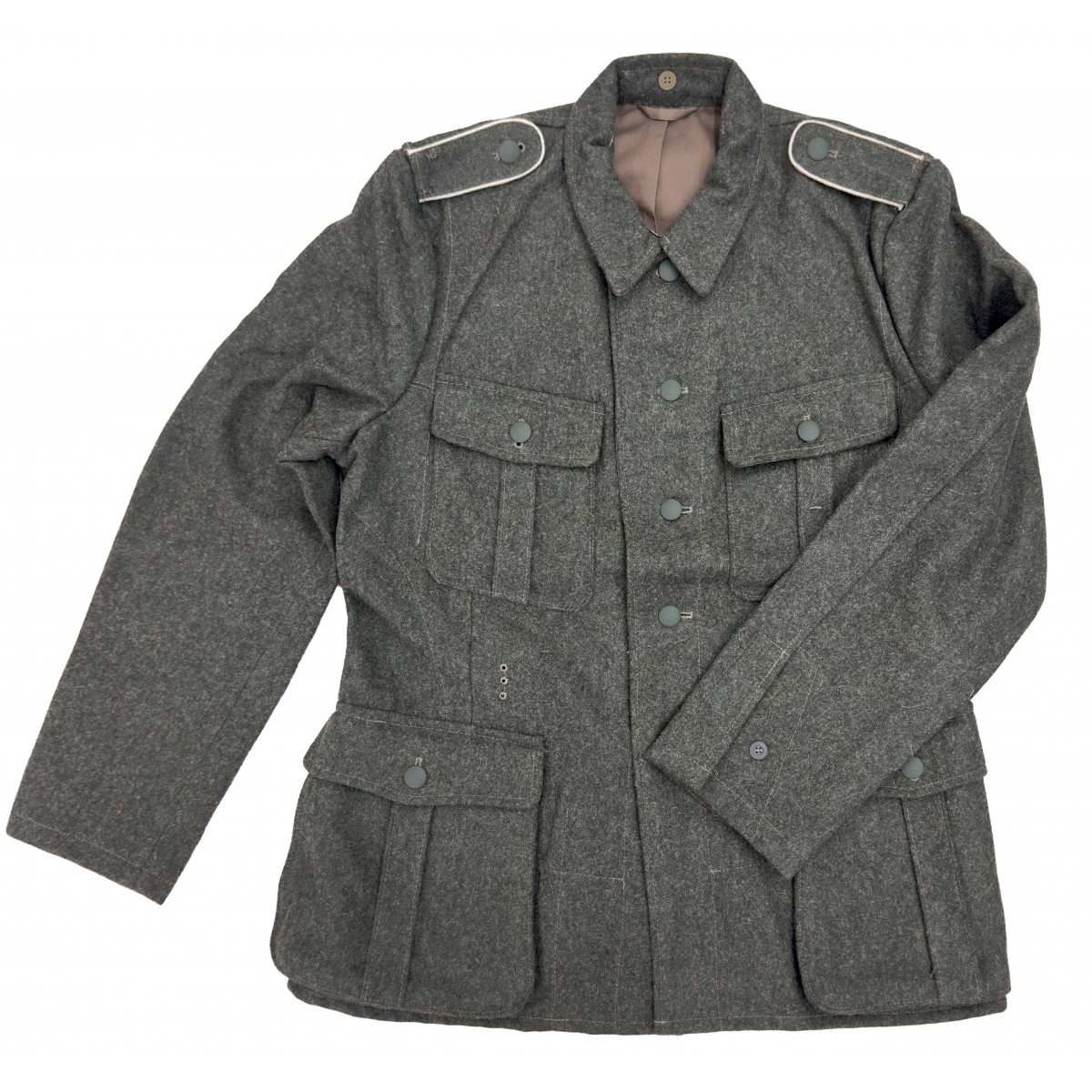
M40 Field Tunic of the Heer, distinguished by its field-grey collar, five-button front closure and four pleated pockets with shaped flaps. Developed from the earlier M36, it retained the traditional fitted cut while introducing the first wartime production simplifications.
- Satisfied or refunded: we guarantee 100% secure protection on your purchases
- Free return: return your order free of charge within 30 days from receipt
- Secure payments: pay securely online with PayPal or credit cards

More info
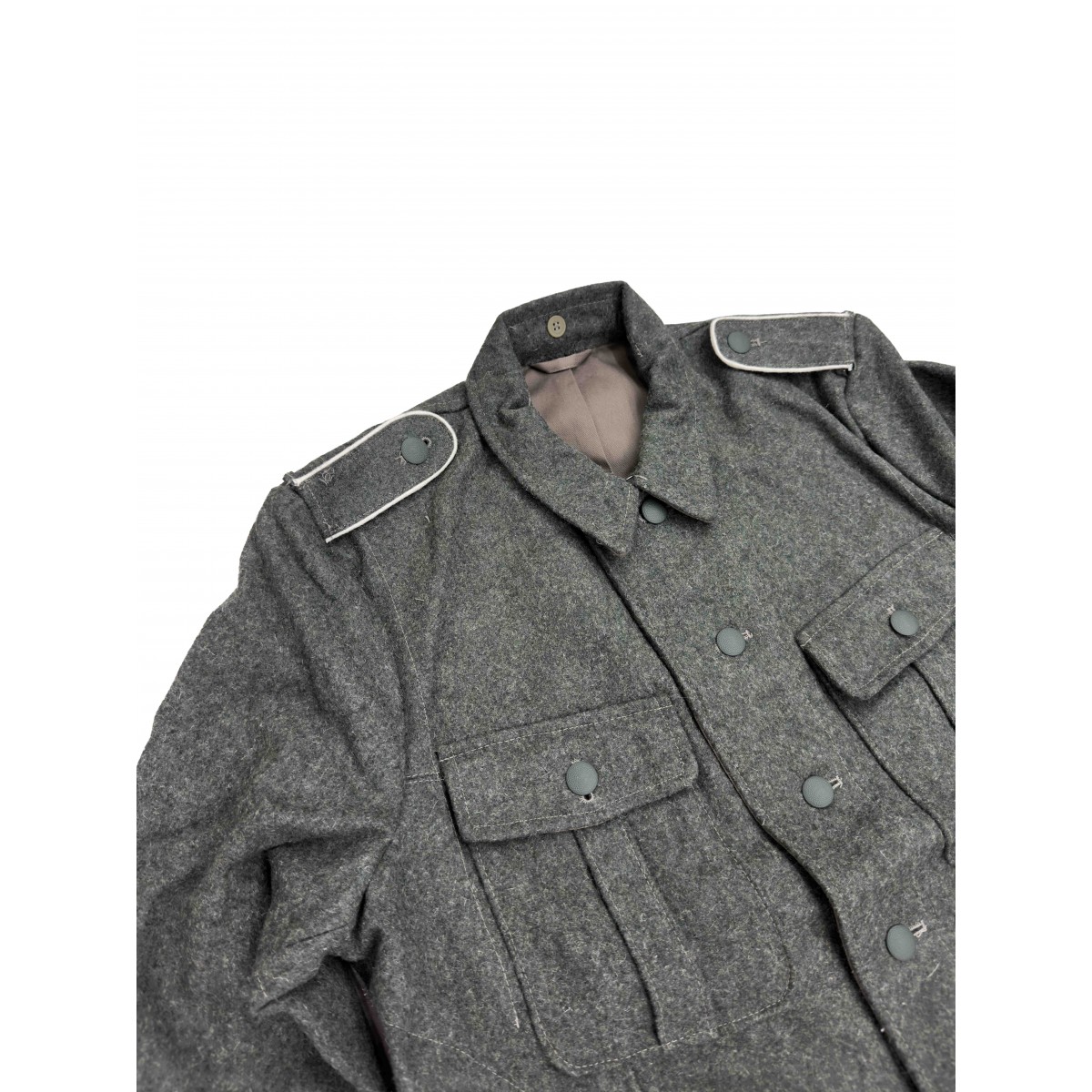
The M40 Field Tunic, historically known as the Feldbluse, represents one of the principal stages in the development of the German Army field uniform during the Second World War. It evolved directly from the earlier M36 Field Tunic and retained its fitted silhouette, pocket arrangement and most of its external construction. Its most recognizable feature was the introduction of a field-grey collar, replacing the contrasting dark bottle-green collar of the previous pattern.
Although visually modest, this alteration formed part of the first measures intended to simplify wartime production. Eliminating the requirement for a separate dark-green collar material reduced the number of different fabrics and manufacturing processes needed for each garment. The M40 therefore marked the beginning of the transition from the carefully finished pre-war uniform to the progressively simplified field tunics of the later war years.
The tunic featured a short, single-breasted and slightly fitted cut, designed to be worn with the military equipment belt. The front was secured by five exposed pebbled metal buttons, normally finished in a field-grey colour. Its stand-and-fall collar could be fastened at the throat with a hook and eye or worn slightly open under field conditions.
Four large external pockets were positioned on the front: two breast pockets and two larger skirt pockets. Each retained the characteristic central pleat, allowing the pocket to expand when carrying small personal items or field equipment. The pockets were closed by shaped or scalloped flaps secured with individual buttons.
This relatively elaborate pocket construction was inherited from the M36 and gives the M40 its distinctive early-war appearance. Later field tunics progressively eliminated the pleats and adopted simpler pocket flaps in order to reduce the amount of material and labour required.
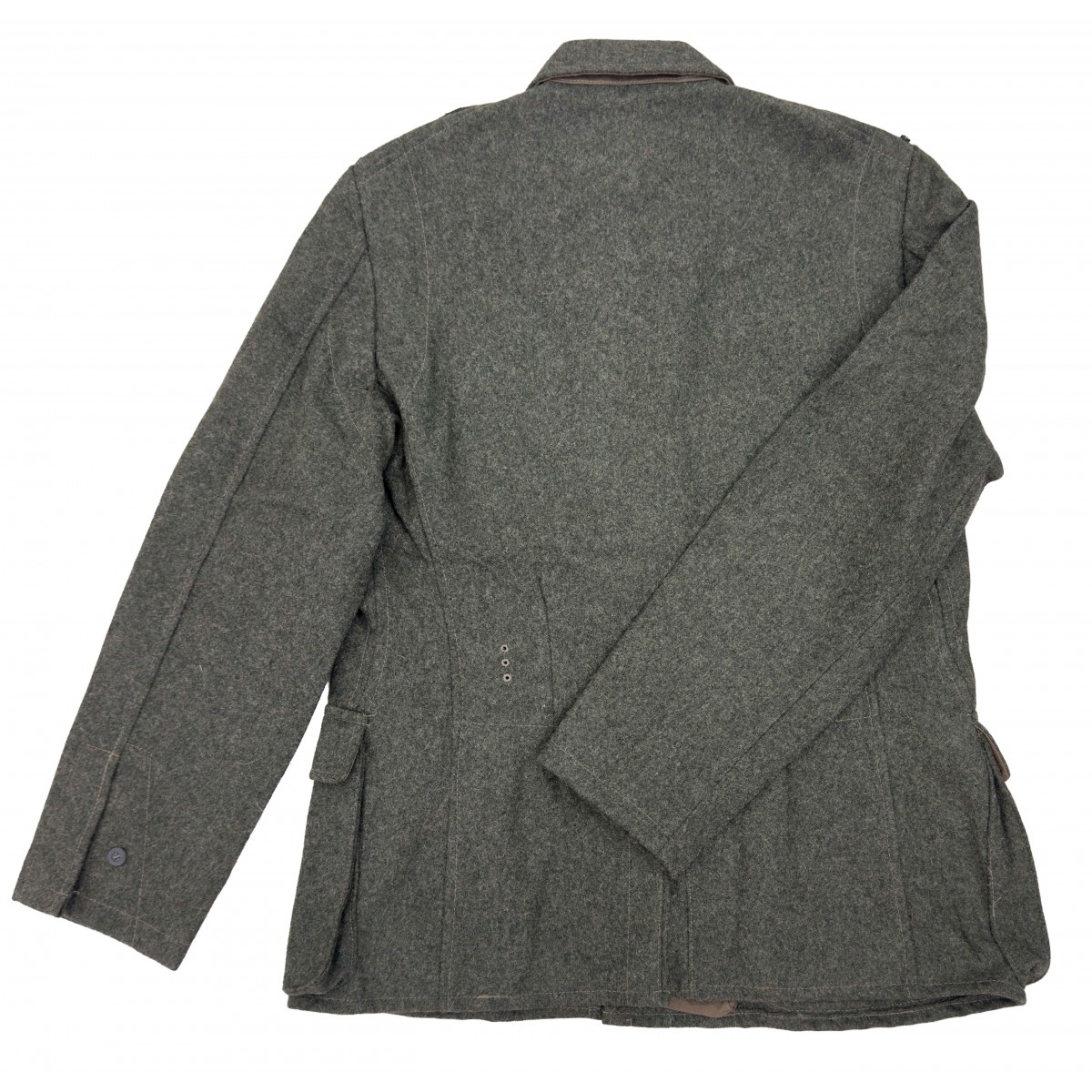
The sleeves ended in adjustable cuffs with concealed button closures. A central rear vent provided additional freedom of movement while marching, sitting or carrying out field duties. Loops and buttons on the shoulders allowed the fitting of removable shoulder straps, which displayed the wearer’s rank, branch of service and, in some cases, unit affiliation.
A particularly important feature was the internal support system for the equipment belt. Metal belt hooks passed through reinforced openings around the waist and helped support the weight of the belt and the equipment attached to it. This prevented the loaded belt from slipping and distributed the weight of ammunition pouches, field flask, bread bag and other equipment more effectively.
The interior normally included a lining, size and acceptance markings and a small pocket for the individual field dressing. Surviving original tunics may display considerable variations in colour, lining, stitching and overall finish. These differences reflect the large number of manufacturers involved, changing production standards and the increasing use of substitute or recycled fibres as the war progressed.
In its standard historical configuration, the Army national emblem was worn above the right breast pocket. The characteristic Litzen were attached to the collar, while the shoulder straps indicated rank and displayed the appropriate Waffenfarbe, or branch-of-service colour. Numerals, letters and removable slides could provide further information concerning the wearer’s unit or specialist role.
The precise style and positioning of the insignia could vary according to rank, date of issue and available stocks. Older insignia continued to be used, damaged components were replaced and uniforms already in service could be updated according to later regulations. These practices resulted in numerous historically authentic transitional combinations.
The introduction of the M40 did not cause the immediate disappearance of the earlier M36. Existing M36 tunics continued to be issued and worn alongside the new pattern. Similarly, M40 tunics remained in service after later models had entered production, provided that the garments were still usable.
Subsequent versions introduced further production economies, including a sixth front button, the removal of pocket pleats and increasingly simplified pocket flaps. The M40 nevertheless retained much of the traditional appearance of the pre-war uniform while showing the first visible effects of wartime economic and logistical requirements.
Historical curiosity: original tunics were not normally stamped with “M40” as a model designation. Their internal markings generally recorded body measurements, manufacturer, clothing depot and year of acceptance. Modern identification as an M36, M40 or later model is therefore based mainly on construction details such as collar colour, button count and pocket design. A tunic accepted in 1941 may consequently still conform to the pattern now commonly classified as an M40.
Nota di verifica storica, esterna alle descrizioni: gli esemplari museali dell’M40 confermano il colletto feldgrau, la chiusura a cinque bottoni e le tasche pieghettate, mentre l’M36 conserva il colletto verde scuro. Le varianti successive mostrano la progressiva adozione di sei bottoni e tasche semplificate.
Data sheet
| Material | Upper: 70% Wool, 30% Viscose Lining: 100% Cotton |
17 other products in the same category:

Customers who bought this product also bought:
Uniforms
- Germany
- Uniforms
- Medals, Orders and Decorations
- Badges and Pins
- ID Tags
- Arm Shields
- Helmets
- Helmet Decals
- Visor Caps and Hats
- Cap and Helmet Badges
- Collar Tabs Badges
- Collar Tabs, Shoulder Boards and Epaulettes
- Arm Bands
- Division Cuff Titles
- Buckles And Belts
- Buttons For Uniforms
- Stamps
- Gorgets
- Rings
- SS Honour Ring in 925 Silver - Collector's Set
- Poletops
- Flags
- Daggers and Knives (Ornamental)
- Field Marshal Batons
- Field and Personal Equipment
- Service Watches
- Presentation Cases
- Documents and Award Letters
- Busts, Eagles, Lighters and Miscellaneous
- Croatian and Ustasha Militaria
- Denazified Articles
- Commemorative Necklaces
- Spare Parts, Small Parts and Accessories
- Italy
- Medals and Decorations
- Brevets And Badges
- Battle Shields and Tags
- Gorgets
- Visor Caps and Hats
- Cap and Helmet Badges
- Helmets Decals
- Friezes for Collar Tabs
- Collar Tabs, Shoulder Boards and Epaulettes
- Buckles
- Belts
- Buttons For Uniforms
- Rings
- Poletops
- Italian Resistance
- Keyrings
- Wallshields
- Daggers and Knives
- Flags
- Busts and Eagles
- Souvenirs
- Commemorative Necklaces
- Imperial Germany
- Soviet Union
- Other Countries