
No products
Product successfully added to your shopping cart
There are 0 items in your cart. There is 1 item in your cart.
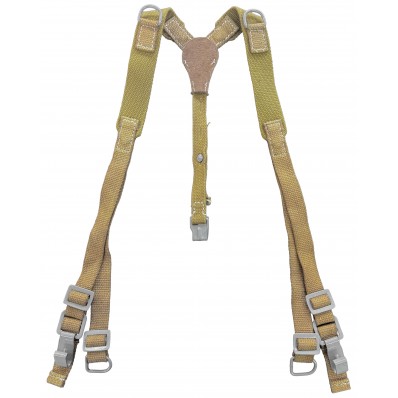


DAK Canvas Webbing Y-Straps
New
DAK canvas webbing Y-straps made from strong sand/khaki cotton webbing with leather reinforcements and end pieces. Used with tropical German field equipment, they distributed the weight of ammunition pouches, canteen, shovel carrier, bread bag and other belt-mounted gear during service in North Africa and warm climates.
Warning: Last items in stock!
- Satisfied or refunded: we guarantee 100% secure protection on your purchases
- Free return: return your order free of charge within 30 days from receipt
- Secure payments: pay securely online with PayPal or credit cards

More info
DAK Canvas Webbing Y-Straps – tropical load-bearing straps for German field equipment
The DAK canvas webbing Y-straps formed part of the tropical German field equipment associated with the Deutsches Afrikakorps and other troops deployed in hot or Mediterranean theatres. Their purpose was to distribute the weight of belt-mounted equipment across the shoulders and upper body, reducing strain on the waist and keeping the soldier’s load more stable during marching and field movement.
The Y-strap name comes from the layout of the carrying system: two front straps passed over the shoulders and down to the belt, while a single rear strap connected to the back of the belt. This arrangement supported the equipment belt and helped stabilize items such as ammunition pouches, canteen, mess tin, straight shovel carrier, bayonet, gas mask canister or bread bag.
The straps were made from strong cotton webbing in sand, khaki or light olive tones. Compared with all-leather carrying straps, webbing was lighter, more flexible and better suited to hot climates. Leather was still used at high-stress points, including hooks, buckles, end tabs and belt connections, where added strength and durability were needed.
German tropical equipment often showed considerable colour variation. Fabric shade could depend on textile batches, dye lots, manufacturer, exposure to sun and field wear. DAK webbing straps fit within this material pattern: textile components reduced weight and improved comfort in heat, while leather was reserved for structural points exposed to tension.
The Deutsches Afrikakorps, deployed to North Africa from 1941, operated in conditions very different from central Europe. Heat, sand, dust, long movements, vehicle use and heavy wear made lighter and less rigid equipment especially useful. Webbing load-bearing straps were practical in these environments while still allowing the soldier to carry the standard field load.
From a technical standpoint, the Y-straps stabilized the belt by transferring part of the weight to the shoulders and back. The front hooks attached to the belt or ammunition pouches, while the rear strap balanced the pull from behind. This reduced bouncing and shifting of equipment during movement and allowed a more even distribution of weight over distance.
Collector’s note: DAK webbing equipment can vary widely in colour. Sun, sand, sweat and constant use quickly faded the fabric, so surviving examples may range from pale sand and khaki to washed-out olive or grey-beige tones.
30 other products in the same category:

Customers who bought this product also bought:
Field and Personal Equipment
- Germany
- Uniforms
- Medals, Orders and Decorations
- Badges and Pins
- ID Tags
- Arm Shields
- Helmets
- Helmet Decals
- Visor Caps and Hats
- Cap and Helmet Badges
- Collar Tabs Badges
- Collar Tabs, Shoulder Boards and Epaulettes
- Arm Bands
- Division Cuff Titles
- Buckles And Belts
- Buttons For Uniforms
- Stamps
- Gorgets
- Rings
- SS Honour Ring in 925 Silver - Collector's Set
- Poletops
- Flags
- Daggers and Knives (Ornamental)
- Field Marshal Batons
- Field and Personal Equipment
- Service Watches
- Presentation Cases
- Documents and Award Letters
- Busts, Eagles, Lighters and Miscellaneous
- Croatian and Ustasha Militaria
- Denazified Articles
- Commemorative Necklaces
- Spare Parts, Small Parts and Accessories
- Italy
- Medals and Decorations
- Brevets And Badges
- Battle Shields and Tags
- Gorgets
- Visor Caps and Hats
- Cap and Helmet Badges
- Helmets Decals
- Friezes for Collar Tabs
- Collar Tabs, Shoulder Boards and Epaulettes
- Buckles
- Belts
- Buttons For Uniforms
- Rings
- Poletops
- Italian Resistance
- Keyrings
- Wallshields
- Daggers and Knives
- Flags
- Busts and Eagles
- Souvenirs
- Commemorative Necklaces
- Imperial Germany
- Soviet Union
- Other Countries