
No products
Product successfully added to your shopping cart
There are 0 items in your cart. There is 1 item in your cart.
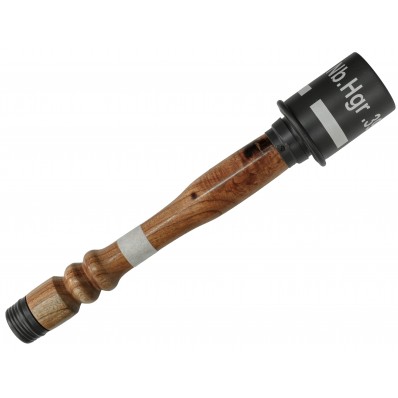
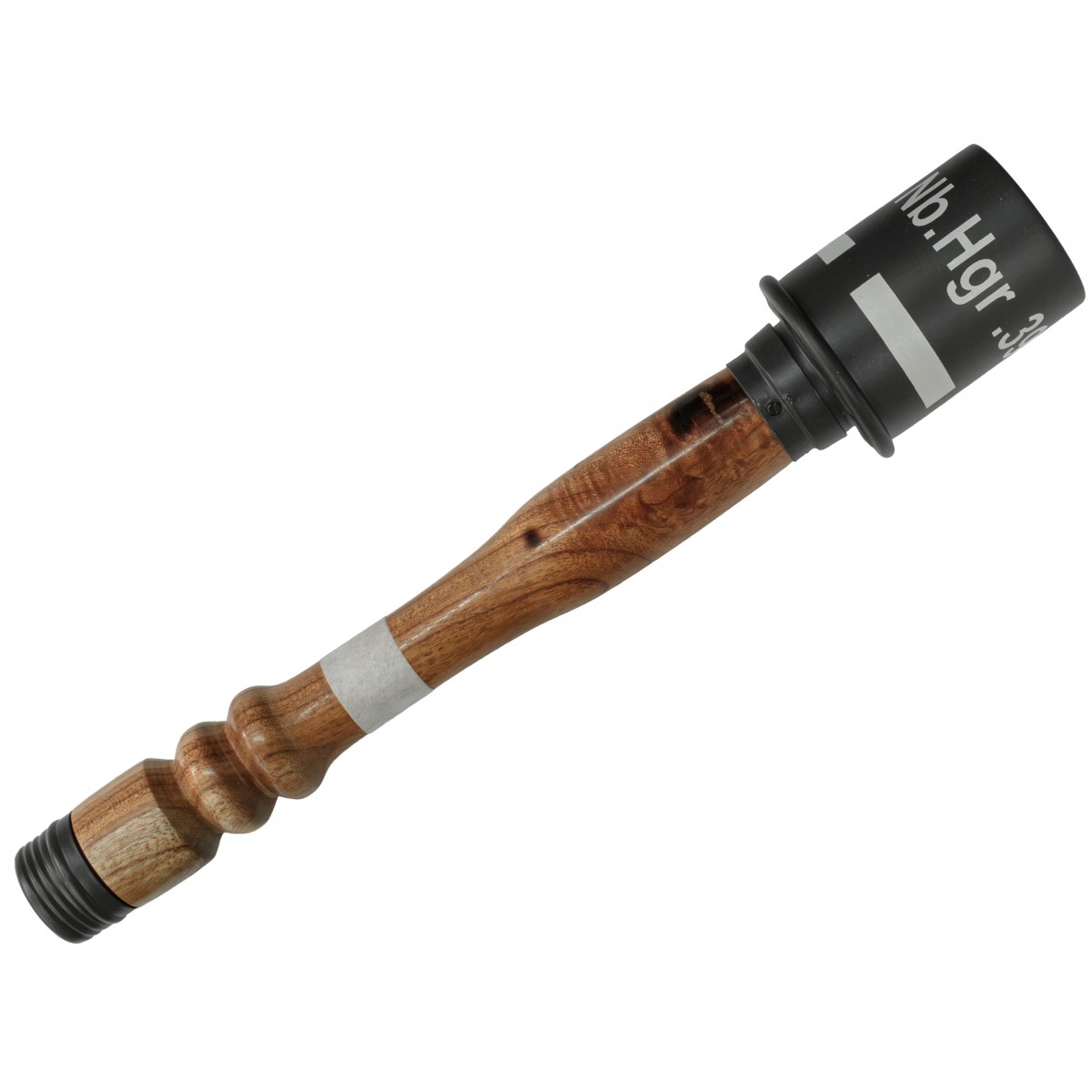
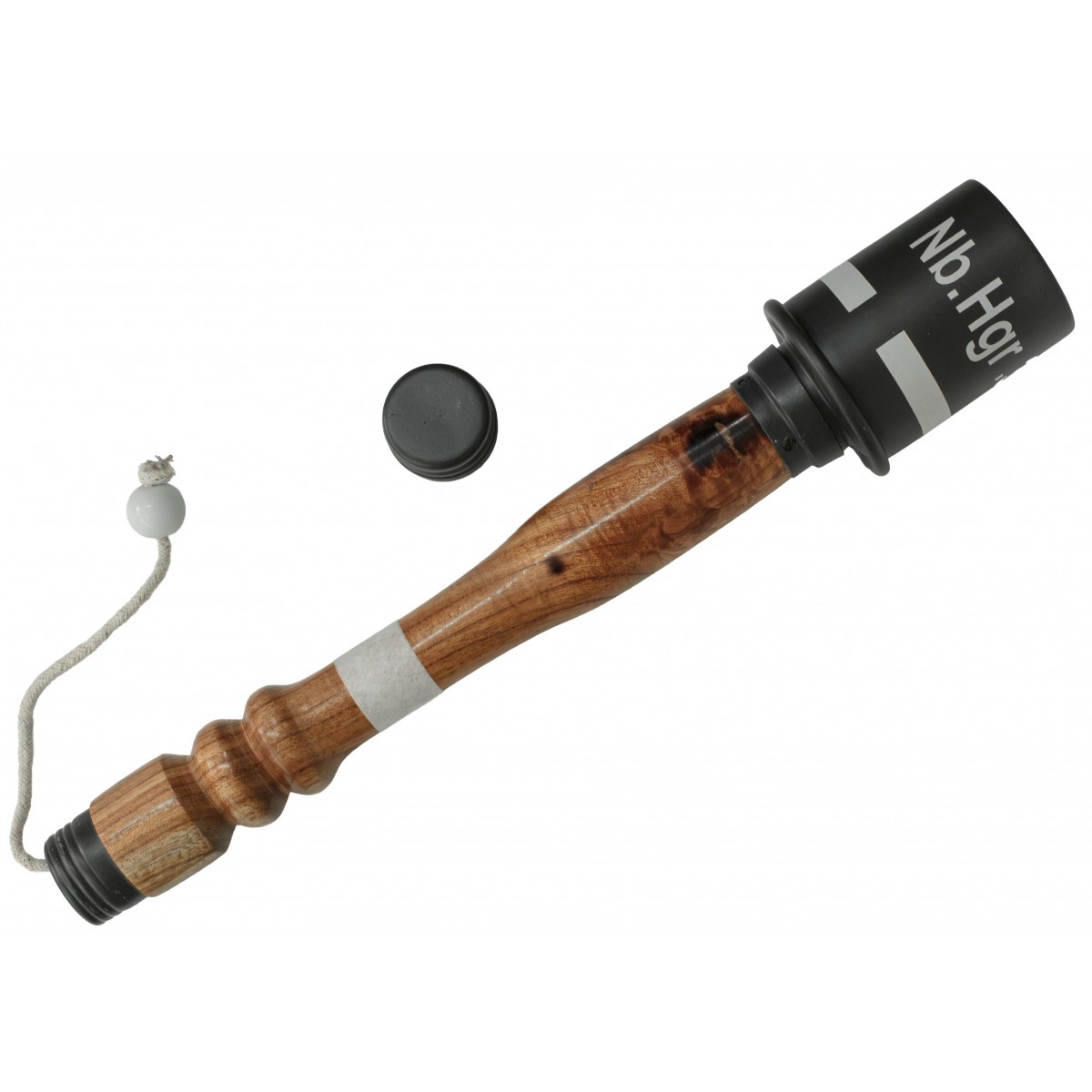
M39 Nebelhandgranate – German Smoke Stick Grenade
New
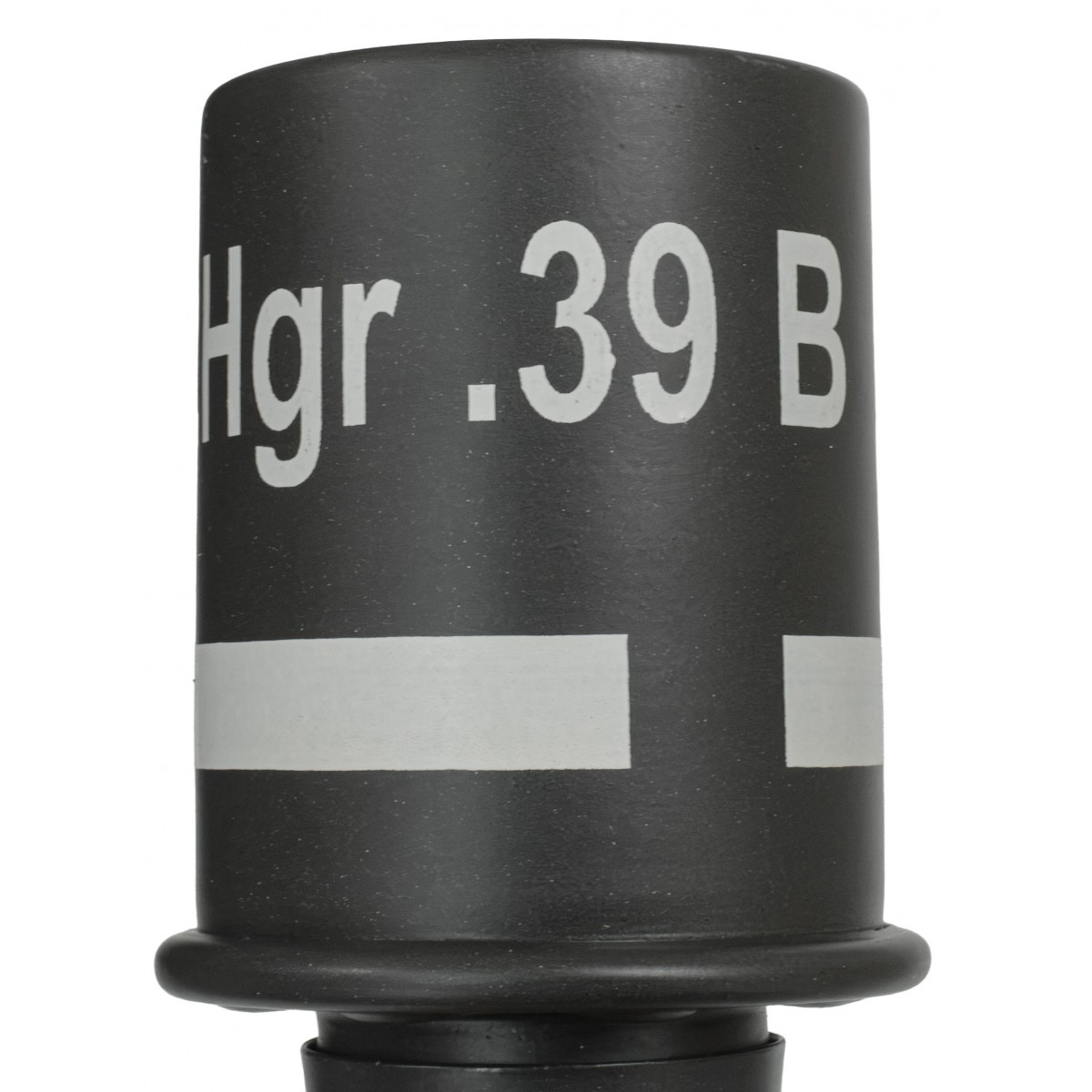
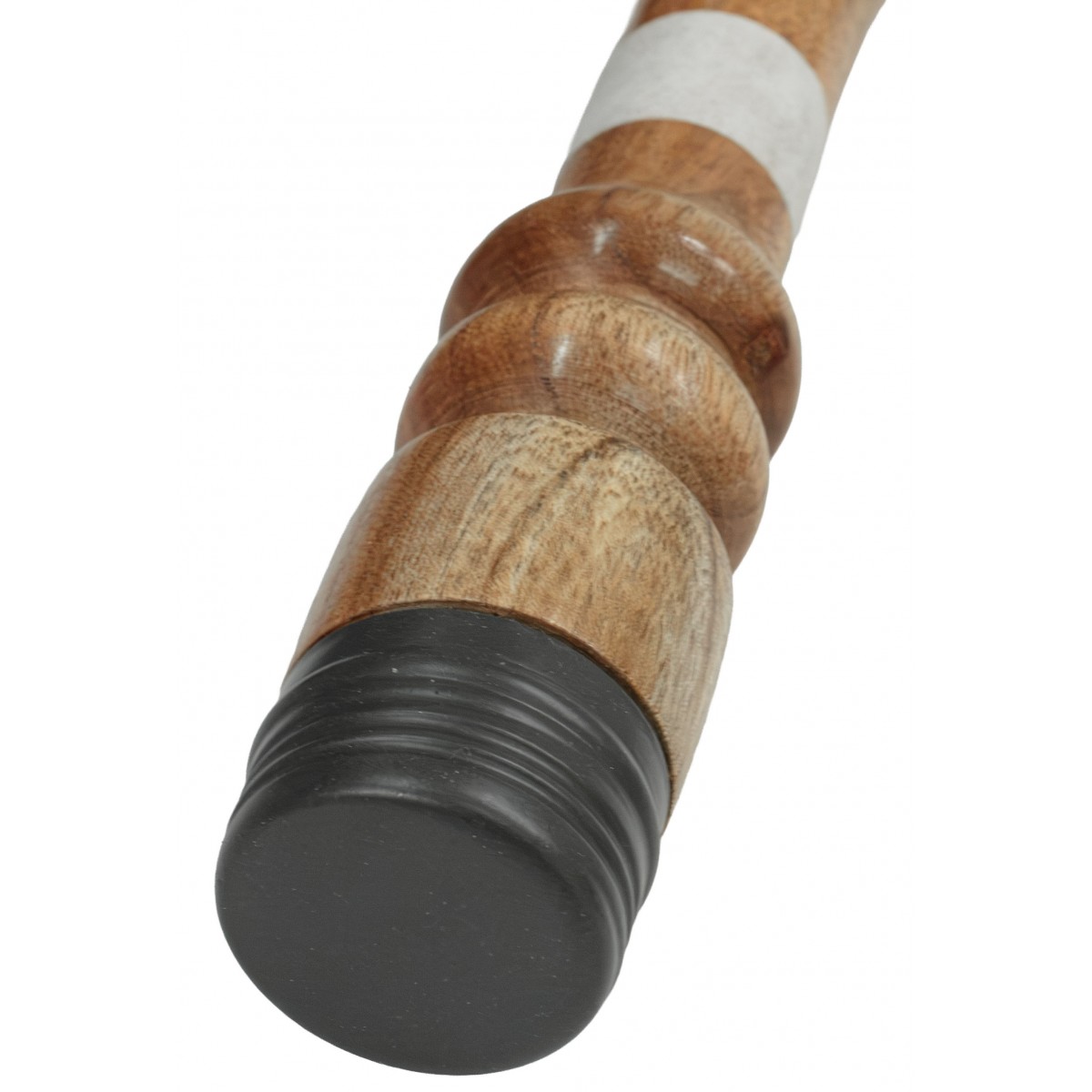
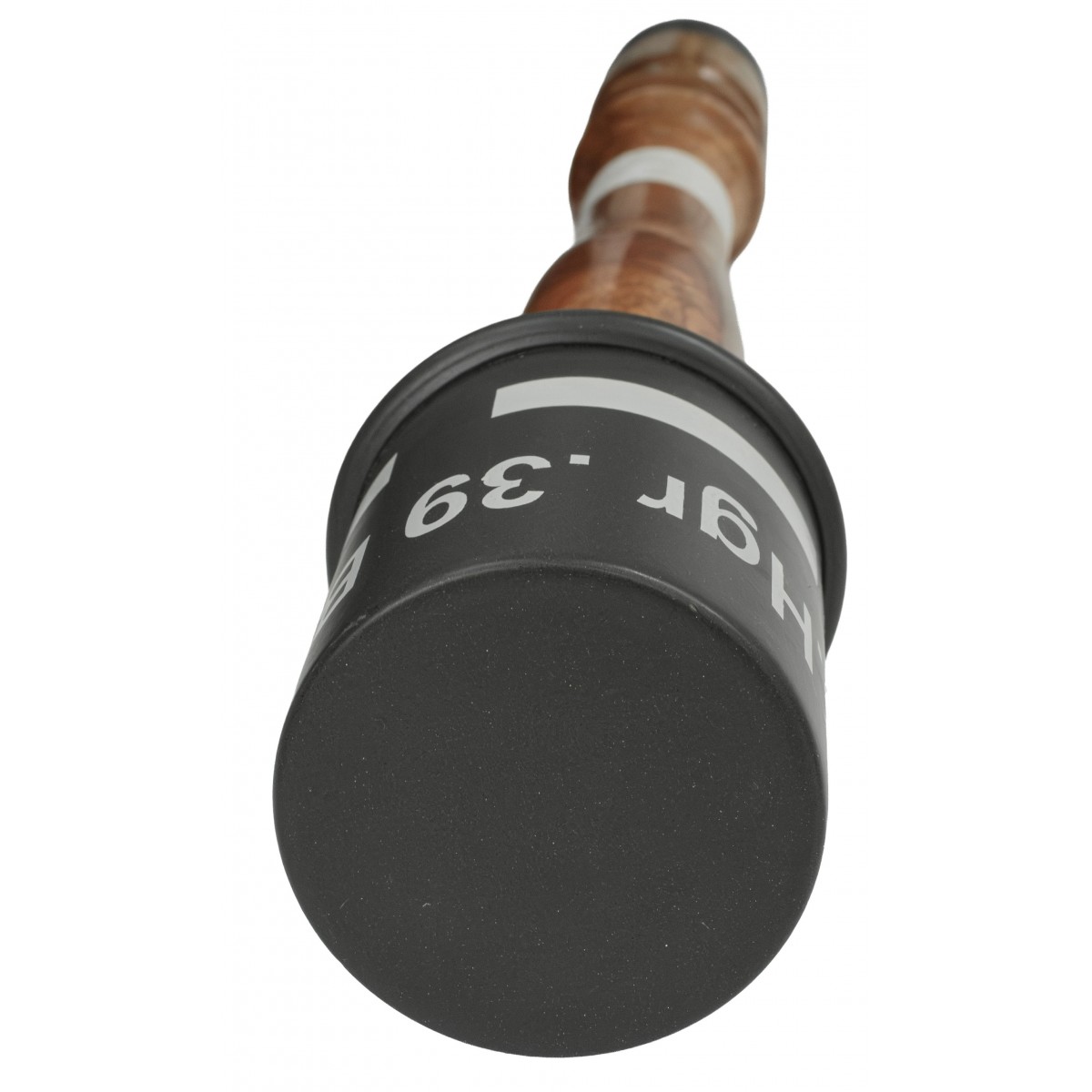
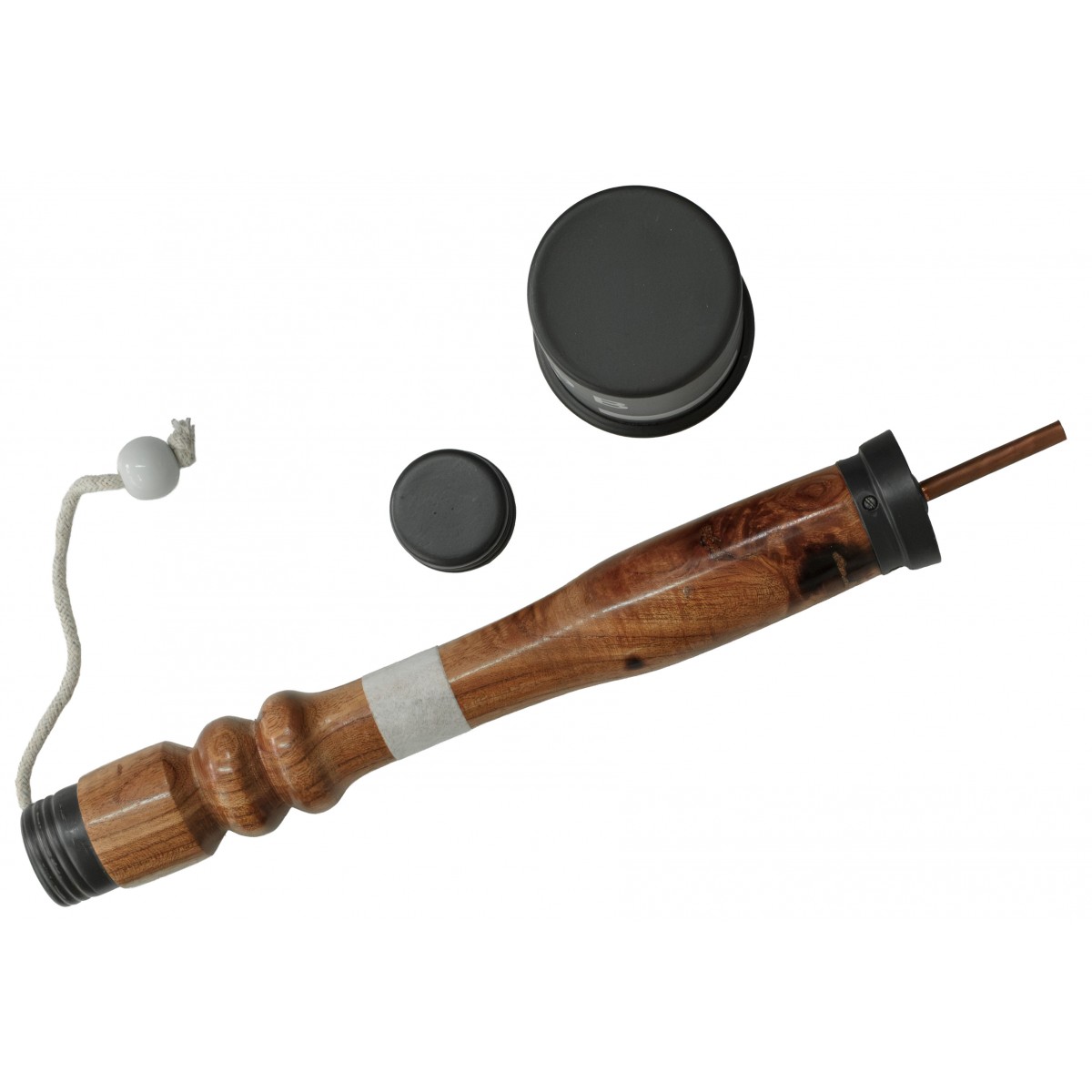
German Nebelhandgranate 39, abbreviated Nb.Hgr.39, used during the Second World War. Although externally similar to the Stielhandgranate 24, it contained a smoke-producing composition. White identification markings, a later grooved wooden handle and smoke vents beneath the head distinguished it from the high-explosive stick grenade.
Product temporarily out of stock.
- Satisfied or refunded: we guarantee 100% secure protection on your purchases
- Free return: return your order free of charge within 30 days from receipt
- Secure payments: pay securely online with PayPal or credit cards

More info
The Nebelhandgranate 39, officially abbreviated Nb.Hgr.39, was a German stick-type smoke grenade intended to create small, short-duration smoke screens. Developed and approved in 1938, it became widely known under its Model 39 designation during the following year and was used by the Wehrmacht throughout the Second World War. It should not be confused with the Eihandgranate 39, which was a compact, egg-shaped explosive hand grenade.
Its external construction was based on the familiar Stielhandgranate 24. The Nb.Hgr.39 consisted of a cylindrical, thin-sheet-metal smoke canister screwed onto a hollow wooden handle. It measured approximately 35.6 centimetres in overall length and weighed about 850 grams when prepared for service. The head contained approximately 420 grams of smoke composition. A plate beneath the canister incorporated eight openings around its edge through which the smoke was discharged.
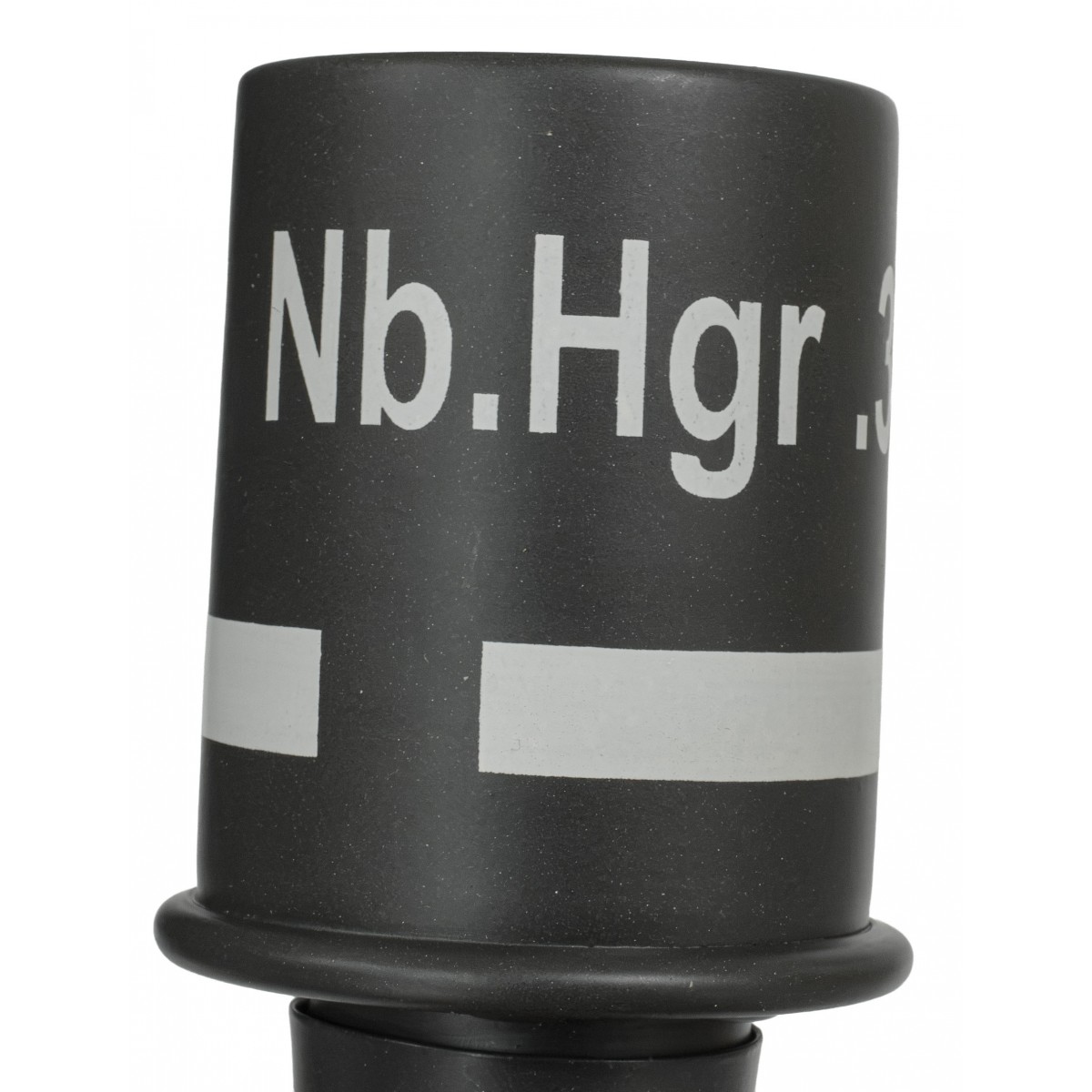
Because its silhouette closely resembled that of the explosive stick grenade, conspicuous visual and tactile identification features were introduced. The olive or grey-green head normally carried the designation Nb.Hgr.39 in white, together with a broken white band. A white stripe approximately two centimetres wide was painted around the central portion of the wooden handle. Later handles were also manufactured with circular grooves near the lower end, allowing the smoke grenade to be identified by touch in darkness or poor visibility.
The ignition assembly consisted of a Brennzünder 39 friction igniter used with a Zündladung N 4 ignition charge. Several seconds elapsed before the grenade began producing a substantial quantity of smoke. Its solid composition was based on zinc powder and hexachloroethane and generated a grey-white cloud for approximately one to two minutes. The density and persistence of the screen depended heavily upon wind, humidity, temperature and the surrounding terrain.
The Nb.Hgr.39 was used to screen infantry advances and withdrawals, cover movement across exposed ground and obscure nearby enemy observation. It could be placed or thrown in front of trenches, bunker entrances, buildings and machine-gun positions. German equipment lists classified it among camouflage and concealment materials because its primary function was to obstruct vision rather than produce an explosive fragmentation effect.
Several forms of the white type marking are documented, including Nb, Nb 39, Nb.Hgr., Nb.Hgr.39 and the later Nb.Hgr.39 B. The markings were frequently applied with a roller stamp, leaving a characteristic pattern of very small paint dots. Fonts, alignment and orientation varied between manufacturers, and period examples are known with upside-down or unevenly positioned lettering.
The Nb.Hgr.39 B, introduced around 1942, retained essentially the same external construction but used a modified proportion of the ingredients in its smoke composition. The metal head and wooden handle could be manufactured by different subcontractors before final filling and assembly. As a result, maker codes and dates found on the two components do not necessarily match. The head could also carry the final assembler’s code, production year and lot number.
Fifteen smoke grenades were transported in a purpose-made carrying crate, with the igniters and ignition charges packed separately. The crate followed the general construction of the Stielhandgranate 24 container but was identified by white stripes. Later in the war, the Nebelhandgranate 39 was supplemented and progressively replaced in production by more compact designs, including the Nebelhandgranate 41 and the Nebel-Eihandgranate 42.
Data sheet
| Width | 6 cm |
| Lenght | 36 cm |
| Weight | 303.4 gr |
| Material | Wood, Metal |
| Disclaimer | Ornamental item devoid of any function, completely inert. A scenic item intended for museum mannequins. |
30 other products in the same category:

Customers who bought this product also bought:
Field and Personal Equipment
- Germany
- Uniforms
- Medals, Orders and Decorations
- Badges and Pins
- ID Tags
- Arm Shields
- Helmets
- Helmet Decals
- Visor Caps and Hats
- Cap and Helmet Badges
- Collar Tabs Badges
- Collar Tabs, Shoulder Boards and Epaulettes
- Arm Bands
- Division Cuff Titles
- Buckles And Belts
- Buttons For Uniforms
- Stamps
- Gorgets
- Rings
- SS Honour Ring in 925 Silver - Collector's Set
- Poletops
- Flags
- Daggers and Knives (Ornamental)
- Field Marshal Batons
- Field and Personal Equipment
- Service Watches
- Presentation Cases
- Documents and Award Letters
- Busts, Eagles, Lighters and Miscellaneous
- Croatian and Ustasha Militaria
- Denazified Articles
- Commemorative Necklaces
- Spare Parts, Small Parts and Accessories
- Italy
- Medals and Decorations
- Brevets And Badges
- Battle Shields and Tags
- Gorgets
- Visor Caps and Hats
- Cap and Helmet Badges
- Helmets Decals
- Friezes for Collar Tabs
- Collar Tabs, Shoulder Boards and Epaulettes
- Buckles
- Belts
- Buttons For Uniforms
- Rings
- Poletops
- Italian Resistance
- Keyrings
- Wallshields
- Daggers and Knives
- Flags
- Busts and Eagles
- Souvenirs
- Commemorative Necklaces
- Imperial Germany
- Soviet Union
- Other Countries