
No products
Product successfully added to your shopping cart
There are 0 items in your cart. There is 1 item in your cart.
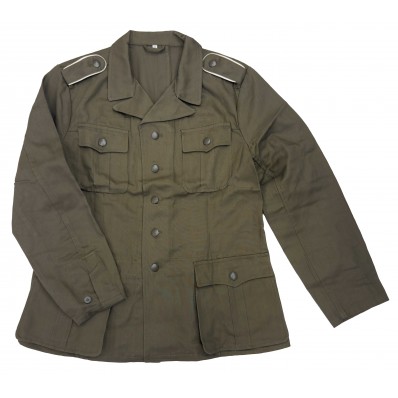
M40 Tropical Field Tunic
New
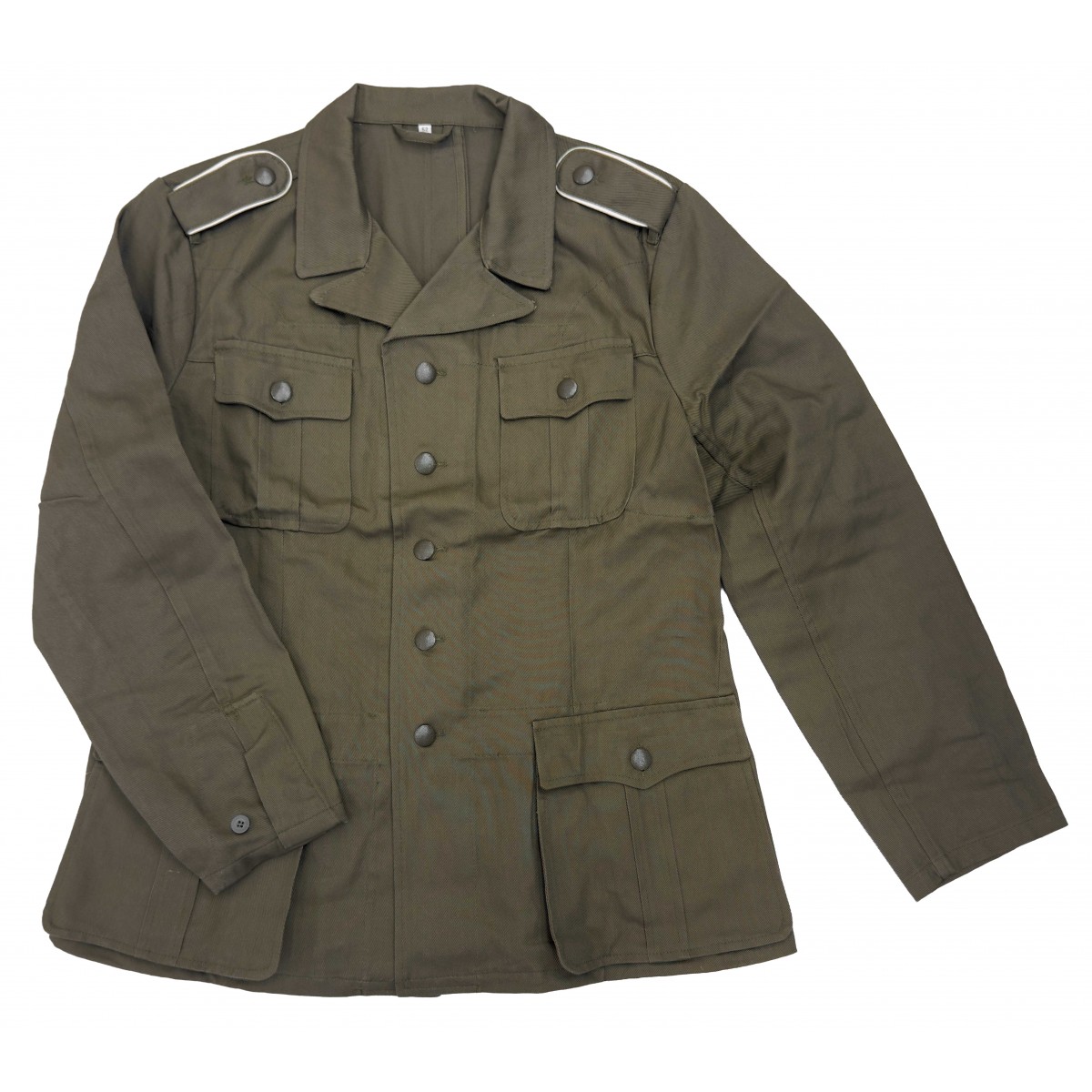
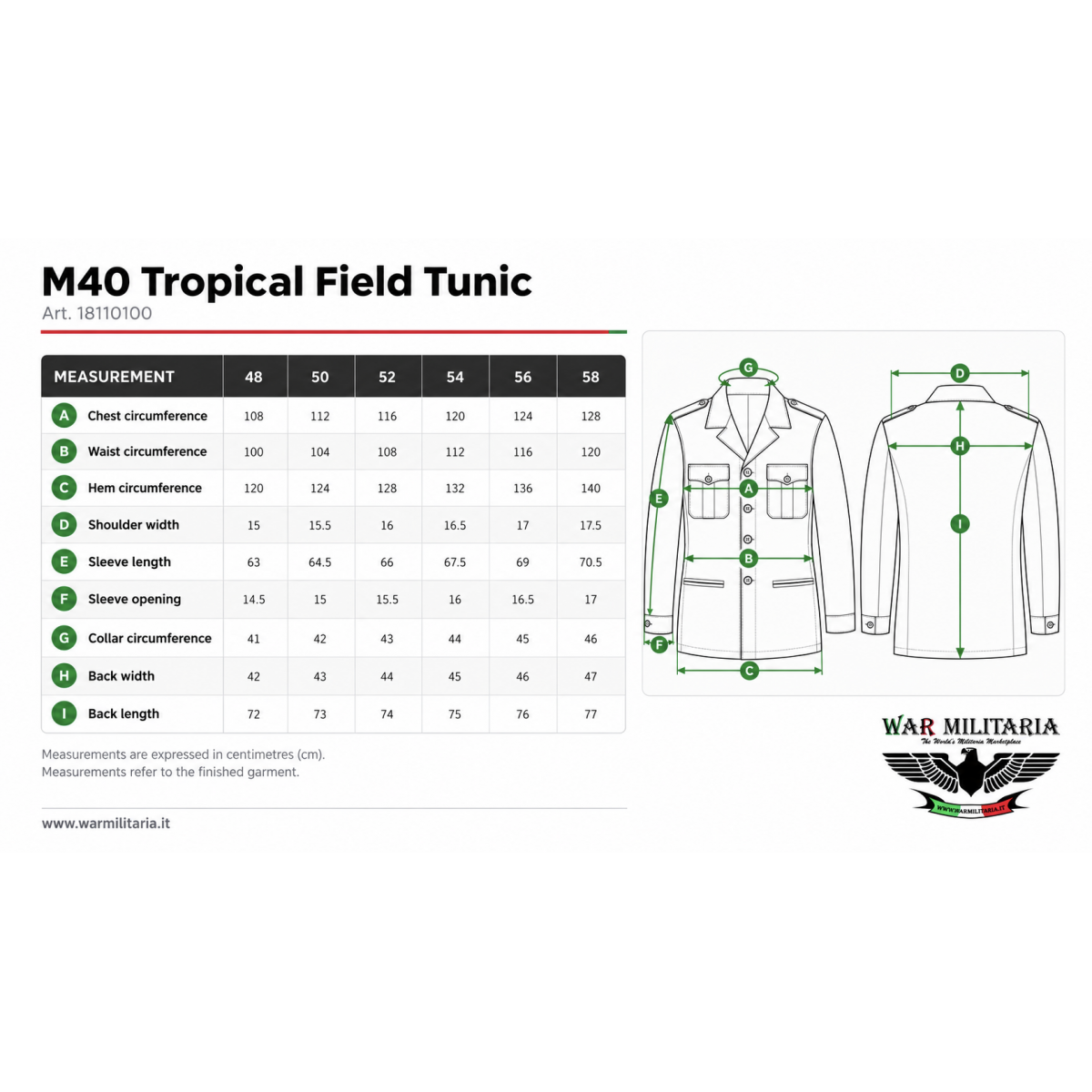
M40 Tropical Field Tunic of the Heer, developed for service in hot and tropical climates and made famous during the North African campaign. Distinguished by its five-button front, four pleated patch pockets, open collar and characteristic olive-green appearance, which could fade dramatically after prolonged exposure to intense sunlight.
Warning: Last items in stock!
- Satisfied or refunded: we guarantee 100% secure protection on your purchases
- Free return: return your order free of charge within 30 days from receipt
- Secure payments: pay securely online with PayPal or credit cards

More info
The M40 Tropical Field Tunic, generally referred to in German as the Tropenfeldbluse, is one of the most distinctive garments associated with the tropical uniform of the Heer during the Second World War. Developed during late 1940 and early 1941 in anticipation of German operations in North Africa, it provided an alternative to the standard European field tunic for troops serving in extremely hot conditions.
The deployment of German units to Libya and the formation of the force that became famous as the Deutsches Afrikakorps created an urgent requirement for an entire system of tropical clothing and equipment. Extreme heat, intense sunlight, dust and sand presented very different challenges from those encountered in Central Europe.
The Tropenfeldbluse retained much of the recognizable appearance of contemporary German Army field dress while incorporating a construction better suited to warm climates. Its cut was practical and comparatively loose, improving ventilation and allowing greater freedom of movement.
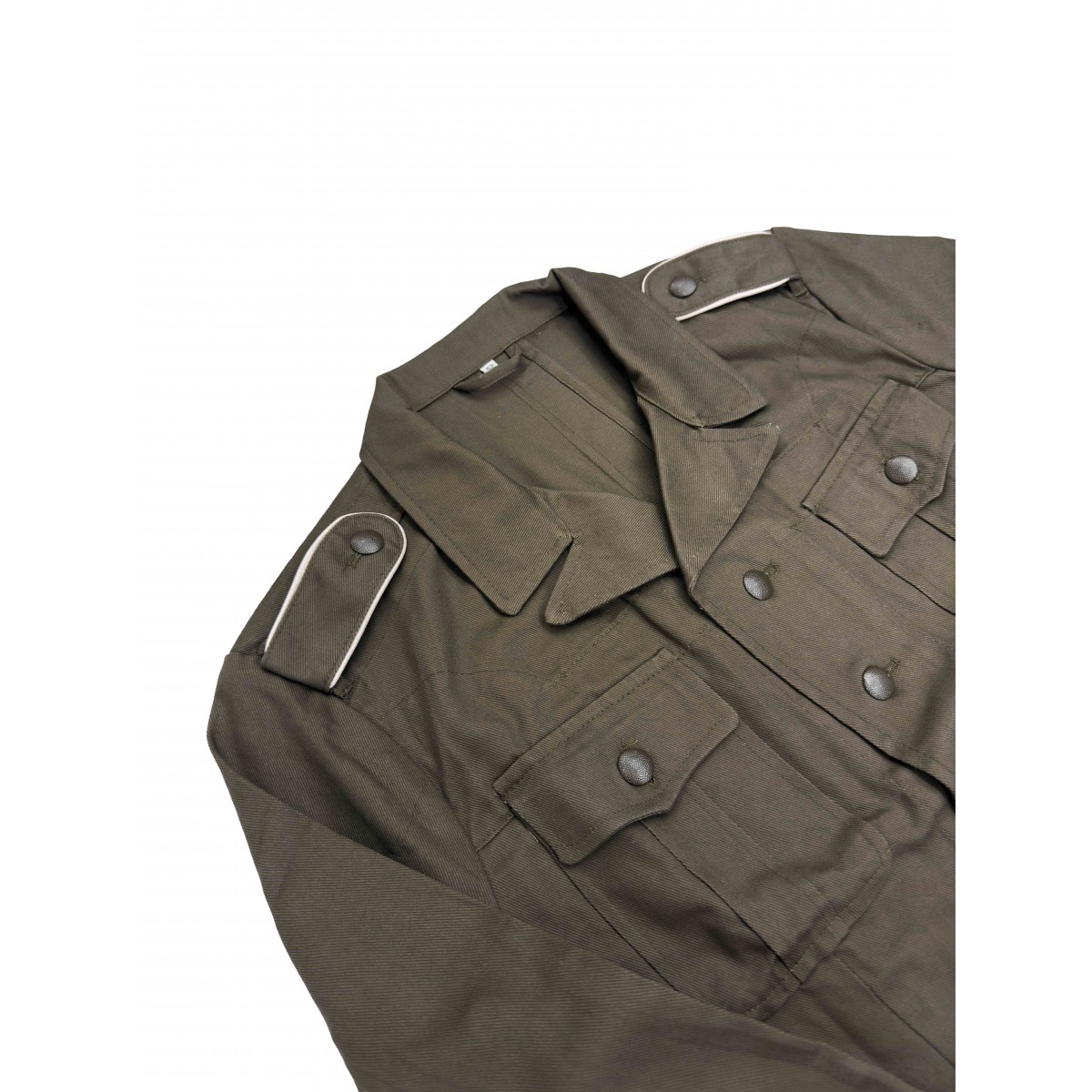
The collar could be worn open with visible lapels, producing one of the most recognizable features of German tropical dress in wartime photographs.
The front was secured by five buttons, while the tunic incorporated four large external patch pockets, two on the breast and two at skirt level.
Each pocket featured a characteristic vertical central pleat, allowing it to expand when filled, together with a shaped button-fastened flap. This relatively elaborate pocket arrangement is one of the principal identifying features of the early tropical field tunic.
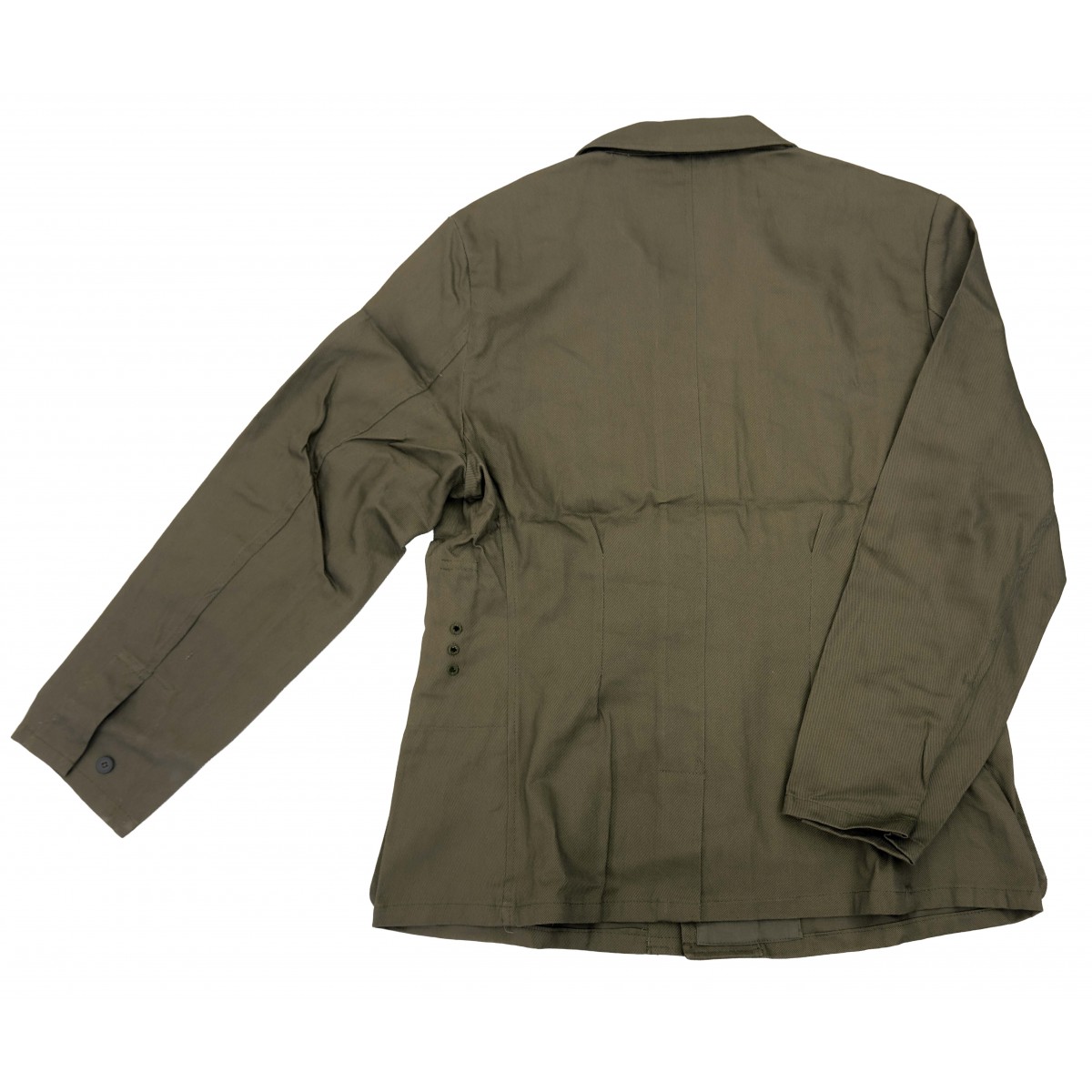
Original examples frequently display olive-painted buttons, many attached by removable retaining rings. This method of attachment could simplify maintenance and laundering of a garment expected to require frequent cleaning under hot and dusty conditions.
Loops and buttons at the shoulders accommodated removable tropical shoulder straps. These retained the appropriate Waffenfarbe, or branch-of-service colour, allowing the soldier's arm or specialist branch to remain identifiable.
Special insignia were also developed to complement the tropical uniform. The breast carried a tropical version of the Army national emblem, while appropriate tropical collar Litzen were worn on the collar.
Their colours were selected to harmonize with the tropical uniform and differed noticeably from many of the insignia associated with the standard field-grey uniform worn in Europe.
Internally, the tunic retained the practical features expected of operational military clothing, including reinforcement and arrangements associated with carrying field equipment. Regulation examples could also include a small pocket for the individual field dressing.
One of the most fascinating aspects of the Tropenfeldbluse is its colour. Newly manufactured examples could originally appear distinctly olive green, olive khaki or brownish olive. The pale sand colour so strongly associated with the Afrika Korps in popular imagery was therefore not necessarily the original appearance of a newly issued tunic.
The North African environment could transform the garment remarkably quickly. Intense sunlight, dust, perspiration and repeated washing progressively bleached the cloth. A strongly olive-green tunic could become light khaki after prolonged service and, in extreme cases, fade to an almost pale beige or off-white appearance.
Surviving original examples consequently display an extraordinary range of shades. Two garments that may originally have been relatively similar could look dramatically different after months of exposure and service.
Although inseparably associated today with the Deutsches Afrikakorps, tropical field uniforms were not restricted exclusively to North Africa. Their use was subsequently extended to Italy, the Balkans, the Mediterranean region and other southern areas where lighter clothing was advantageous.
The practical importance of tropical clothing therefore continued even after the conclusion of the North African campaign.
The designation M40 is now widely used by collectors and uniform historians to classify this early form of tropical field tunic and distinguish it from later developments. Original garments were not normally identified simply by a prominent “M40” model marking. Their interiors instead carried combinations of size stamps, manufacturer markings, clothing-depot codes and acceptance dates.
The M40 Tropical Field Tunic therefore occupies a particularly interesting position in the development of German wartime field dress. It retained many visual elements associated with early-war military tailoring while adapting them to the practical requirements of one of the most demanding climates in which German forces operated.
Historical curiosity: the famous sand-coloured appearance of the Afrika Korps was partly created by the conditions in which the uniforms were actually worn. Many tropical tunics were originally issued in a noticeably olive-green shade, rather than the pale beige commonly imagined today. Months under the intense North African sun, combined with washing and constant field use, could bleach them dramatically. Some surviving original tunics have faded from green to extremely pale khaki and even near-white shades. The colour of a heavily worn Tropenfeldbluse could therefore become a visible record of its exposure to the desert environment.
Data sheet
| Material | Upper: 100% Cotton Lining: 100% Cotton |
17 other products in the same category:

Customers who bought this product also bought:
Uniforms
- Germany
- Uniforms
- Medals, Orders and Decorations
- Badges and Pins
- ID Tags
- Arm Shields
- Helmets
- Helmet Decals
- Visor Caps and Hats
- Cap and Helmet Badges
- Collar Tabs Badges
- Collar Tabs, Shoulder Boards and Epaulettes
- Arm Bands
- Division Cuff Titles
- Buckles And Belts
- Buttons For Uniforms
- Stamps
- Gorgets
- Rings
- SS Honour Ring in 925 Silver - Collector's Set
- Poletops
- Flags
- Daggers and Knives (Ornamental)
- Field Marshal Batons
- Field and Personal Equipment
- Service Watches
- Presentation Cases
- Documents and Award Letters
- Busts, Eagles, Lighters and Miscellaneous
- Croatian and Ustasha Militaria
- Denazified Articles
- Commemorative Necklaces
- Spare Parts, Small Parts and Accessories
- Italy
- Medals and Decorations
- Brevets And Badges
- Battle Shields and Tags
- Gorgets
- Visor Caps and Hats
- Cap and Helmet Badges
- Helmets Decals
- Friezes for Collar Tabs
- Collar Tabs, Shoulder Boards and Epaulettes
- Buckles
- Belts
- Buttons For Uniforms
- Rings
- Poletops
- Italian Resistance
- Keyrings
- Wallshields
- Daggers and Knives
- Flags
- Busts and Eagles
- Souvenirs
- Commemorative Necklaces
- Imperial Germany
- Soviet Union
- Other Countries