
No products
Product successfully added to your shopping cart
There are 0 items in your cart. There is 1 item in your cart.
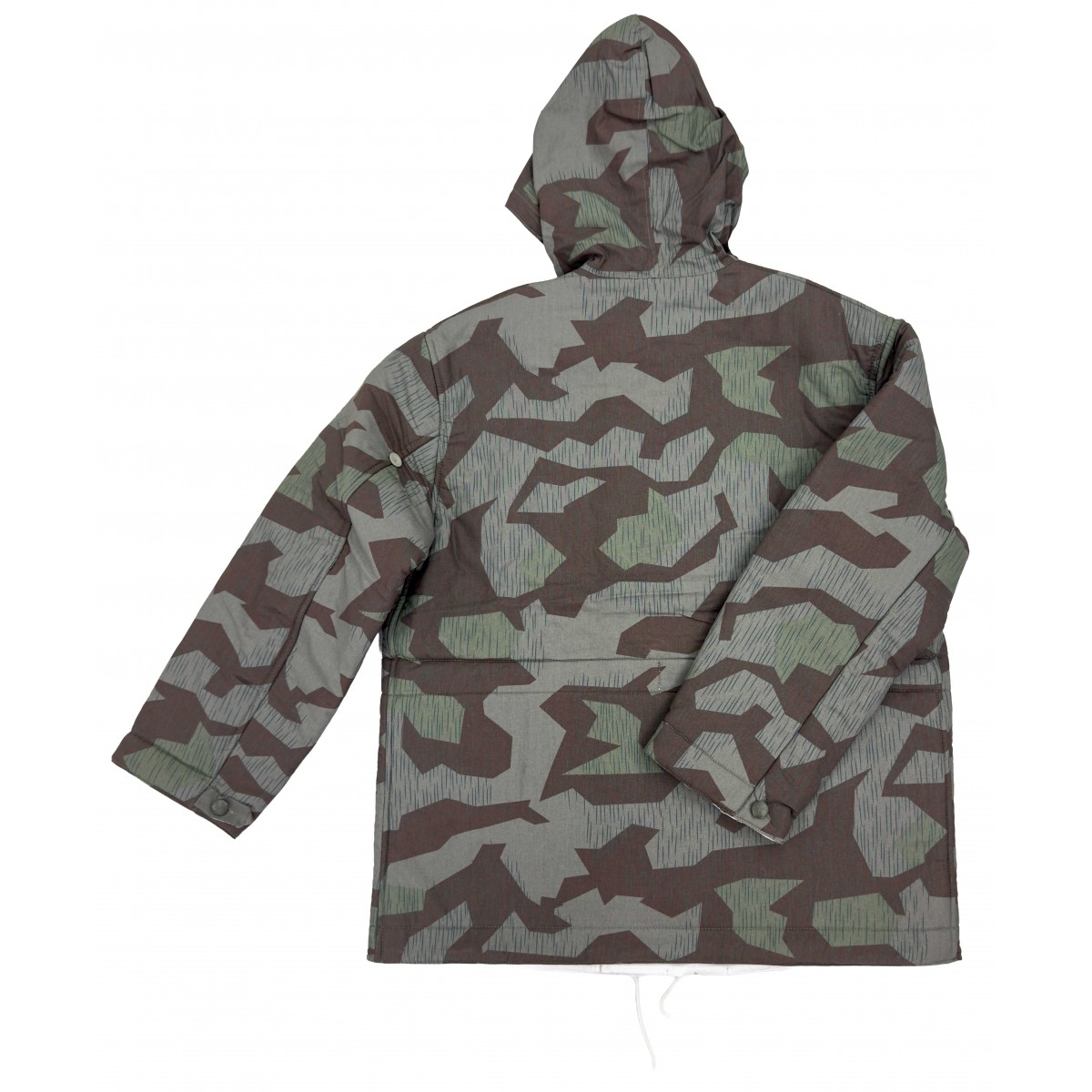
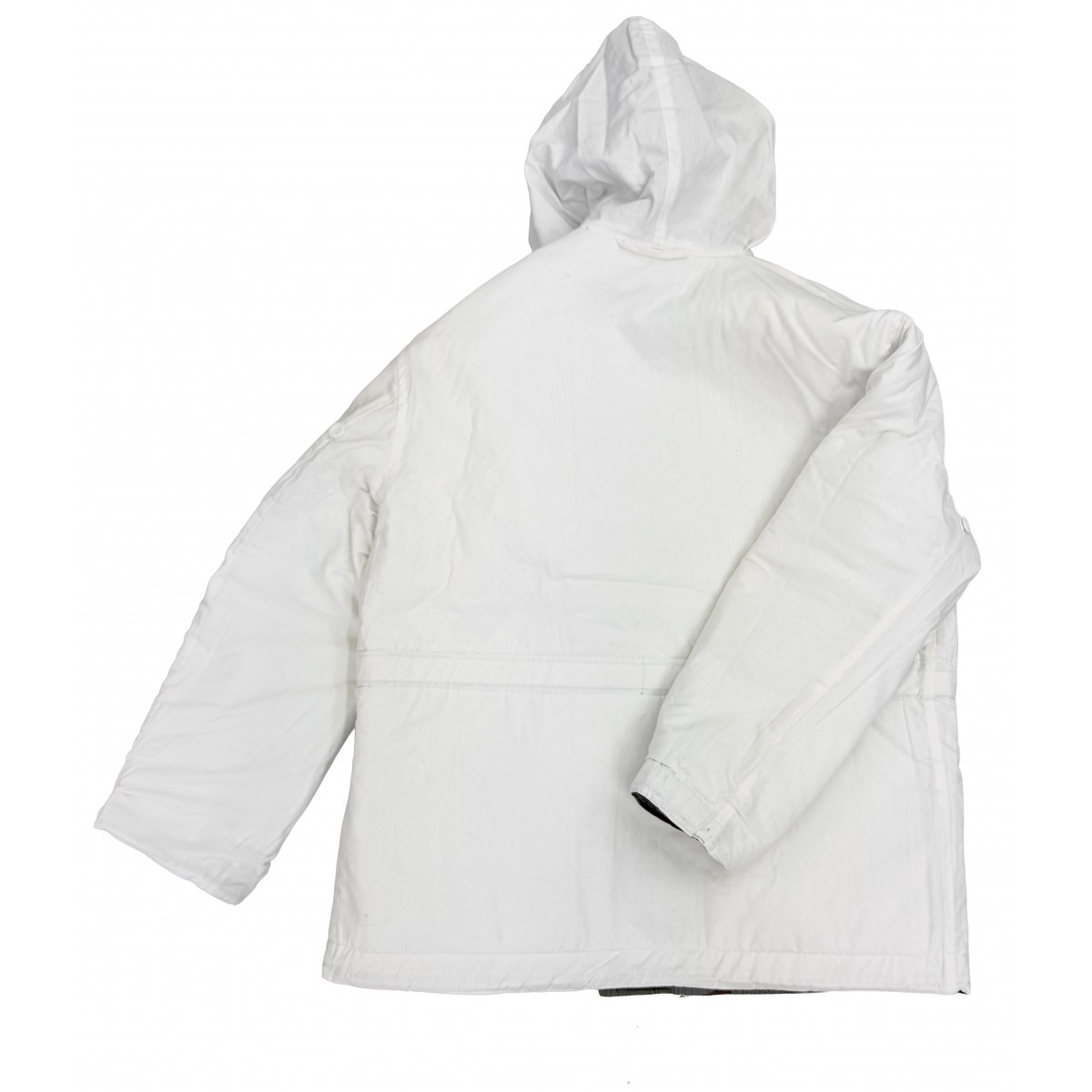
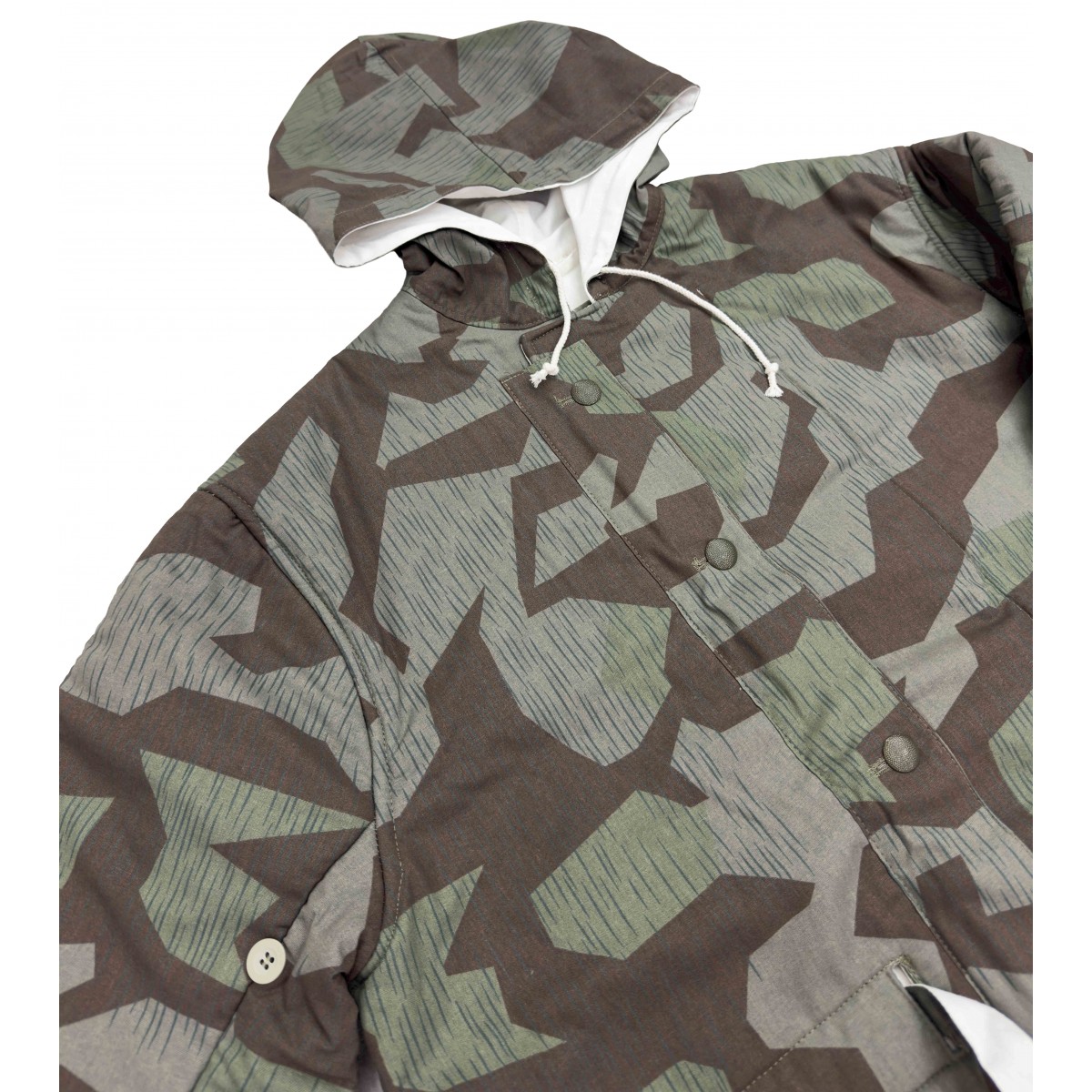
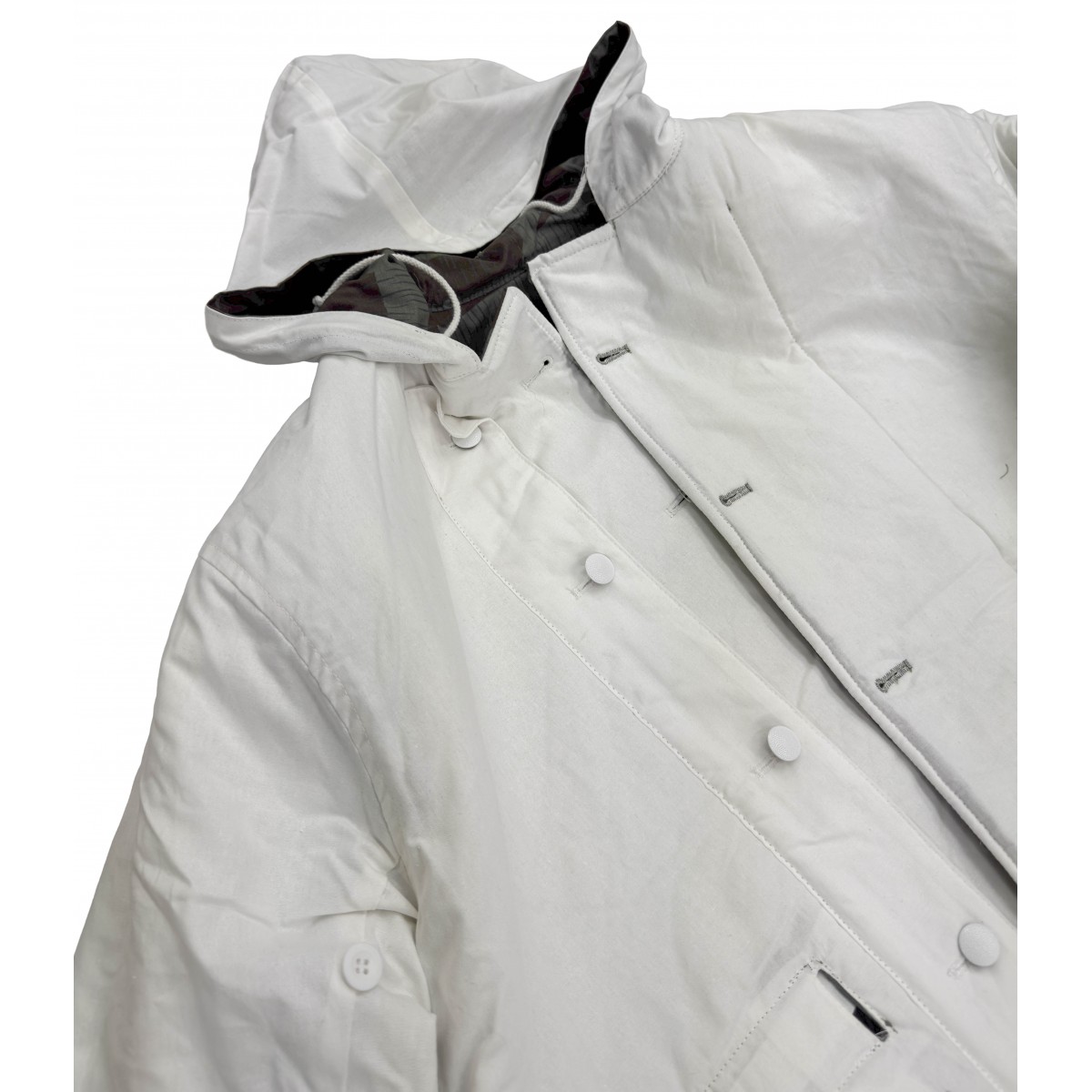
Splittertarn Reversible Winter Jacket
New
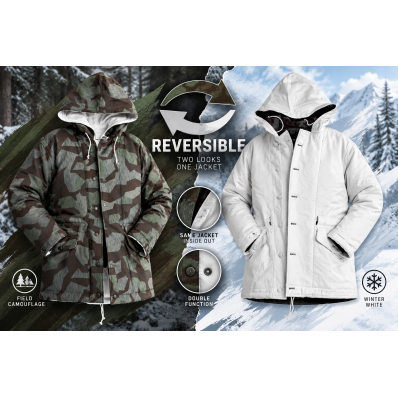
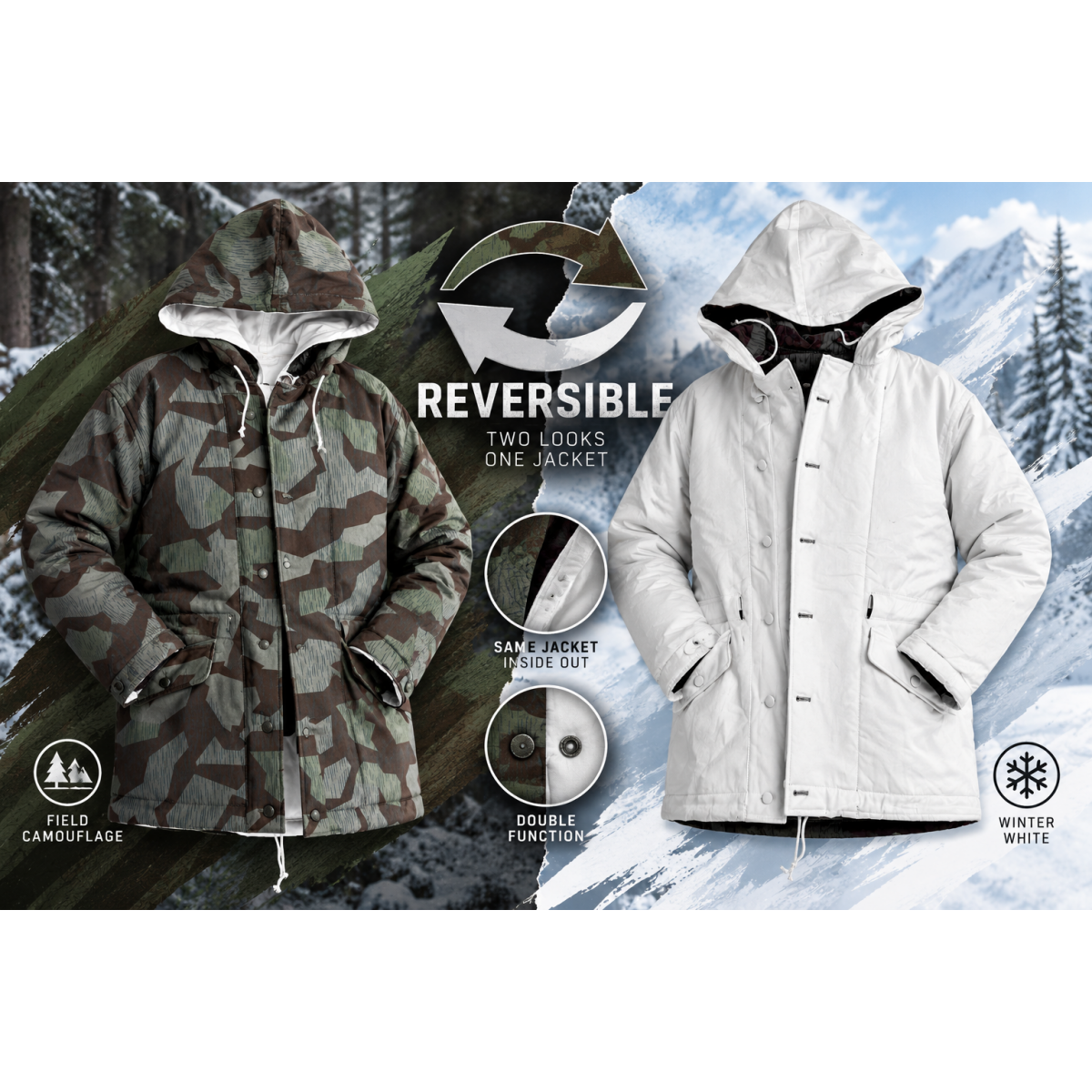
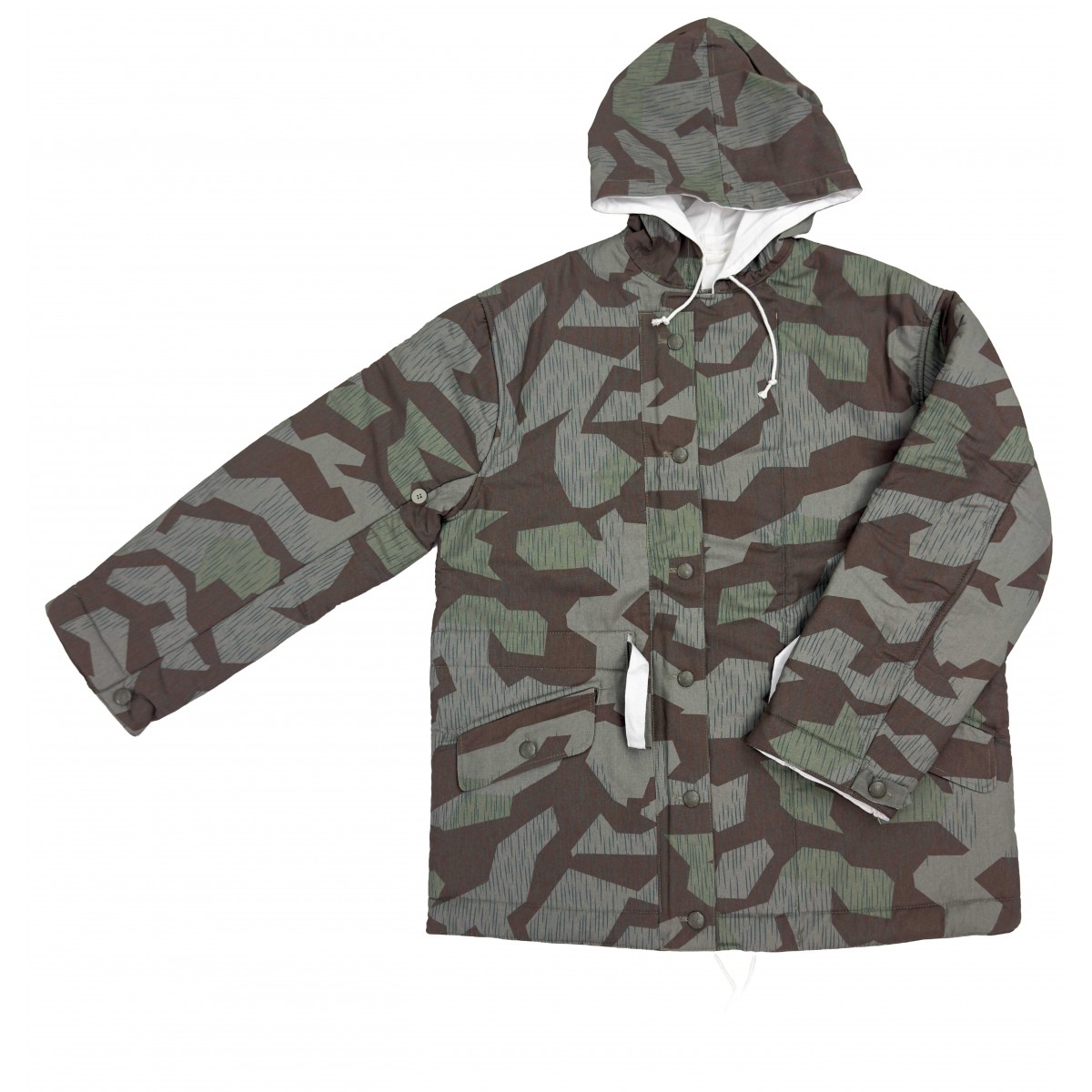
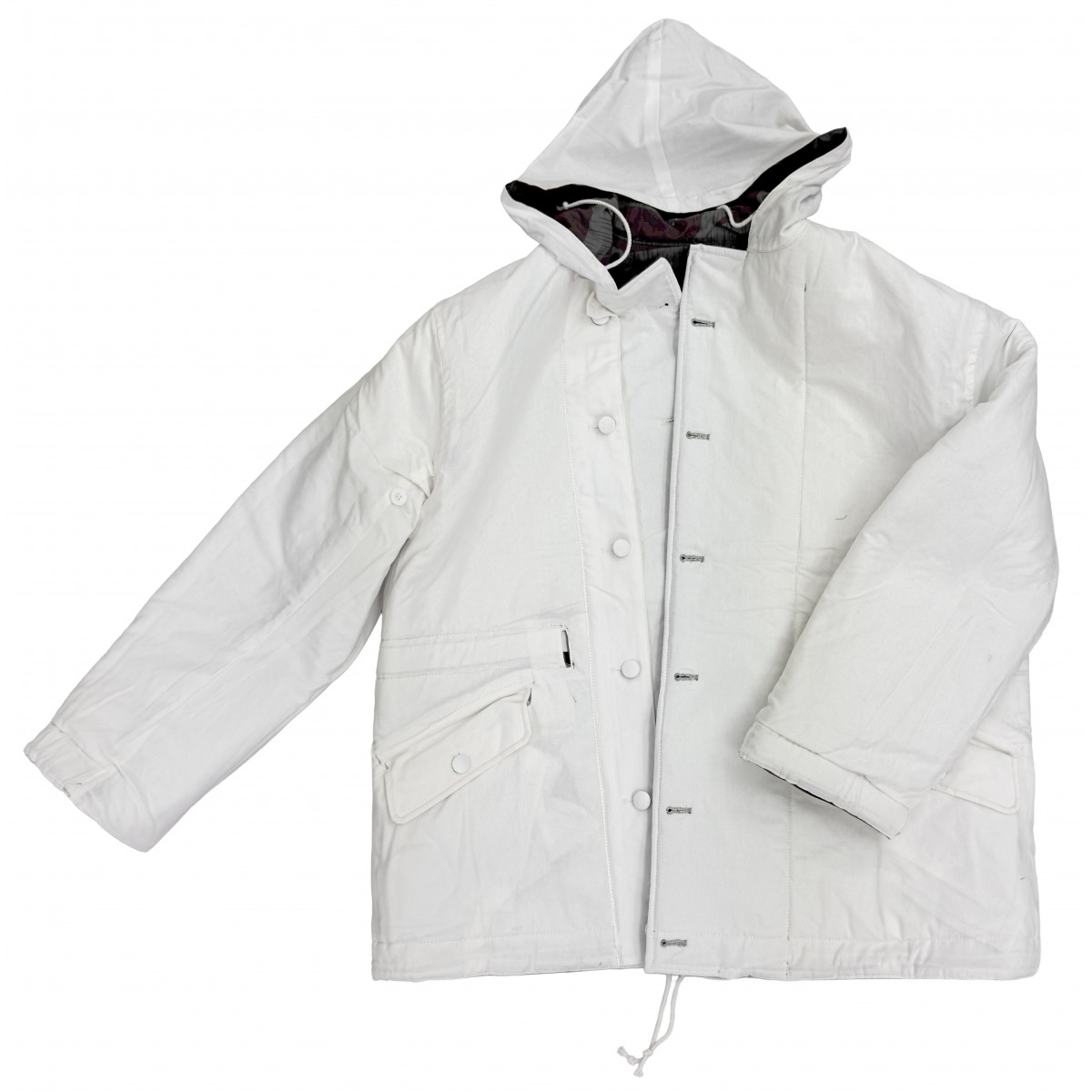
Reversible winter jacket of the Heer featuring Splittertarn camouflage on one side and snow white on the reverse, with thermal insulation, large hood, front pockets and an adjustable waist. Developed for the severe conditions of the Eastern Front, it combined cold-weather protection and adaptable seasonal camouflage in a single garment.
Warning: Last items in stock!
- Satisfied or refunded: we guarantee 100% secure protection on your purchases
- Free return: return your order free of charge within 30 days from receipt
- Secure payments: pay securely online with PayPal or credit cards

More info
The Splittertarn Reversible Winter Jacket, known in German as a Winter-Wendejacke, represents one of the most significant developments in Heer cold-weather combat clothing during the Second World War. Its origins were directly connected to the severe lessons learned during the first winter on the Eastern Front in 1941-1942.
The winter clothing initially available to German forces proved inadequate for prolonged operations under the extreme conditions encountered in the Soviet Union. Temperatures far below freezing, strong winds, snow and extended periods spent outdoors demanded clothing far beyond the capabilities of the standard field uniform and conventional greatcoat.
A new system of specialized winter clothing was consequently developed to provide soldiers with substantially improved protection.
The resulting Winteranzug consisted of several coordinated garments designed to be worn over the ordinary field uniform, including a winter jacket, matching trousers, protective headgear and mittens.
The jacket was deliberately cut large and generously proportioned so that it could be worn over the Feldbluse and other insulating layers without excessively restricting movement.
Between the outer fabric layers was a substantial insulating layer, designed to retain body heat and provide protection against the severe temperatures encountered during winter operations.
The defining characteristic of this version, however, was its fully reversible construction. One side displayed the distinctive Splittertarn camouflage pattern, while the reverse was white for snow camouflage.
This gave the soldier two completely different forms of concealment in a single garment. The camouflage side could be worn outward in woodland, exposed earth or mixed terrain, while the jacket could be reversed to expose the white side when snow covered the surrounding landscape.
The Splittertarn pattern itself originated from the Buntfarbenaufdruck 31 camouflage introduced in 1931 and originally most closely associated with the Zeltbahn.
Its distinctive design combined sharp-edged green and brown geometric shapes over a lighter background, together with the familiar groups of narrow vertical strokes often described as “rain” lines.
These elements helped break up large continuous areas of colour and reduce the visual recognition of the wearer's outline. When applied to a bulky winter garment, the pattern also helped disguise the enlarged silhouette created by heavy insulated clothing.
The jacket incorporated a large integral hood designed to protect the head and neck from wind, snow and low temperatures. Its generous dimensions allowed it to be worn over additional headgear and, when required, in conjunction with a helmet.
Drawcords around the hood allowed the opening to be reduced around the face, improving both weather protection and fit.
The front was secured by a series of buttons, with overlapping sections helping form an additional barrier against wind penetrating through the closure.
Because the entire garment was intended to be reversible, functional components had to remain usable regardless of which side was facing outward.
An adjustable drawcord at the waist allowed the otherwise loose jacket to be gathered closer to the body. This helped retain warmth, reduced unnecessary movement of the fabric and made the garment easier to wear with field equipment.
Two front pockets provided storage while remaining compatible with the reversible construction.
The cuffs could also be adjusted, helping close the openings around the wrists and reducing the entry of cold air and snow.
Some historical variants incorporated additional reinforcement in high-wear areas, particularly around the elbows, reflecting the demanding conditions in which the garments were expected to be used.
Unlike the standard Feldbluse, the Winter-Wendejacke was not principally designed as a formal uniform garment on which insignia and distinctions were prominently displayed. Its priorities were entirely practical: warmth, wind protection, freedom of movement and camouflage.
German reversible winter clothing evolved considerably during the war. Earlier garments could feature a plain grey or green outer surface with a white reverse. As the system developed, camouflage patterns were increasingly incorporated into the outer face.
Among the best-known Heer versions were jackets produced in Splittertarn, followed by garments using various forms of Sumpftarn camouflage.
The reversible concept was especially valuable on the Eastern Front, where weather could transform the appearance of the landscape extremely quickly. Ground that had previously consisted of vegetation, mud and exposed earth could become almost completely white after heavy snowfall.
Instead of carrying an entirely separate snow camouflage garment, the wearer could simply reverse the jacket and adapt his appearance to the new surroundings.
The winter jacket was normally accompanied by matching reversible winter trousers, creating an insulated outer suit that covered most of the standard uniform beneath.
Together, the two garments provided a substantial protective layer while still allowing sufficient mobility for normal field duties.
Surviving originals display considerable variation in fabric, camouflage shade, insulation and construction details. German wartime production relied on numerous manufacturers, and increasing material shortages meant that available fabrics had to be used as efficiently as possible.
Original jackets are even documented with individual sections made from different camouflage fabrics, a striking illustration of the increasingly pragmatic use of available materials during the later stages of the conflict.
The Splittertarn Reversible Winter Jacket therefore represents much more than a camouflage garment. It was a direct response to the demands of one of the harshest environments faced by German troops and combined thermal protection, wind resistance, practical field construction and two different camouflage configurations in a single piece of equipment.
Historical curiosity: the rapid development of improved reversible winter clothing was one of the direct consequences of the disastrous experience of the 1941-1942 Russian winter. The solution was remarkably practical: rather than issuing a separate snow camouflage layer, the same insulated jacket could be turned from Splittertarn camouflage to pure winter white in moments. On a front where heavy snowfall could completely transform the landscape overnight, the soldier could therefore change his camouflage without carrying a second complete outer uniform.
Data sheet
| Material | Upper: 100% Cotton Lining: 100% Cotton Padding: 100% Polyester (440 g/qm) |
17 other products in the same category:

Customers who bought this product also bought:
Uniforms
- Germany
- Uniforms
- Medals, Orders and Decorations
- Badges and Pins
- ID Tags
- Arm Shields
- Helmets
- Helmet Decals
- Visor Caps and Hats
- Cap and Helmet Badges
- Collar Tabs Badges
- Collar Tabs, Shoulder Boards and Epaulettes
- Arm Bands
- Division Cuff Titles
- Buckles And Belts
- Buttons For Uniforms
- Stamps
- Gorgets
- Rings
- SS Honour Ring in 925 Silver - Collector's Set
- Poletops
- Flags
- Daggers and Knives (Ornamental)
- Field Marshal Batons
- Field and Personal Equipment
- Service Watches
- Presentation Cases
- Documents and Award Letters
- Busts, Eagles, Lighters and Miscellaneous
- Croatian and Ustasha Militaria
- Denazified Articles
- Commemorative Necklaces
- Spare Parts, Small Parts and Accessories
- Italy
- Medals and Decorations
- Brevets And Badges
- Battle Shields and Tags
- Gorgets
- Visor Caps and Hats
- Cap and Helmet Badges
- Helmets Decals
- Friezes for Collar Tabs
- Collar Tabs, Shoulder Boards and Epaulettes
- Buckles
- Belts
- Buttons For Uniforms
- Rings
- Poletops
- Italian Resistance
- Keyrings
- Wallshields
- Daggers and Knives
- Flags
- Busts and Eagles
- Souvenirs
- Commemorative Necklaces
- Imperial Germany
- Soviet Union
- Other Countries