
No products
Product successfully added to your shopping cart
There are 0 items in your cart. There is 1 item in your cart.
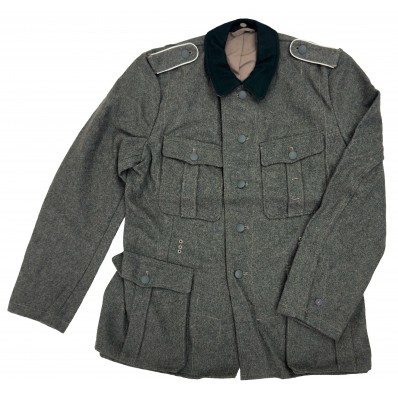
M36 Field Tunic
New
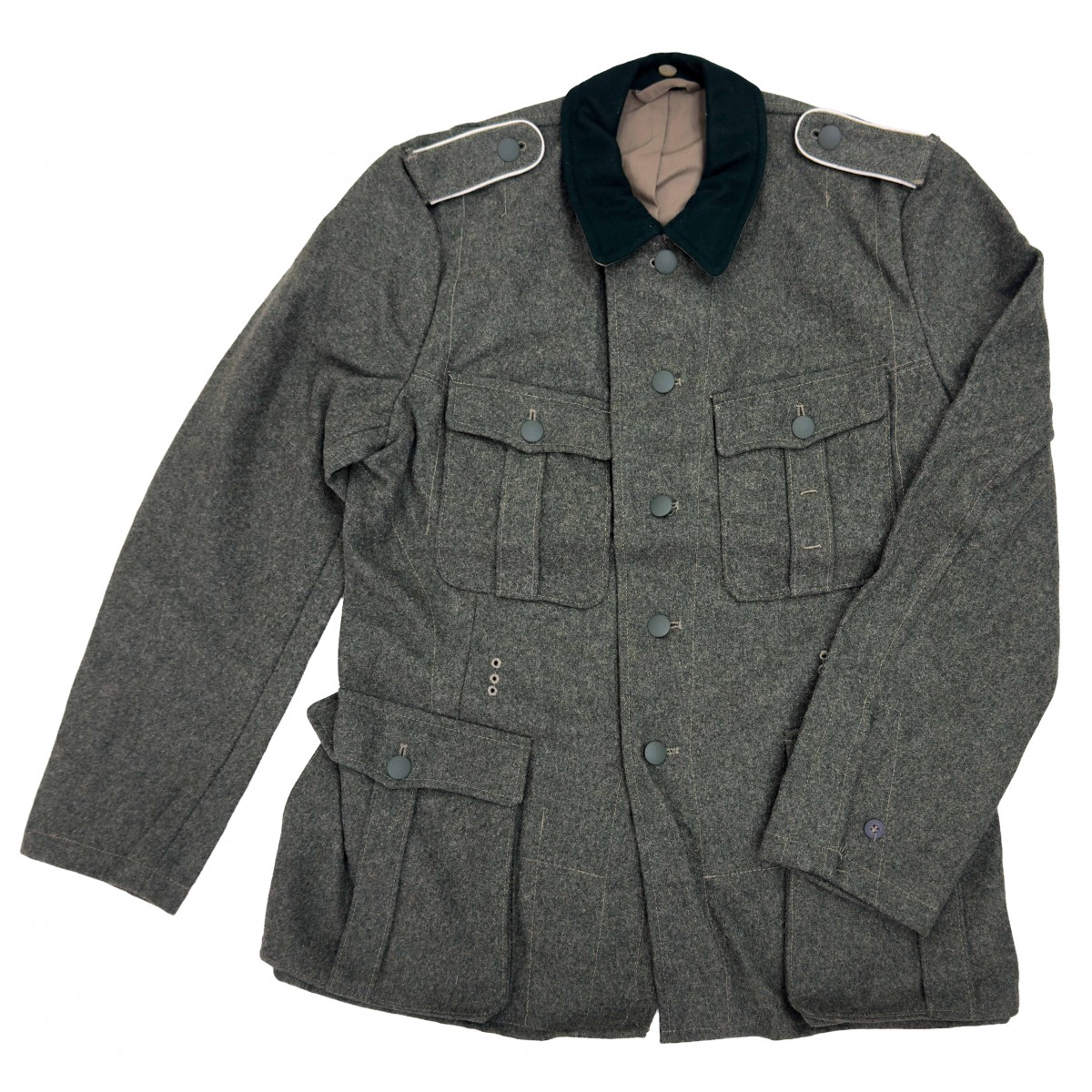
M36 Field Tunic of the Heer, distinguished by its contrasting dark-green collar, five-button single-breasted front and four external pockets with central pleats and shaped flaps. One of the most recognizable patterns of German field and service dress worn during the pre-war period and the opening campaigns of the Second World War.
Warning: Last items in stock!
- Satisfied or refunded: we guarantee 100% secure protection on your purchases
- Free return: return your order free of charge within 30 days from receipt
- Secure payments: pay securely online with PayPal or credit cards

More info
The M36 Field Tunic, historically known as the Feldbluse, represents one of the most distinctive patterns of field uniform worn by the German Army during the years immediately preceding the Second World War. Developed from the field blouses introduced during the early 1930s, it combined a relatively formal and carefully tailored appearance with practical features intended for everyday military service and operational use.
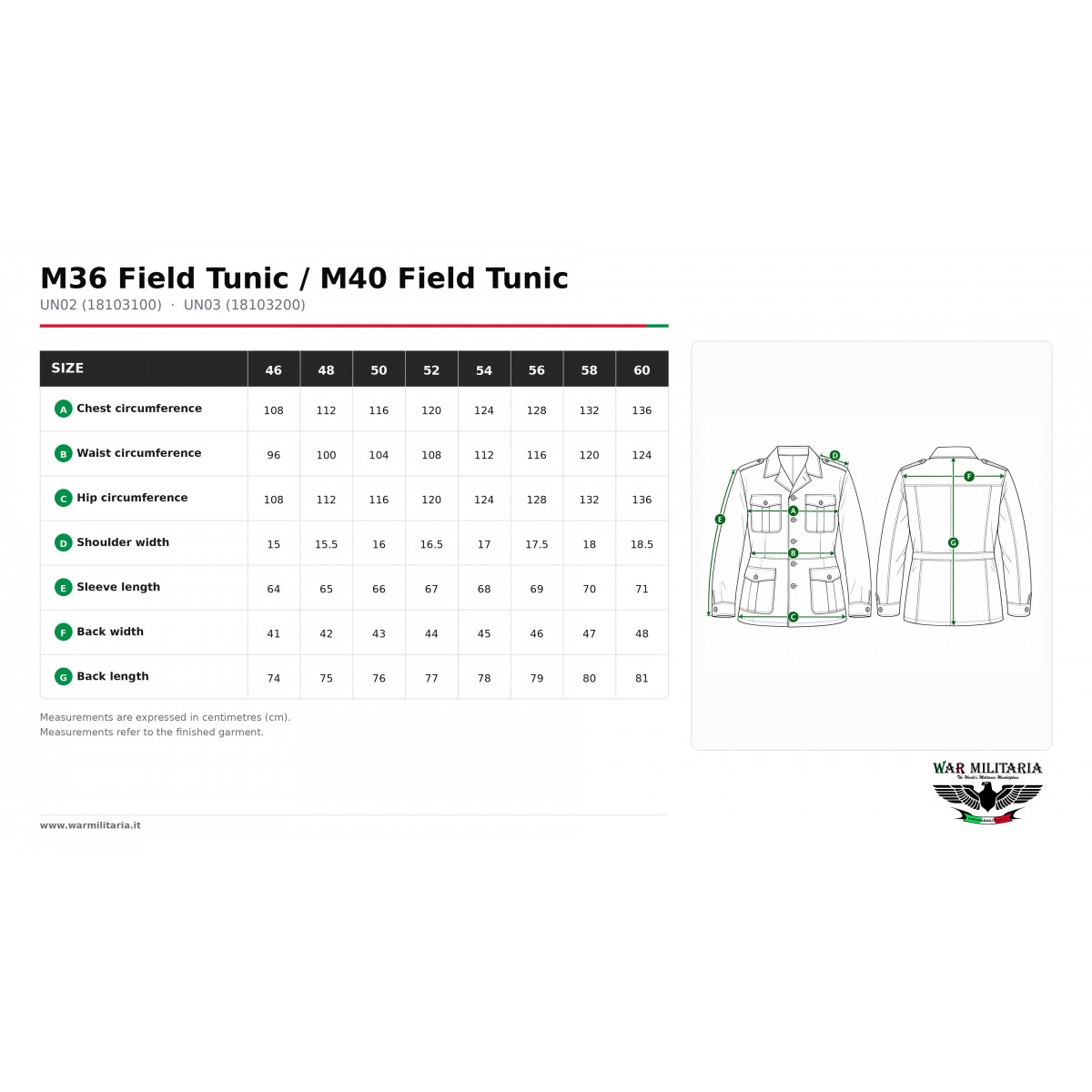
The tunic has a short, fitted, single-breasted cut with a five-button front closure, designed to be worn with the military belt and personal field equipment. Four external patch pockets are positioned on the front: two breast pockets and two larger skirt pockets. Each pocket features a central pleat that provides additional capacity, together with a shaped or scalloped flap secured by a button. This elaborate pocket arrangement gives the M36 its characteristic early-war appearance and distinguishes it from the progressively simplified field tunics produced later in the conflict.
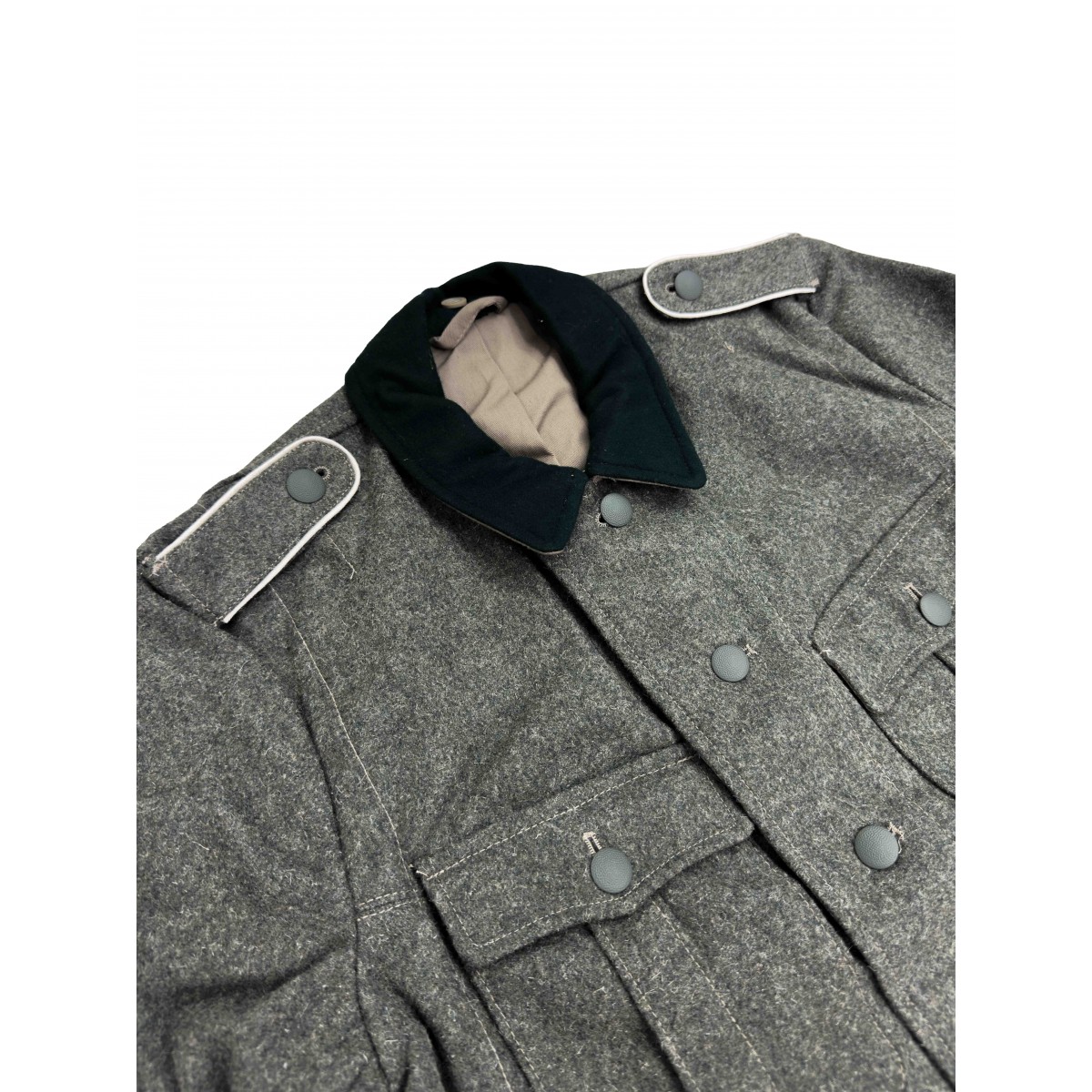
Its most immediately recognizable feature is the dark bottle-green stand-and-fall collar, which contrasts sharply with the field-grey body of the garment. The collar could be secured at the neck with a hook-and-eye fastening and was fitted with a removable internal Kragenbinde, or collar liner. This protected the collar from direct contact with the wearer’s neck and could be removed more easily for cleaning or replacement. The tunic was commonly worn fully closed during formal duties, while the collar could be opened under field conditions for greater comfort.
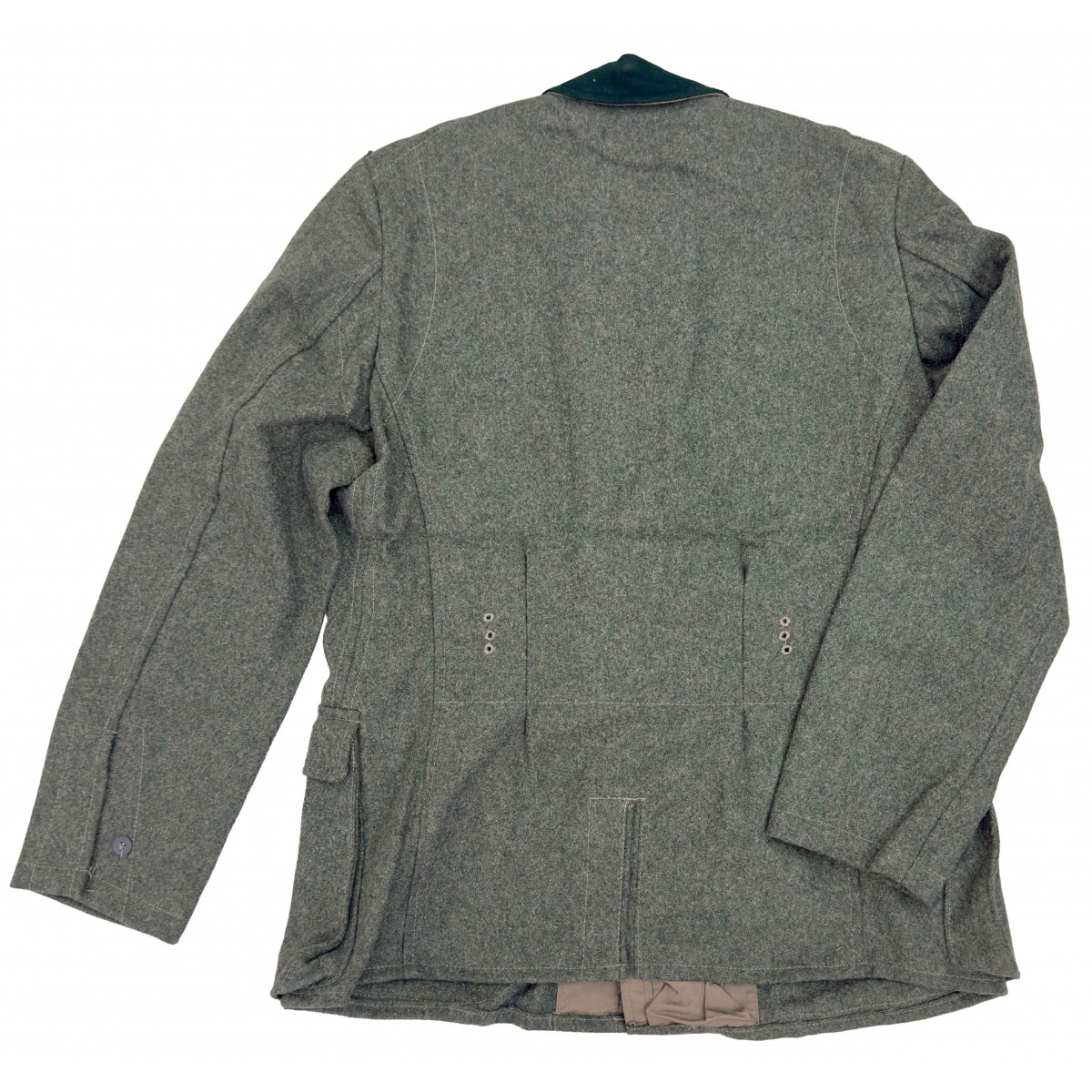
Additional construction details included adjustable cuffs with concealed buttons, a rear vent and removable shoulder straps. Reinforced eyelets around the waist accepted metal belt hooks, helping support the equipment belt and distribute the weight of the equipment carried by the soldier. A small internal pocket was also provided for the individual field dressing, an easily overlooked feature that illustrates the practical planning incorporated into the garment.
The insignia arrangement varied according to rank, branch of service and period of wear. The Army national emblem was normally positioned on the right breast, while the characteristic Litzen were applied to the collar. Shoulder straps, unit numerals, letters and branch colours known as Waffenfarbe identified the wearer’s rank and service affiliation. Early shoulder straps issued between 1936 and 1938 were often pointed, while later examples adopted different shapes and edging. Older insignia and garments continued to be worn until replacement became necessary, resulting in numerous historically authentic variations.
As wartime production requirements increased, later versions of the Feldbluse were progressively simplified. The contrasting dark-green collar was replaced by a field-grey version, a sixth front button was introduced and the pleated pockets and shaped flaps were gradually simplified or removed. The M36 did not, however, disappear when newer patterns entered production. Existing tunics continued to be worn, repaired and modified throughout the war, and could be encountered with insignia or shoulder straps introduced several years after the original garment.
Historical curiosity: the familiar classifications M36, M40, M41, M42 and M43 are used mainly by modern collectors and uniform historians to distinguish the various stages in the tunic’s development. In contemporary military terminology, the garment generally remained simply the Feldbluse. A wartime soldier would therefore not necessarily have referred to his own tunic as an “M36” in the precise way collectors do today.
Data sheet
| Material | Upper: 70% Wool, 30% Viscose Lining: 100% Cotton |
| EAN | 4046872212314 |
17 other products in the same category:

Customers who bought this product also bought:
Uniforms
- Germany
- Uniforms
- Medals, Orders and Decorations
- Badges and Pins
- ID Tags
- Arm Shields
- Helmets
- Helmet Decals
- Visor Caps and Hats
- Cap and Helmet Badges
- Collar Tabs Badges
- Collar Tabs, Shoulder Boards and Epaulettes
- Arm Bands
- Division Cuff Titles
- Buckles And Belts
- Buttons For Uniforms
- Stamps
- Gorgets
- Rings
- SS Honour Ring in 925 Silver - Collector's Set
- Poletops
- Flags
- Daggers and Knives (Ornamental)
- Field Marshal Batons
- Field and Personal Equipment
- Service Watches
- Presentation Cases
- Documents and Award Letters
- Busts, Eagles, Lighters and Miscellaneous
- Croatian and Ustasha Militaria
- Denazified Articles
- Commemorative Necklaces
- Spare Parts, Small Parts and Accessories
- Italy
- Medals and Decorations
- Brevets And Badges
- Battle Shields and Tags
- Gorgets
- Visor Caps and Hats
- Cap and Helmet Badges
- Helmets Decals
- Friezes for Collar Tabs
- Collar Tabs, Shoulder Boards and Epaulettes
- Buckles
- Belts
- Buttons For Uniforms
- Rings
- Poletops
- Italian Resistance
- Keyrings
- Wallshields
- Daggers and Knives
- Flags
- Busts and Eagles
- Souvenirs
- Commemorative Necklaces
- Imperial Germany
- Soviet Union
- Other Countries