
No products
Product successfully added to your shopping cart
There are 0 items in your cart. There is 1 item in your cart.
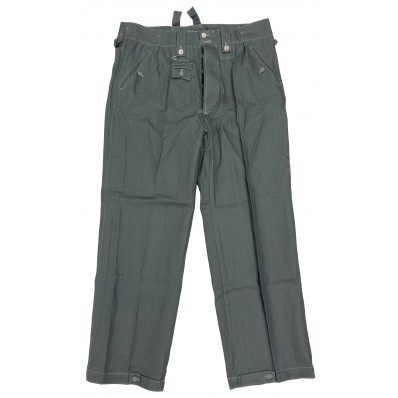
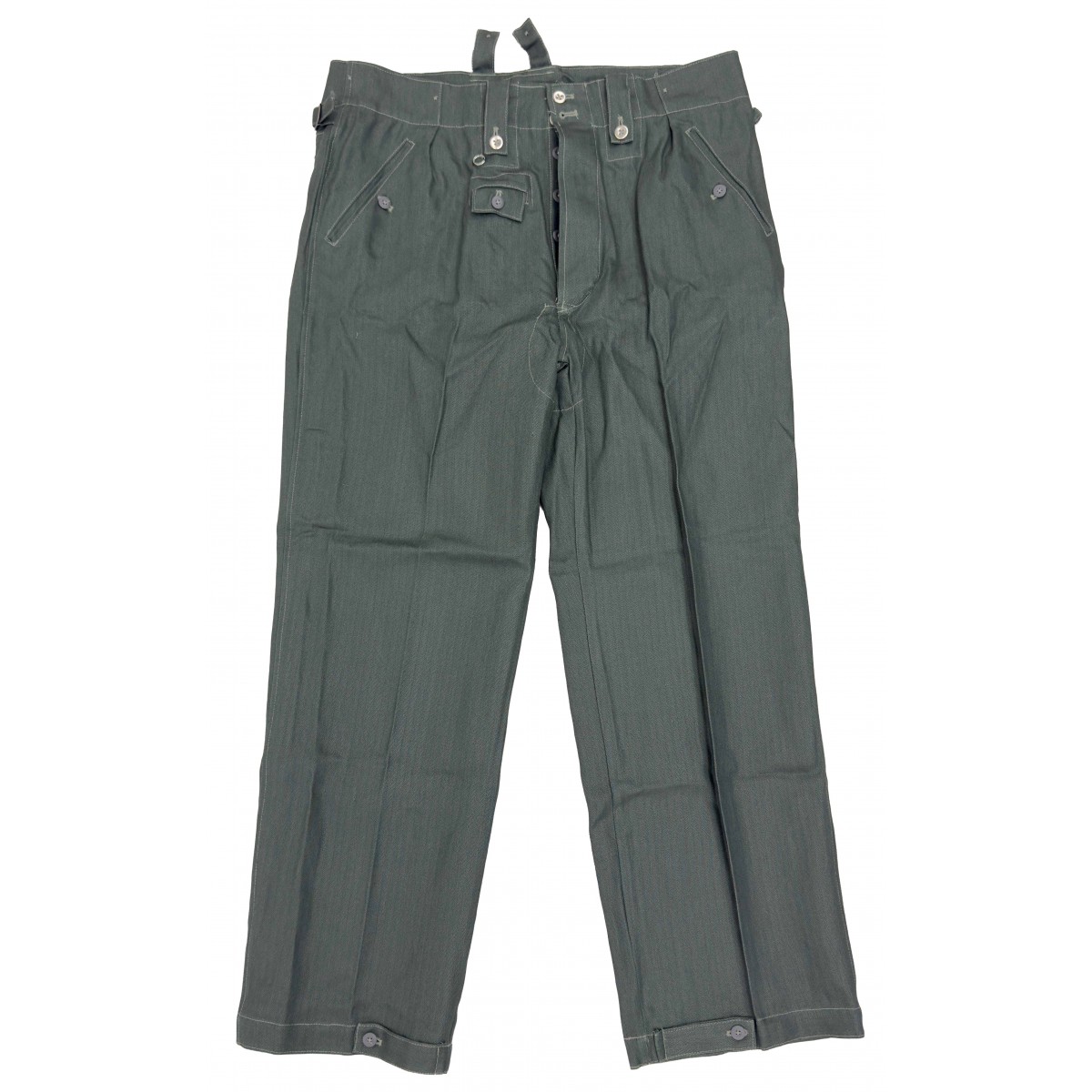
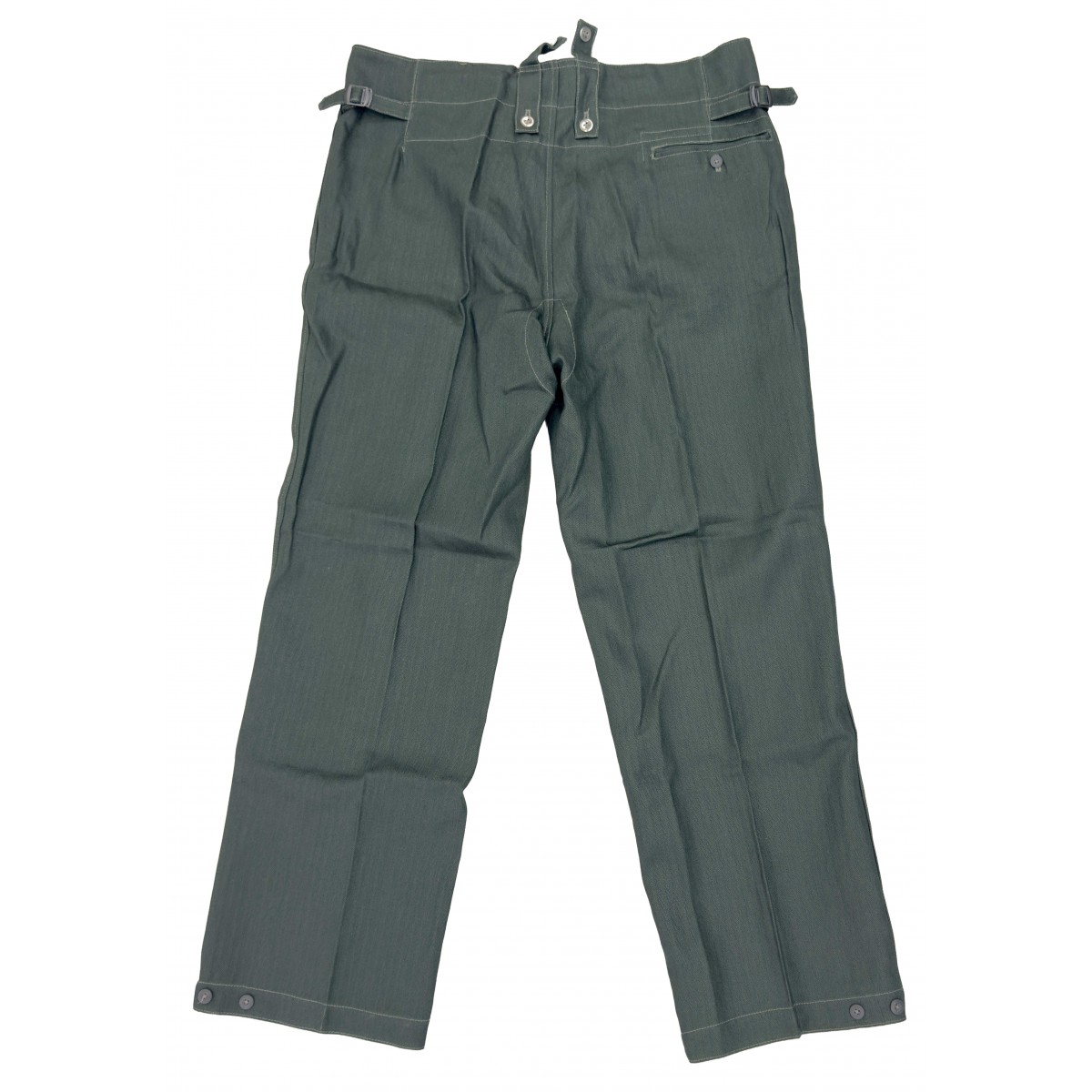
M40 HBT Trousers
New
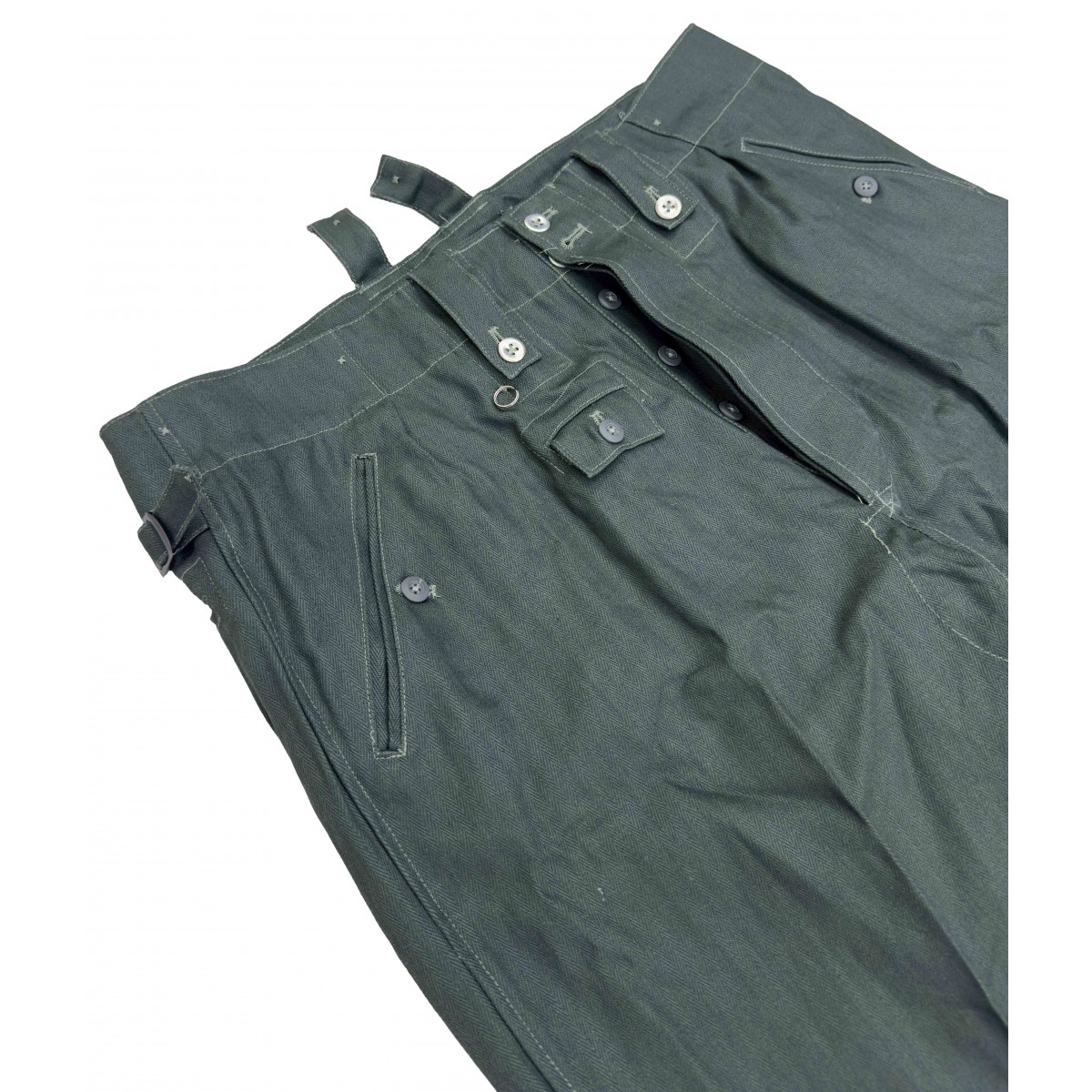
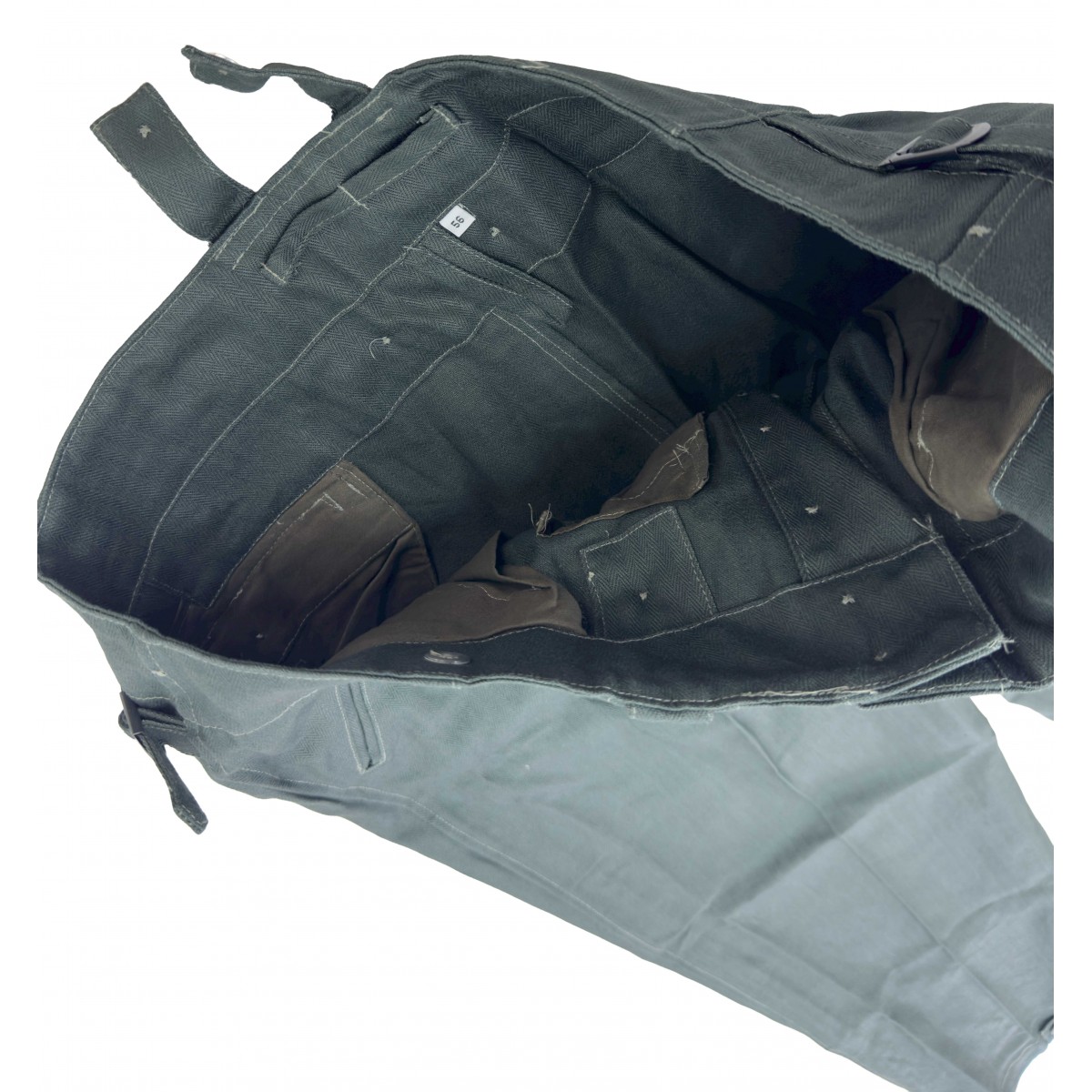
M40 HBT Trousers of the Heer in characteristic Reed Green, featuring a high-rise waist, side pockets, watch pocketand rear waist adjustment. Part of the lightweight Drillich uniform, they were used for fatigue duties, training and warm-weather service, following the traditional cut of the M40 field trousers.
Warning: Last items in stock!
- Satisfied or refunded: we guarantee 100% secure protection on your purchases
- Free return: return your order free of charge within 30 days from receipt
- Secure payments: pay securely online with PayPal or credit cards

More info
The M40 HBT Trousers, known in German as the Drillichhose, belong to the distinctive lightweight work and warm-weather clothing used by the Heer during the Second World War. The German term Drillich refers to the durable fabric woven in the characteristic herringbone pattern internationally known as HBT – Herringbone Twill.
Drillich clothing had been used by the German Army since before the war. Its original purpose was to protect the more expensive wool service and field uniforms from unnecessary wear during training, weapons cleaning, vehicle maintenance, work details and other routine duties.
Early Drillich uniforms were generally produced from undyed or very lightly coloured fabric, resulting in shades ranging from off-white and natural cloth to pale grey.
In 1940, green colouring was introduced for Heer Drillich clothing. This distinctive shade became commonly known as Reed Green, or Schilfgrün.
The darker colour was considerably more practical for work clothing, but soldiers also discovered another important advantage: Drillich fabric was lighter and easier to wash than the heavy field-grey wool uniform.
The trousers retained the characteristic high-rise waist typical of military and civilian tailoring of the period. Their general construction followed the traditional M40 field-trouser pattern, with long, relatively straight-cut legs.
The trousers could be supported by the standard braces, while a rear waist adjustment allowed the fit to be tightened within a limited range.
This was particularly useful within the military clothing system, where garments were manufactured in standardized measurements and issued to soldiers through Army clothing depots.
The front was secured by a traditional button fly, providing a strong and straightforward closure that could also be repaired relatively easily.
Two angled side pockets provided accessible storage for small personal items without creating excessive bulk beneath the equipment belt.
A small watch pocket was also incorporated near the fly. This traditional tailoring detail survived even on practical military work clothing and is one of the characteristic features associated with trousers of this period.
In overall appearance, the trousers therefore remained closely related to the standard field uniform. Their most obvious distinguishing feature was the Reed Green Drillich construction.
The characteristic herringbone weave is clearly visible when the cloth is examined closely. This structure produced a hard-wearing fabric while remaining lighter than the traditional wool material used for the standard Feldhose.
Another significant advantage was that Drillich garments could withstand more frequent laundering. Work clothing was regularly exposed to dirt, dust, perspiration, grease and oil, making ease of cleaning particularly important.
As wartime experience accumulated, soldiers increasingly appreciated the lightweight uniform during summer field service as well. In hot weather it could be considerably more comfortable than the heavy wool field uniform.
This practical use eventually contributed to the development of dedicated HBT summer field uniforms, combining lightweight Drillich fabric with the cut and functional details of normal field clothing.
The Drillichhose should nevertheless be distinguished from the Tropenhose. German tropical uniforms were specifically developed for operations in tropical and very hot climates, whereas the Drillich uniform originated primarily as fatigue and training clothing within the normal Army clothing system.
The characteristic Reed Green colour could fade substantially through repeated washing, exposure to sunlight and normal wear. Surviving original Drillich garments consequently display a wide variety of green and grey-green shades.
Internally, issued examples could carry size markings, manufacturer information and military acceptance stamps, assisting the clothing depots in distribution and identification.
As the war progressed, HBT trousers evolved alongside standard field clothing. The traditional M40-style construction was eventually supplemented by later forms featuring tapered legs, belt loops and different adjustment systems.
The M40 HBT Trousers therefore represent an interesting link between two different forms of military clothing: the traditional fatigue uniform intended to protect field dress from unnecessary wear, and the increasingly important lightweight summer field uniform developed through practical wartime experience.
Historical curiosity: the Drillich uniform was originally intended largely for dirty work and training, allowing soldiers to preserve their more valuable field uniforms. In practice, however, troops quickly discovered that lightweight Reed Green clothing was far more comfortable during hot summer conditions. A uniform originally associated with cleaning weapons, maintaining vehicles and barrack duties therefore helped shape the development of the Heer’s later summer combat clothing.
Data sheet
| Material | Upper: 55% Linen, 45% Cotton Lining: 100% Cotton |
17 other products in the same category:

Customers who bought this product also bought:
Uniforms
- Germany
- Uniforms
- Medals, Orders and Decorations
- Badges and Pins
- ID Tags
- Arm Shields
- Helmets
- Helmet Decals
- Visor Caps and Hats
- Cap and Helmet Badges
- Collar Tabs Badges
- Collar Tabs, Shoulder Boards and Epaulettes
- Arm Bands
- Division Cuff Titles
- Buckles And Belts
- Buttons For Uniforms
- Stamps
- Gorgets
- Rings
- SS Honour Ring in 925 Silver - Collector's Set
- Poletops
- Flags
- Daggers and Knives (Ornamental)
- Field Marshal Batons
- Field and Personal Equipment
- Service Watches
- Presentation Cases
- Documents and Award Letters
- Busts, Eagles, Lighters and Miscellaneous
- Croatian and Ustasha Militaria
- Denazified Articles
- Commemorative Necklaces
- Spare Parts, Small Parts and Accessories
- Italy
- Medals and Decorations
- Brevets And Badges
- Battle Shields and Tags
- Gorgets
- Visor Caps and Hats
- Cap and Helmet Badges
- Helmets Decals
- Friezes for Collar Tabs
- Collar Tabs, Shoulder Boards and Epaulettes
- Buckles
- Belts
- Buttons For Uniforms
- Rings
- Poletops
- Italian Resistance
- Keyrings
- Wallshields
- Daggers and Knives
- Flags
- Busts and Eagles
- Souvenirs
- Commemorative Necklaces
- Imperial Germany
- Soviet Union
- Other Countries