
No products
Product successfully added to your shopping cart
There are 0 items in your cart. There is 1 item in your cart.
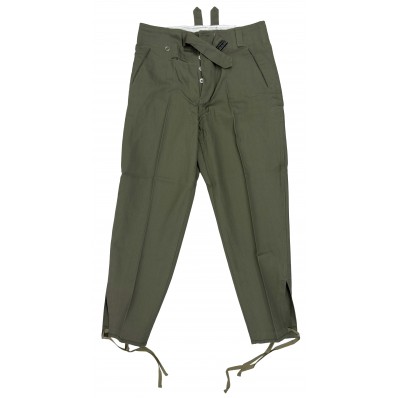
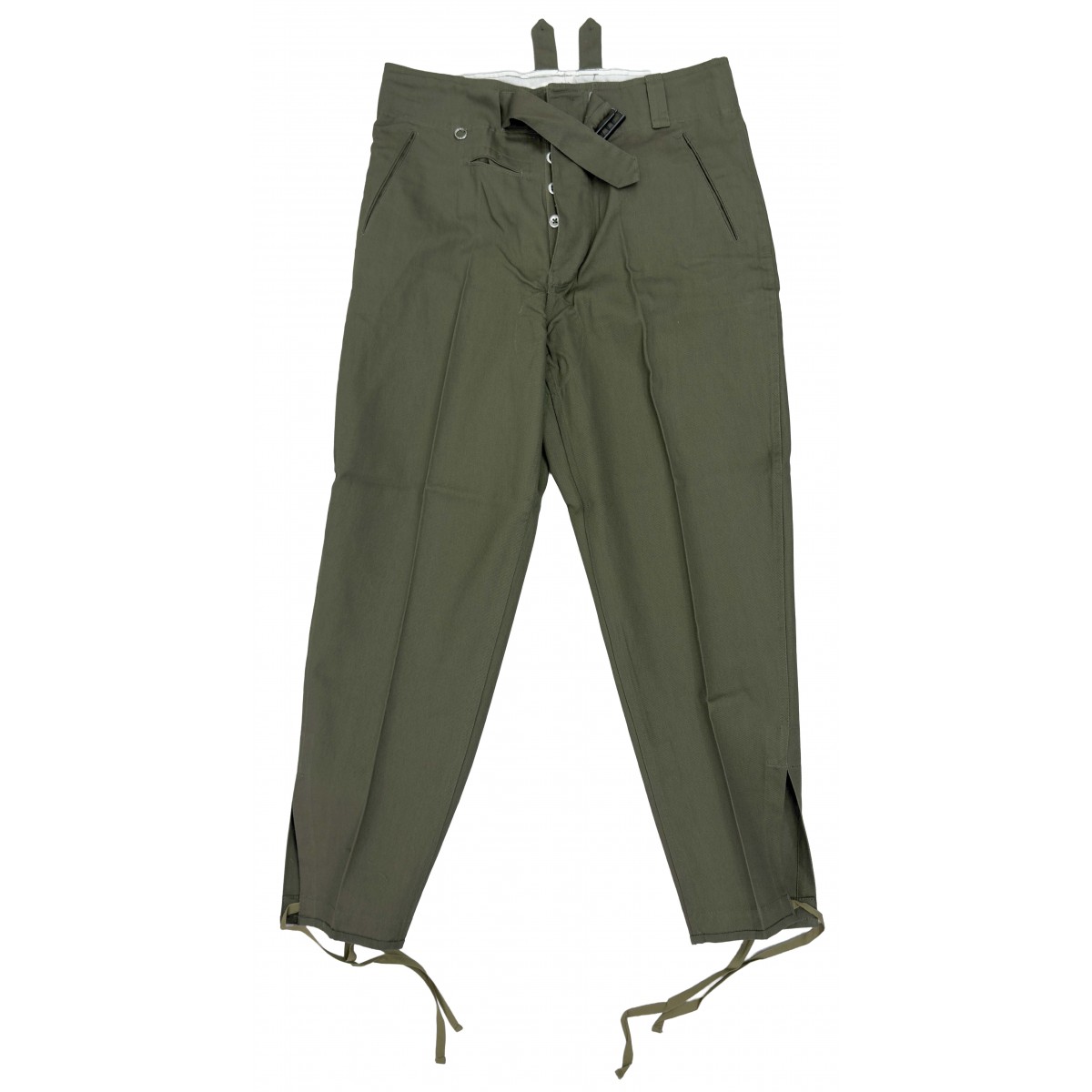
M40 Tropical Trousers
New
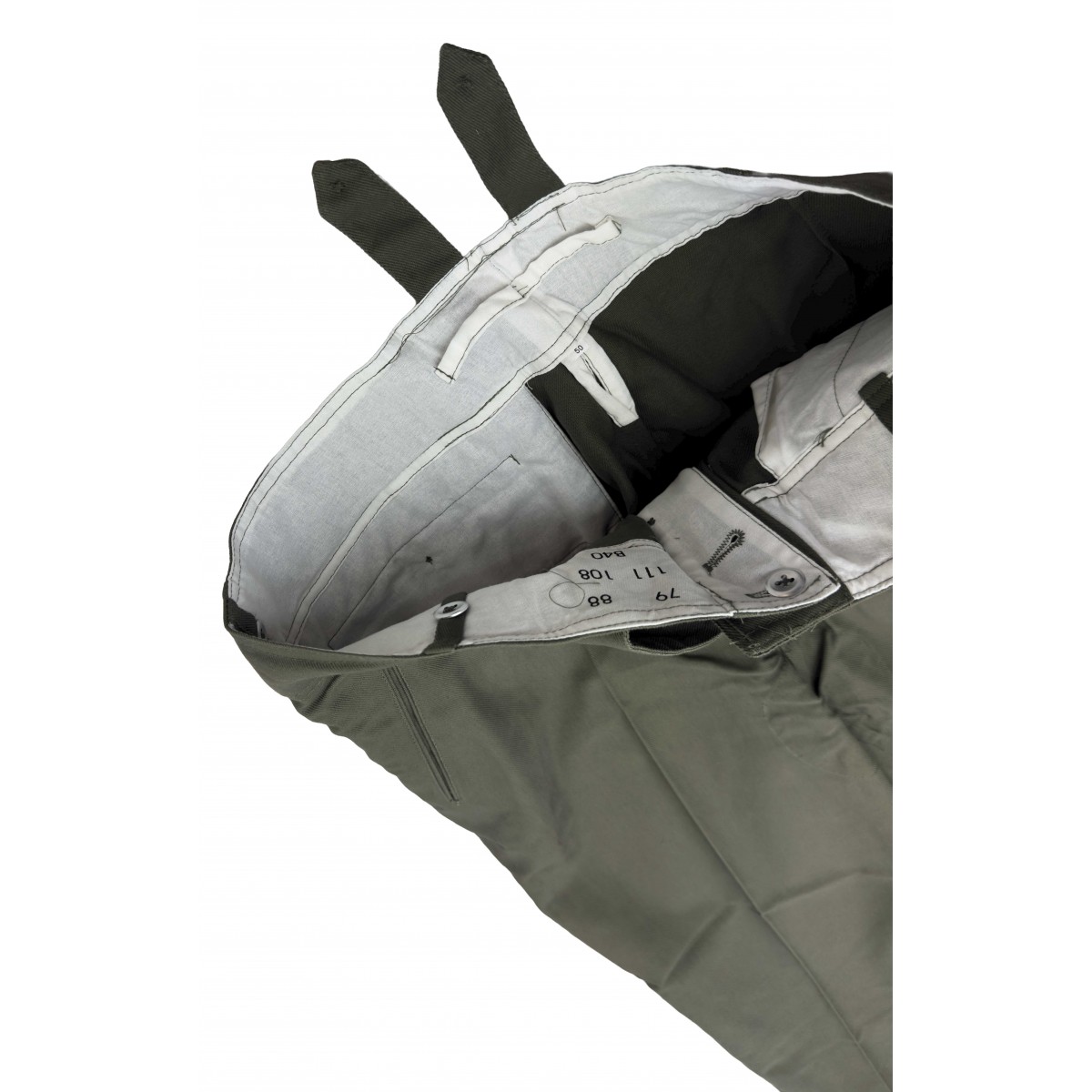
M40 Tropical Trousers of the Heer, developed for service in hot climates and distinguished by their long cut, angled side pockets, small watch pocket and characteristic integral internal waist belt. Their original olive-green appearance could fade dramatically through prolonged exposure to intense sunlight and field use.
Warning: Last items in stock!
- Satisfied or refunded: we guarantee 100% secure protection on your purchases
- Free return: return your order free of charge within 30 days from receipt
- Secure payments: pay securely online with PayPal or credit cards

More info
The M40 Tropical Trousers, commonly referred to in German as the Tropenhose, formed part of the tropical clothing system developed by the Heer between 1940 and 1941 for German troops expected to operate in hot and tropical environments.
Service in North Africa presented completely different challenges from those encountered in Central Europe. Extreme temperatures, intense sunlight, dust and sand made the heavier trousers of the standard field-grey European uniform considerably less suitable for prolonged use.
A specialized range of tropical clothing was therefore developed, including the well-known Tropenfeldbluse and corresponding trousers designed specifically for warmer climates.
The long trousers provided protection against sunlight, sand and the surrounding environment, while remaining considerably more suitable for high temperatures than the conventional field trousers used in Europe.
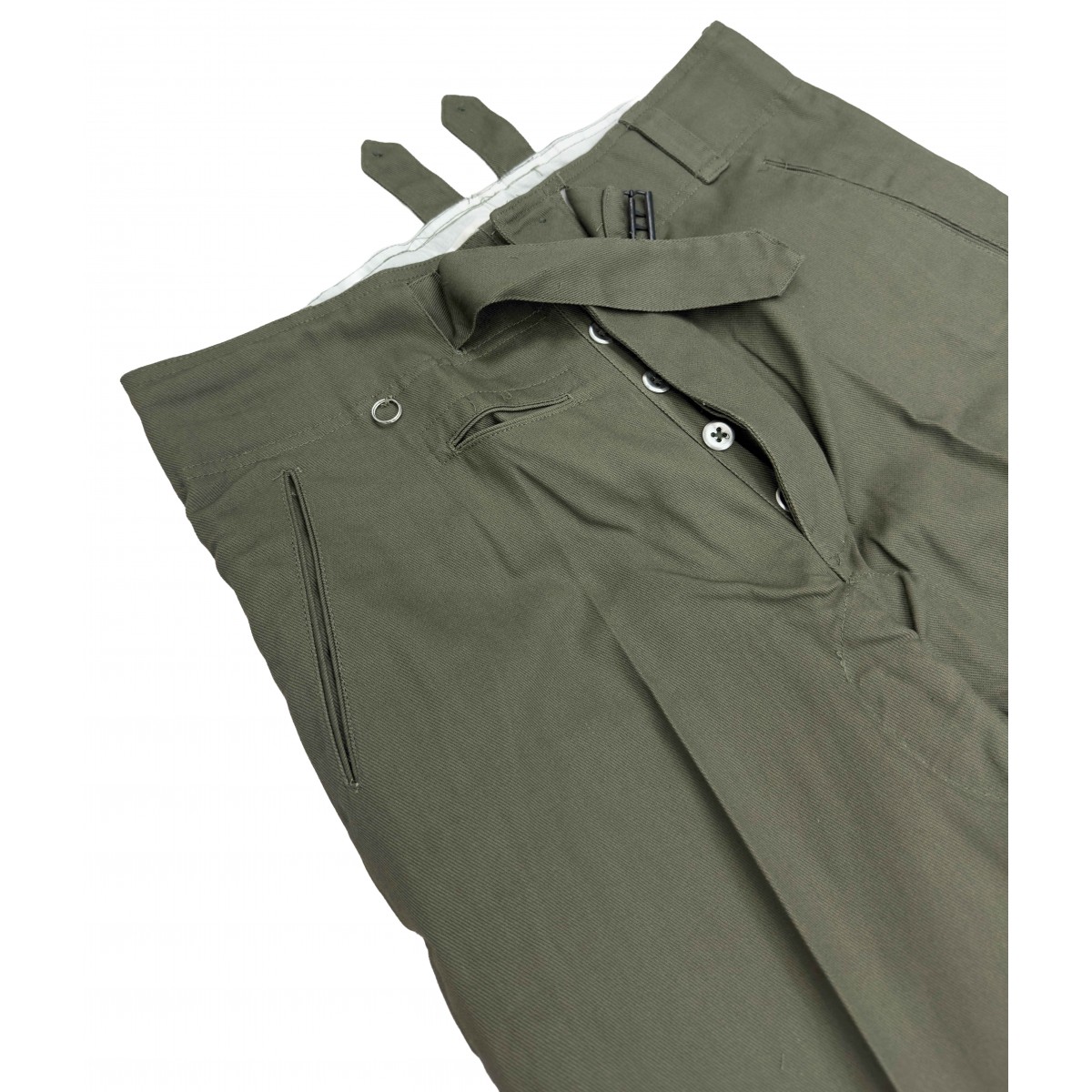
One of their most distinctive construction features was the integral internal cloth belt. Incorporated directly into the waistband and fitted with its own buckle, this allowed the wearer to adjust the waist without relying exclusively on a conventional trouser belt.
This was especially useful with tropical clothing, which was frequently worn less formally under extreme heat. The field tunic could be removed when conditions permitted, making it advantageous for the trousers to remain independently adjustable and comfortable.
Two angled side pockets were positioned at the front, providing convenient access even while marching or carrying field equipment.
A small watch pocket was also incorporated on the right side. This apparently modest feature reflected traditional military and civilian tailoring practices that survived even in clothing specifically designed for operational service in extreme climates.
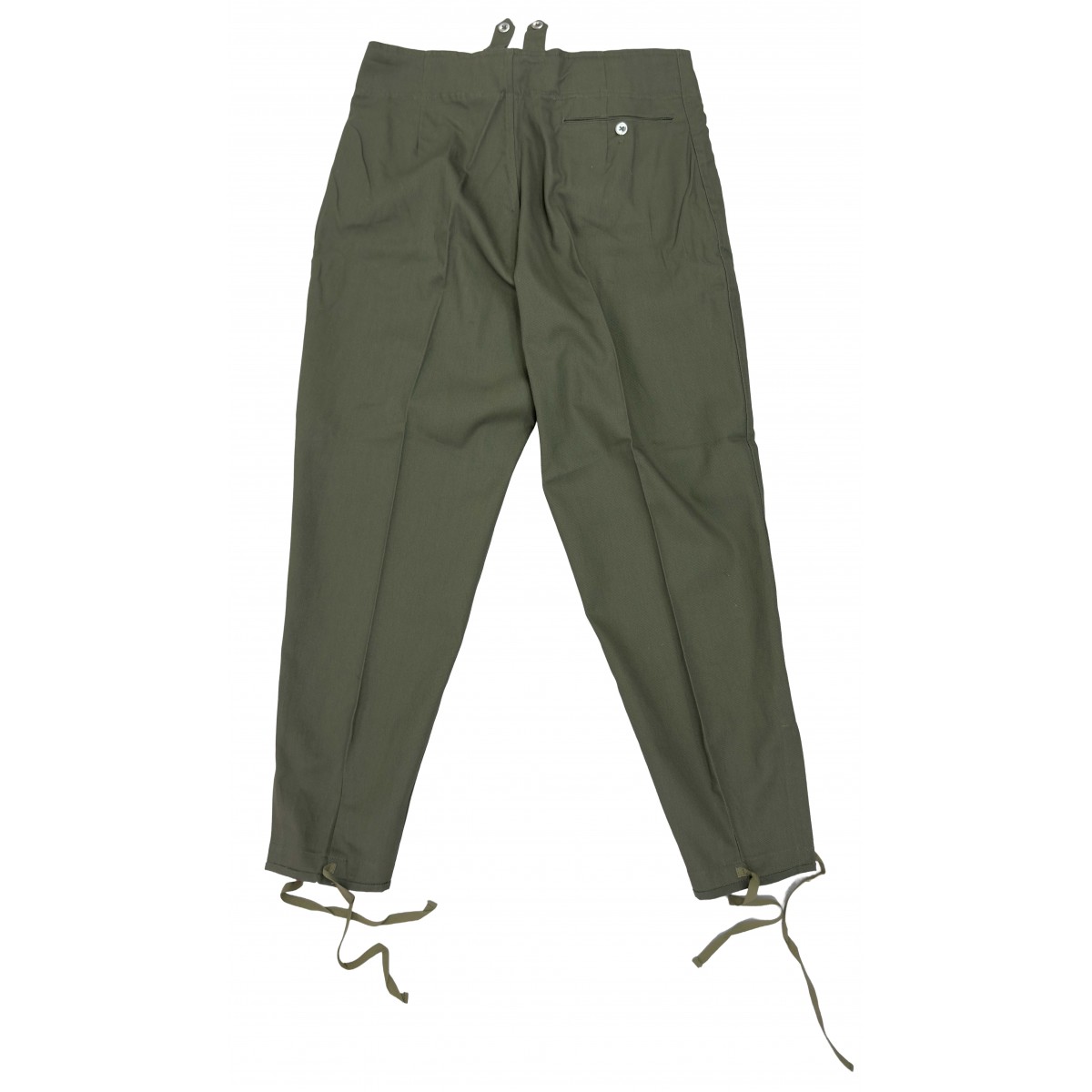
At the rear there was normally a single button-fastened pocket, usually positioned on the right. The overall pocket arrangement remained deliberately straightforward to prevent unnecessary interference with the equipment belt and personal field gear.
The front was secured by a traditional button fly, providing a robust closure that could also be repaired relatively easily. Buttons, buckles and smaller construction details could vary according to manufacturer and production period.
The trousers were manufactured from a lightweight fabric suitable for warm conditions, typically displaying shades ranging from olive green and olive khaki to brownish green.
Their colouration is one of the most fascinating aspects of German tropical clothing. The pale sand colour now popularly associated with the Afrika Korps was not necessarily the original appearance of a newly issued uniform.
Many tropical garments began service in a noticeably olive-green shade. Intense sunlight, dust, perspiration and repeated washing then caused progressive and sometimes dramatic fading.
After prolonged service, the original olive colour could become khaki, beige, yellowish green or an extremely pale shade. Surviving original trousers consequently display a remarkable range of colours.
The Tropenhose could be worn with several forms of tropical footwear. Different boots, shoes and leg coverings were tested during the early stages of the North African campaign, as not every item originally intended for desert service proved equally practical under real operational conditions.
Soldiers consequently adapted their clothing considerably according to heat, terrain and the equipment available to them.
Although inseparably associated with the Deutsches Afrikakorps, tropical trousers were not restricted exclusively to North Africa. German tropical clothing was subsequently used in Italy, the Balkans, throughout the Mediterranean region and in other warm southern theatres.
Its usefulness therefore continued after the end of the North African campaign. In Italy in particular, tropical and standard European uniform garments could be encountered alongside one another.
Original trousers may carry internal size markings, manufacturer information and military acceptance stamps. Later examples may also display RBNr. markings, reflecting the numerical system increasingly used to identify manufacturers during the later stages of the war.
Variation between surviving originals is therefore entirely normal. Differences in cloth shade, internal construction, fittings and finishing resulted from multiple manufacturers, different production periods and the increasing pressures placed upon German industry.
The M40 Tropical Trousers are consequently an important part of the development of Heer field clothing. They were not simply a differently coloured version of European trousers, but part of a specialized tropical uniform system developed around the very different requirements of hot-weather operations.
Historical curiosity: one of the most interesting and easily overlooked features is the built-in internal cloth belt, which allowed the waist to be adjusted without an ordinary external trouser belt. Even more revealing was the way soldiers treated their tropical clothing in actual service. Under the extreme conditions of North Africa, regulation garments were frequently altered for comfort, and some long tropical trousers were even cut down into shorts in the field. The real appearance of troops in the desert could therefore be considerably more improvised and varied than official uniform regulations might suggest.
Data sheet
| Material | Upper: 100% Cotton |
17 other products in the same category:

Customers who bought this product also bought:
Uniforms
- Germany
- Uniforms
- Medals, Orders and Decorations
- Badges and Pins
- ID Tags
- Arm Shields
- Helmets
- Helmet Decals
- Visor Caps and Hats
- Cap and Helmet Badges
- Collar Tabs Badges
- Collar Tabs, Shoulder Boards and Epaulettes
- Arm Bands
- Division Cuff Titles
- Buckles And Belts
- Buttons For Uniforms
- Stamps
- Gorgets
- Rings
- SS Honour Ring in 925 Silver - Collector's Set
- Poletops
- Flags
- Daggers and Knives (Ornamental)
- Field Marshal Batons
- Field and Personal Equipment
- Service Watches
- Presentation Cases
- Documents and Award Letters
- Busts, Eagles, Lighters and Miscellaneous
- Croatian and Ustasha Militaria
- Denazified Articles
- Commemorative Necklaces
- Spare Parts, Small Parts and Accessories
- Italy
- Medals and Decorations
- Brevets And Badges
- Battle Shields and Tags
- Gorgets
- Visor Caps and Hats
- Cap and Helmet Badges
- Helmets Decals
- Friezes for Collar Tabs
- Collar Tabs, Shoulder Boards and Epaulettes
- Buckles
- Belts
- Buttons For Uniforms
- Rings
- Poletops
- Italian Resistance
- Keyrings
- Wallshields
- Daggers and Knives
- Flags
- Busts and Eagles
- Souvenirs
- Commemorative Necklaces
- Imperial Germany
- Soviet Union
- Other Countries