
No products
Product successfully added to your shopping cart
There are 0 items in your cart. There is 1 item in your cart.
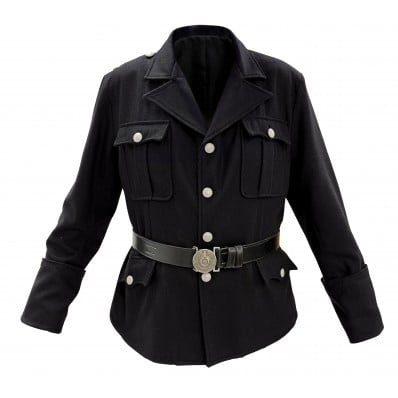
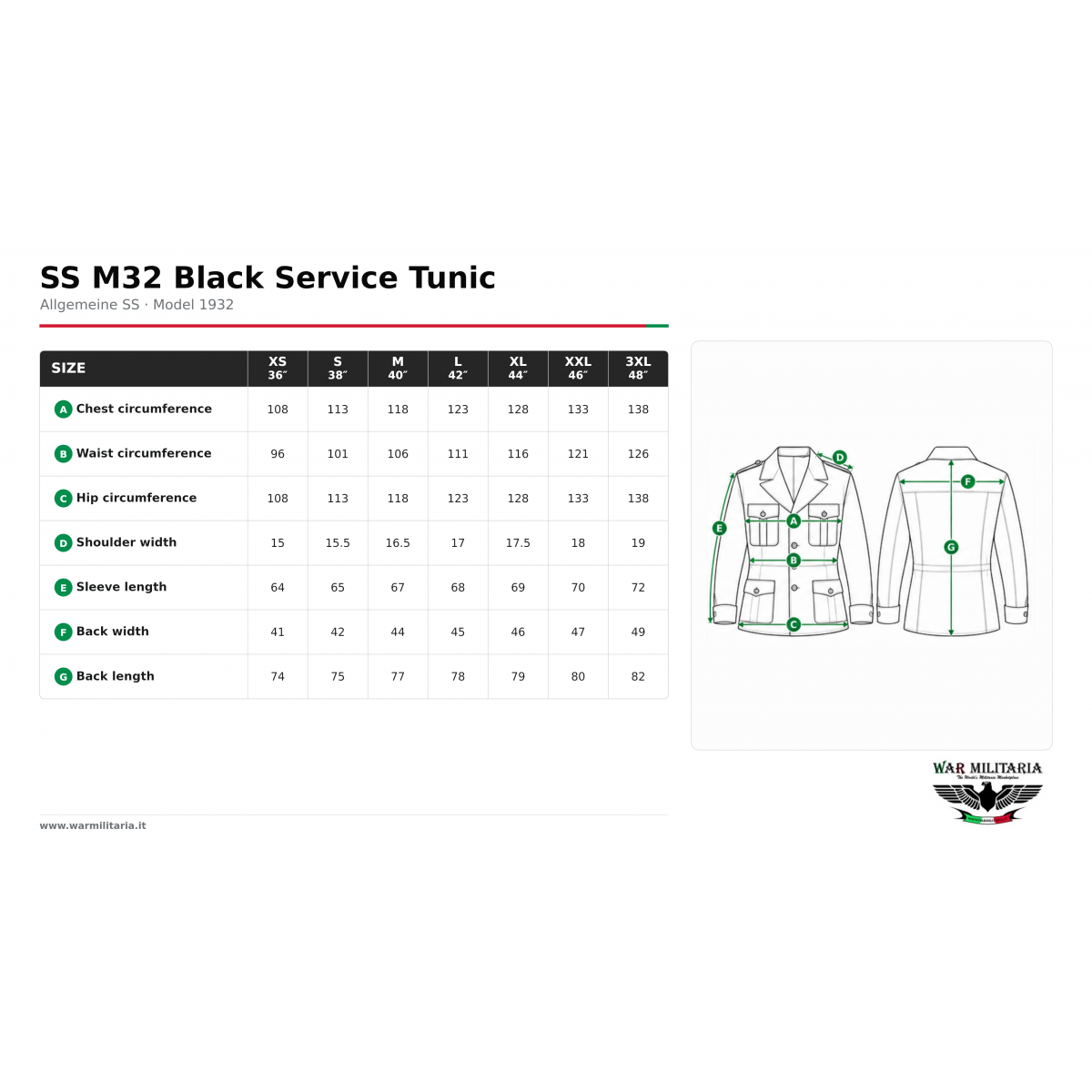
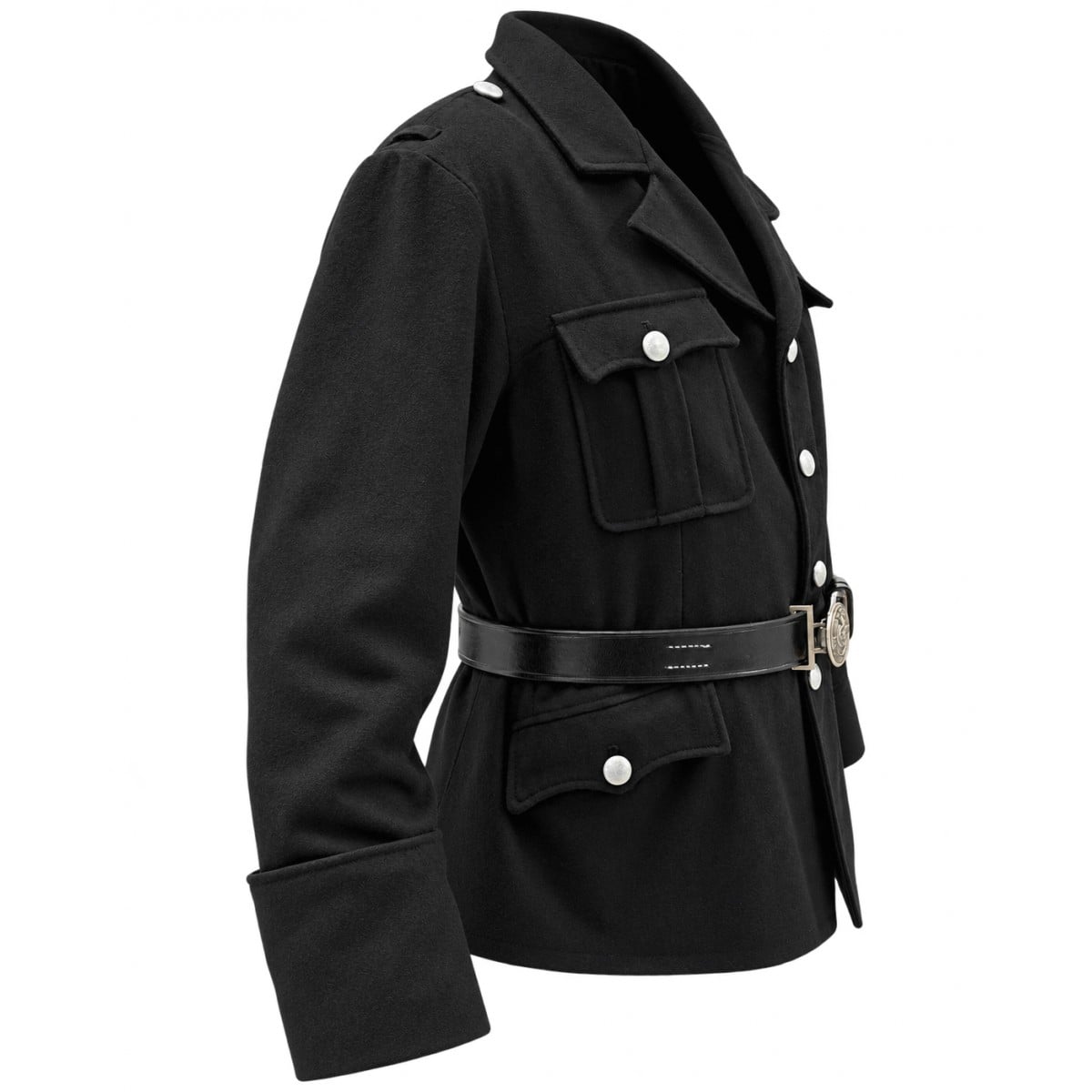
SS M32 Gabardine Service Tunic – Black Dienstrock
New
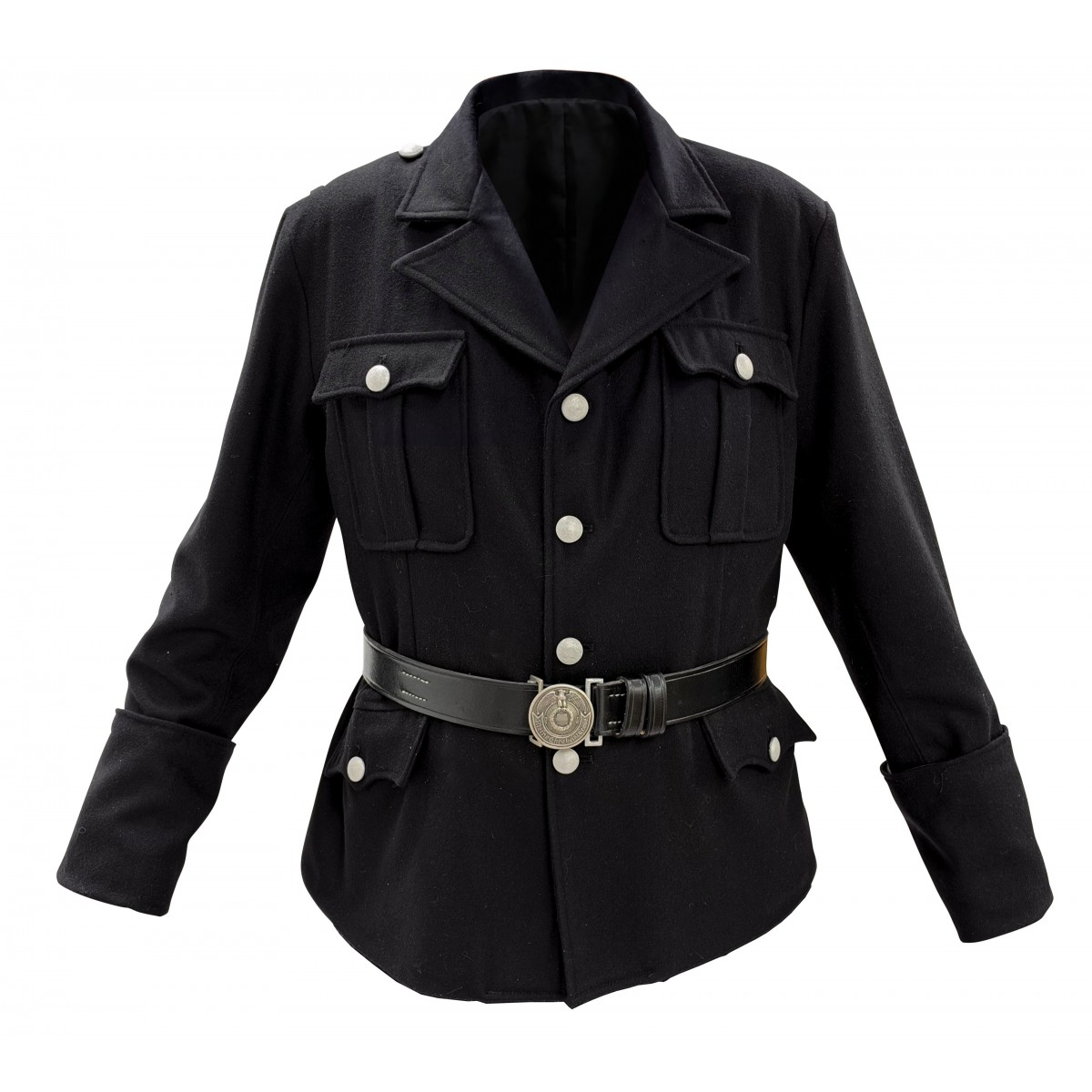
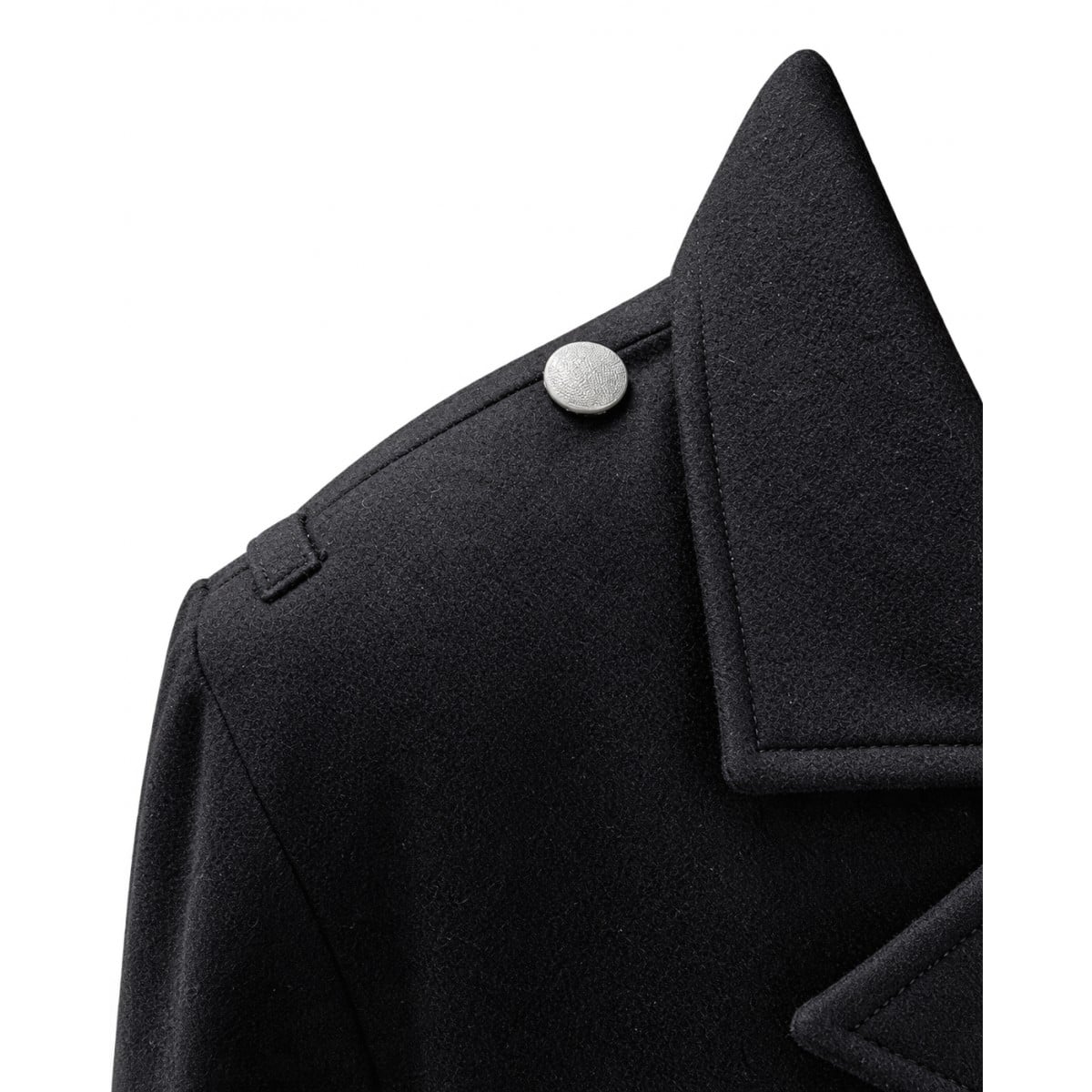
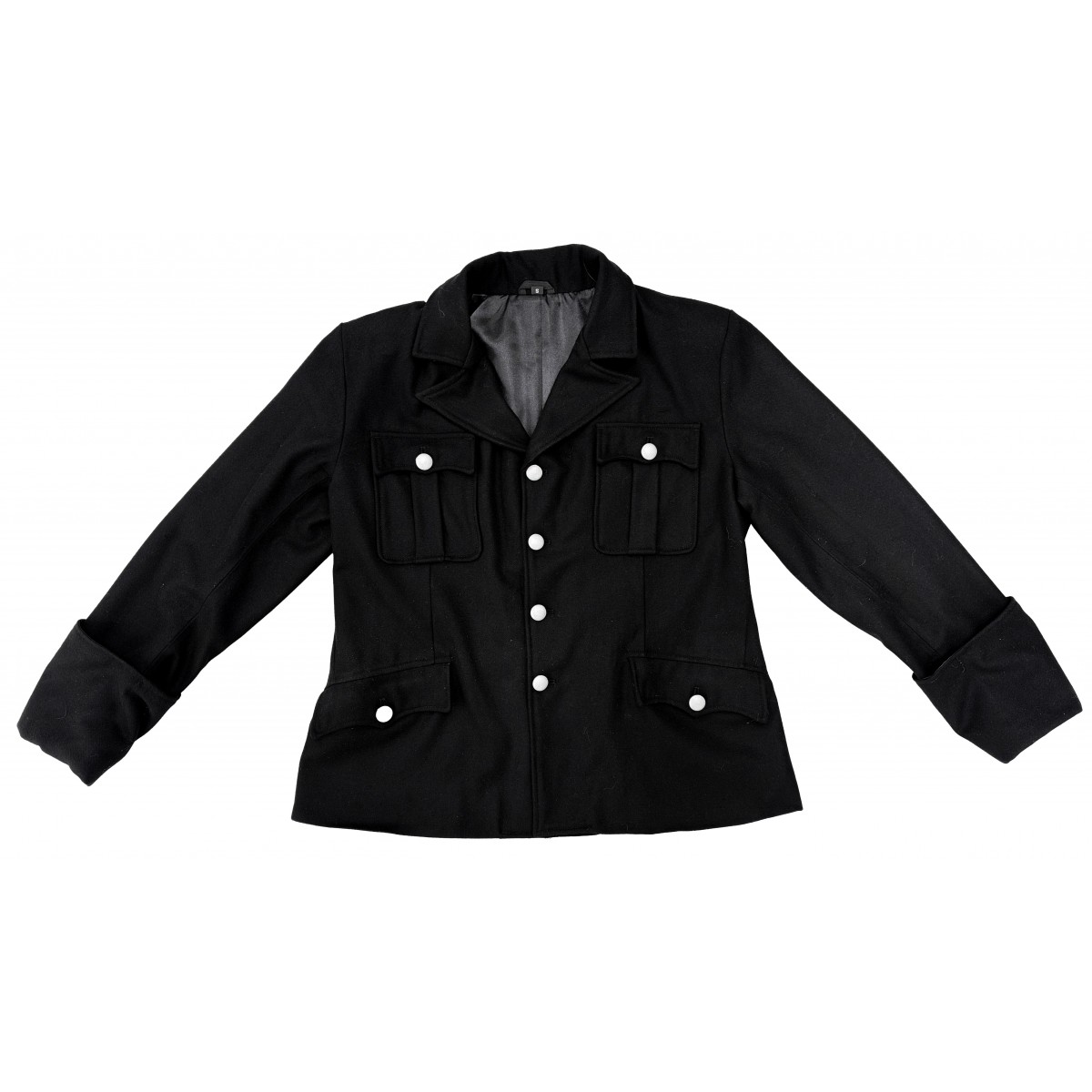
Black SS M32 service tunic in gabardine, developed and manufactured by War Militaria through an extensive industrial design process. It follows the characteristic construction of the 1932 black Dienstrock, with four pockets, silver-coloured buttons and broad turn-back cuffs. Belt and buckle not included.
- Satisfied or refunded: we guarantee 100% secure protection on your purchases
- Free return: return your order free of charge within 30 days from receipt
- Secure payments: pay securely online with PayPal or credit cards

More info
The SS M32 Black Gabardine Service Tunic, historically known as the schwarzer SS-Dienstrock, is one of the most demanding textile projects developed by War Militaria.
The work behind this garment went considerably beyond reproducing the general appearance of a black uniform. Particular attention was required to achieve the correct relationship between cut, proportions, structure and fabric behaviour. The sharply tailored body, four-pocket arrangement, broad cuffs, lining and structured back make this a considerably more complex garment than a conventional uniform jacket.
The new black SS service uniform was introduced in 1932, gradually replacing the earlier uniform system centred around the brown shirt. Contemporary clothing documentation referred to the jacket simply as the SS-Dienstrock. The designation “M32” or “Model 1932”, now standard among collectors and historians, is a later classification based on its year of introduction.
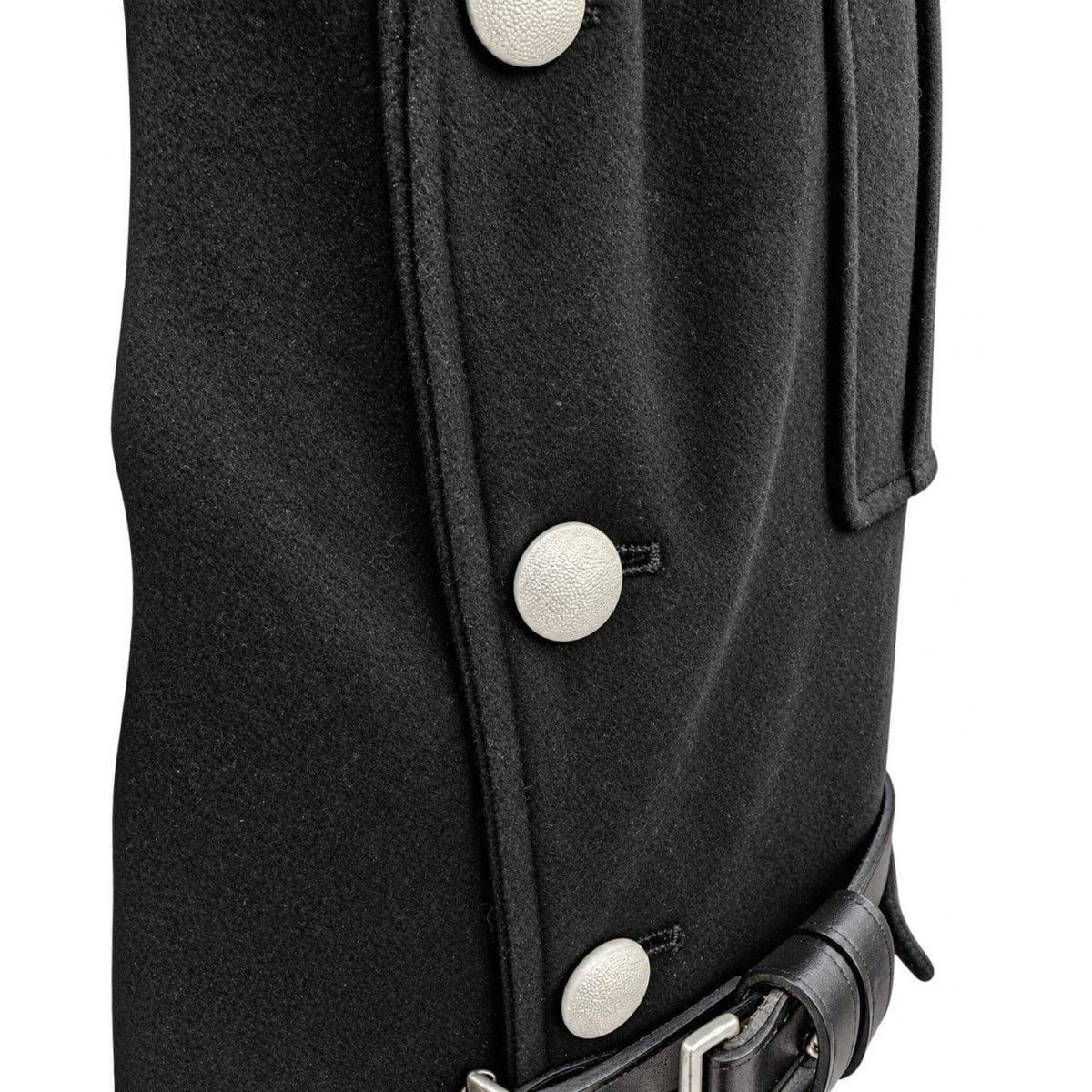
The Dienstrock was a single-breasted, open-collar tunic fastened by four silver-coloured front buttons. Its distinctly shaped waist and tailored construction gave it a considerably more formal silhouette than the field-grey military uniforms that followed.
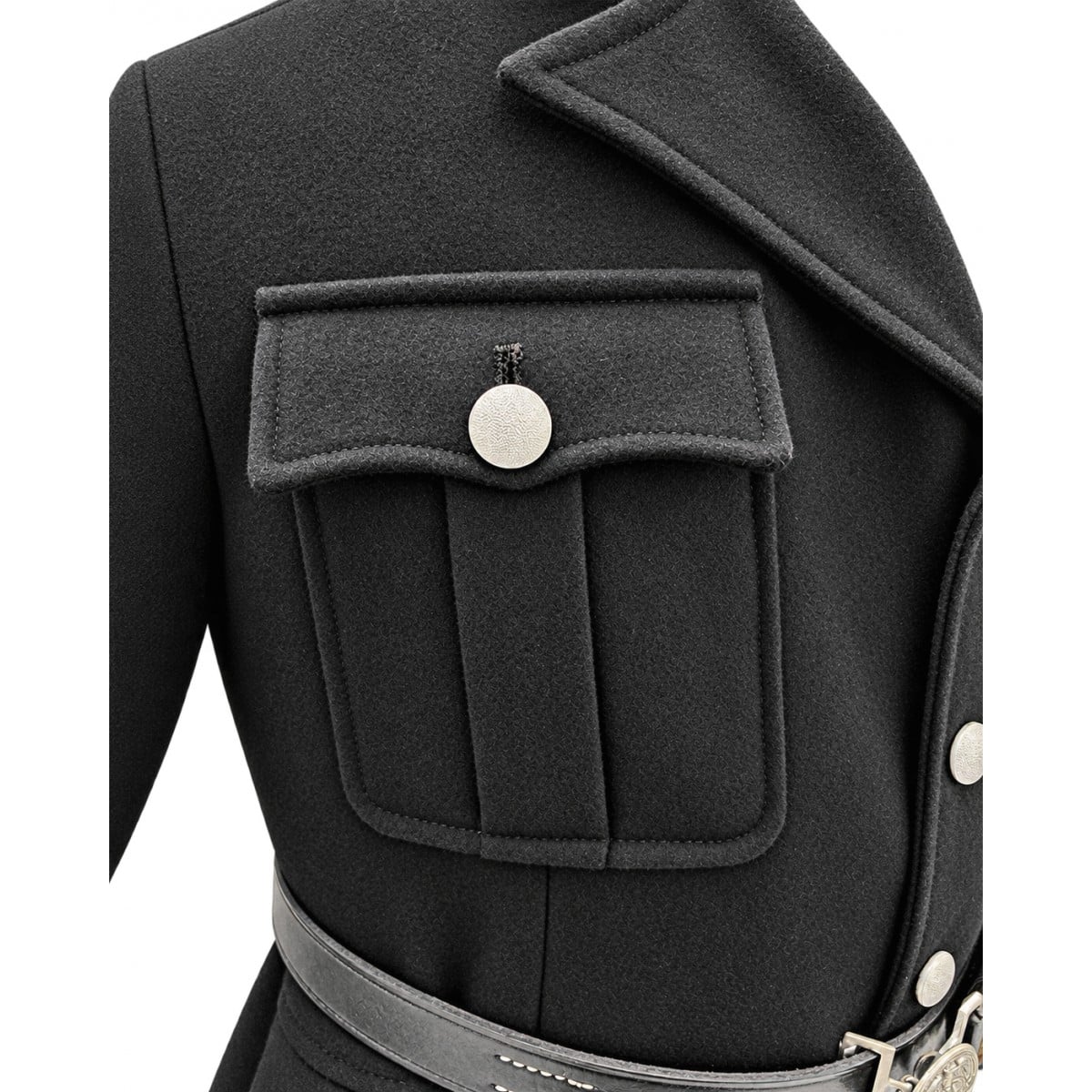
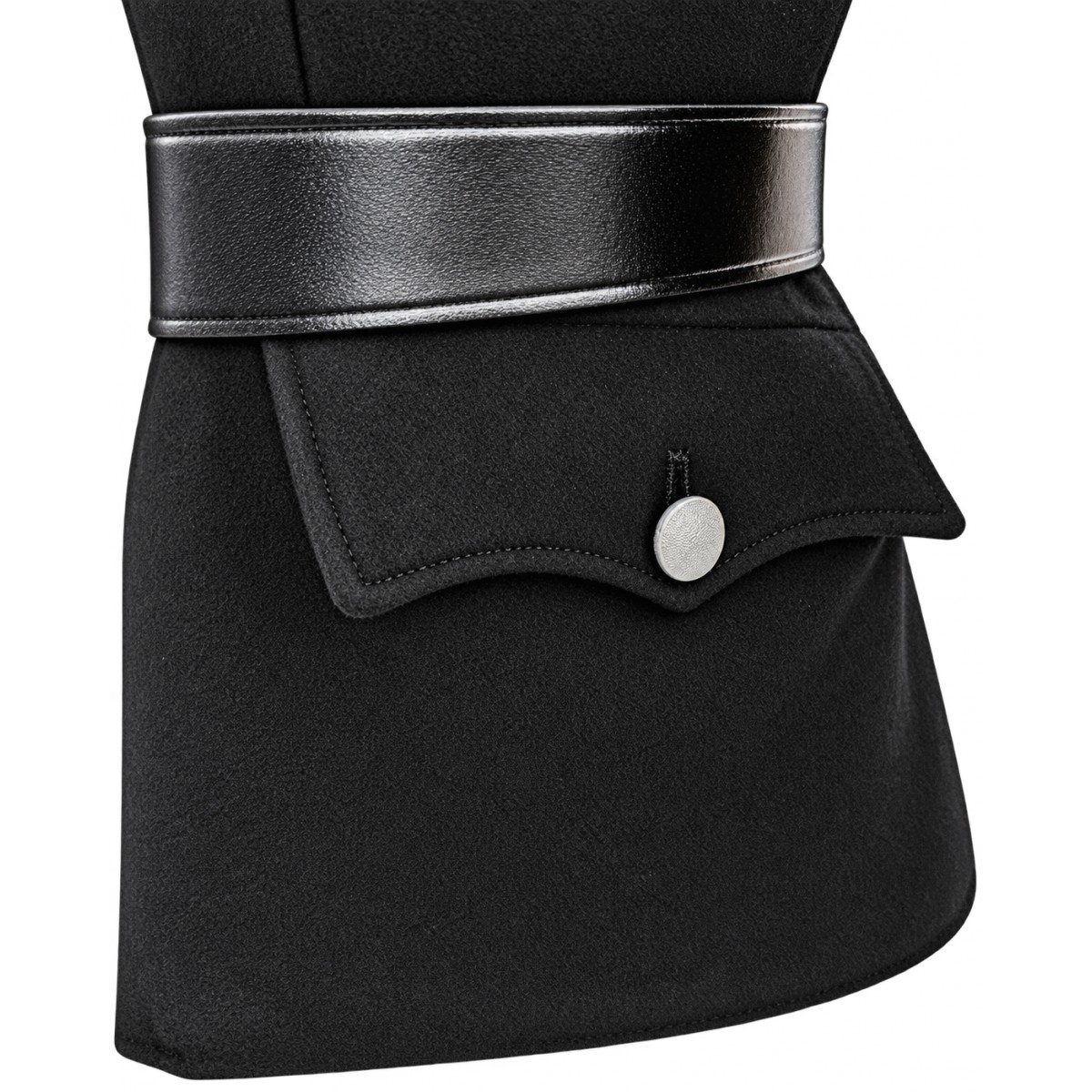
The chest carries two large patch pockets with central pleats, each closed by a shaped buttoned flap. Two further pockets are positioned at the lower front, creating the characteristic four-pocket arrangement of the model.
The sleeves terminate in broad turn-back cuffs, commonly described today as French cuffs. Together with the open collar, these cuffs are among the details that most readily distinguish the black Dienstrock from later field-service tunics.
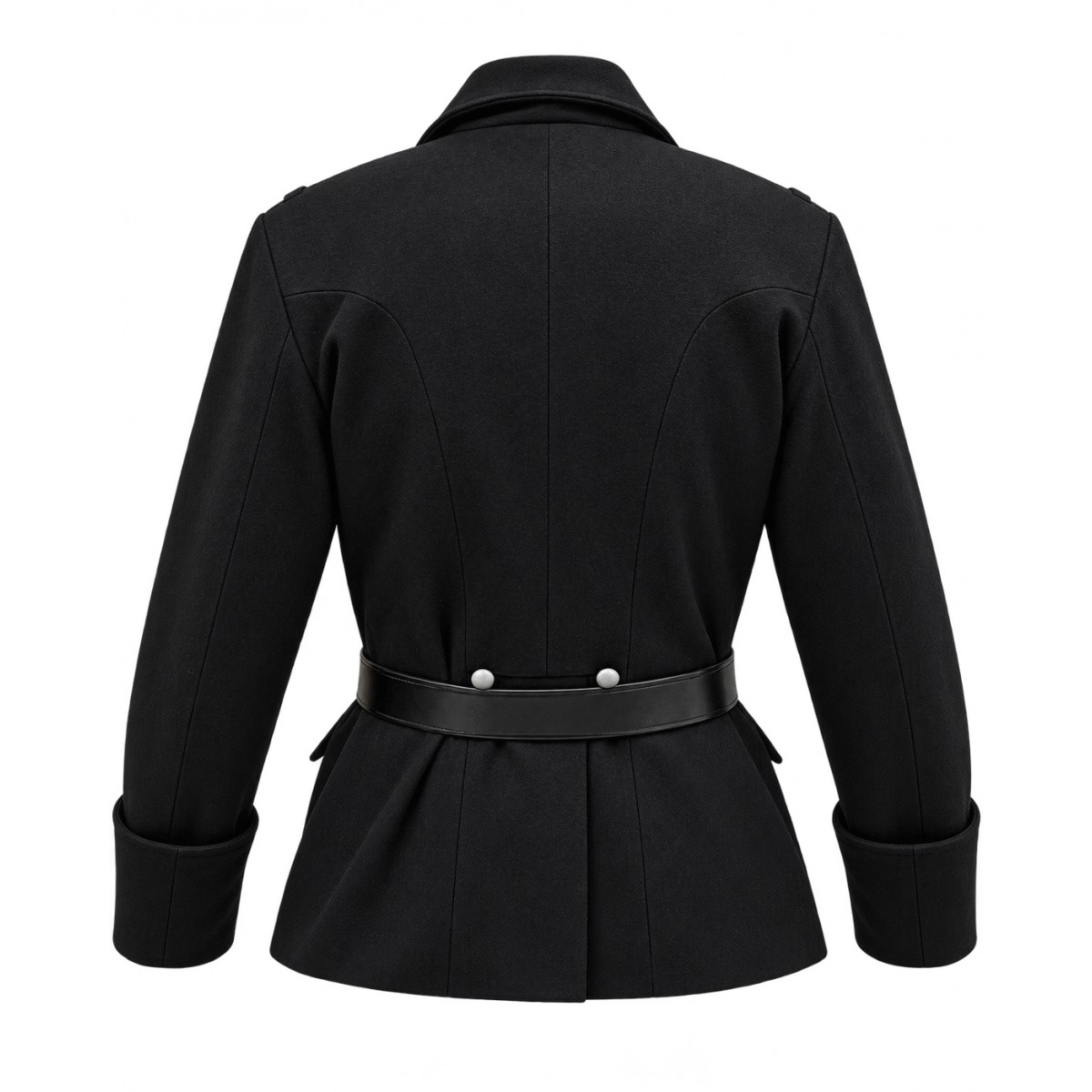
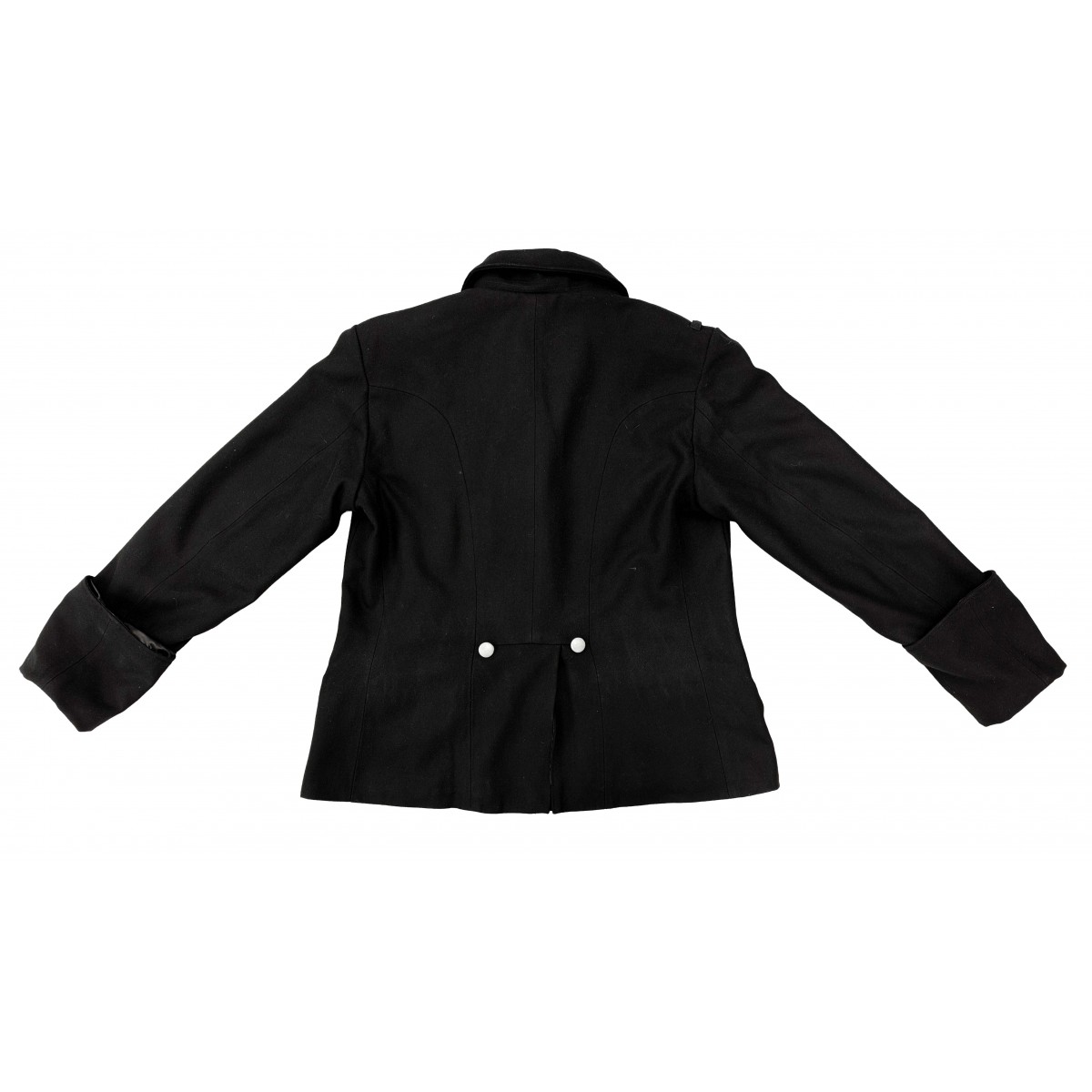
The back follows a true Uniformrock-style construction, using shaped seams to form the torso and waist. A central rear vent extends through the lower skirt, with two metal buttons positioned above it.
Another characteristic feature is the use of silver-coloured pebbled buttons. Their light finish provides the strong contrast against the black cloth that became one of the visual characteristics of the original uniform.
Material was historically an important distinction. Enlisted men and NCOs commonly wore versions manufactured from black uniform wool, while SS-Führer could obtain higher-grade tunics in black gabardine or fine worsted fabrics, often through private purchase or the SS clothing supply system.
Gabardine produces a substantially different garment from heavy wool cloth. Its finer weave allows cleaner tailoring, sharper seams and a more defined fall through the chest, waist and back, which is why it is strongly associated with surviving officer-quality examples.
The basic black Dienstrock was completed with collar tabs, shoulder insignia, cuff titles, armband and other insignia appropriate to the wearer's rank, unit and period. The underlying garment could therefore appear in numerous different configurations.
During different phases, the black service uniform was used by personnel belonging to the Allgemeine SS, SS-Verfügungstruppe, Leibstandarte and SS-Totenkopfverbände, with insignia providing the principal means of identifying specific branch and unit affiliation.
From 1935 onward, the introduction of earth-grey and field-grey uniforms progressively changed the role of the black Dienstrock within militarised SS formations. As military field dress became increasingly important, the black uniform remained particularly associated with the Allgemeine SS and with certain service and ceremonial functions.
For War Militaria, the development of this tunic required an exceptionally substantial industrial effort. The appearance of the M32 depends on a series of closely related proportions: shoulder width, waist shaping, lapel angle, pocket placement, flap geometry, cuff depth and rear construction all influence the final silhouette.
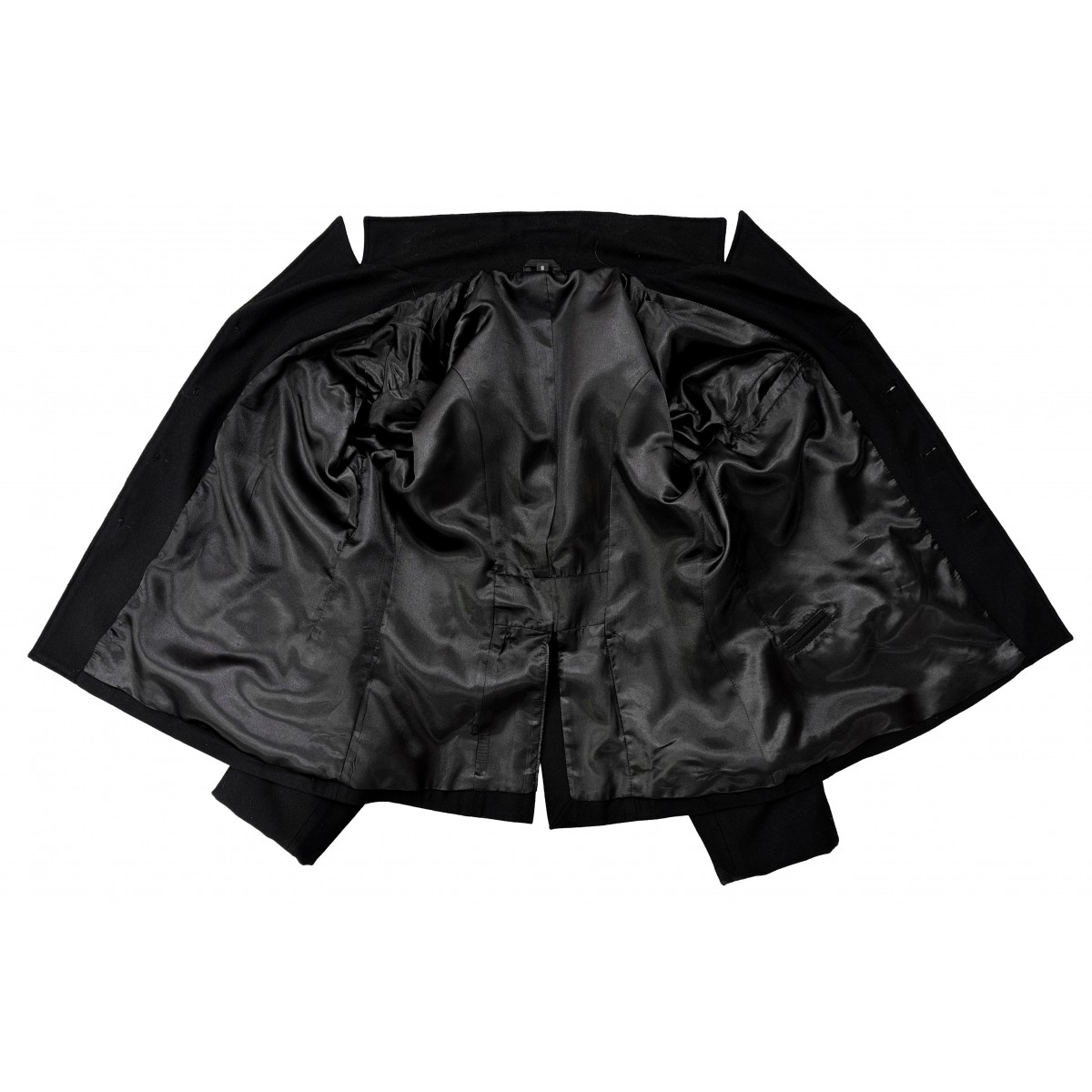
Particular attention has therefore been given to the black gabardine, the construction of the pleated breast pockets, the shape of the pocket flaps, the lapels, broad cuffs, button positioning and the fully lined interior.
Much of the work involved in a garment of this type is not immediately visible from the outside. The internal construction, however, is precisely what allows the tunic to retain its shape and produce the sharply defined profile associated with the historical Dienstrock.
A lesser-known detail concerns the name itself: “M32” was not the official period designation used by the SS.Contemporary documents simply referred to the garment as the SS-Dienstrock. The M32 designation became established later among collectors and researchers as a convenient way of identifying the black service tunic introduced in 1932.
Data sheet
| Material | Outer fabric: 100% Gabardine Lining: 100% Synthetic |
18 other products in the same category:

Uniforms
- Germany
- Uniforms
- Medals, Orders and Decorations
- Badges and Pins
- ID Tags
- Arm Shields
- Helmets
- Helmet Decals
- Visor Caps and Hats
- Cap and Helmet Badges
- Collar Tabs Badges
- Collar Tabs, Shoulder Boards and Epaulettes
- Arm Bands
- Division Cuff Titles
- Buckles And Belts
- Buttons For Uniforms
- Stamps
- Gorgets
- Rings
- SS Honour Ring in 925 Silver - Collector's Set
- Poletops
- Flags
- Daggers and Knives (Ornamental)
- Field Marshal Batons
- Field and Personal Equipment
- Service Watches
- Presentation Cases
- Documents and Award Letters
- Busts, Eagles, Lighters and Miscellaneous
- Croatian and Ustasha Militaria
- Denazified Articles
- Commemorative Necklaces
- Spare Parts, Small Parts and Accessories
- Italy
- Medals and Decorations
- Brevets And Badges
- Battle Shields and Tags
- Gorgets
- Visor Caps and Hats
- Cap and Helmet Badges
- Helmets Decals
- Friezes for Collar Tabs
- Collar Tabs, Shoulder Boards and Epaulettes
- Buckles
- Belts
- Buttons For Uniforms
- Rings
- Poletops
- Italian Resistance
- Keyrings
- Wallshields
- Daggers and Knives
- Flags
- Busts and Eagles
- Souvenirs
- Commemorative Necklaces
- Imperial Germany
- Soviet Union
- Other Countries