
No products
Product successfully added to your shopping cart
There are 0 items in your cart. There is 1 item in your cart.
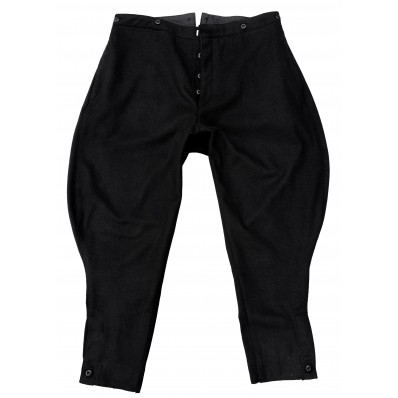
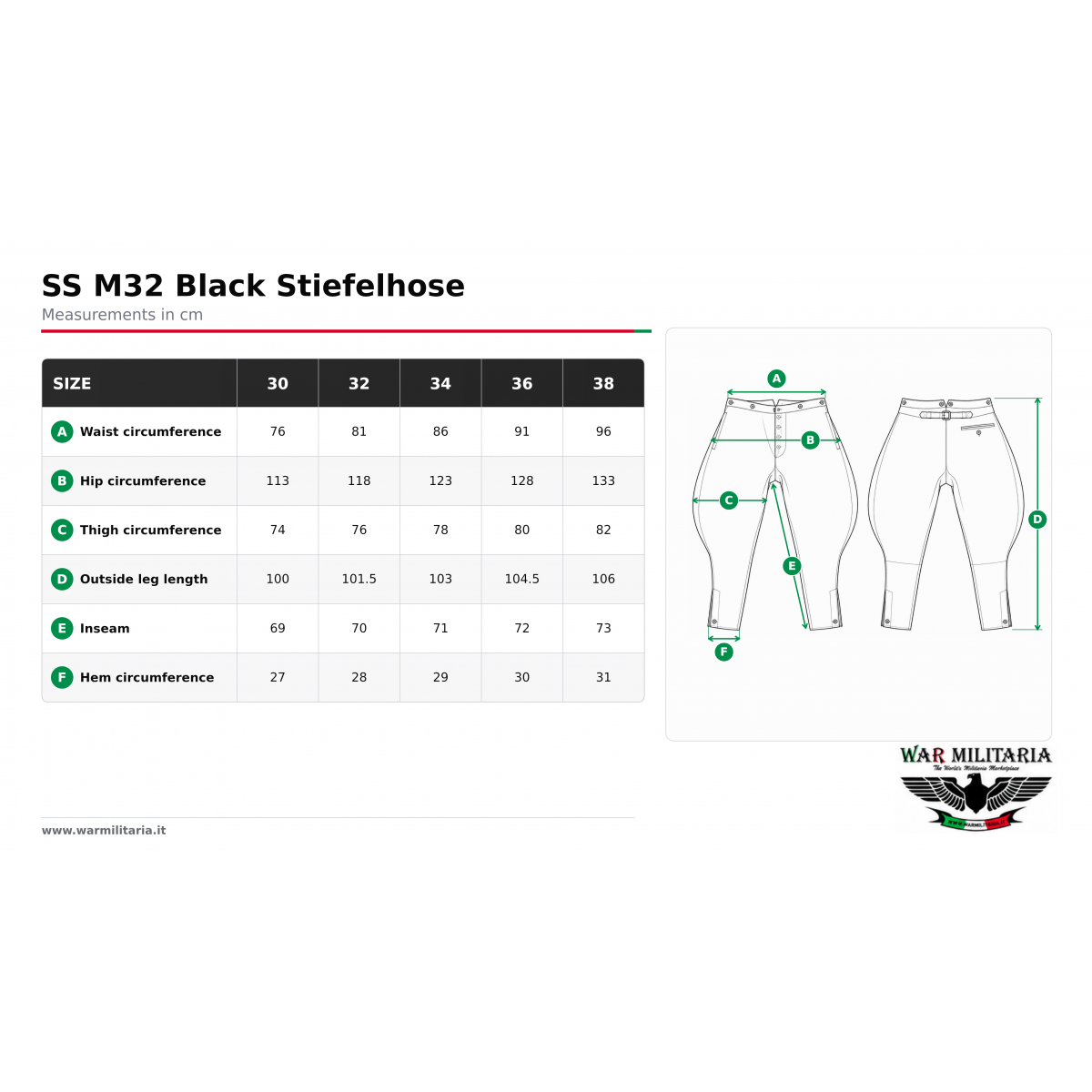
SS M32 Stiefelhose
New
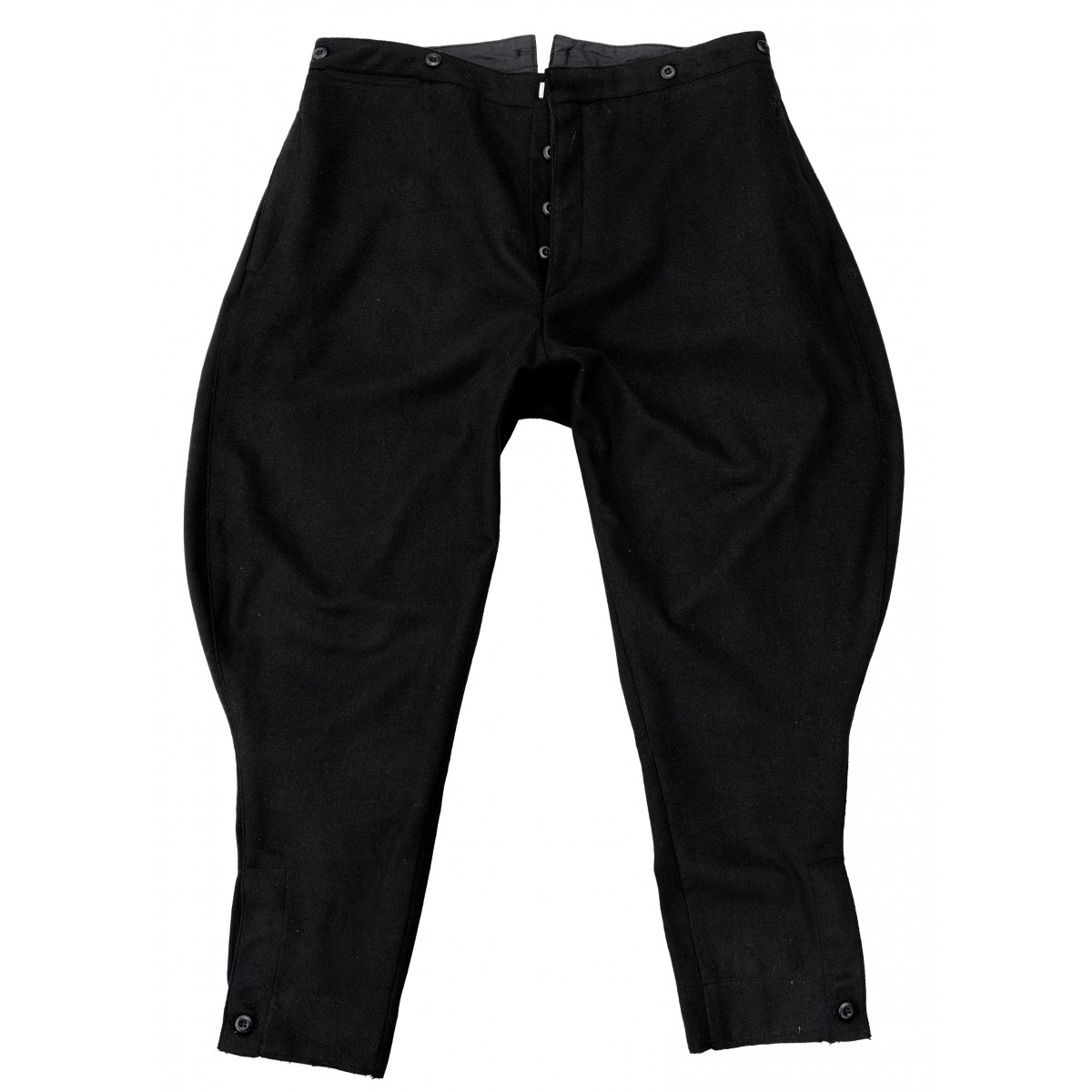
M32 SS Stiefelhose intended for wear with the black service uniform. High waist, full thighs and strongly tapered lower legs for wear inside tall boots, with button fly, rear waist adjustment and buttons for braces.
- Satisfied or refunded: we guarantee 100% secure protection on your purchases
- Free return: return your order free of charge within 30 days from receipt
- Secure payments: pay securely online with PayPal or credit cards

More info
The SS M32 Stiefelhose formed one of the characteristic trouser combinations worn with the black service tunic of the early 1930s.
Its silhouette is immediately recognizable: a high waist, pronounced fullness through the thighs and a strongly tapered lower leg.
This shape was functional as well as visual. The full upper section provided freedom of movement, while the narrow calf allowed the trousers to fit comfortably inside tall Schaftstiefel without excessive material gathering inside the boot.
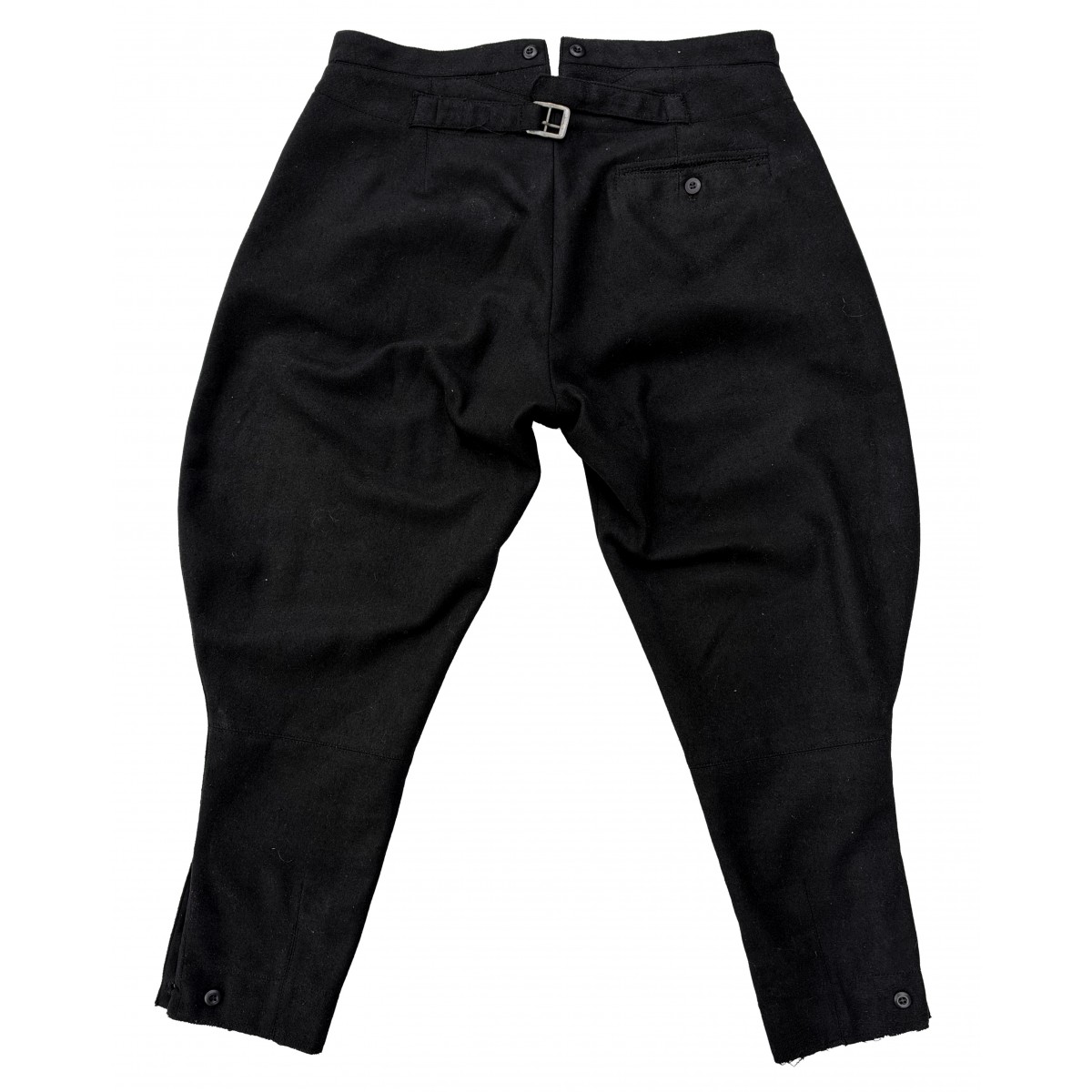
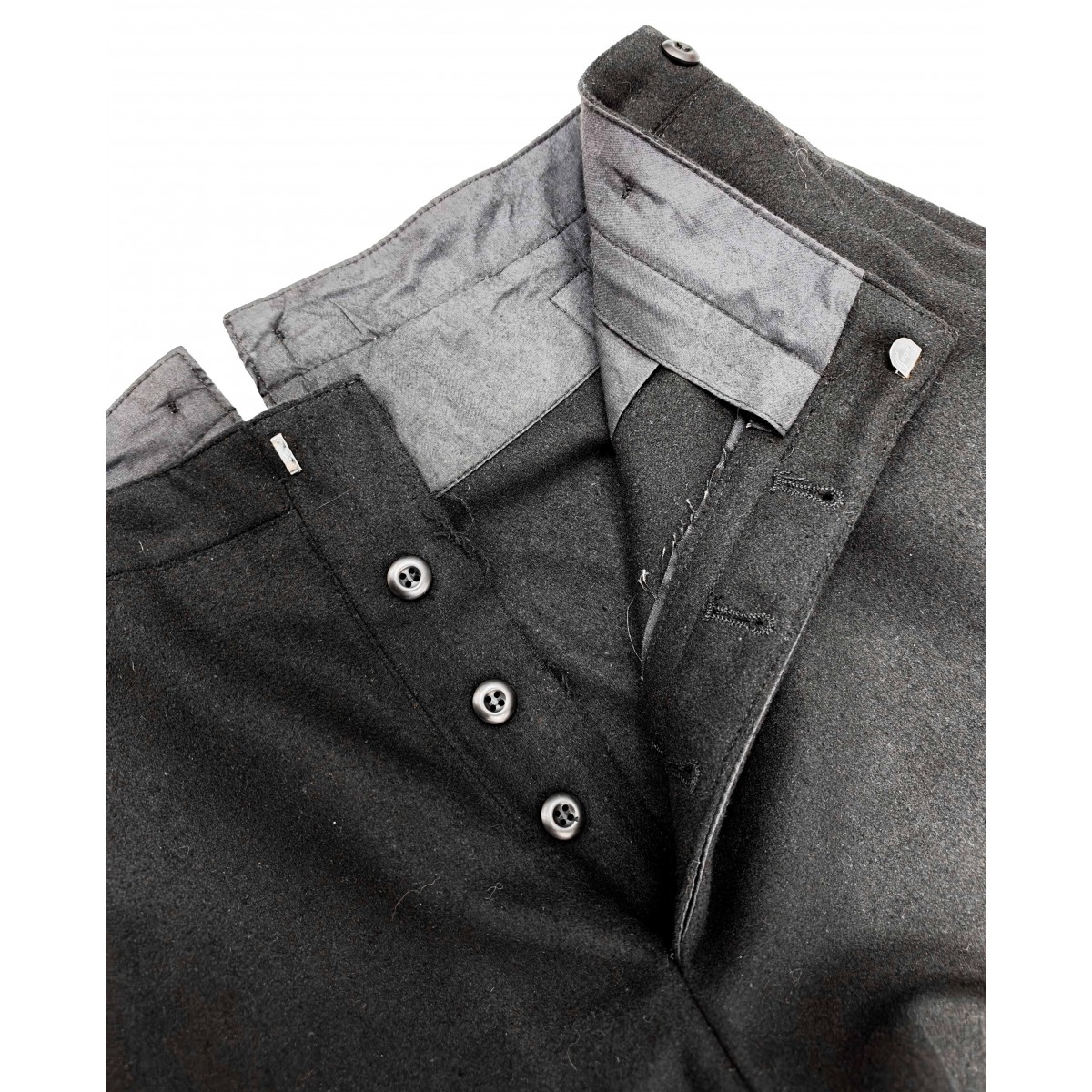
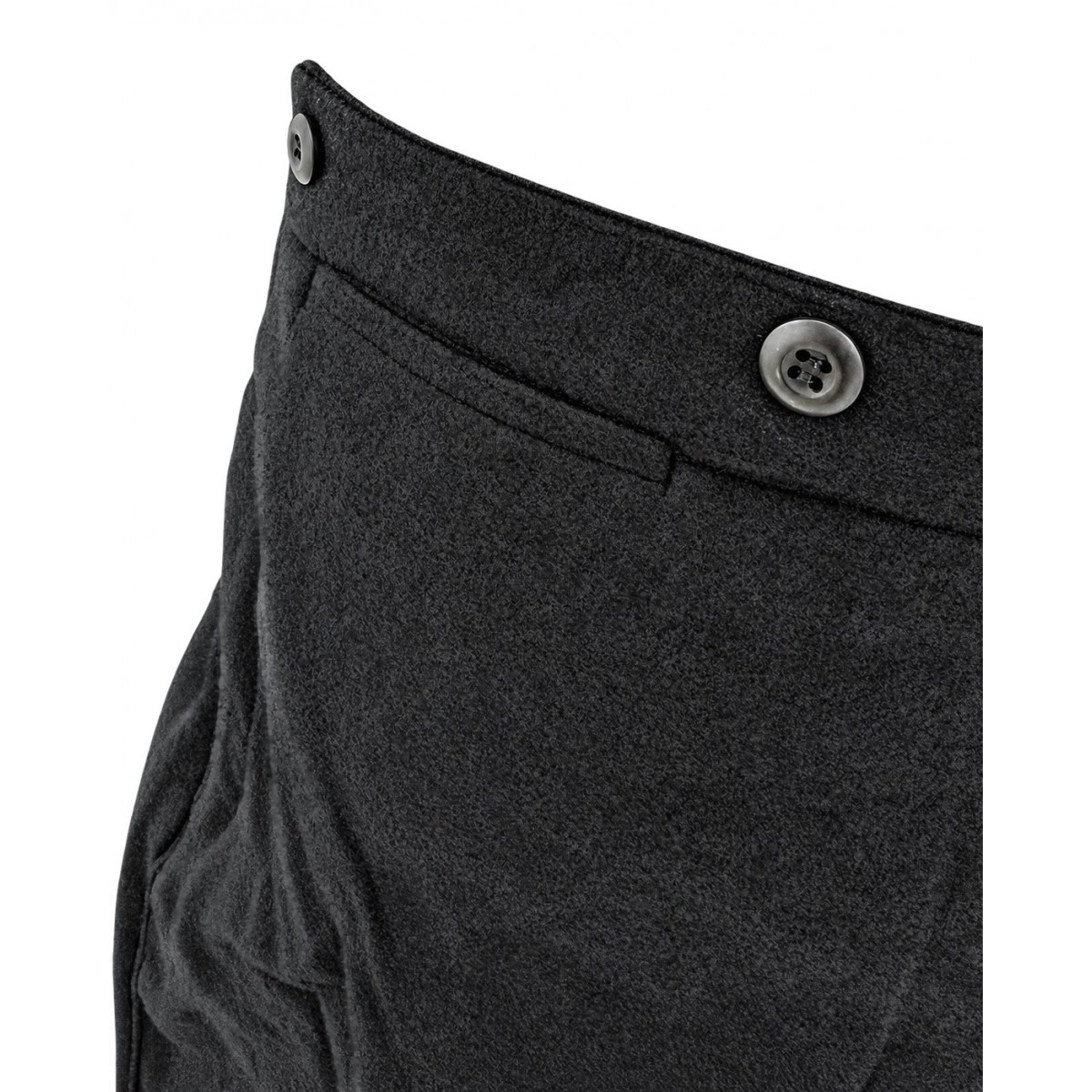
The trousers feature a traditional button fly, angled side pockets and a rear pocket.
The waistband carries buttons for braces, reflecting the construction of many German uniform trousers of the period, when suspenders remained a standard method of supporting military trousers.
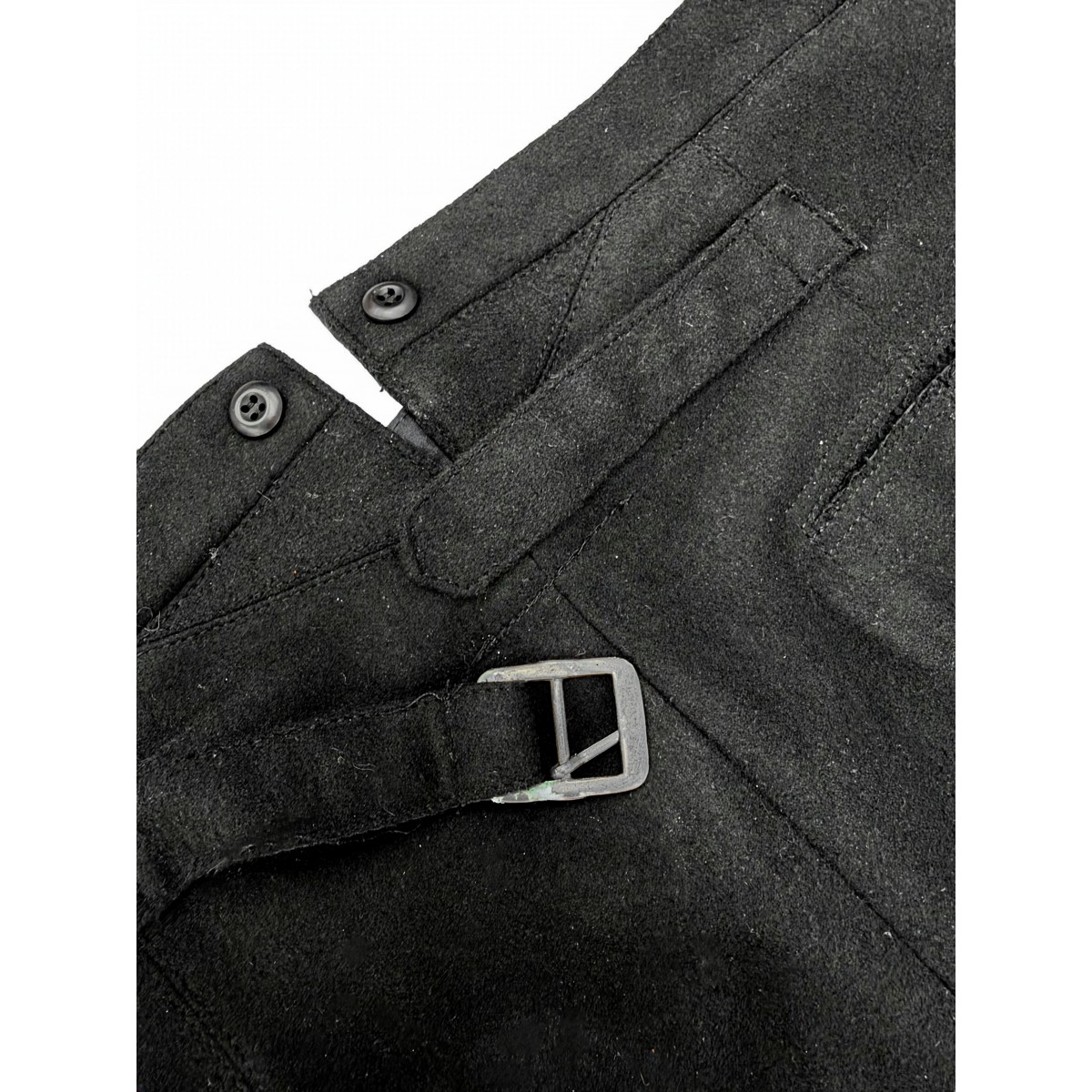
At the rear is an adjustment strap with metal buckle, allowing limited alteration of the waist circumference.
This model is made from black cotton fabric, although the defining characteristic of the garment remains its cut rather than the specific cloth itself.
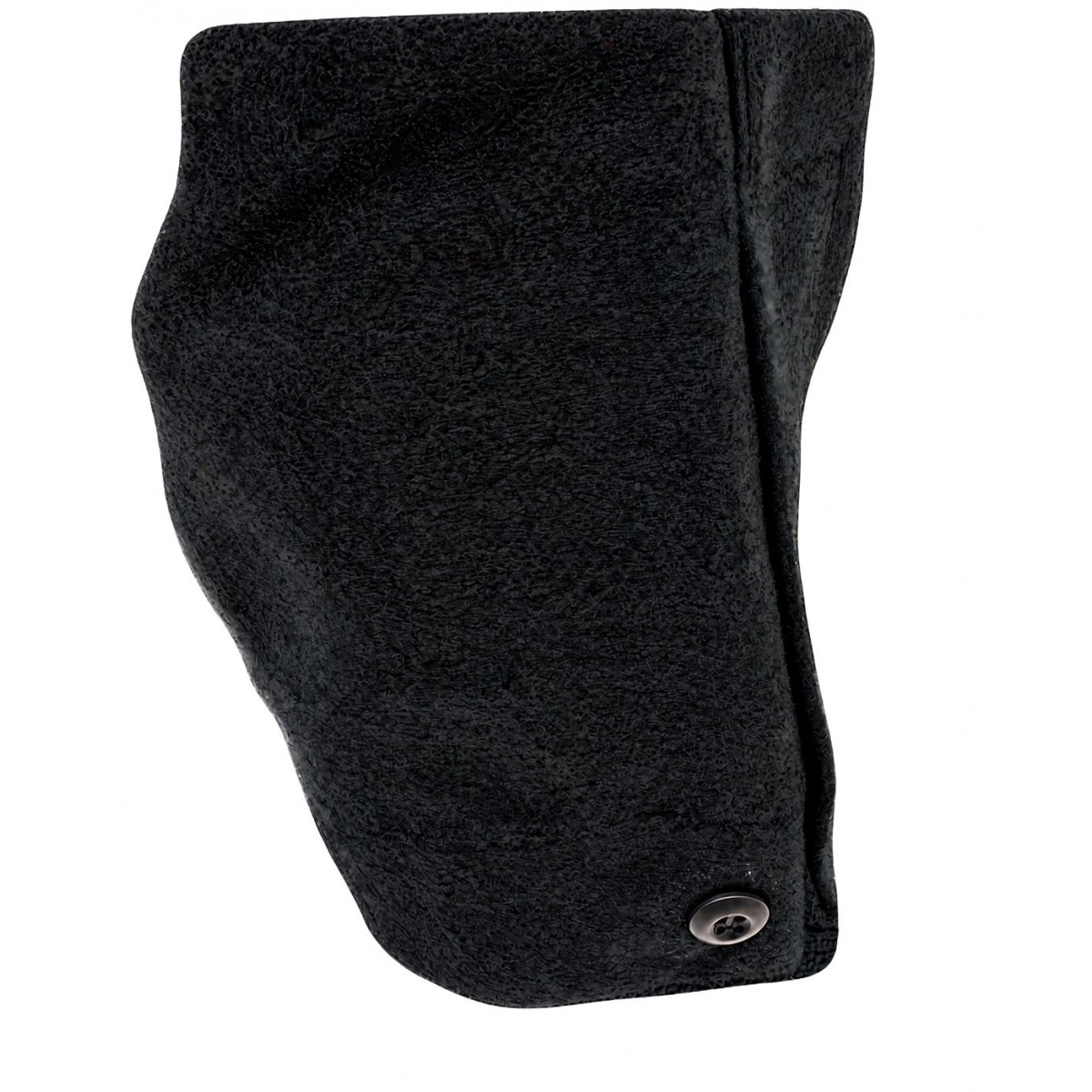
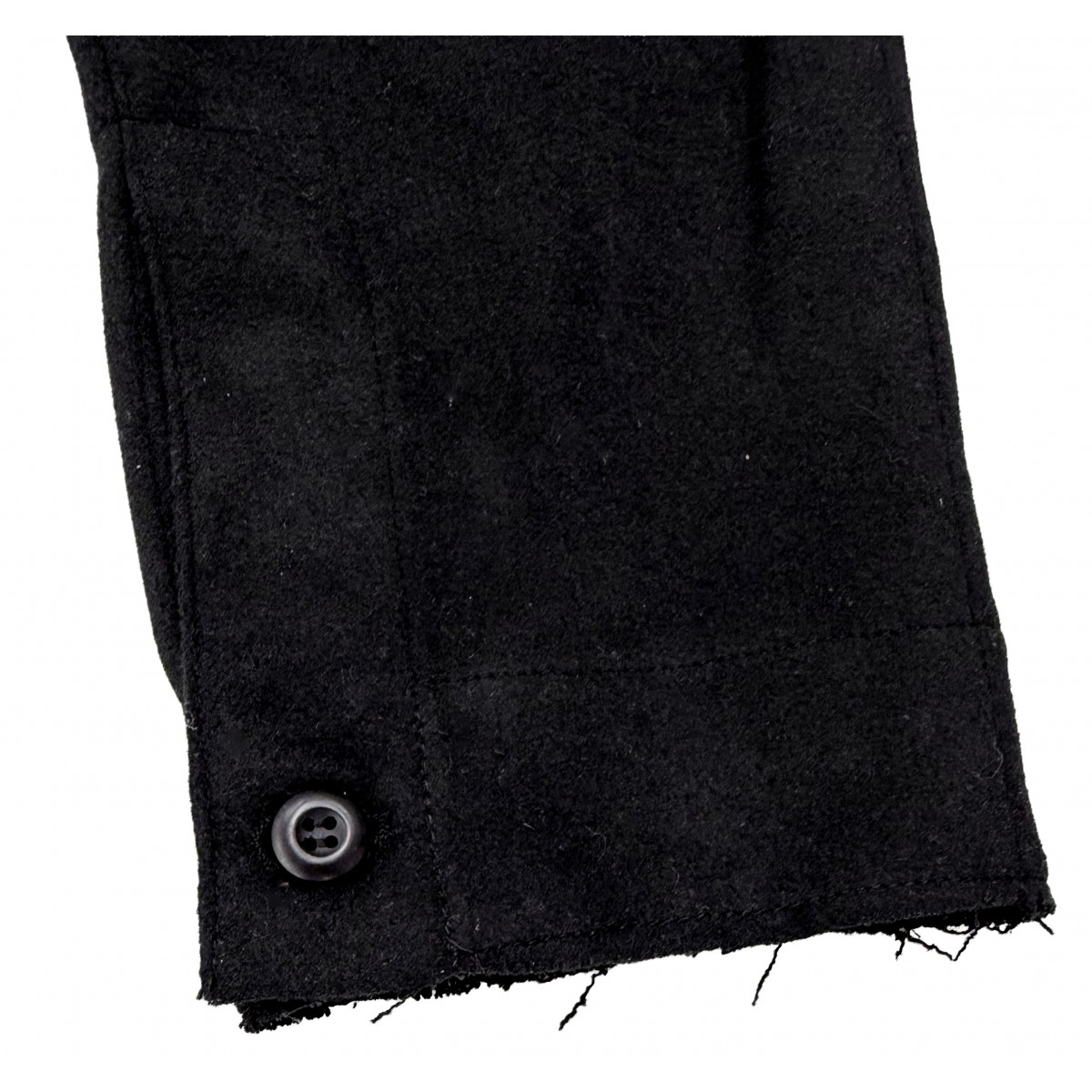
The lower leg terminates in a button closure, forming part of the narrow section intended to be worn inside the boot.
Surviving period Stiefelhosen demonstrate considerable variation in this area. Lace closures, button closures and combined systems are all known, with differing numbers and arrangements of fasteners.
Such differences could result from manufacturer, procurement system, production period and private tailoring.
Waist adjustment also varied between surviving garments. Some examples employ side adjusters, while others use a rear adjustment strap, a construction already common in contemporary military and civilian tailoring.
One of the most difficult aspects of this garment to reproduce correctly is the shape of the leg itself. Too little volume through the thigh destroys the characteristic profile, while insufficient taper below the knee prevents the trousers from sitting correctly inside the boot.
Particular attention has therefore been given to the transition from thigh to knee and calf, as well as to the waistband, pocket placement, closures and rear construction.
Black Stiefelhosen accompanied the black Dienstrock throughout the 1930s and continued to appear even as grey and field-grey uniforms increasingly replaced the earlier black service uniform in many roles.
A lesser-known detail: Stiefelhose and Reithose were not strictly interchangeable terms. A Stiefelhose was specifically designed for wear with tall boots and could have a less exaggerated outward curve than a true riding breech. The modern generic use of the word “breeches” often obscures this distinction.
Data sheet
| Material | 100% Wool |
19 other products in the same category:

Uniforms
- Germany
- Uniforms
- Medals, Orders and Decorations
- Badges and Pins
- ID Tags
- Arm Shields
- Helmets
- Helmet Decals
- Visor Caps and Hats
- Cap and Helmet Badges
- Collar Tabs Badges
- Collar Tabs, Shoulder Boards and Epaulettes
- Arm Bands
- Division Cuff Titles
- Buckles And Belts
- Buttons For Uniforms
- Stamps
- Gorgets
- Rings
- SS Honour Ring in 925 Silver - Collector's Set
- Poletops
- Flags
- Daggers and Knives (Ornamental)
- Field Marshal Batons
- Field and Personal Equipment
- Service Watches
- Presentation Cases
- Documents and Award Letters
- Busts, Eagles, Lighters and Miscellaneous
- Croatian and Ustasha Militaria
- Denazified Articles
- Commemorative Necklaces
- Spare Parts, Small Parts and Accessories
- Italy
- Medals and Decorations
- Brevets And Badges
- Battle Shields and Tags
- Gorgets
- Visor Caps and Hats
- Cap and Helmet Badges
- Helmets Decals
- Friezes for Collar Tabs
- Collar Tabs, Shoulder Boards and Epaulettes
- Buckles
- Belts
- Buttons For Uniforms
- Rings
- Poletops
- Italian Resistance
- Keyrings
- Wallshields
- Daggers and Knives
- Flags
- Busts and Eagles
- Souvenirs
- Commemorative Necklaces
- Imperial Germany
- Soviet Union
- Other Countries