
No products
Product successfully added to your shopping cart
There are 0 items in your cart. There is 1 item in your cart.
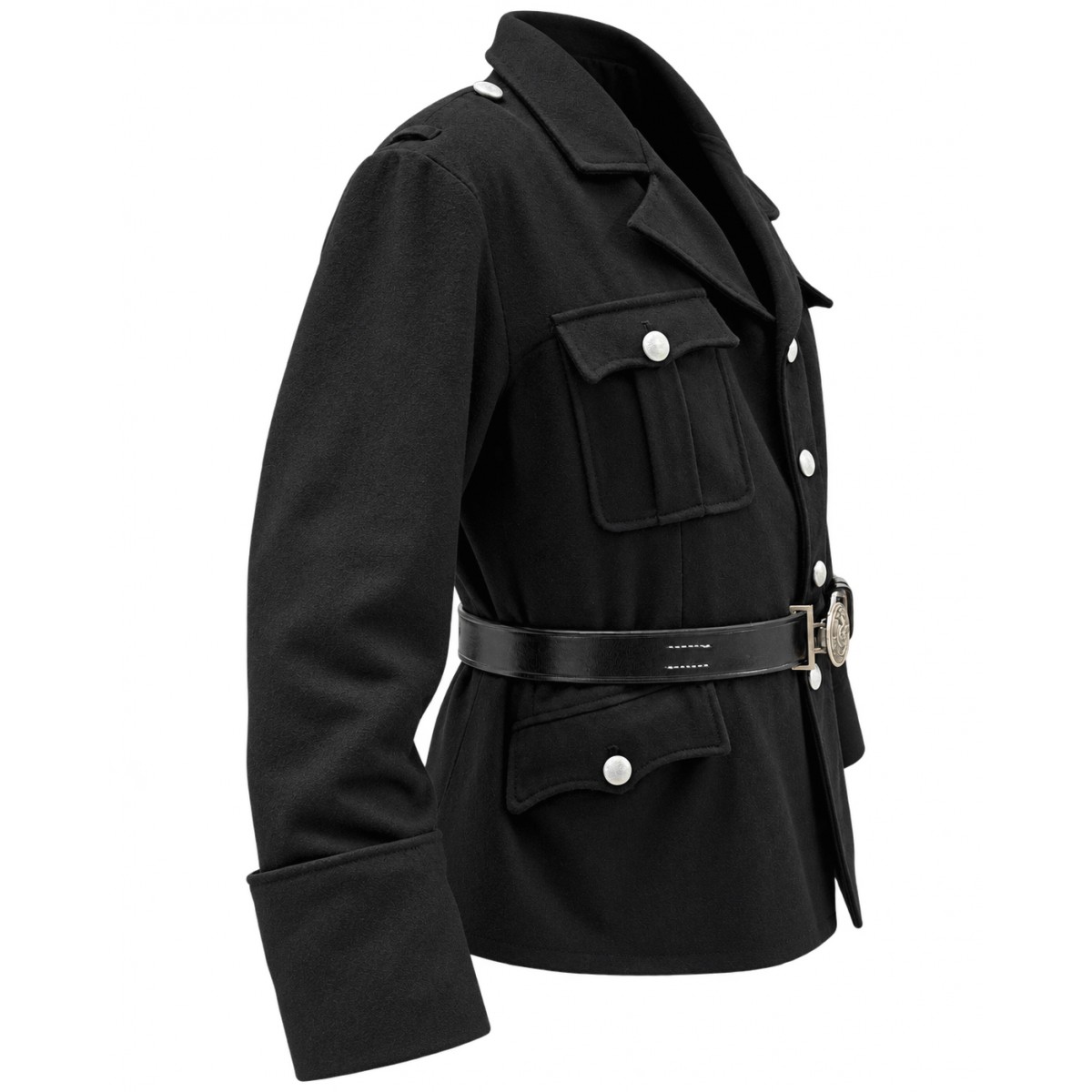
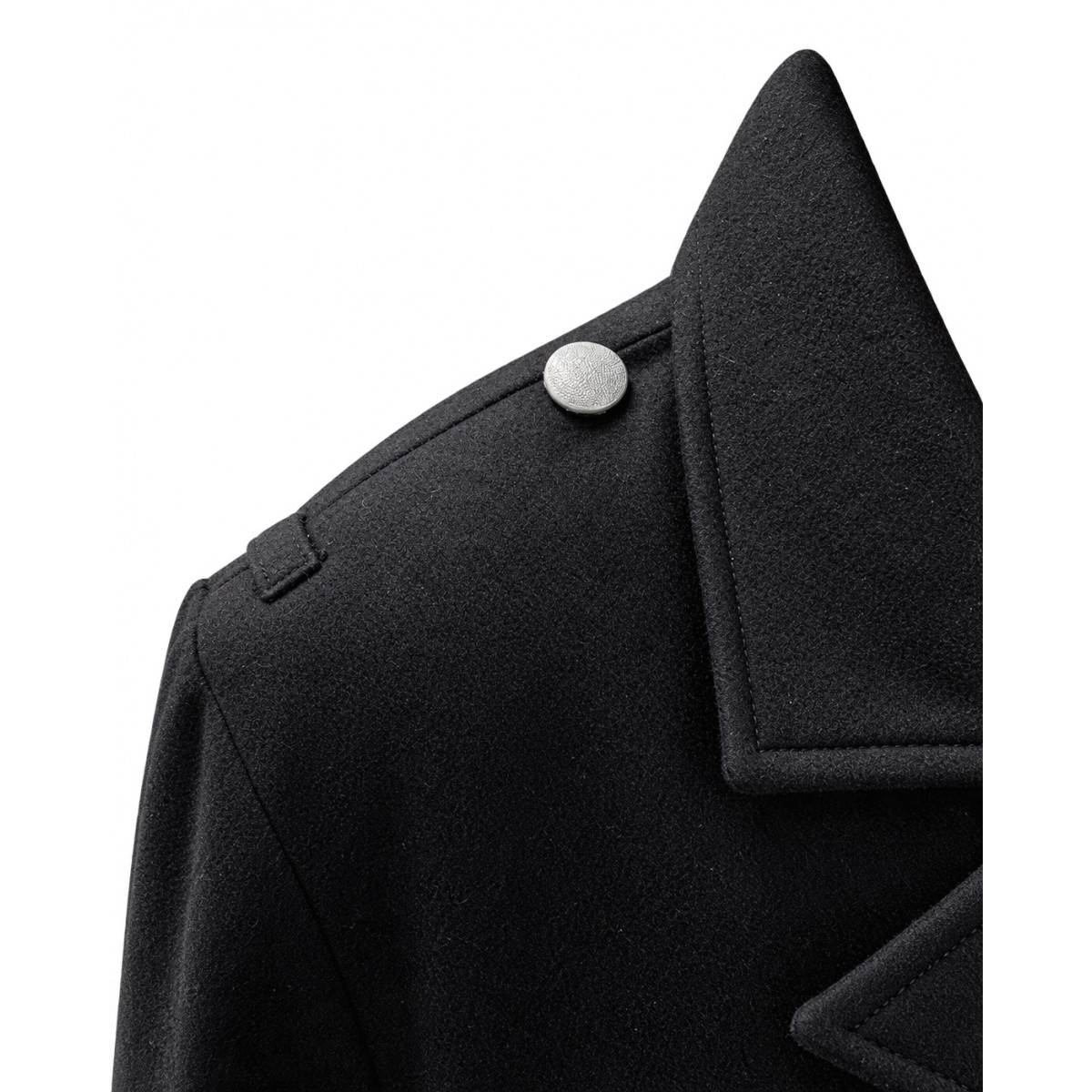
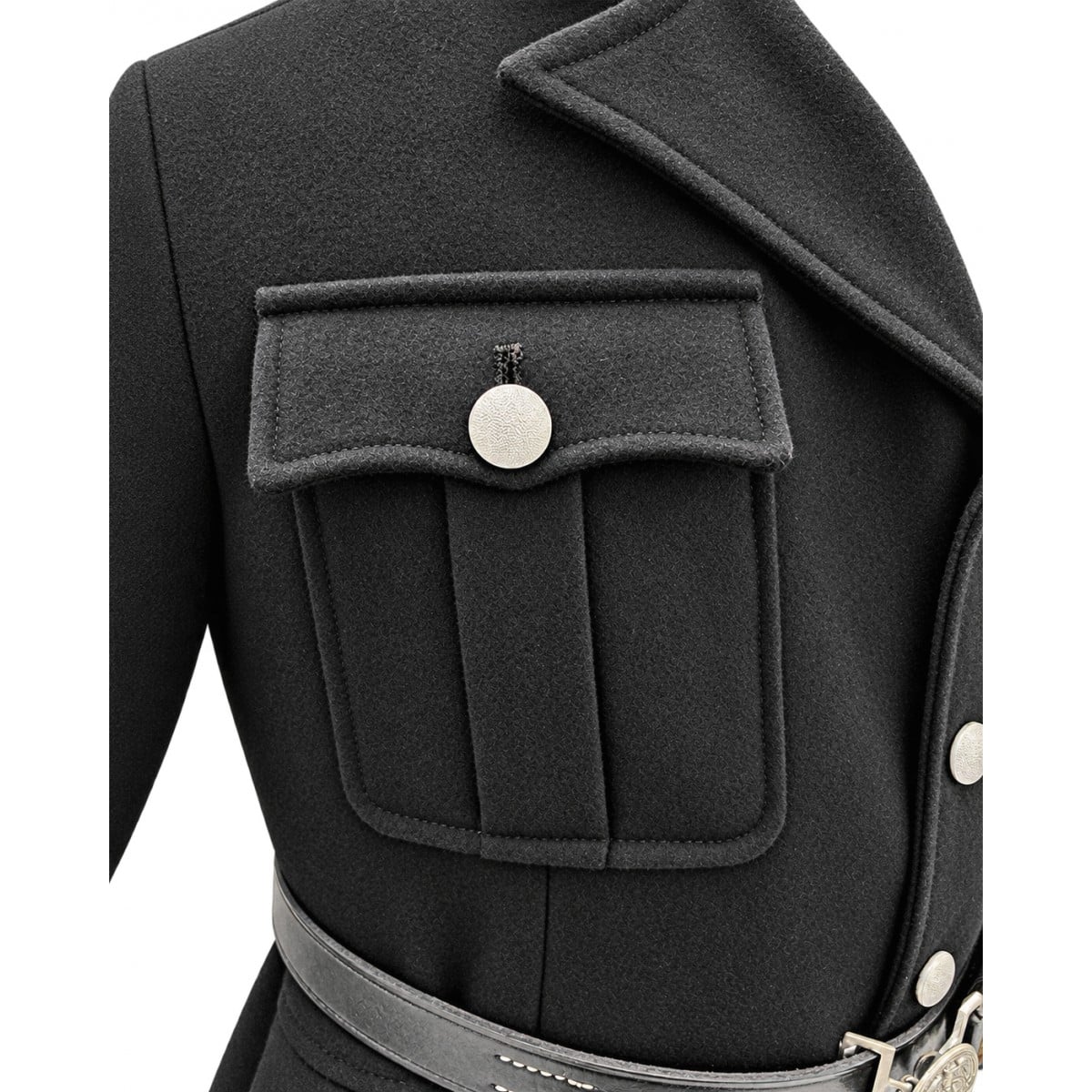
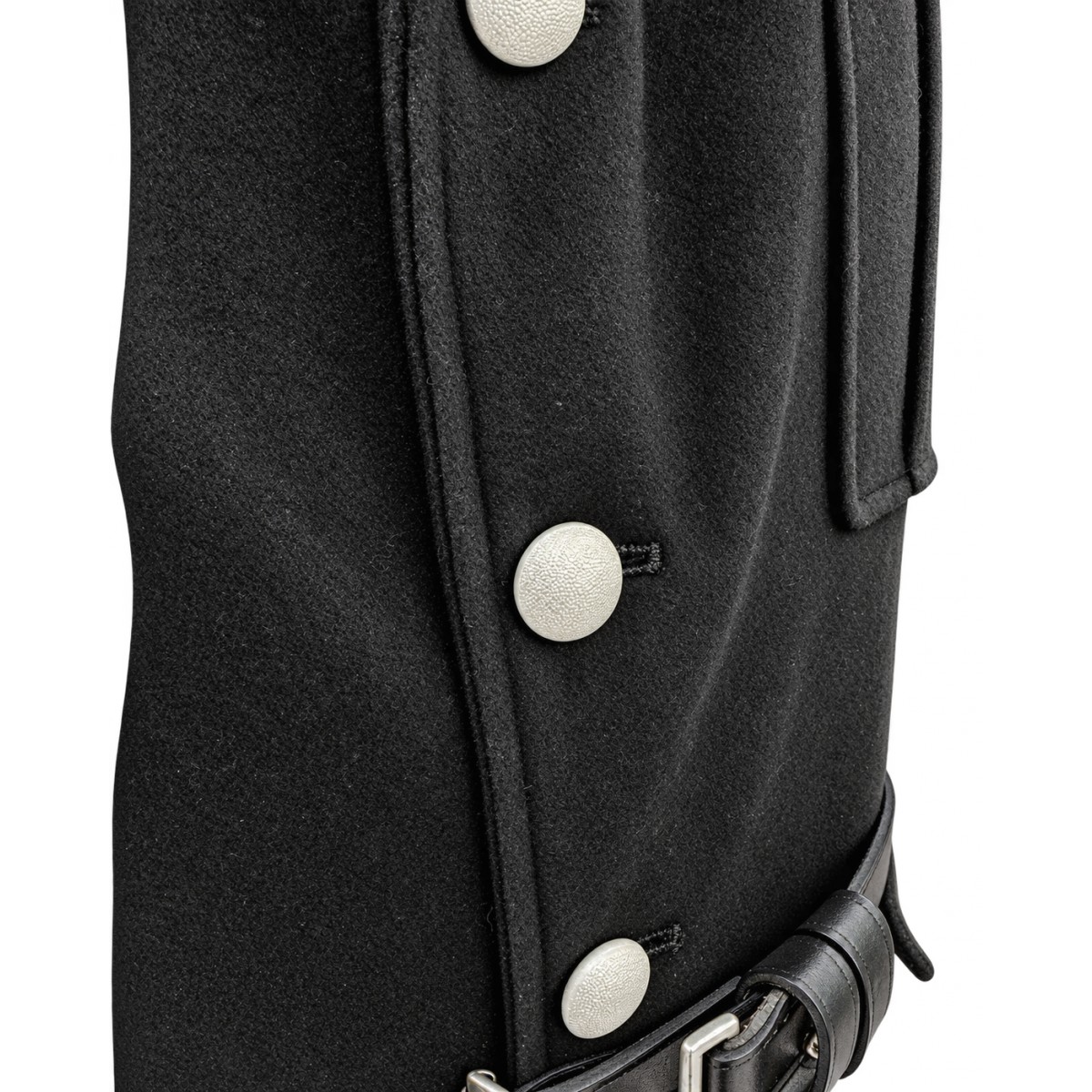
SS M32 Black Service Tunic – Dienstrock
New
SS M32 tunic based on the characteristic black Dienstrock introduced in 1932. One of War Militaria's most demanding textile projects, developed with particular attention to cut, proportions, pockets, cuffs, rear construction and internal tailoring.
- Satisfied or refunded: we guarantee 100% secure protection on your purchases
- Free return: return your order free of charge within 30 days from receipt
- Secure payments: pay securely online with PayPal or credit cards

More info
The SS M32 Black Service Tunic, belonging to the family of the schwarzer SS-Dienstrock, represents one of the most technically demanding textile projects developed by War Militaria.
Introduced in 1932, the black service uniform had a distinctly tailored appearance, considerably different from the later grey and field-grey military uniforms.
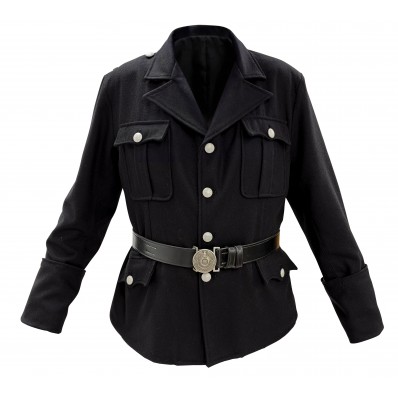
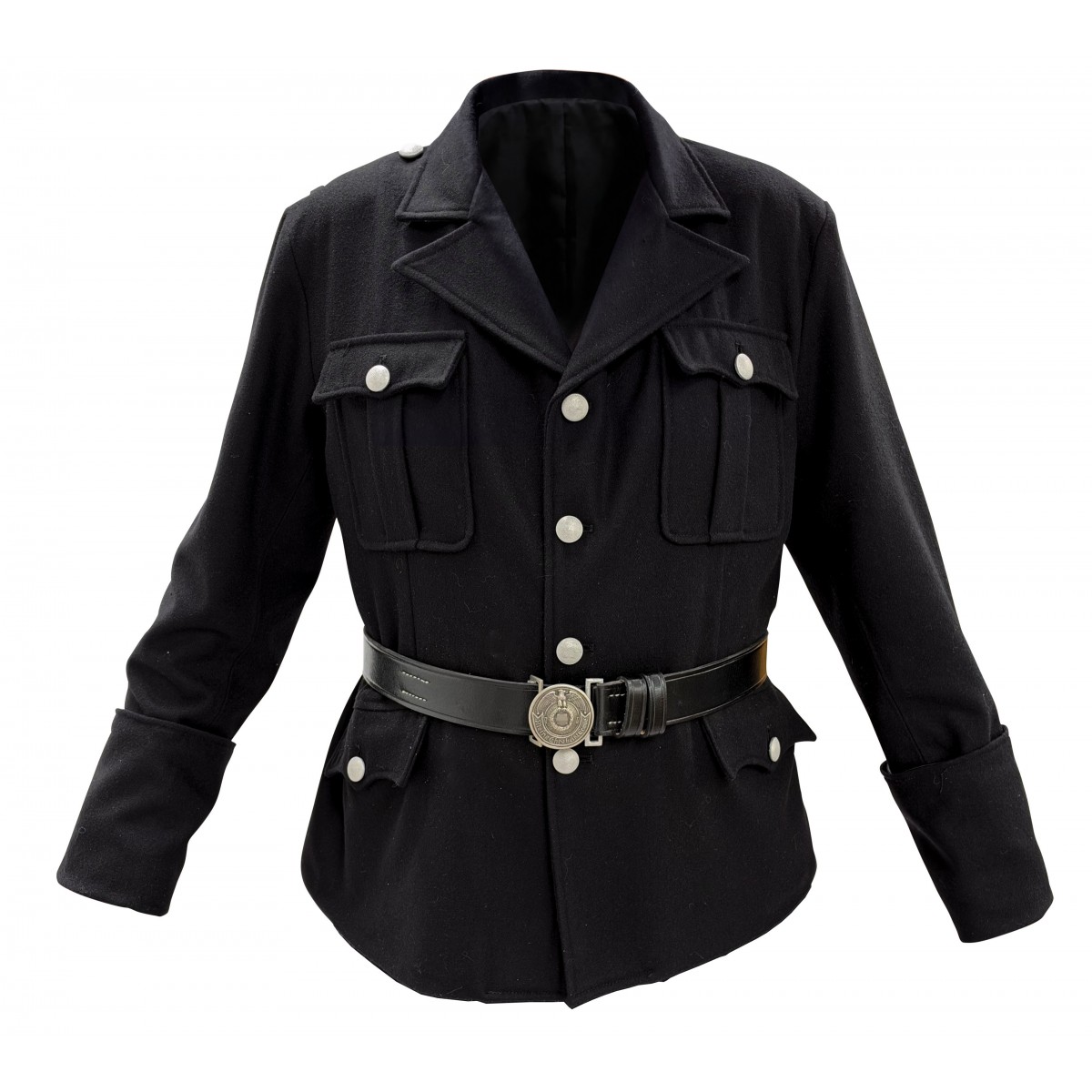
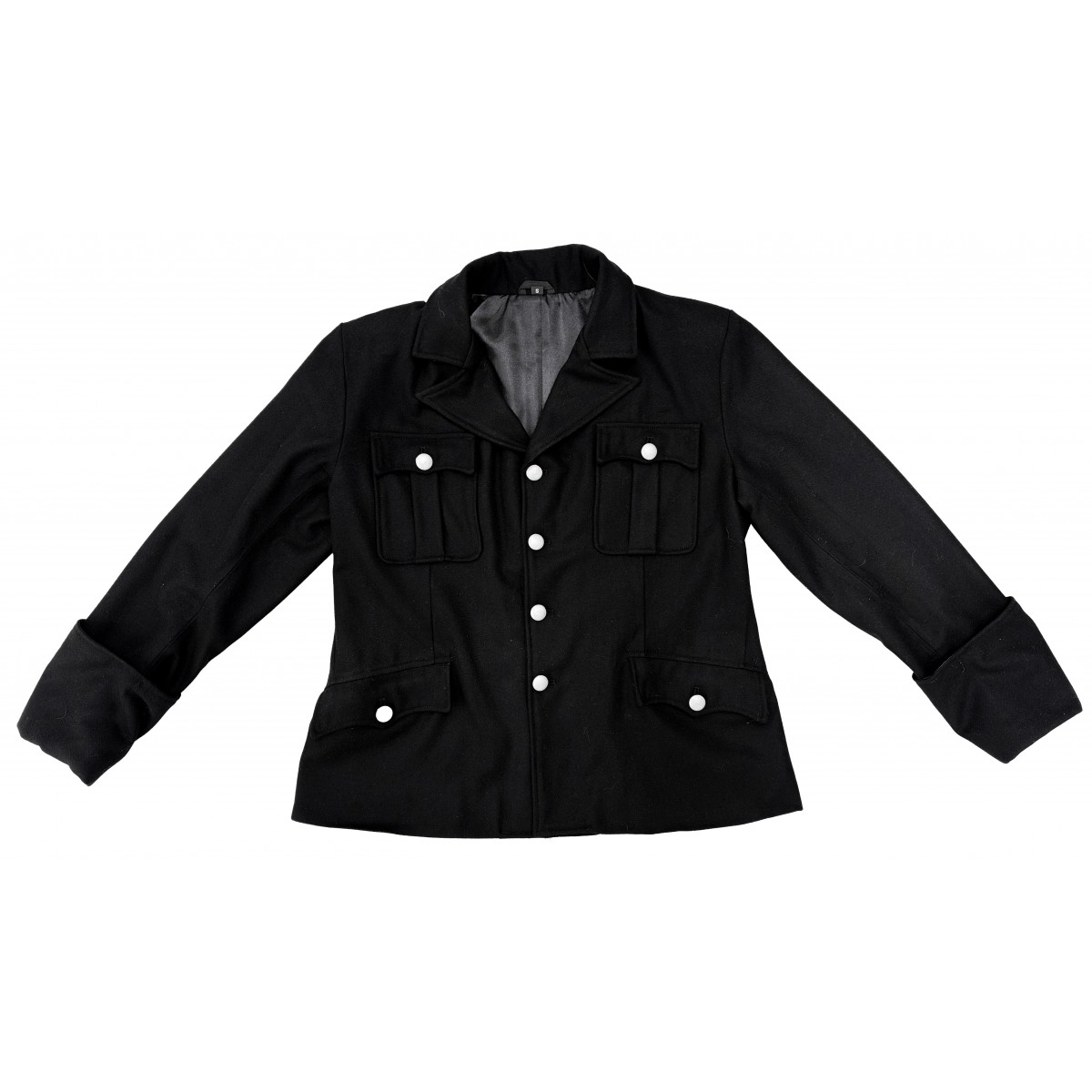
The tunic was single-breasted and strongly shaped through the waist, with open lapels, four external pockets and the characteristic broad turned-back cuffs.
A major part of the development of this garment concerned its proportions. Relatively small differences in lapel angle, pocket position, body length, waist suppression or cuff depth can substantially alter the appearance of the entire tunic.
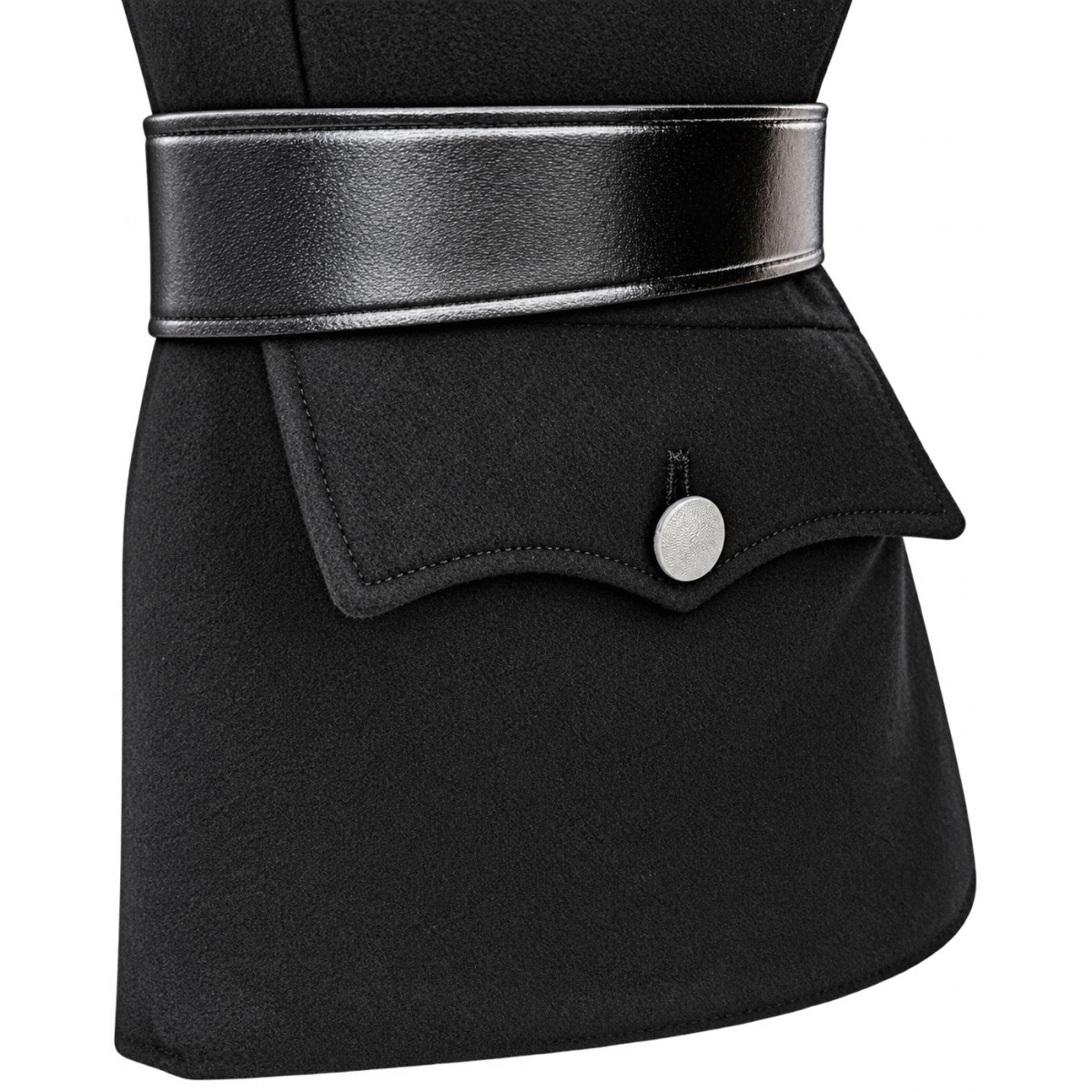
The front carries four metal buttons, two pleated patch breast pockets with shaped flaps and two lower pockets with flaps.
The sleeves terminate in the distinctive broad cuffs, one of the most recognizable features of the black Dienstrock.
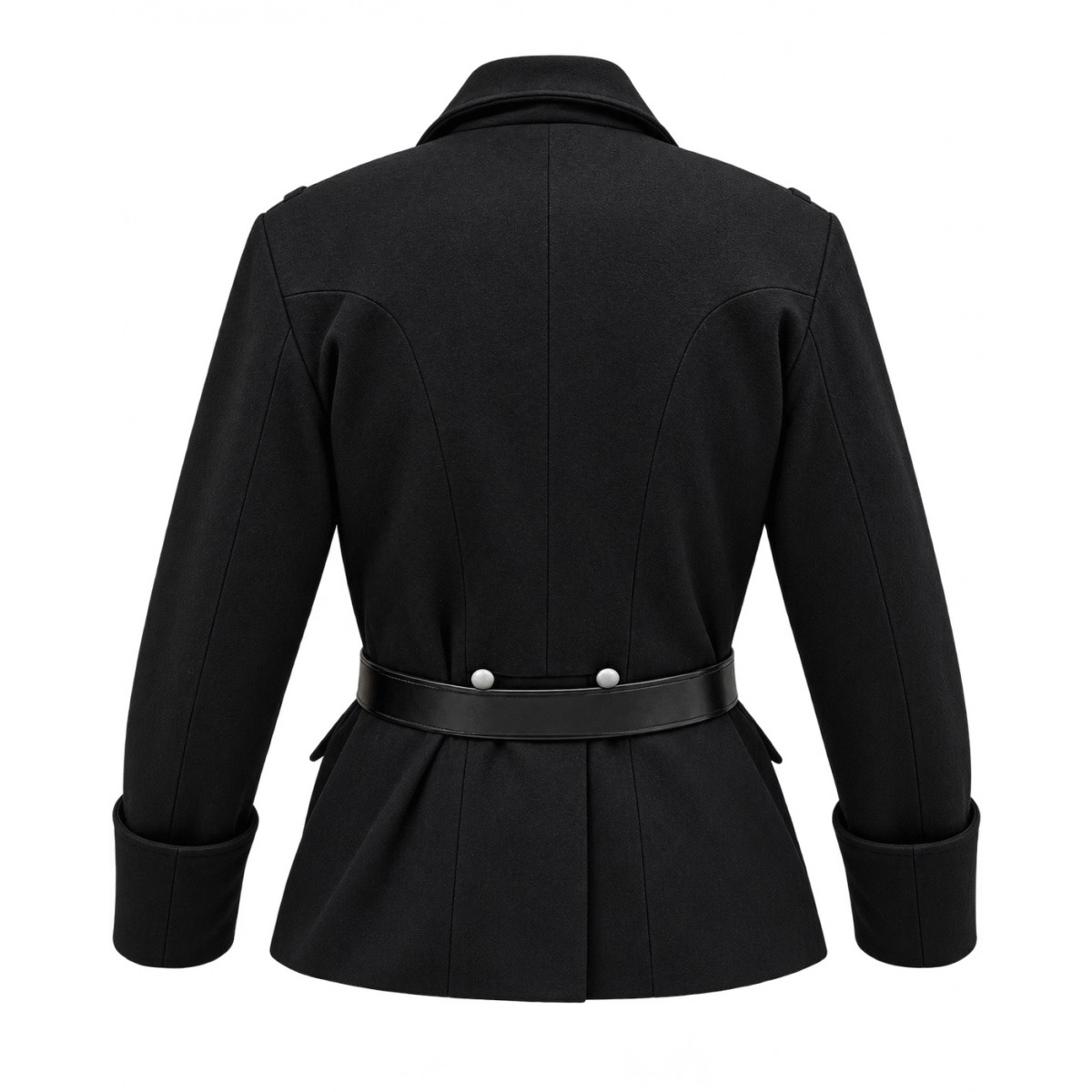
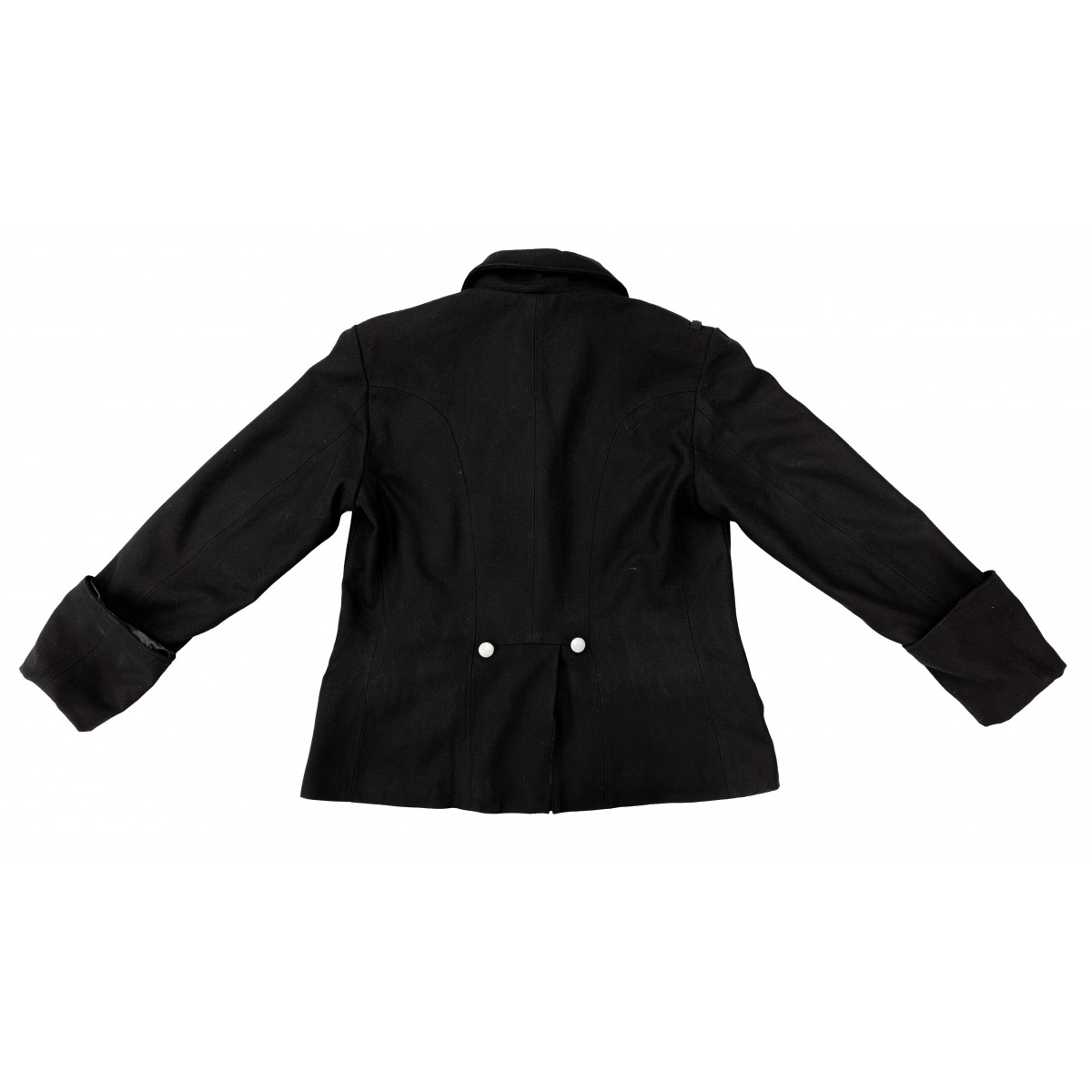
The back also requires careful tailoring. Shaped seams follow the body, while the rear vent and two buttons contribute to the characteristic construction of the garment.
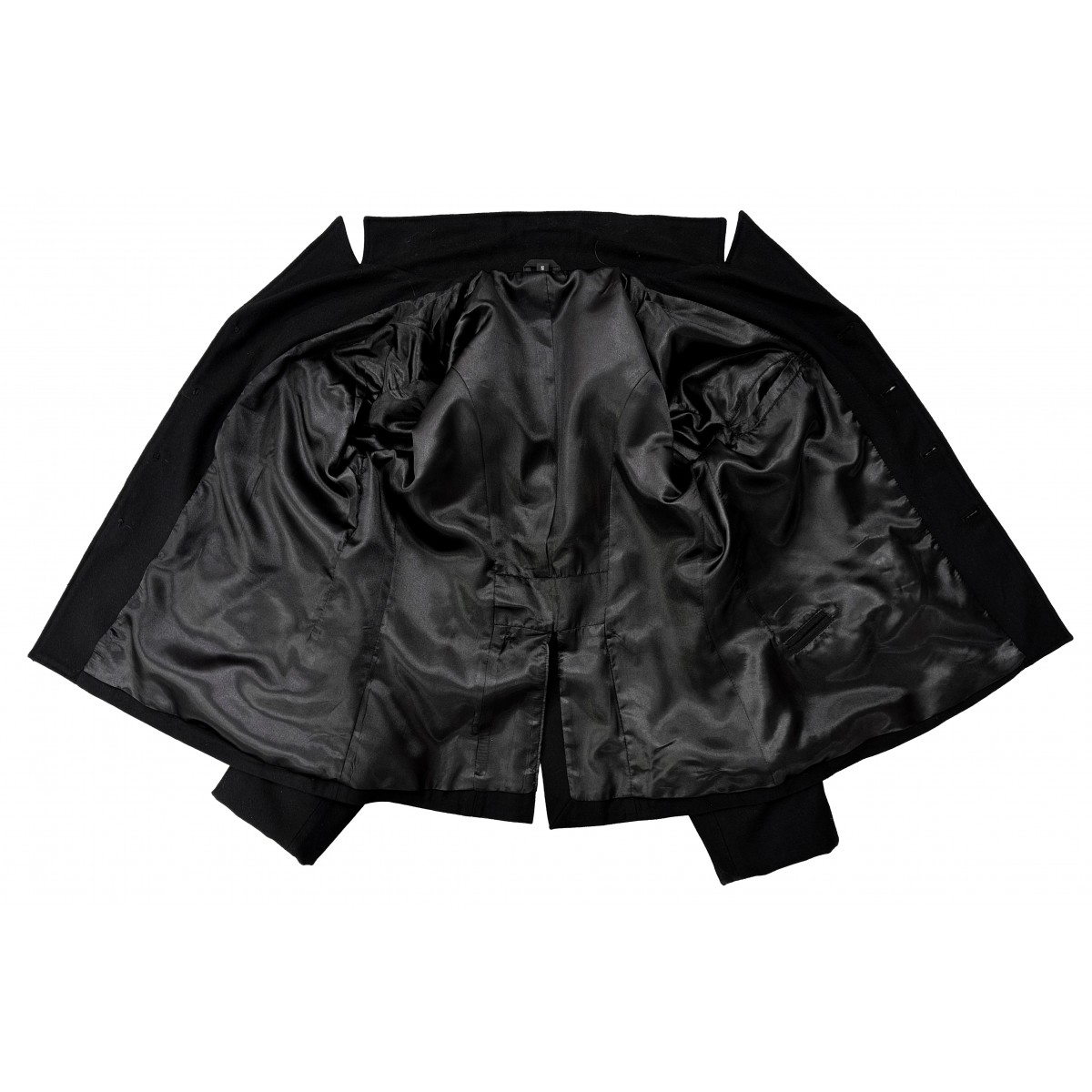
The tunic is fully lined, concealing a considerable amount of work that is not immediately visible from the exterior. Reinforcement, shaping, seams and internal structure are essential for maintaining the intended silhouette when worn.
This model is manufactured from black cotton fabric, incorporated into the construction without making the material itself the defining feature of the garment.
Historically, the Dienstrock acted as the foundation for a wide range of insignia combinations. Rank, unit and appointment determined the collar tabs, shoulder boards, cuff titles, armband and other insignia applied to the basic garment.
During the 1930s the black Dienstrock became particularly associated with the Allgemeine SS and with the early uniforms of other SS formations. Its role changed progressively as grey and field-grey uniforms were introduced for military service.
Surviving period garments also demonstrate considerable manufacturing variation. Cut, cloth, linings, pocket construction and tailoring details could differ between centrally supplied garments and privately purchased uniforms.
For this reason, developing this tunic required a substantial industrial and tailoring effort, with particular attention given to the geometry of the pockets, lapels, cuffs, shoulder line, waist and rear construction.
A lesser-known detail: the now familiar designation “M32” was not the official period name of the garment. Contemporary documentation generally referred to it simply as the Dienstrock. The term M32 is a later collector classification derived from the year of introduction.
Data sheet
| Material | 100% Wool |
19 other products in the same category:

Customers who bought this product also bought:
Uniforms
- Germany
- Uniforms
- Medals, Orders and Decorations
- Badges and Pins
- ID Tags
- Arm Shields
- Helmets
- Helmet Decals
- Visor Caps and Hats
- Cap and Helmet Badges
- Collar Tabs Badges
- Collar Tabs, Shoulder Boards and Epaulettes
- Arm Bands
- Division Cuff Titles
- Buckles And Belts
- Buttons For Uniforms
- Stamps
- Gorgets
- Rings
- SS Honour Ring in 925 Silver - Collector's Set
- Poletops
- Flags
- Daggers and Knives (Ornamental)
- Field Marshal Batons
- Field and Personal Equipment
- Service Watches
- Presentation Cases
- Documents and Award Letters
- Busts, Eagles, Lighters and Miscellaneous
- Croatian and Ustasha Militaria
- Denazified Articles
- Commemorative Necklaces
- Spare Parts, Small Parts and Accessories
- Italy
- Medals and Decorations
- Brevets And Badges
- Battle Shields and Tags
- Gorgets
- Visor Caps and Hats
- Cap and Helmet Badges
- Helmets Decals
- Friezes for Collar Tabs
- Collar Tabs, Shoulder Boards and Epaulettes
- Buckles
- Belts
- Buttons For Uniforms
- Rings
- Poletops
- Italian Resistance
- Keyrings
- Wallshields
- Daggers and Knives
- Flags
- Busts and Eagles
- Souvenirs
- Commemorative Necklaces
- Imperial Germany
- Soviet Union
- Other Countries