
No products
Product successfully added to your shopping cart
There are 0 items in your cart. There is 1 item in your cart.
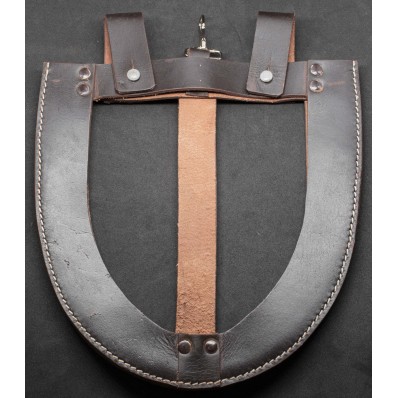


Pioneer Shovel Carrier in Brown Leather
New
German pioneer shovel carrier in brown leather, with rear belt loops, securing strap and reinforced stitching. Designed to carry the pioneer shovel on the belt or field equipment, it protected the blade and kept the tool secure during marching, digging work and field service.
Warning: Last items in stock!
- Satisfied or refunded: we guarantee 100% secure protection on your purchases
- Free return: return your order free of charge within 30 days from receipt
- Secure payments: pay securely online with PayPal or credit cards

More info
Pioneer Shovel Carrier in Brown Leather – field carrier for the German Pionierspaten
The pioneer shovel carrier was a field equipment accessory used to carry the Pionierspaten, the shovel associated with German pioneer troops. The Pioniere were combat engineers responsible for earthworks, field fortifications, obstacles, demolitions, bridging tasks, road work and other technical operations in the field.
Made from strong brown leather, the carrier protected the metal blade and secured the tool to the soldier’s equipment. Leather was well suited to this role because it resisted friction, pulling force and pressure from the shovel. Rear belt loops allowed the carrier to be attached to the equipment belt, while a securing strap held the shovel in place during marching and movement.
The Pionierspaten had a more work-oriented role than the ordinary infantry shovel. It could be used for digging positions, preparing cover, shaping ground, clearing passages, improving tracks or assisting with field engineering tasks. A strong carrier kept the tool accessible while preventing it from moving excessively or damaging other equipment.
From a construction standpoint, the carrier was shaped to fit the shovel blade. Reinforced stitching, formed leather panels, stress points and securing straps helped prevent accidental loss and reduced contact between the blade and the uniform or other gear. The sturdy leather construction made it suitable for repeated field use.
The brown leather colour appears on various German equipment pieces, especially older, early or unblackened leather items. With use, leather could darken, polish at contact points and show creases or tension marks around stitching, loops and straps.
Collector’s note: pioneer shovel carriers can differ from standard Spaten covers in size, shape and attachment layout because they were made for a working tool associated with engineer duties. For pioneer troops, the shovel was not only personal equipment but a practical tool used for daily field tasks.
30 other products in the same category:

Customers who bought this product also bought:
Field and Personal Equipment
- Germany
- Uniforms
- Medals, Orders and Decorations
- Badges and Pins
- ID Tags
- Arm Shields
- Helmets
- Helmet Decals
- Visor Caps and Hats
- Cap and Helmet Badges
- Collar Tabs Badges
- Collar Tabs, Shoulder Boards and Epaulettes
- Arm Bands
- Division Cuff Titles
- Buckles And Belts
- Buttons For Uniforms
- Stamps
- Gorgets
- Rings
- SS Honour Ring in 925 Silver - Collector's Set
- Poletops
- Flags
- Daggers and Knives (Ornamental)
- Field Marshal Batons
- Field and Personal Equipment
- Service Watches
- Presentation Cases
- Documents and Award Letters
- Busts, Eagles, Lighters and Miscellaneous
- Croatian and Ustasha Militaria
- Denazified Articles
- Commemorative Necklaces
- Spare Parts, Small Parts and Accessories
- Italy
- Medals and Decorations
- Brevets And Badges
- Battle Shields and Tags
- Gorgets
- Visor Caps and Hats
- Cap and Helmet Badges
- Helmets Decals
- Friezes for Collar Tabs
- Collar Tabs, Shoulder Boards and Epaulettes
- Buckles
- Belts
- Buttons For Uniforms
- Rings
- Poletops
- Italian Resistance
- Keyrings
- Wallshields
- Daggers and Knives
- Flags
- Busts and Eagles
- Souvenirs
- Commemorative Necklaces
- Imperial Germany
- Soviet Union
- Other Countries