
No products
Product successfully added to your shopping cart
There are 0 items in your cart. There is 1 item in your cart.
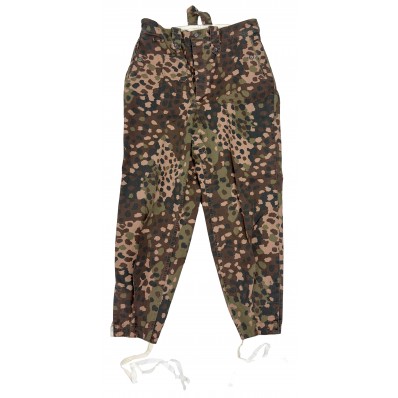
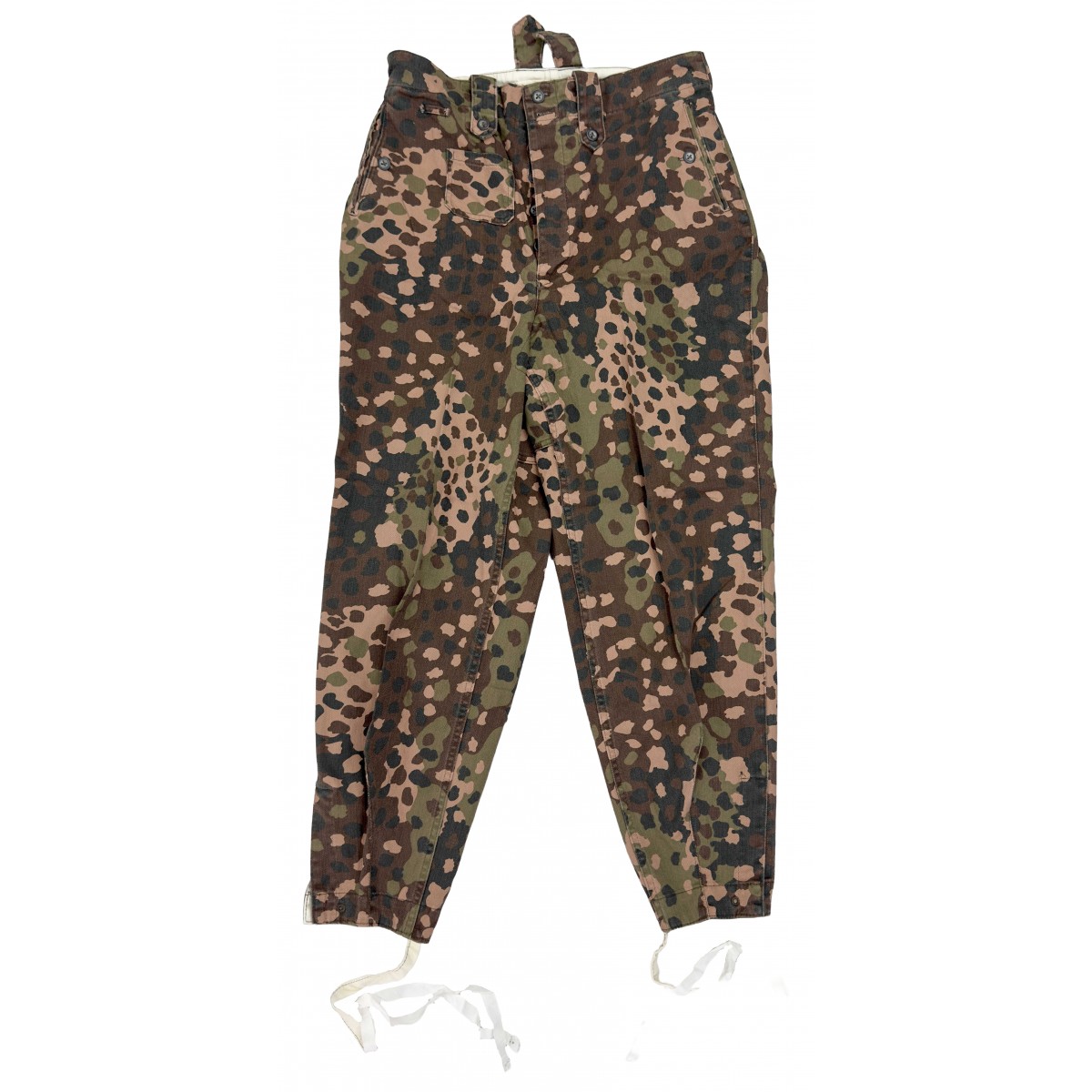
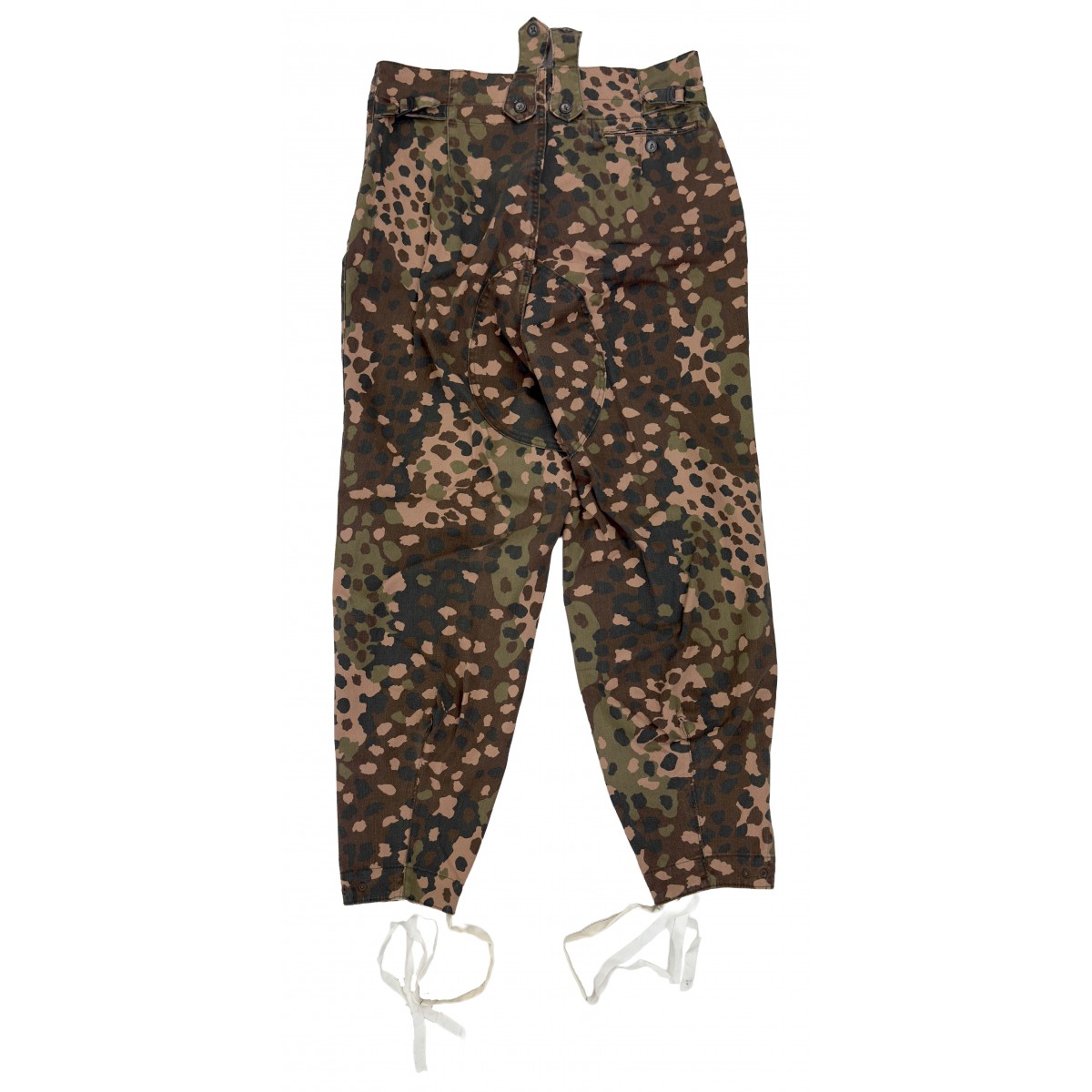
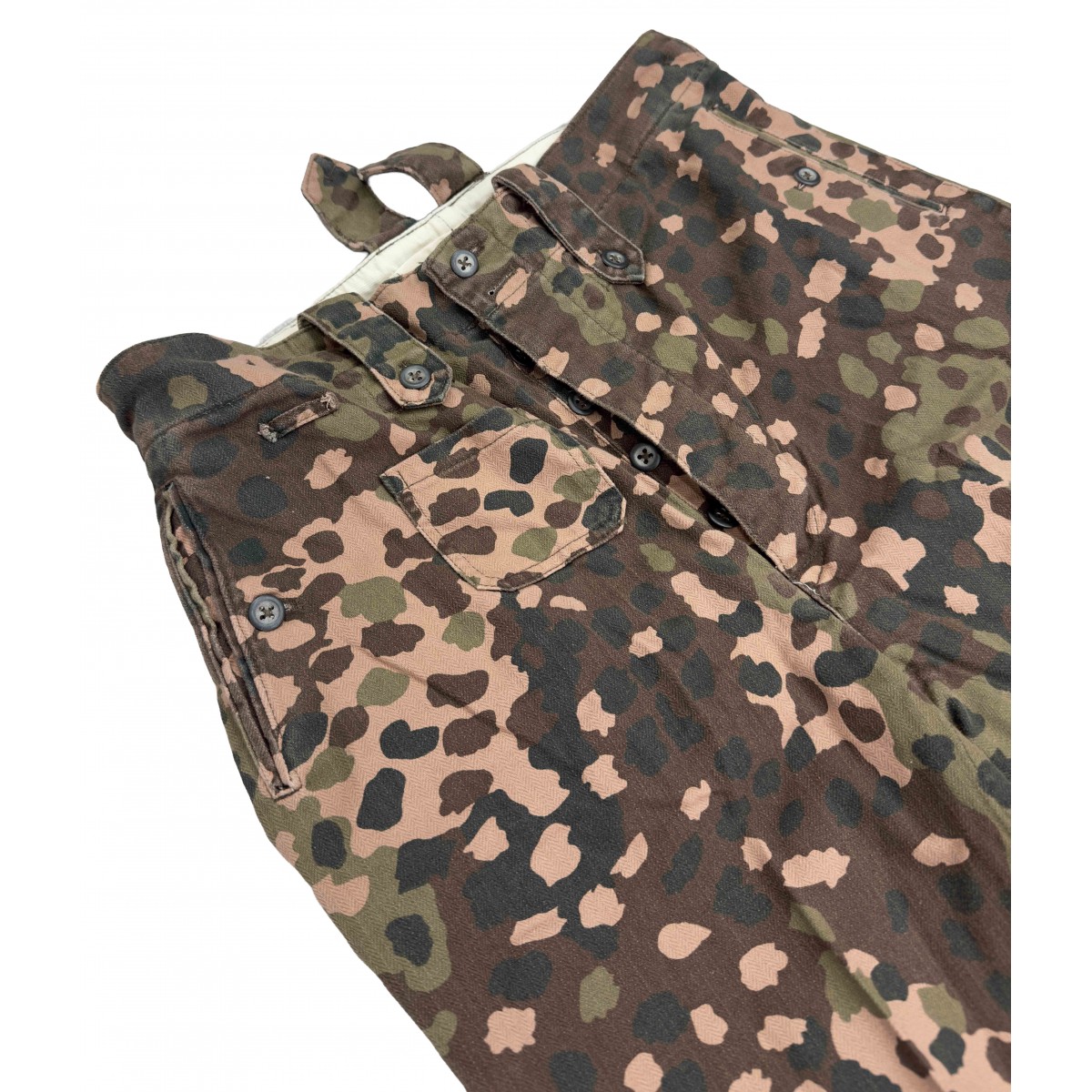
M44 Pea Dot Field Trousers
New
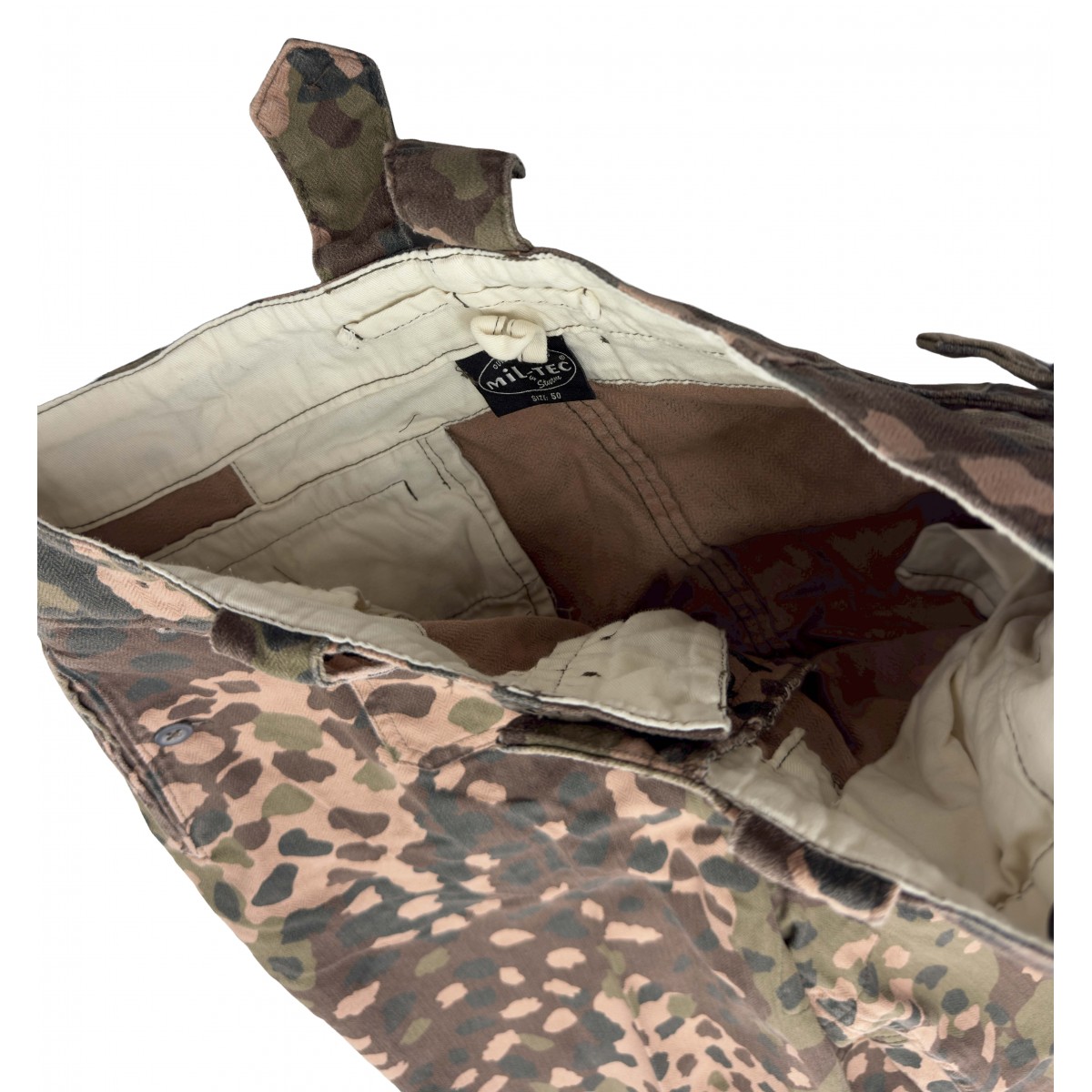
M44 Erbsenmuster field trousers of the Waffen-SS, featuring the distinctive five-colour Pea Dot camouflage, button fly, side pockets, adjustable waist and lower-leg fastening system. Introduced in 1944 together with the matching field tunic, they formed part of a complete non-reversible camouflage combat uniform intended for use across different seasons.
Warning: Last items in stock!
- Satisfied or refunded: we guarantee 100% secure protection on your purchases
- Free return: return your order free of charge within 30 days from receipt
- Secure payments: pay securely online with PayPal or credit cards

More info
The M44 Pea Dot Field Trousers, commonly identified as the Erbsenmuster or Erbsentarn Tarnhose, formed the lower half of the distinctive camouflage uniform introduced by the Waffen-SS during 1944.
Together with the matching field tunic, the trousers represented an important change in the concept of German camouflage clothing.
Earlier Waffen-SS camouflage was largely based on reversible smocks and other overs garments worn on top of the conventional field uniform. The new Erbsenmuster outfit instead consisted of a coordinated field tunic and trousers that could themselves serve as the combat uniform.
The pattern is now known by several names, including Erbsenmuster, Erbsentarn, Dot 44, Pea Dot and Pea Pattern.
Its familiar English name derives from the enormous number of small rounded spots distributed across the surface of the cloth.
Approximately five principal colours were incorporated into the pattern, combining lighter background areas with different greens, browns and very dark spots.
Instead of the large geometric shapes of Splittertarn or the broader organic areas found on other wartime camouflage patterns, Erbsenmuster created an exceptionally fragmented surface using hundreds of small dots and irregular patches.
At close range the pattern appears extremely detailed and busy. As viewing distance increases, however, the individual spots begin to merge visually into larger irregular areas.
This helped make the human outline more difficult to distinguish across different viewing distances.
An important concept behind the design was multi-season camouflage. Earlier Waffen-SS camouflage smocks were often reversible, offering greener spring and summer colours on one side and browner autumn shades on the other.
Erbsenmuster instead combined greens, browns, light background tones and dark areas within the same printed surface. The uniform therefore did not need to be reversible.
The trousers were designed as part of a genuine field uniform and incorporated many practical features associated with late-war German combat clothing.
The front was secured by a traditional button fly. Original examples display a variety of button types and materials, reflecting different manufacturers and increasingly variable wartime supply.
Two angled slash pockets were positioned at the hips, normally provided with button closures.
A single button-fastened rear pocket was generally fitted on the right side.
A small watch or fob pocket was positioned near the front fly, continuing a traditional tailoring feature already found on earlier German military trousers.
The waist incorporated adjustable side straps and buckles, allowing the circumference to be altered within a limited range.
Provision was also retained for the use of braces, with appropriate buttons or attachment points positioned around the inner waistband.
The trousers additionally featured belt loops, giving the wearer several options for supporting and adjusting the garment depending on the equipment configuration being used.
A reinforced seat could be incorporated into the rear construction, adding durability to an area subjected to considerable wear during marching, vehicle use and field operations.
Surviving original M44 camouflage trousers show some variation in the shape of the legs. Both relatively straight examples and trousers approaching the tapered Keilhose configuration are documented.
The lower legs could incorporate laces, straps or other fastening arrangements, helping keep the trousers correctly positioned when worn with ankle boots and gaiters.
Such variation reflects the realities of German wartime production during 1944 rather than a perfectly uniform manufacturing system.
Several different types of cloth were used. Surviving examples include the characteristic HBT or herringbone-twill Drillich, together with smoother cotton and linen fabrics.
The interior was normally partially lined around the waistband and pockets, using tan, khaki, beige or other available cloth.
Original garments may carry size markings, depot stamps and manufacturer identification, including the numerical Reichsbetriebsnummer system increasingly encountered during the later stages of the war.
Considerable variation is also found in the camouflage itself. Different printing facilities, cloth batches, dyes and production methods resulted in noticeable changes in green and brown shades, background colour, print density and the overlap of individual dots.
Two entirely authentic Erbsenmuster trousers can therefore look surprisingly different even when manufactured during approximately the same period.
The complete M44 camouflage uniform could be worn directly as lightweight field clothing, giving it a much broader role than the earlier camouflage oversmocks.
Its production life was nevertheless exceptionally short. Erbsenmuster was introduced only in 1944, leaving approximately one year before the end of the war.
Despite this brief period of manufacture, its complex spotted appearance became one of the most instantly recognizable camouflage designs associated with the late-war Waffen-SS.
Historical curiosity: the Erbsenmuster uniform was officially introduced on 1 March 1944, and camouflage effectiveness was only part of the reason for its development. The new outfit was intended to replace both the existing Reed Green Drillich summer uniform and, to a degree, the separate camouflage smocks previously issued to troops. A single non-reversible camouflage uniform could therefore perform several roles at once, helping to save cloth and simplify production at precisely the point when German wartime industry was under increasing pressure.
Data sheet
| Material | Upper: 100% Cotton Lining: 100% Cotton |
17 other products in the same category:

Customers who bought this product also bought:
Uniforms
- Germany
- Uniforms
- Medals, Orders and Decorations
- Badges and Pins
- ID Tags
- Arm Shields
- Helmets
- Helmet Decals
- Visor Caps and Hats
- Cap and Helmet Badges
- Collar Tabs Badges
- Collar Tabs, Shoulder Boards and Epaulettes
- Arm Bands
- Division Cuff Titles
- Buckles And Belts
- Buttons For Uniforms
- Stamps
- Gorgets
- Rings
- SS Honour Ring in 925 Silver - Collector's Set
- Poletops
- Flags
- Daggers and Knives (Ornamental)
- Field Marshal Batons
- Field and Personal Equipment
- Service Watches
- Presentation Cases
- Documents and Award Letters
- Busts, Eagles, Lighters and Miscellaneous
- Croatian and Ustasha Militaria
- Denazified Articles
- Commemorative Necklaces
- Spare Parts, Small Parts and Accessories
- Italy
- Medals and Decorations
- Brevets And Badges
- Battle Shields and Tags
- Gorgets
- Visor Caps and Hats
- Cap and Helmet Badges
- Helmets Decals
- Friezes for Collar Tabs
- Collar Tabs, Shoulder Boards and Epaulettes
- Buckles
- Belts
- Buttons For Uniforms
- Rings
- Poletops
- Italian Resistance
- Keyrings
- Wallshields
- Daggers and Knives
- Flags
- Busts and Eagles
- Souvenirs
- Commemorative Necklaces
- Imperial Germany
- Soviet Union
- Other Countries