
No products
Product successfully added to your shopping cart
There are 0 items in your cart. There is 1 item in your cart.
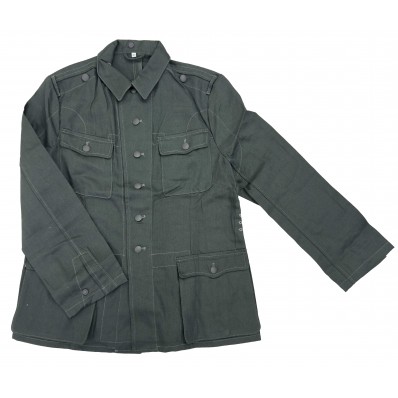
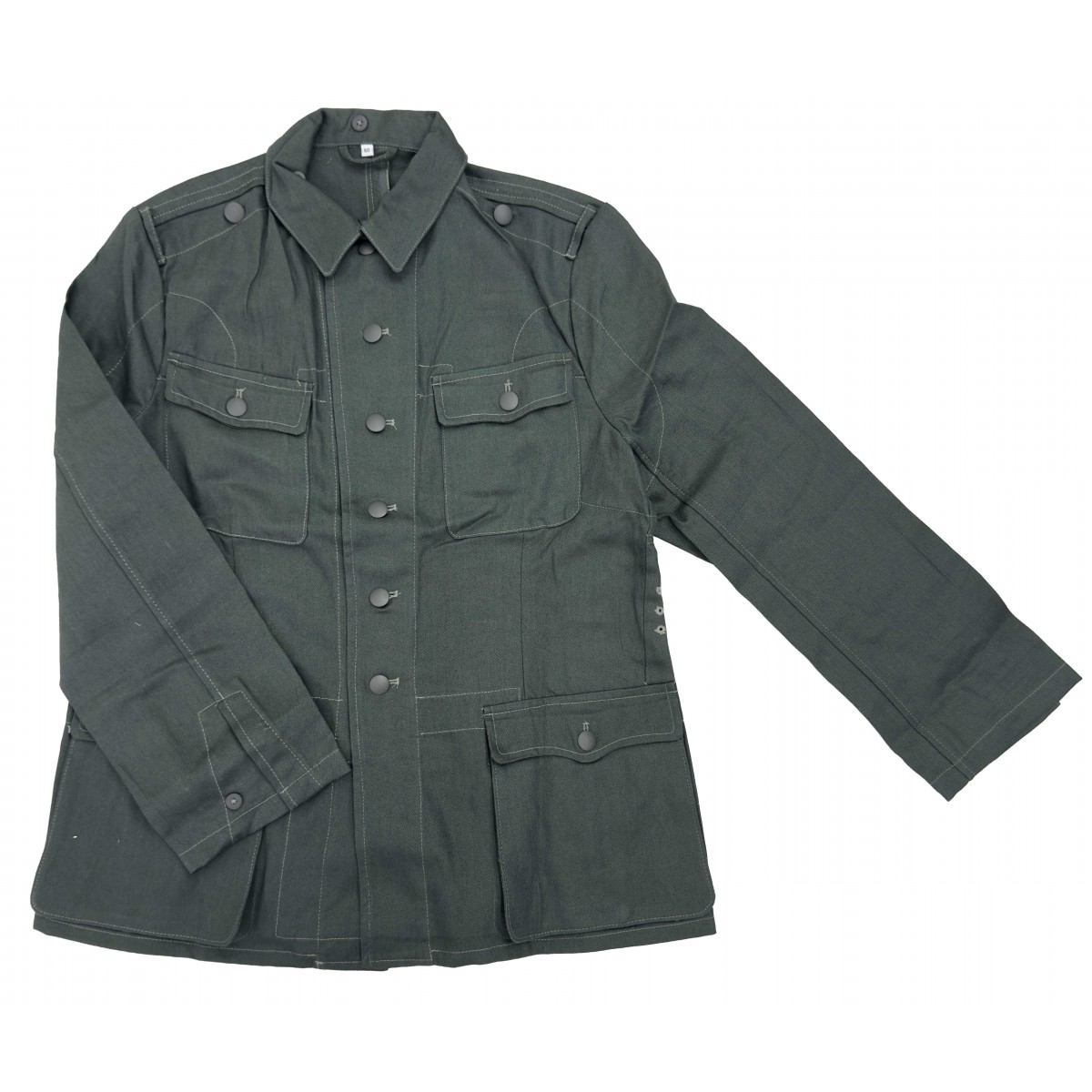
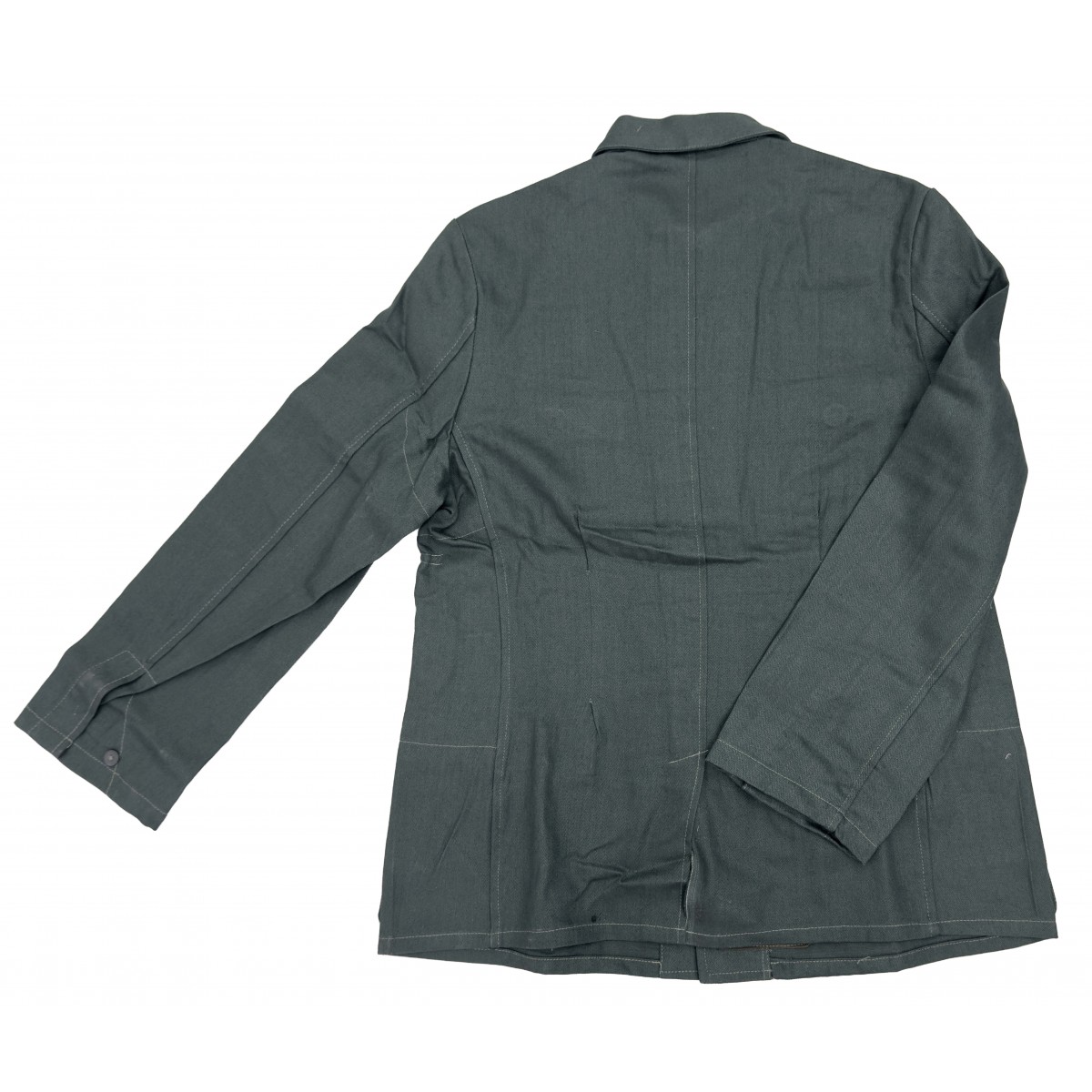
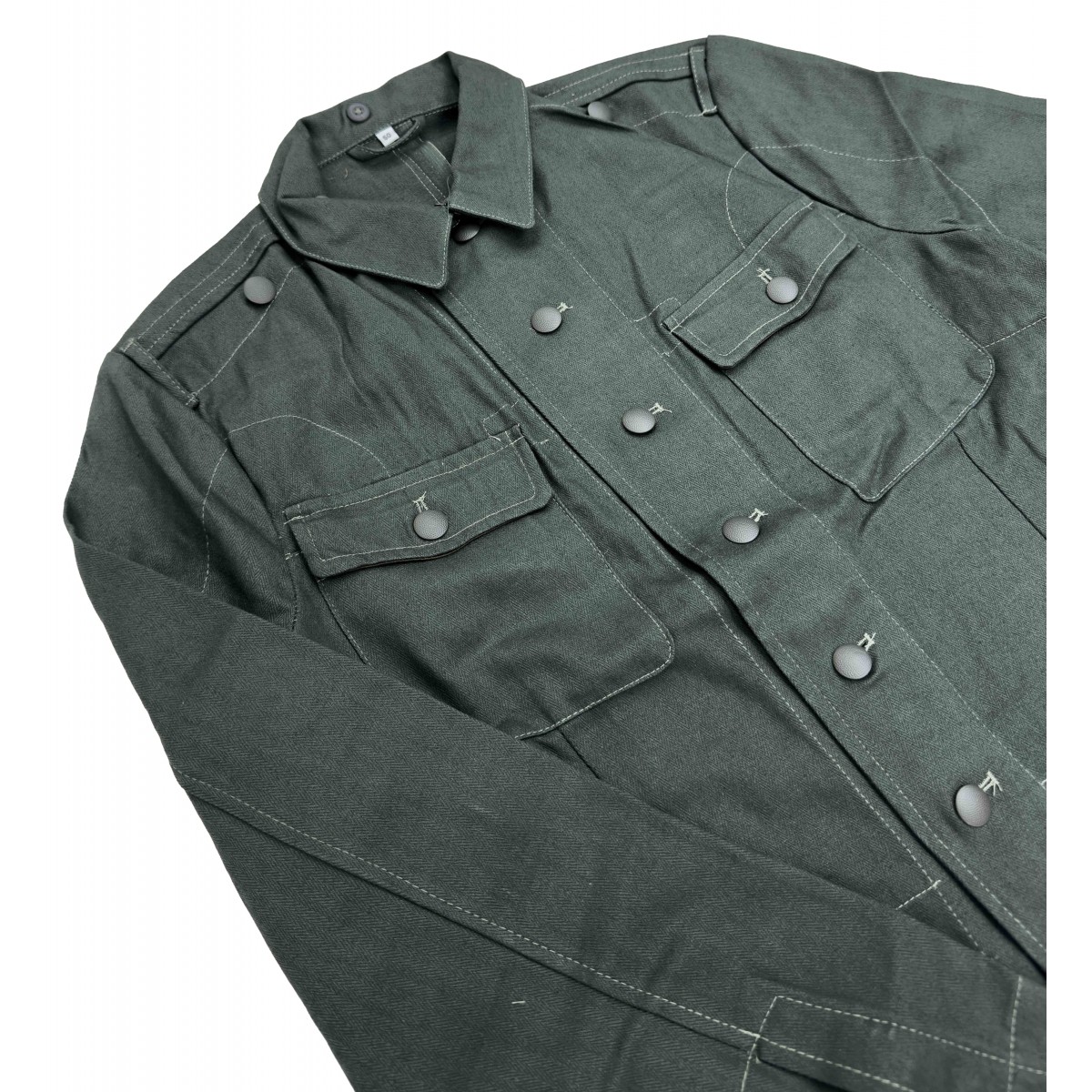
M40 HBT Field Blouse
New
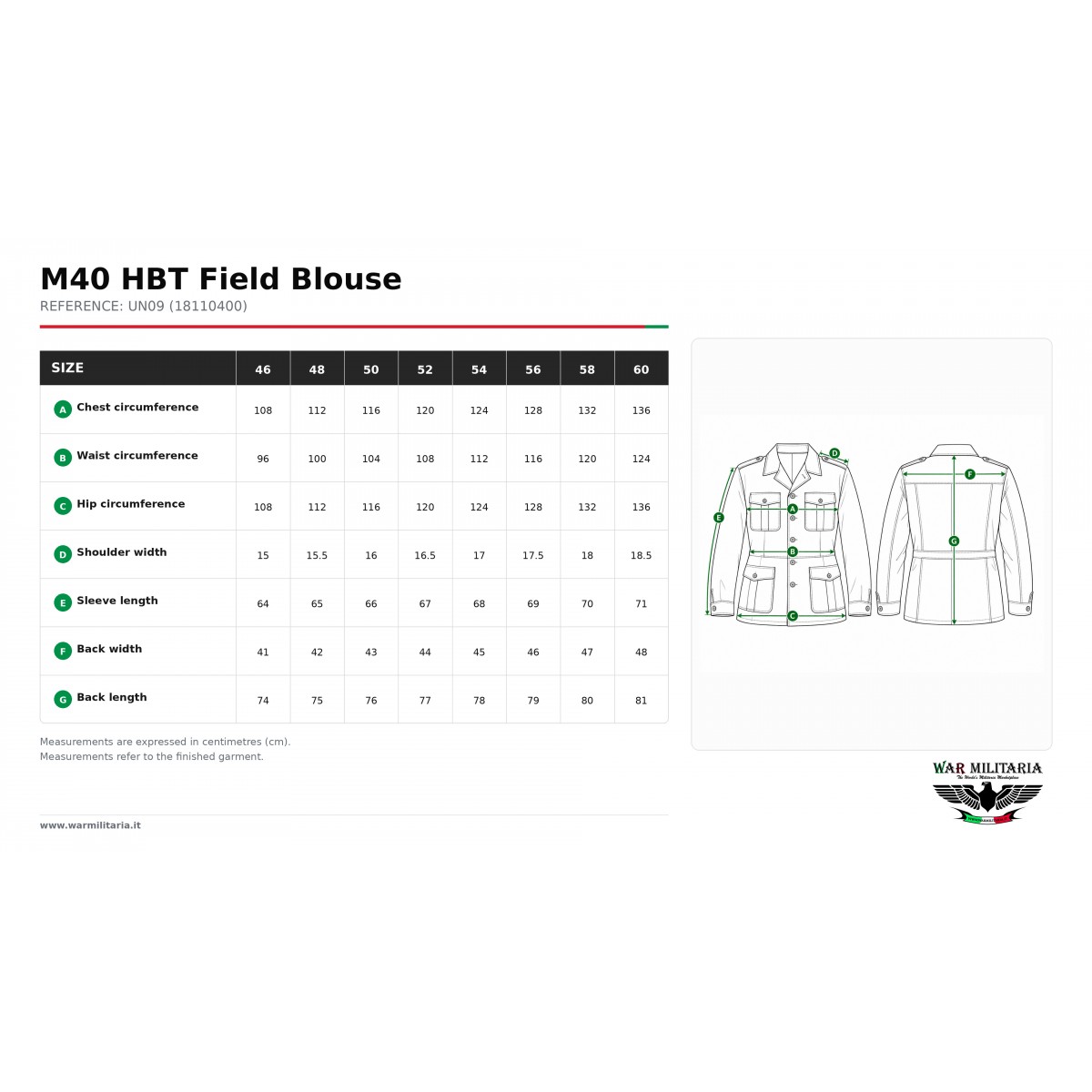
M40 HBT Field Blouse of the Heer in characteristic reed green, featuring four external pockets, button front closure and a cut derived from the M40 Feldbluse. Developed from the original Drillich fatigue uniform, it provided a lighter and practical garment for training, work duties and, later, summer field service.
Warning: Last items in stock!
- Satisfied or refunded: we guarantee 100% secure protection on your purchases
- Free return: return your order free of charge within 30 days from receipt
- Secure payments: pay securely online with PayPal or credit cards

More info
The M40 HBT Field Blouse, known in German as a Drillichbluse, represents one of the most interesting developments in Heer work, training and warm-weather clothing during the Second World War. The German term Drillich referred to a durable fabric woven in the characteristic herringbone pattern internationally known as HBT – Herringbone Twill.
The Heer had already introduced a dedicated Drillichanzug in 1933. Its original purpose was to provide recruits and soldiers with a hard-wearing uniform for basic training, maintenance duties, weapons cleaning and other activities that would otherwise cause unnecessary wear to the more expensive service and field uniforms.
Early Drillich uniforms were produced from undyed fabric and consequently appeared in shades ranging from off-white and natural linen to oatmeal and pale grey. Although economical, such light colours proved impractical for work clothing because dirt and stains became immediately visible.
In February 1940, regulations therefore changed the colour of the drill uniform to the distinctive green shade commonly known as Reed Green, or Schilfgrün.
The new colour made the uniform considerably more practical, but wartime experience soon revealed another important advantage of the Drillich uniform: its lightweight construction made it far more comfortable than the standard wool field uniform during hot weather.
The traditional field-grey wool Feldbluse could become uncomfortably warm during summer service, particularly in southern and eastern operational areas. Soldiers therefore increasingly used their lightweight reed-green work uniforms outside the duties for which they had originally been intended.
This practical field experience eventually resulted in the development of an official summer field blouse, combining lightweight Drillich fabric with the appearance and functionality of the regular Feldbluse.
The pattern now commonly described as the M40 HBT Field Blouse was based on the cut of the M40 Feldbluse. It therefore retained the recognizable silhouette of the standard Heer field uniform while offering the advantages of a lighter, washable and highly durable garment.
The front is secured by a row of buttons, while the traditional turn-down collar could be fastened at the neck or worn open according to conditions.
The shoulders were provided with attachments for removable shoulder straps, allowing the wearer's rank, branch and other service distinctions to be displayed in the normal manner.
One of the most recognizable features is the arrangement of four external patch pockets, with two breast pockets and two lower pockets. This layout closely followed the conventional field blouse and clearly separated the garment from the much simpler early Drillich work jackets.
The four-pocket construction is therefore an important feature in understanding the evolution of the German HBT uniform from a basic fatigue garment into a genuine summer field uniform.
A particularly practical feature was the use of removable buttons on many examples. These could be retained by small metal rings on the inside of the garment and removed before laundering.
This arrangement was especially useful on clothing intended for warm-weather and work use. Drillich garments required more frequent washing than heavy wool uniforms, and removable metal buttons simplified cleaning and maintenance.
The interior incorporated practical details inherited from the Feldbluse, including a pocket for the individual field dressing and provisions associated with supporting the equipment belt.
When issued and worn as a proper summer field blouse, the garment could carry standard Heer insignia, including the national emblem on the breast, collar Litzen and shoulder straps displaying the appropriate Waffenfarbe.
This distinguished the summer combat version from the original fatigue Drillich uniform, which had been conceived principally as work clothing and was normally much more simply insigniaed.
The characteristic Reed Green colour could alter considerably during service. Sunlight, washing, perspiration and general wear progressively faded the original shade.
Surviving examples consequently range from relatively strong green to much paler grey-green and washed-out shades. Such variation is entirely characteristic of genuine wartime Drillich clothing.
The great advantage of the Drillichbluse was its combination of durability, washability and reduced weight compared with the standard wool Feldbluse. It was therefore suitable for training and work duties and, in its later field configuration, for operational use during warm weather.
As the war continued, Drillich field clothing developed alongside the standard Heer uniform. Pocket shapes and construction were progressively simplified to reduce material consumption and manufacturing time, eventually producing versions influenced by the M42 and M43 field blouse designs.
Historical curiosity: the familiar name “M40 HBT Field Blouse” can be misleading. Reed Green was indeed ordered for Heer Drillich clothing in 1940, but the official four-pocket HBT summer field blouse based on the standard Feldbluse did not appear until approximately 1942. In this context, “M40” primarily describes the pattern of field blouse on which the garment was based, rather than the precise year in which the four-pocket HBT version entered service. It is a particularly good example of how modern collector terminology can make wartime uniform development appear much more rigid than it actually was.
Data sheet
| Material | Upper: 55% Linen, 45% Cotton Lining: 100% Cotton |
17 other products in the same category:

Customers who bought this product also bought:
Uniforms
- Germany
- Uniforms
- Medals, Orders and Decorations
- Badges and Pins
- ID Tags
- Arm Shields
- Helmets
- Helmet Decals
- Visor Caps and Hats
- Cap and Helmet Badges
- Collar Tabs Badges
- Collar Tabs, Shoulder Boards and Epaulettes
- Arm Bands
- Division Cuff Titles
- Buckles And Belts
- Buttons For Uniforms
- Stamps
- Gorgets
- Rings
- SS Honour Ring in 925 Silver - Collector's Set
- Poletops
- Flags
- Daggers and Knives (Ornamental)
- Field Marshal Batons
- Field and Personal Equipment
- Service Watches
- Presentation Cases
- Documents and Award Letters
- Busts, Eagles, Lighters and Miscellaneous
- Croatian and Ustasha Militaria
- Denazified Articles
- Commemorative Necklaces
- Spare Parts, Small Parts and Accessories
- Italy
- Medals and Decorations
- Brevets And Badges
- Battle Shields and Tags
- Gorgets
- Visor Caps and Hats
- Cap and Helmet Badges
- Helmets Decals
- Friezes for Collar Tabs
- Collar Tabs, Shoulder Boards and Epaulettes
- Buckles
- Belts
- Buttons For Uniforms
- Rings
- Poletops
- Italian Resistance
- Keyrings
- Wallshields
- Daggers and Knives
- Flags
- Busts and Eagles
- Souvenirs
- Commemorative Necklaces
- Imperial Germany
- Soviet Union
- Other Countries