
No products
Product successfully added to your shopping cart
There are 0 items in your cart. There is 1 item in your cart.
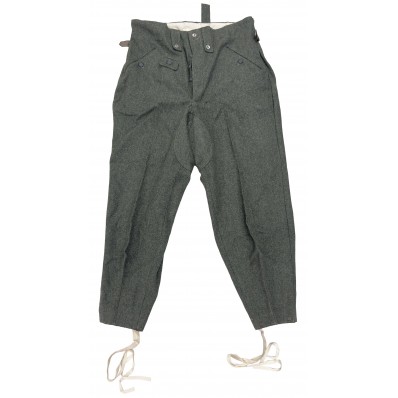
M43 Field Trousers – Keilhose
New
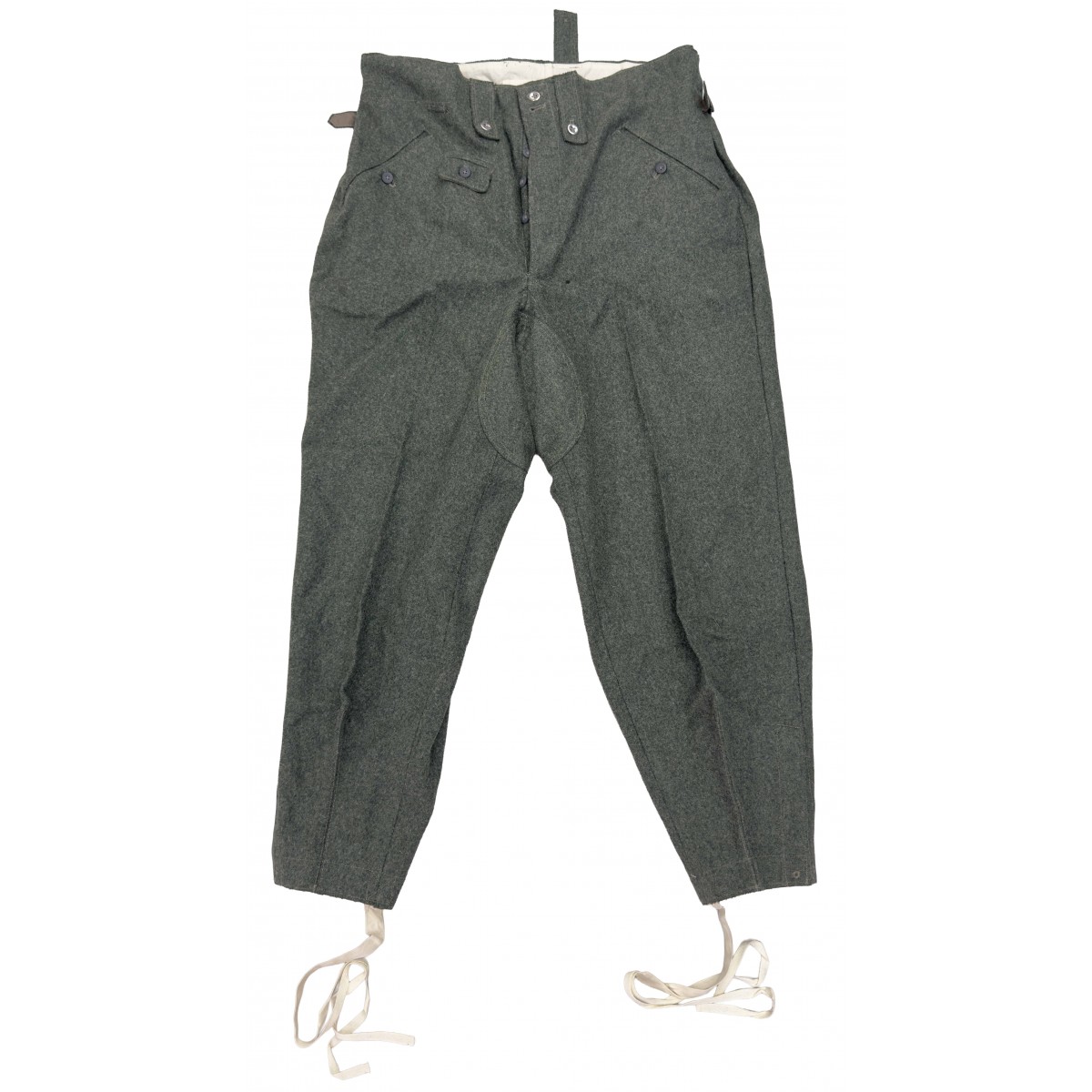
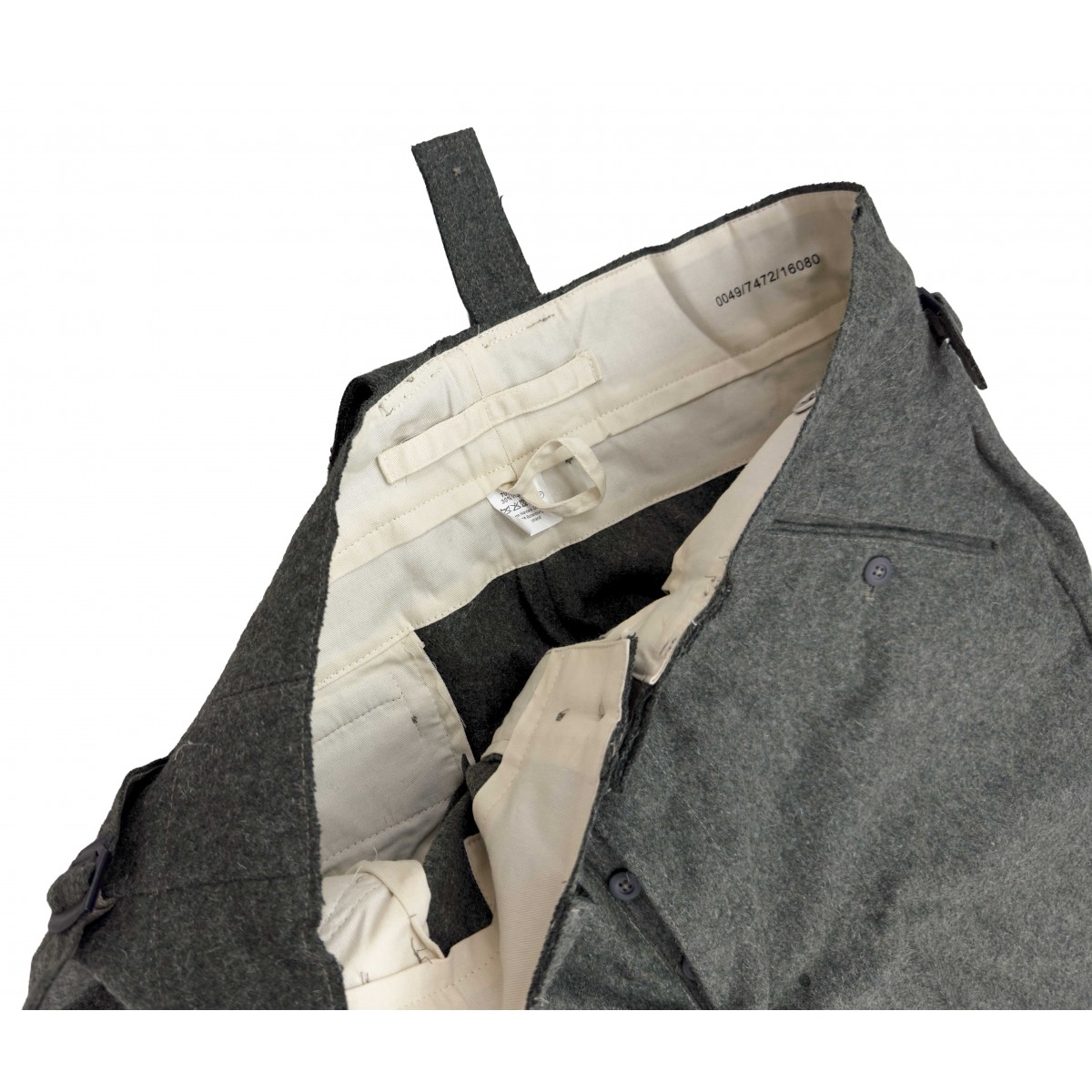
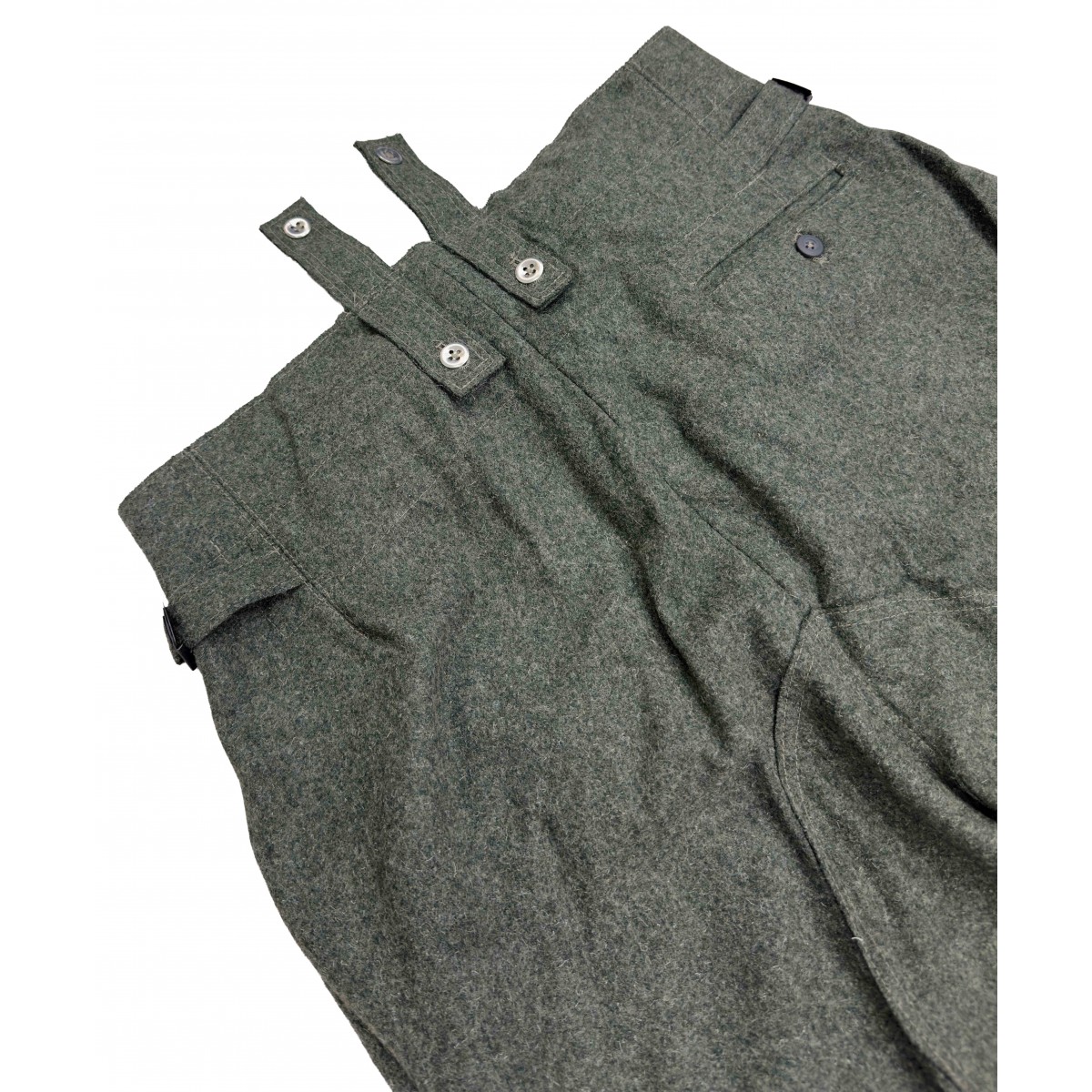
M43 Field Trousers – Keilhose featuring the characteristic tapered leg construction, side waist adjusters, belt loopsand ankle design adapted for wear with ankle boots and gaiters. Introduced in 1943, they represented a major development from the traditional straight-cut field trousers previously worn by the Heer.
Warning: Last items in stock!
- Satisfied or refunded: we guarantee 100% secure protection on your purchases
- Free return: return your order free of charge within 30 days from receipt
- Secure payments: pay securely online with PayPal or credit cards

More info
The M43 Field Trousers, commonly known as the Keilhose, represent one of the most important developments in German Army combat clothing during the second half of the Second World War. Introduced in 1943, the new design moved away from the traditional straight-legged field trousers and adopted a construction more closely suited to changing combat conditions, equipment and footwear.
Earlier field trousers, including the pattern generally identified as the M40, still reflected military tailoring traditions established during the 1930s. They featured a high waist, relatively wide straight legs and a construction particularly suited to wear with the tall Marschstiefel, or marching boots.
As the war progressed, however, tall marching boots became increasingly less common and ankle boots worn with gaiters were issued on a much wider scale. This change in footwear created a practical need for trousers with a different lower-leg construction.
The M43 therefore introduced a distinctly tapered, wedge-shaped leg, narrowing progressively towards the ankle. This characteristic cut gave rise to the widely used name Keilhose, referring to the wedge-like shape of the garment.
The design incorporated several ideas associated with the mountain trousers worn by Gebirgsjäger troops. Mountain clothing had already been developed with freedom of movement, sturdy footwear and demanding field conditions in mind, making it a logical basis for a new general-purpose combat trouser.
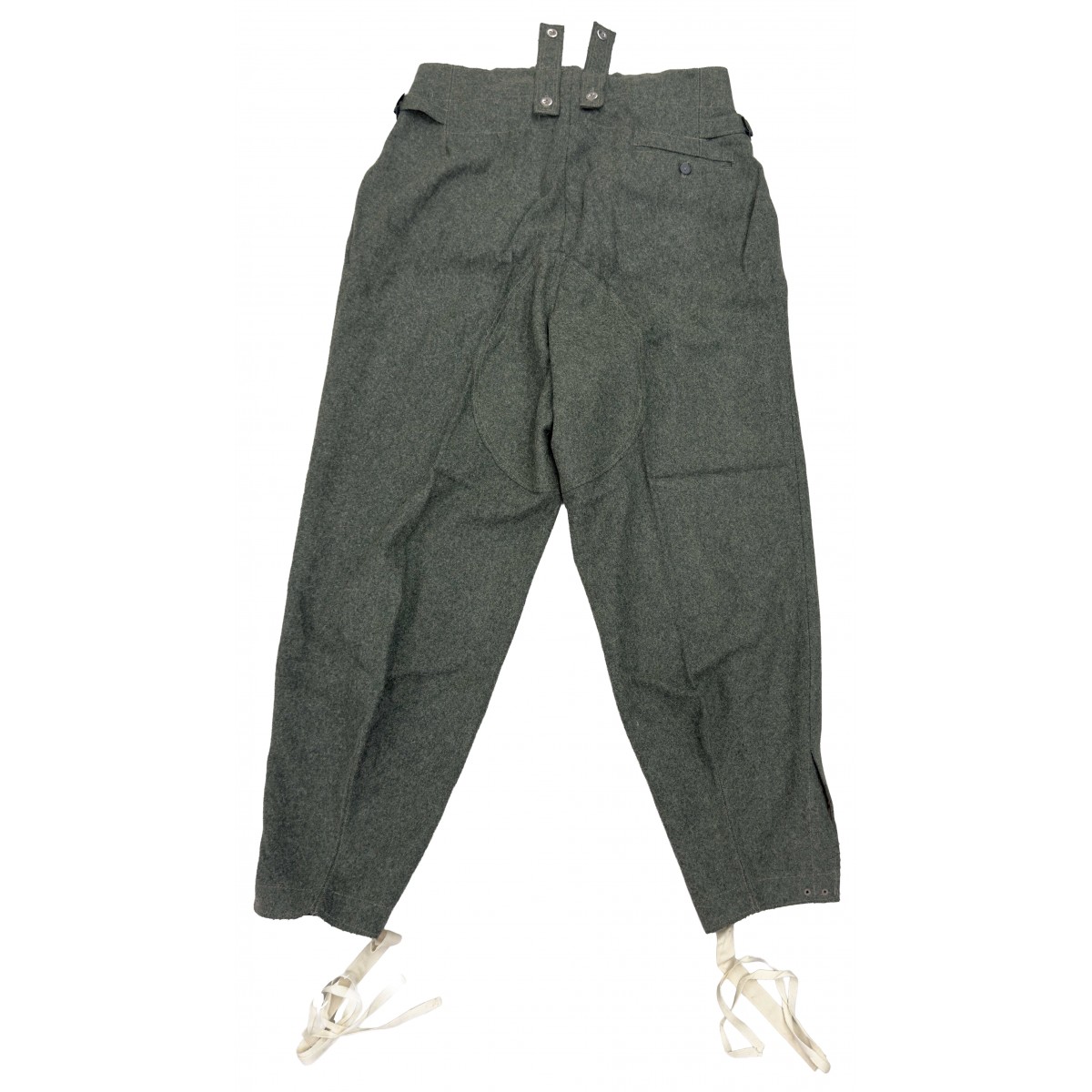
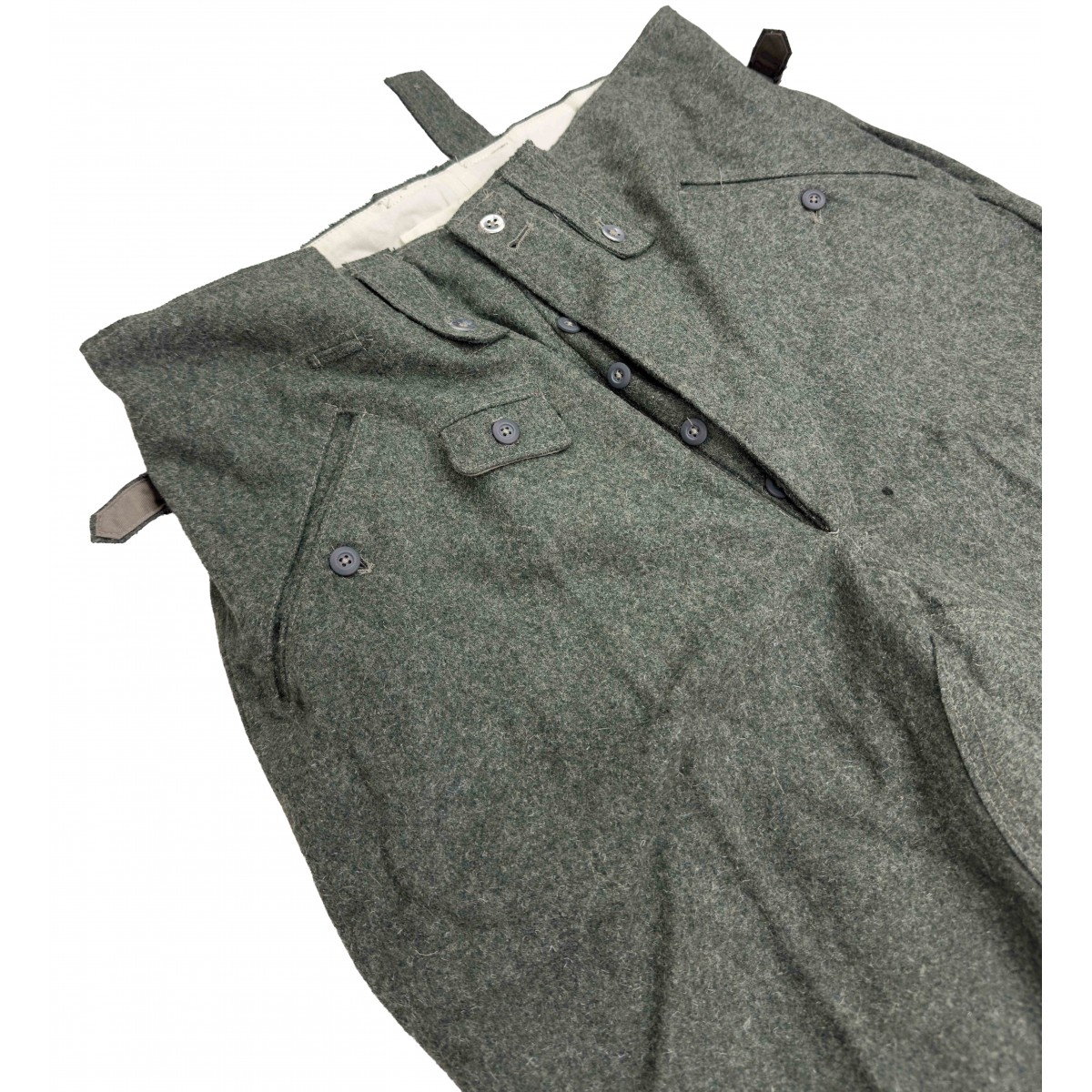
The waistband was also redesigned. Instead of relying solely on the traditional high-waisted arrangement of earlier field trousers, the M43 incorporated adjustable side straps with buckles, allowing the wearer to alter the waist circumference more easily.
Another significant addition was the use of belt loops. These allowed a belt to be worn directly with the trousers and made the garment considerably more practical when the soldier was operating without his field tunic.
This was particularly useful in warmer conditions, when the Feldbluse could be removed and the shirt worn on its own. The trousers nevertheless retained provision for braces, giving the wearer several methods of supporting and adjusting the garment.
The front was secured by a traditional button fly, with additional buttons closing the waistband. The upper portion was strongly constructed to withstand the constant movement and wear associated with field service.
Two deep angled side pockets provided practical storage while remaining accessible when field equipment was worn. The small traditional watch pocket was also retained at the front, continuing a feature already present on earlier German Army trousers.
At the rear was normally a single button-fastened pocket. The overall pocket arrangement remained deliberately straightforward, minimizing unnecessary bulk around the equipment belt and field gear.
The most distinctive feature was found at the bottom of the legs. The trousers narrowed substantially towards the ankles and incorporated openings and adjustment features that allowed the lower legs to fit closely when worn with ankle boots and gaiters.
Historical versions could also include foot straps or cloth ties passing beneath the foot, helping keep the trouser legs correctly positioned during movement and preventing the fabric from riding upwards.
Some examples also display additional reinforcement around the seat and crotch, an especially practical feature for trousers intended specifically for strenuous combat and field use.
The basic colour remained field grey, although surviving originals show a considerable range of shades. By the later stages of the war, shortages of raw materials, variations in fibre content, numerous manufacturers and changing dye processes resulted in considerable differences between individual garments.
Original M43 trousers can consequently range from greenish field grey to distinctly greyer or even brownish shades while still being entirely representative of wartime production.
Original garments frequently carry internal size markings, manufacturer codes and acceptance stamps. During the later war years, the RBNr. system became increasingly common, identifying manufacturers through numerical codes rather than displaying their company names directly.
The introduction of the M43 did not result in the immediate disappearance of earlier field trousers. Existing M40 and older garments remained in use for as long as they were serviceable, and could be repaired and reissued rather than discarded simply because a newer design had entered production.
The M43 Keilhose therefore illustrates the changing character of German field dress particularly well. Its design moved away from the comparatively traditional tailoring of pre-war uniforms and towards clothing increasingly shaped by mobility, practical combat requirements and wartime economy.
Historical curiosity: one of the most interesting reasons behind the development of the Keilhose was the changing supply of military footwear. The tall marching boots so closely associated with the German soldier of the early war years consumed substantial quantities of leather. As wartime shortages increased, ankle boots and gaiters became progressively more common. The tapered M43 trouser leg was much better suited to this footwear. The changing silhouette of the late-war German soldier was therefore partly the visible consequence of something very practical: the need to save raw materials while equipping millions of men.
Data sheet
| Material | Upper: 70% Wool, 30% Viscose Lining: 100% Cotton |
17 other products in the same category:

Customers who bought this product also bought:
Uniforms
- Germany
- Uniforms
- Medals, Orders and Decorations
- Badges and Pins
- ID Tags
- Arm Shields
- Helmets
- Helmet Decals
- Visor Caps and Hats
- Cap and Helmet Badges
- Collar Tabs Badges
- Collar Tabs, Shoulder Boards and Epaulettes
- Arm Bands
- Division Cuff Titles
- Buckles And Belts
- Buttons For Uniforms
- Stamps
- Gorgets
- Rings
- SS Honour Ring in 925 Silver - Collector's Set
- Poletops
- Flags
- Daggers and Knives (Ornamental)
- Field Marshal Batons
- Field and Personal Equipment
- Service Watches
- Presentation Cases
- Documents and Award Letters
- Busts, Eagles, Lighters and Miscellaneous
- Croatian and Ustasha Militaria
- Denazified Articles
- Commemorative Necklaces
- Spare Parts, Small Parts and Accessories
- Italy
- Medals and Decorations
- Brevets And Badges
- Battle Shields and Tags
- Gorgets
- Visor Caps and Hats
- Cap and Helmet Badges
- Helmets Decals
- Friezes for Collar Tabs
- Collar Tabs, Shoulder Boards and Epaulettes
- Buckles
- Belts
- Buttons For Uniforms
- Rings
- Poletops
- Italian Resistance
- Keyrings
- Wallshields
- Daggers and Knives
- Flags
- Busts and Eagles
- Souvenirs
- Commemorative Necklaces
- Imperial Germany
- Soviet Union
- Other Countries