
No products
Product successfully added to your shopping cart
There are 0 items in your cart. There is 1 item in your cart.
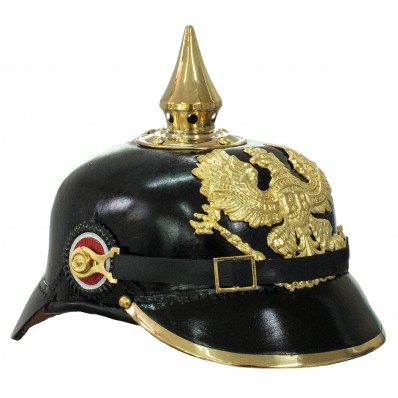
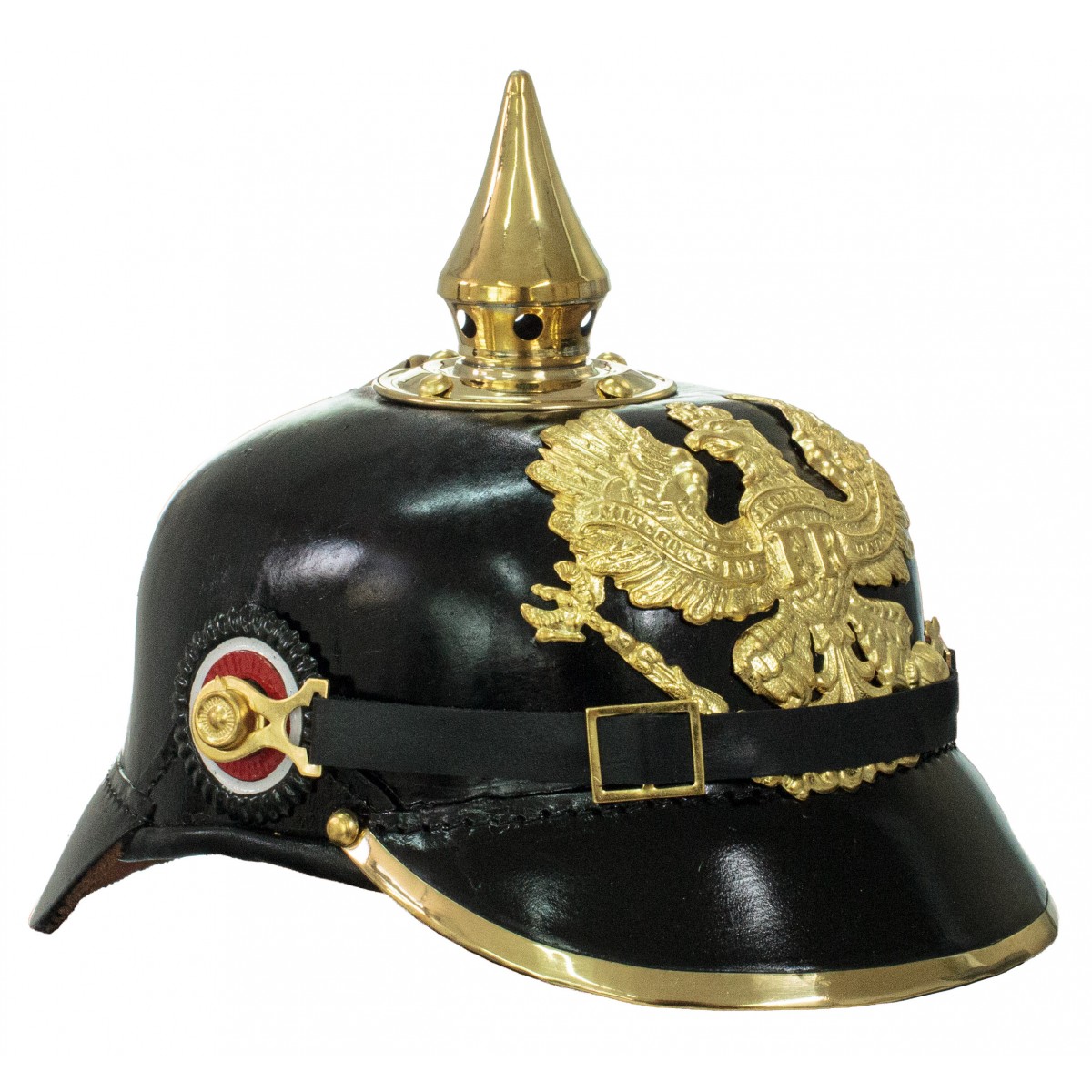
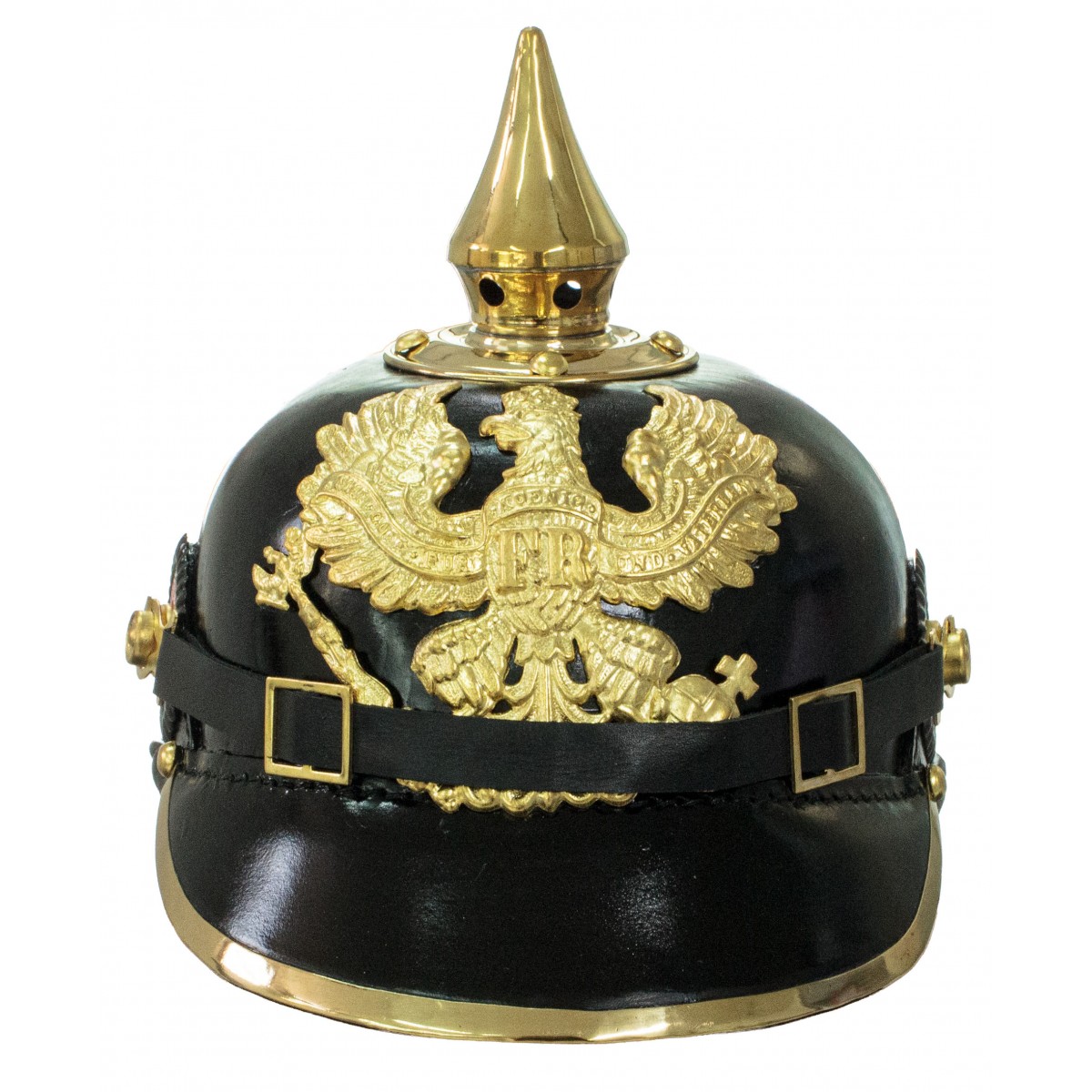
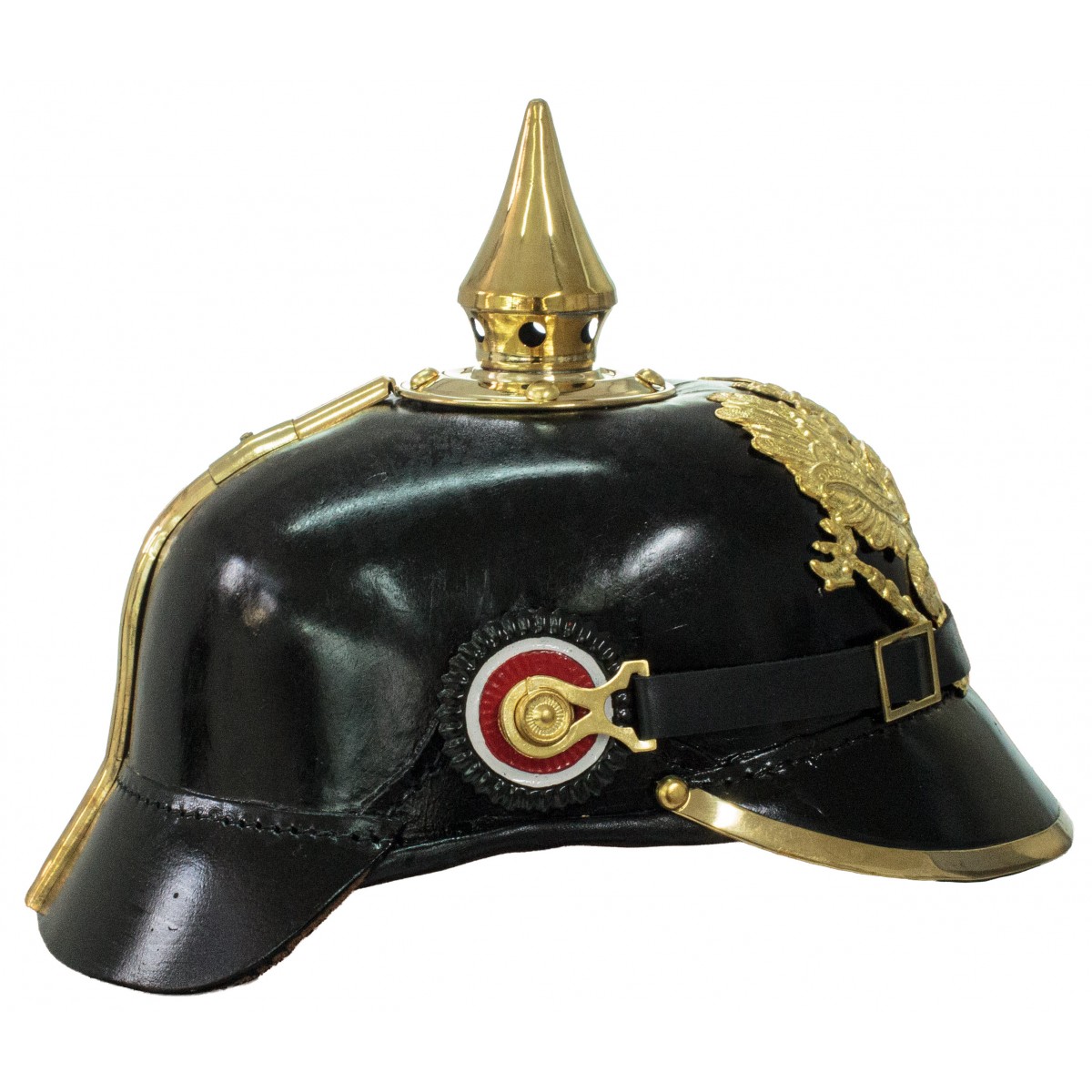
M1895 Pickelhaube of the Kingdom of Prussia for Enlisted Ranks and NCOs
New
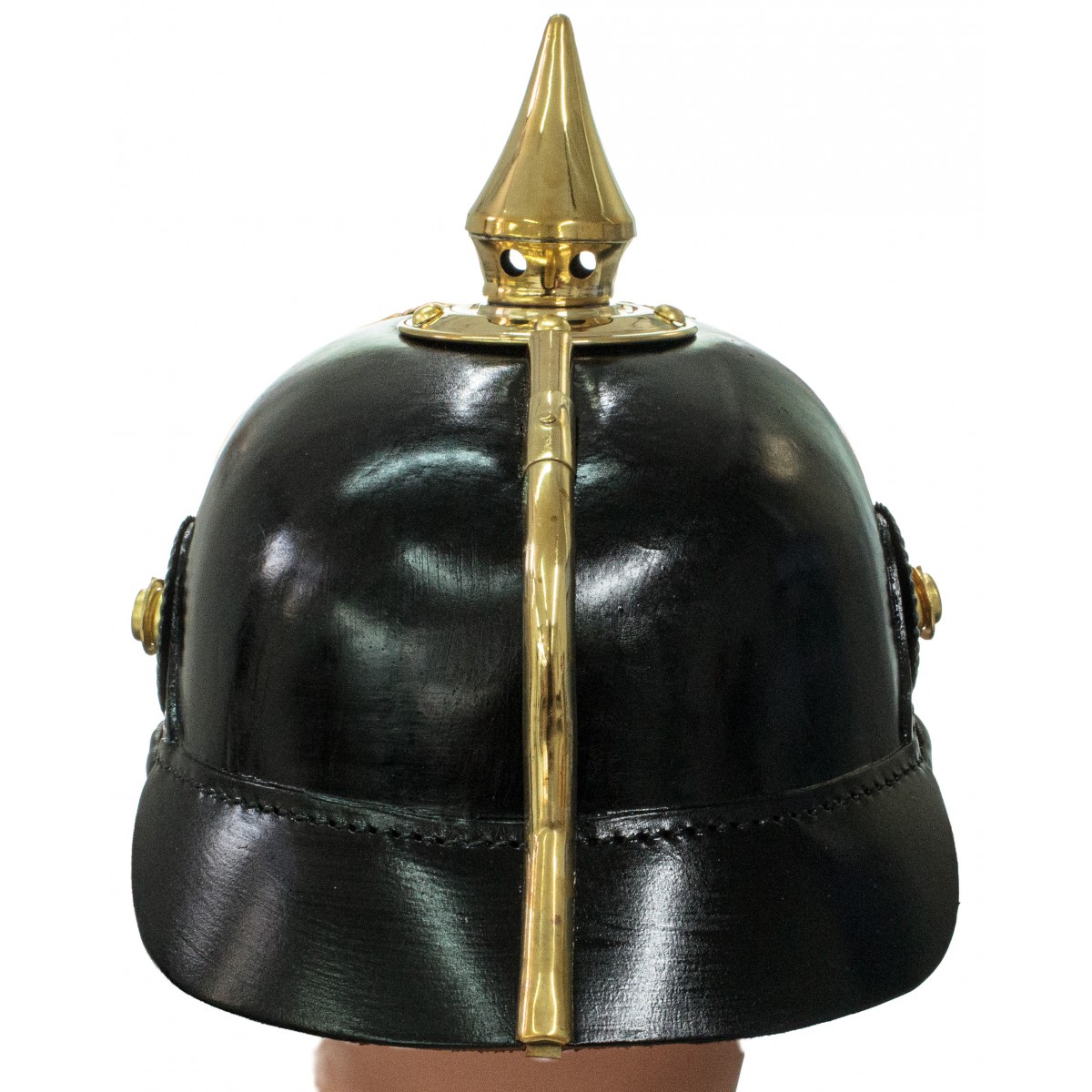
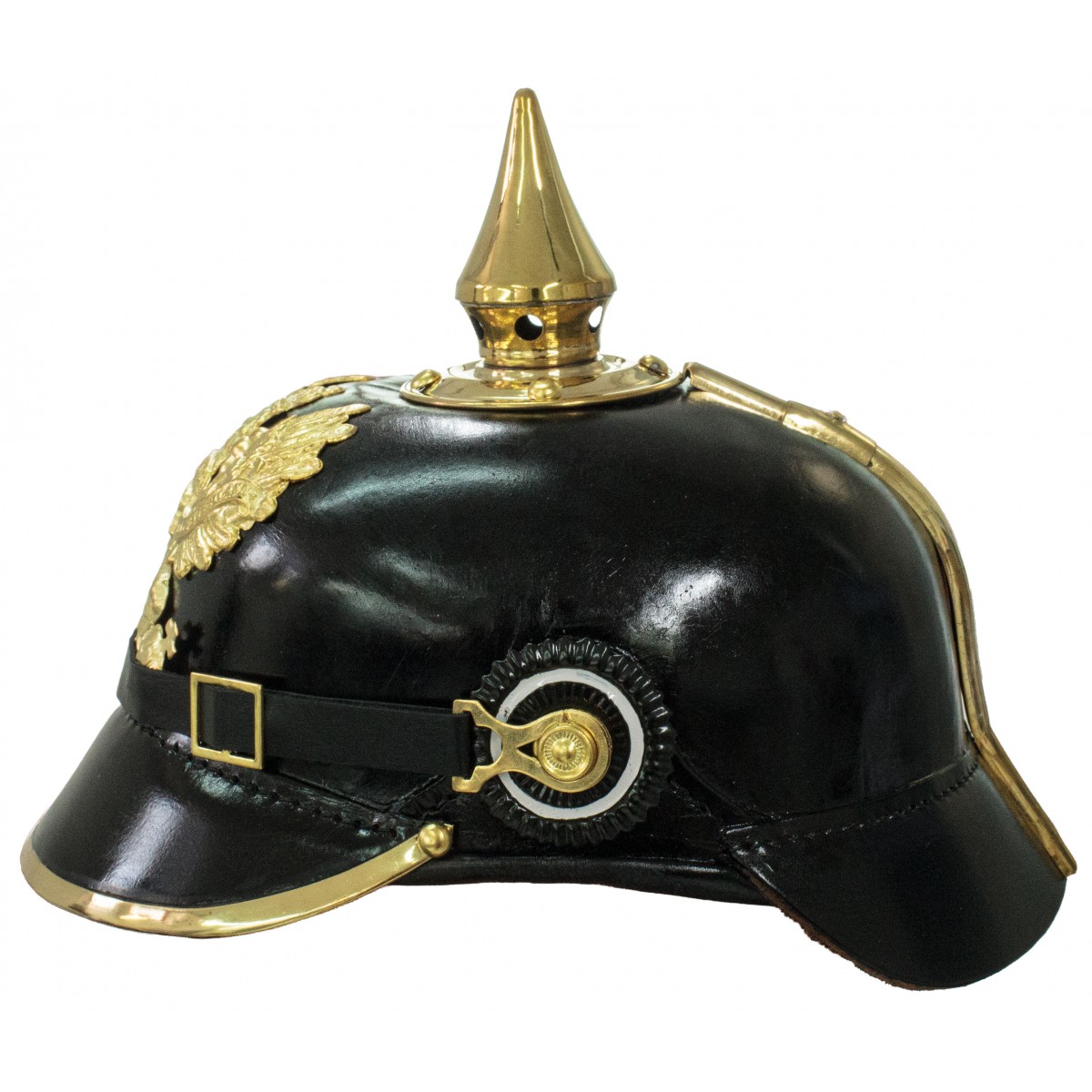
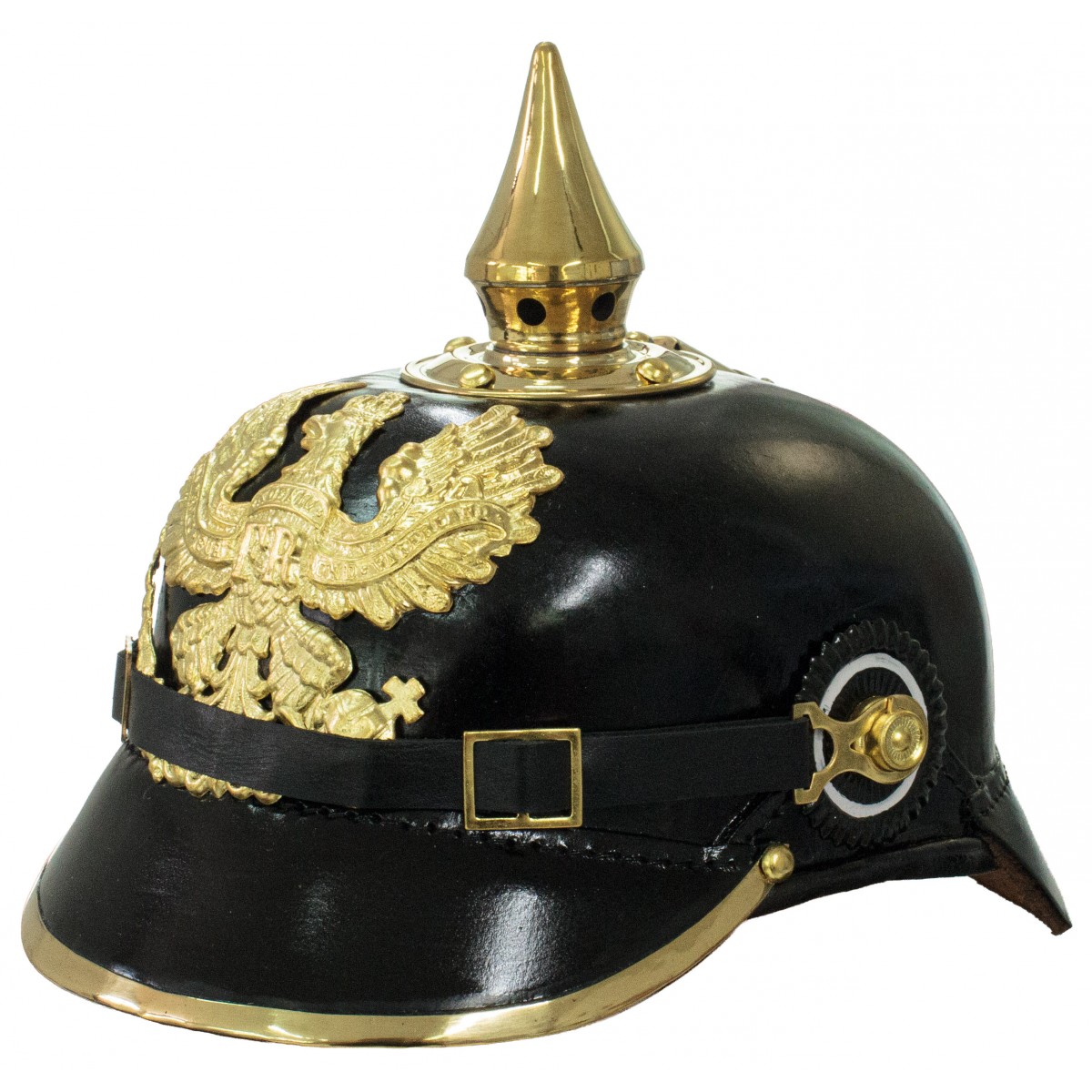
M1895 Pickelhaube for enlisted ranks and NCOs of the Kingdom of Prussia, with a metal spike and Prussian eagle bearing the motto “Mit Gott für König und Vaterland.” The historical model featured a black leather shell, yellow-metal fittings, a leather chinstrap and Imperial and Prussian cockades.
Product temporarily out of stock.
- Satisfied or refunded: we guarantee 100% secure protection on your purchases
- Free return: return your order free of charge within 30 days from receipt
- Secure payments: pay securely online with PayPal or credit cards

More info
The M1895 Pickelhaube with spike was the most widespread form of the Prussian helmet issued to enlisted ranks and non-commissioned officers before and during the opening phase of the First World War. Unlike the artillery Kugelhelm, on which the spike was replaced by a ball, this version carried the characteristic conical metal spike.
The spiked pattern was principally associated with the Prussian infantry, although it was also used by other service branches, corps and state organisations. The combination of spike and Prussian eagle therefore establishes the helmet’s state affiliation but does not, by itself, identify a particular regiment or service.
The historical shell was made from pressed leather, shaped and lacquered black, with separate front and rear visors stitched to the main body. A circular metal plate secured by four fasteners supported the ventilated neck and spike.
The spike primarily served a traditional, uniformological and identifying function. The leather shell provided limited protection against impacts and superficial blows but was not a ballistic helmet. Its inability to offer effective protection from bullets and shell fragments became particularly apparent under the conditions of modern trench warfare.
The front plate was the Prussian line eagle, displaying a crowned eagle with outstretched wings, sceptre and orb, the royal cipher FR upon its breast and the scroll “Mit Gott für König und Vaterland.” This device represented the Kingdom of Prussia and should not be confused with the general Imperial German Reichsadler.
On issue helmets for enlisted ranks and NCOs, the eagle, spike, circular base, front visor trim and rear reinforcing spine were normally manufactured from brass or aluminium bronze, producing a yellow-metal appearance. The M1895 eagle was generally secured by two rear loops passing through the shell and retained internally by small leather wedges.
The spike and standard line eagle identify the ordinary Prussian configuration but do not automatically establish an infantry or Gendarmerie attribution. Guard formations, titled regiments, reservists and certain units raised in Prussian territories could carry additional stars, crosses, breast shields, royal ciphers or honour scrolls.
The regulation chinstrap was made from black leather and attached to M1891 side posts. From 1897, the black-white-red Imperial cockade was worn on the right and the black-and-white Prussian state cockade on the left. Together they represented affiliation with both the German Empire and the Kingdom of Prussia.
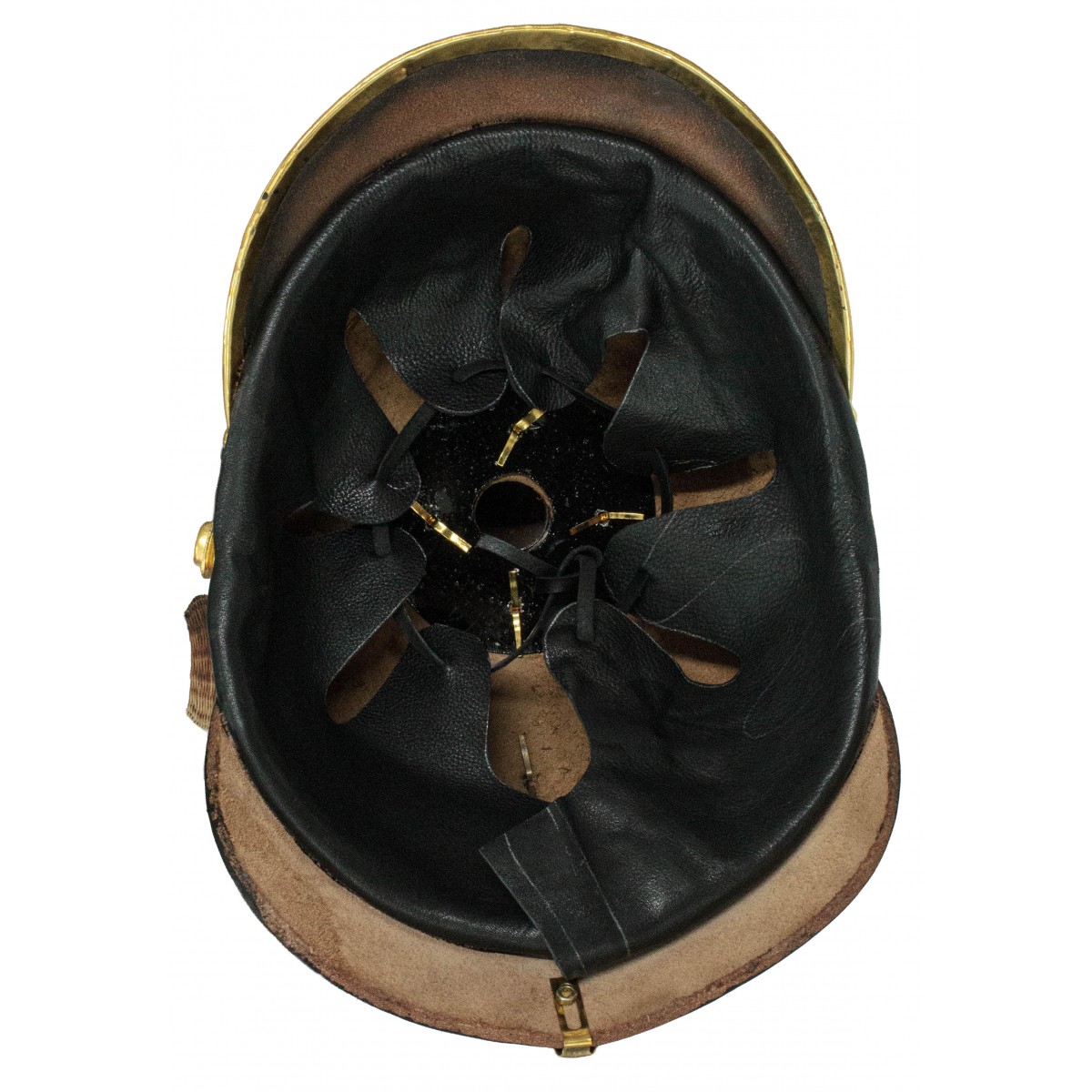
The interior normally contained a tongued leather liner tightened by a drawstring. This provided limited adjustment, but the helmets were still manufactured in different shell sizes. Issue examples could carry size numbers, makers’ marks, dates, inspection stamps, depot markings or unit designations on the rear visor or inside the shell.
During manoeuvres and active service, the Pickelhaube was covered with a light-coloured cloth Überzug. This concealed the glossy black shell and reflective metal fittings. Early wartime covers could display the regiment’s number, initially in red and later in green; these conspicuous markings were subsequently reduced or removed.
In 1915, a simplified helmet appeared with non-reflective grey fittings and a removable spike. From 1916 onward, the Pickelhaube was increasingly replaced in front-line service by the Stahlhelm, which provided substantially greater protection against shell fragments.
Curiosity: M1895 helmets intended for foot troops could incorporate a small ventilation slider in the rear reinforcing spine. It allowed the wearer to open or close the airflow beneath the spike base without removing the helmet.
10 other products in the same category:

Customers who bought this product also bought:
Helmets
- Germany
- Uniforms
- Medals, Orders and Decorations
- Badges and Pins
- ID Tags
- Arm Shields
- Helmets
- Helmet Decals
- Visor Caps and Hats
- Cap and Helmet Badges
- Collar Tabs Badges
- Collar Tabs, Shoulder Boards and Epaulettes
- Arm Bands
- Division Cuff Titles
- Buckles And Belts
- Buttons For Uniforms
- Stamps
- Gorgets
- Rings
- SS Honour Ring in 925 Silver - Collector's Set
- Poletops
- Flags
- Daggers and Knives (Ornamental)
- Field Marshal Batons
- Field and Personal Equipment
- Service Watches
- Presentation Cases
- Documents and Award Letters
- Busts, Eagles, Lighters and Miscellaneous
- Croatian and Ustasha Militaria
- Denazified Articles
- Commemorative Necklaces
- Spare Parts, Small Parts and Accessories
- Italy
- Medals and Decorations
- Brevets And Badges
- Battle Shields and Tags
- Gorgets
- Visor Caps and Hats
- Cap and Helmet Badges
- Helmets Decals
- Friezes for Collar Tabs
- Collar Tabs, Shoulder Boards and Epaulettes
- Buckles
- Belts
- Buttons For Uniforms
- Rings
- Poletops
- Italian Resistance
- Keyrings
- Wallshields
- Daggers and Knives
- Flags
- Busts and Eagles
- Souvenirs
- Commemorative Necklaces
- Imperial Germany
- Soviet Union
- Other Countries