
No products
Product successfully added to your shopping cart
There are 0 items in your cart. There is 1 item in your cart.
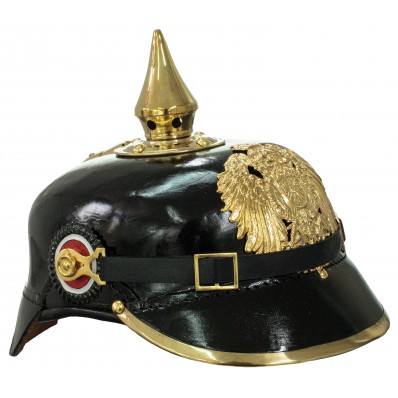
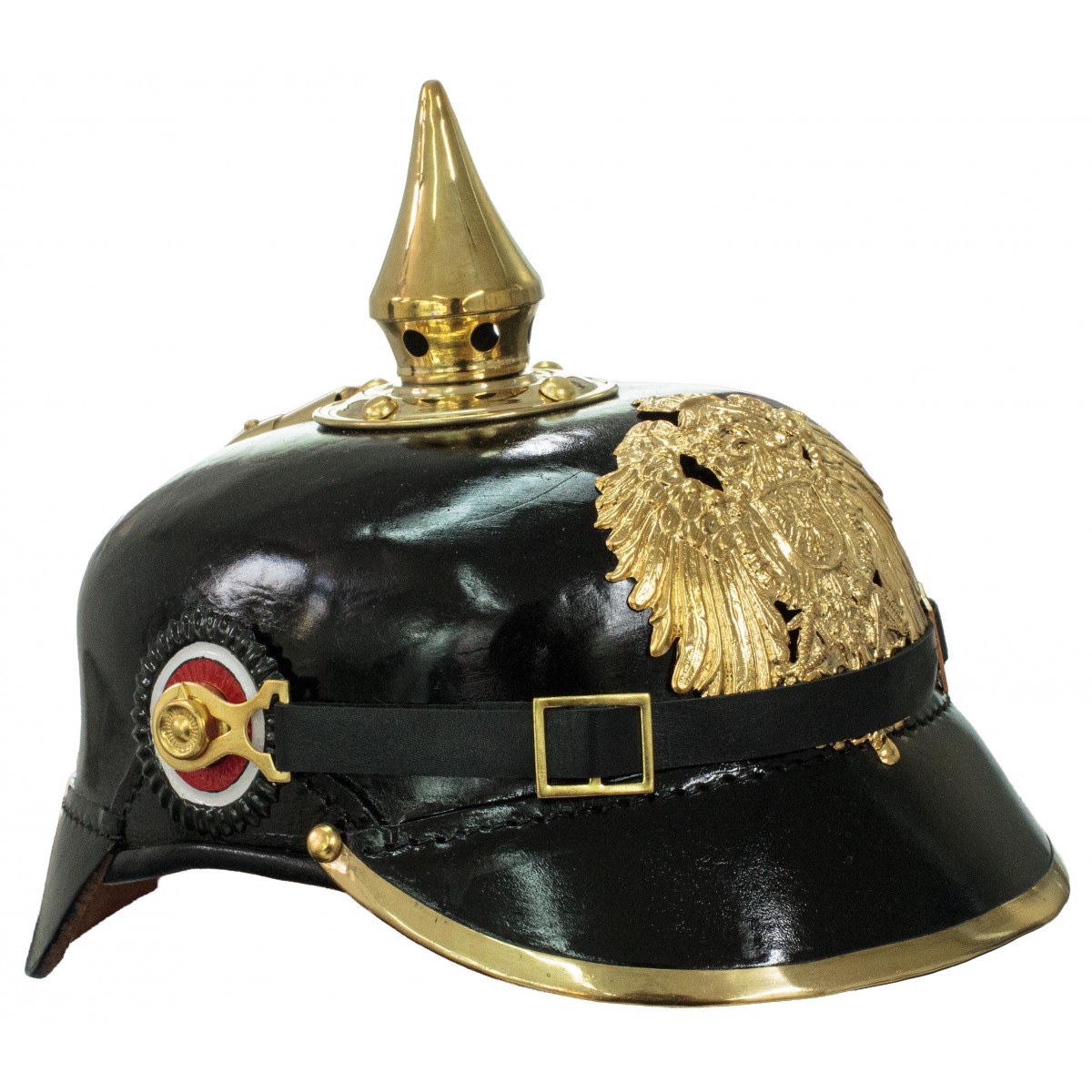
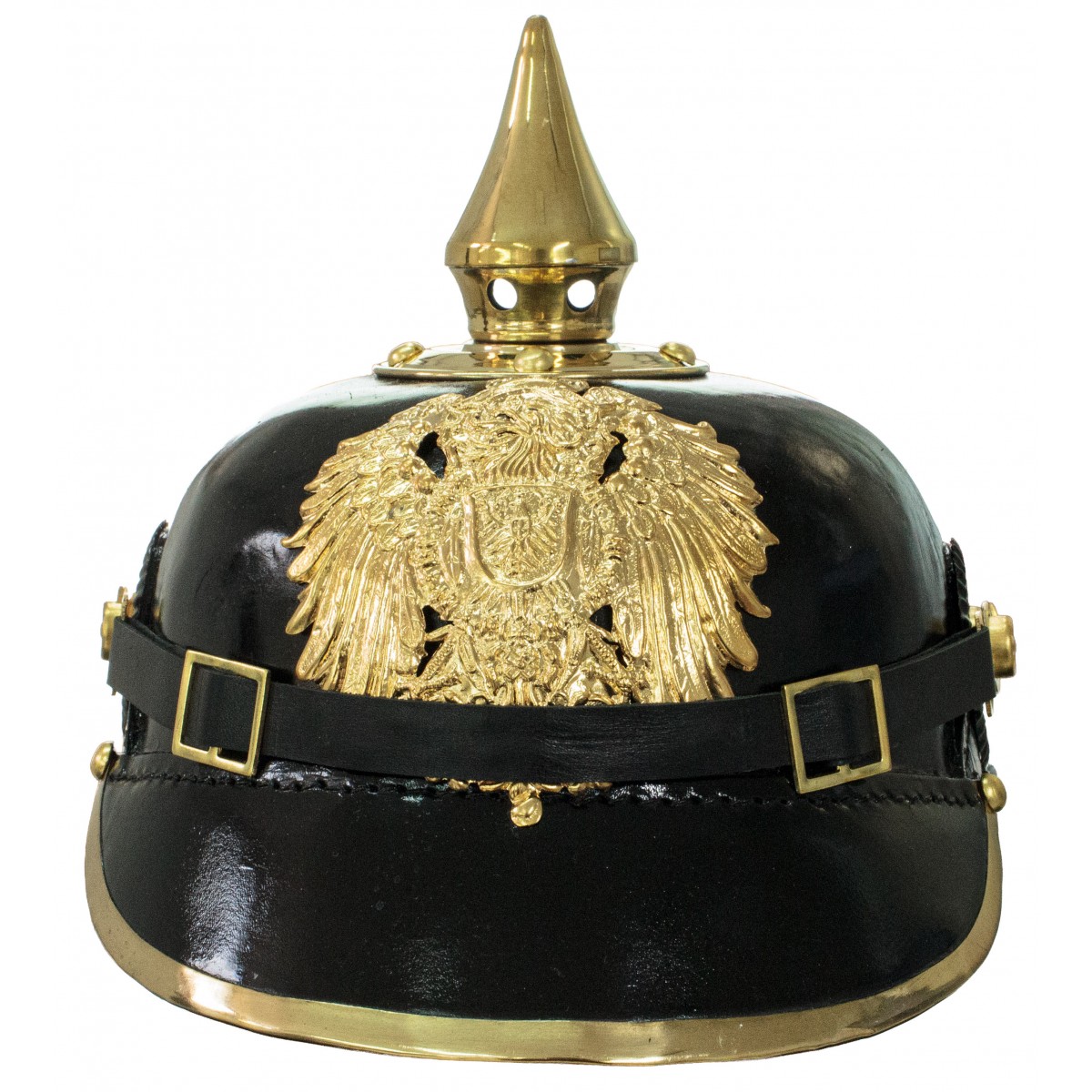
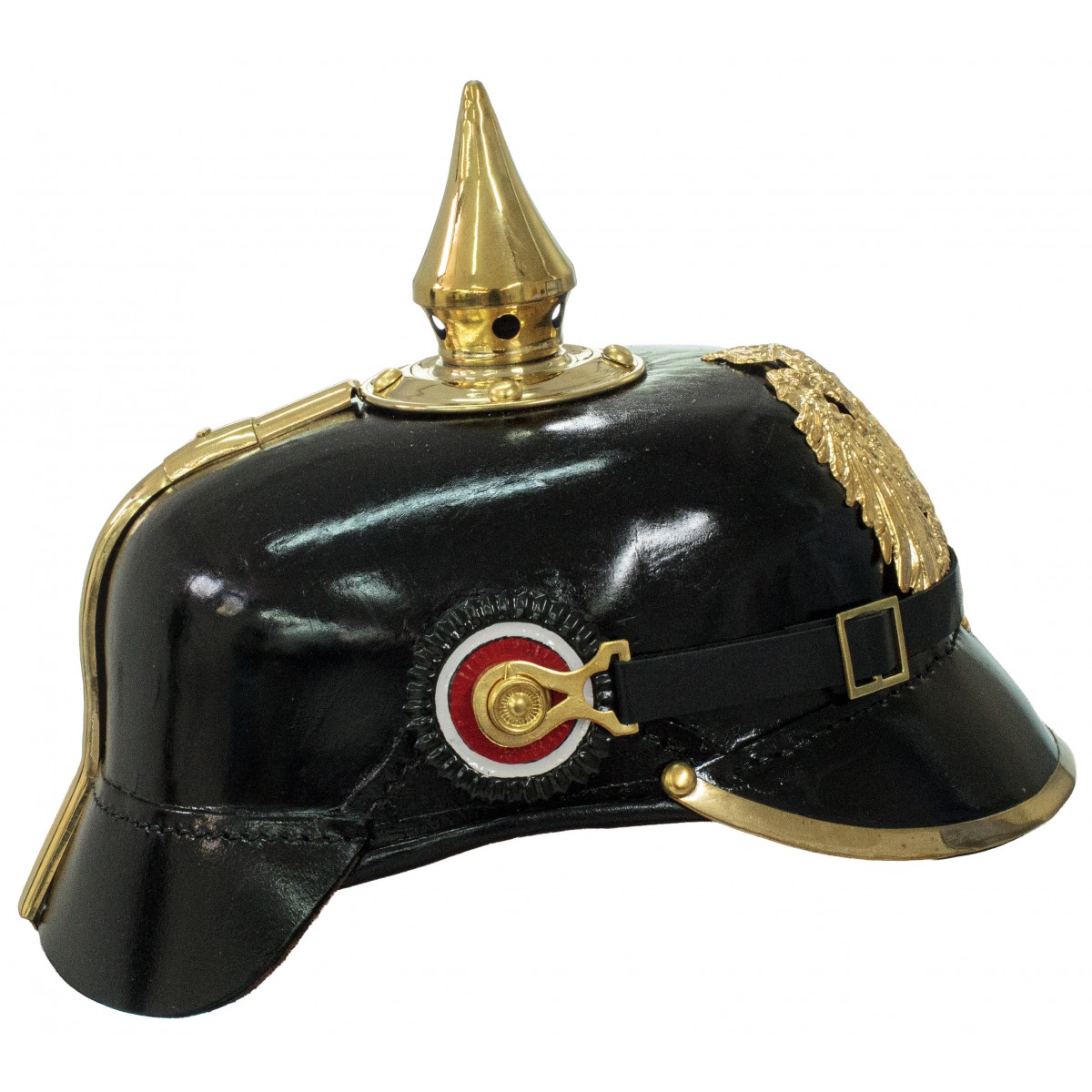
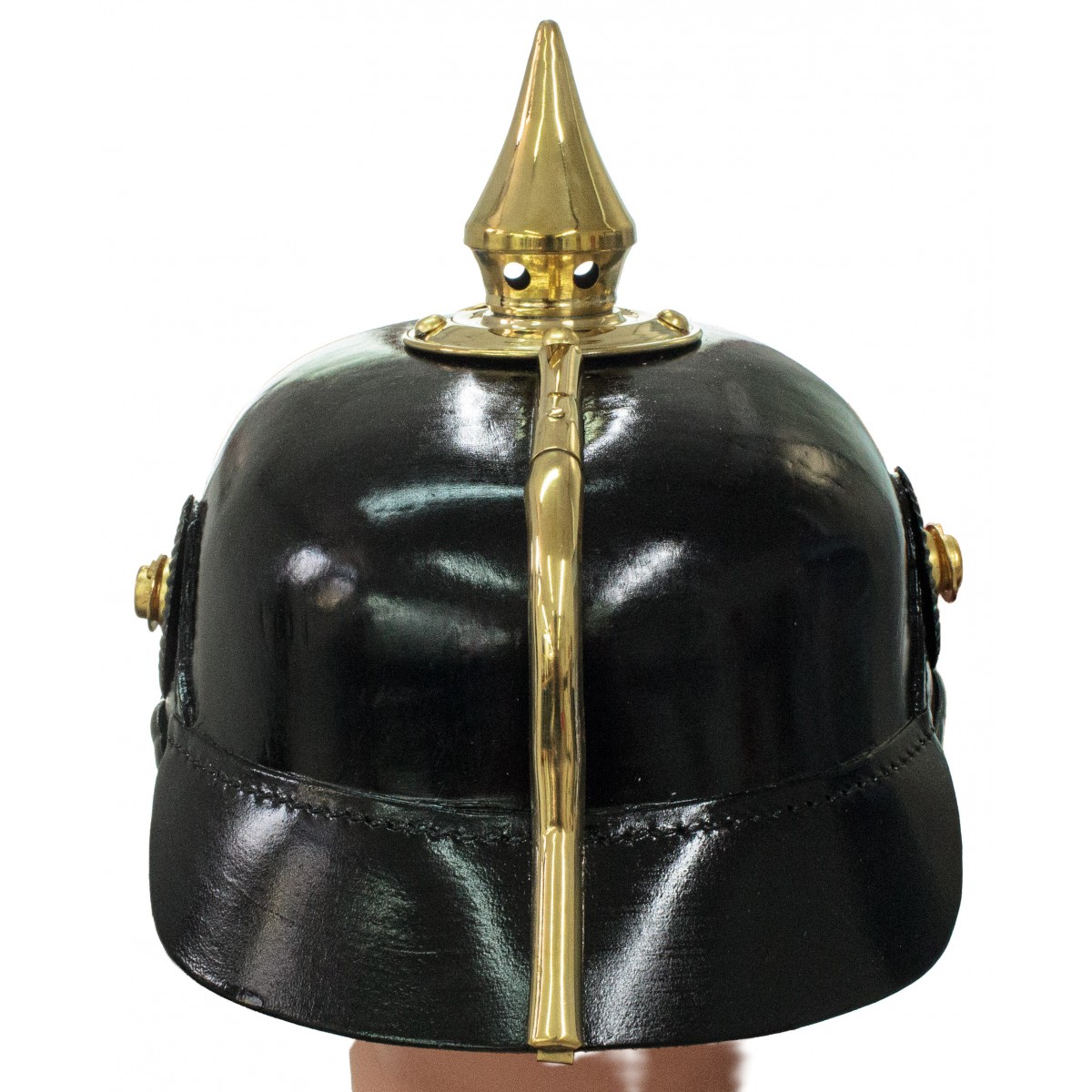
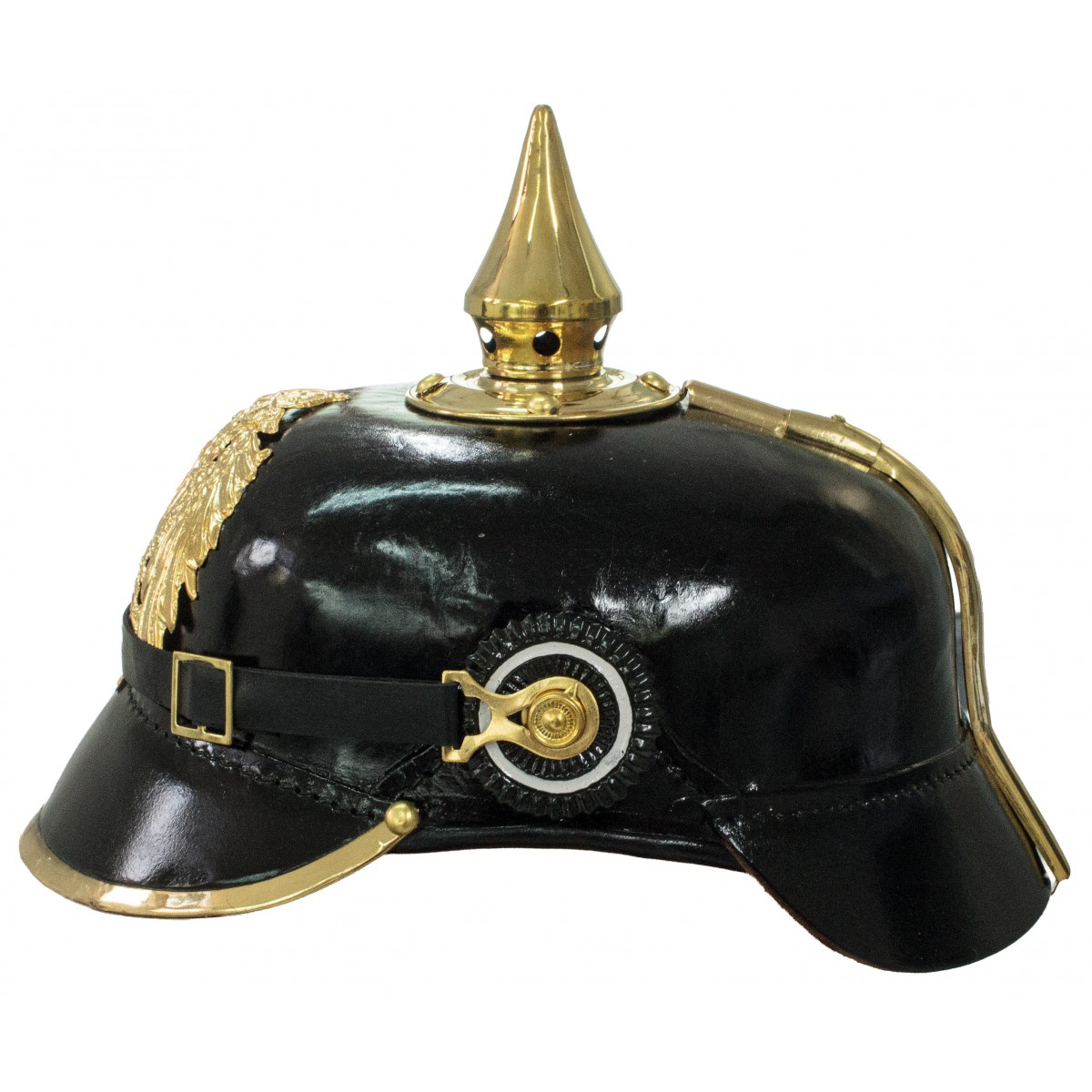
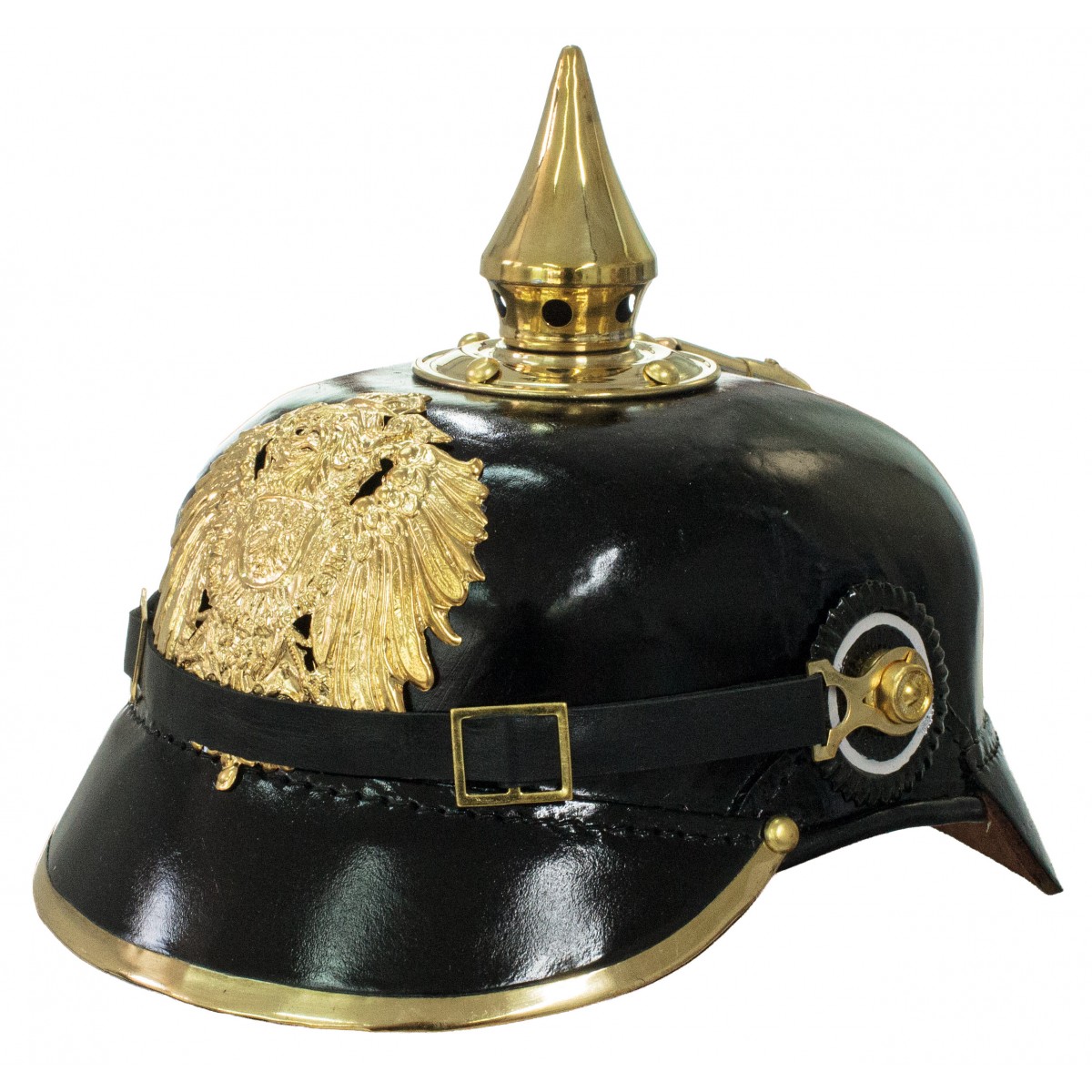
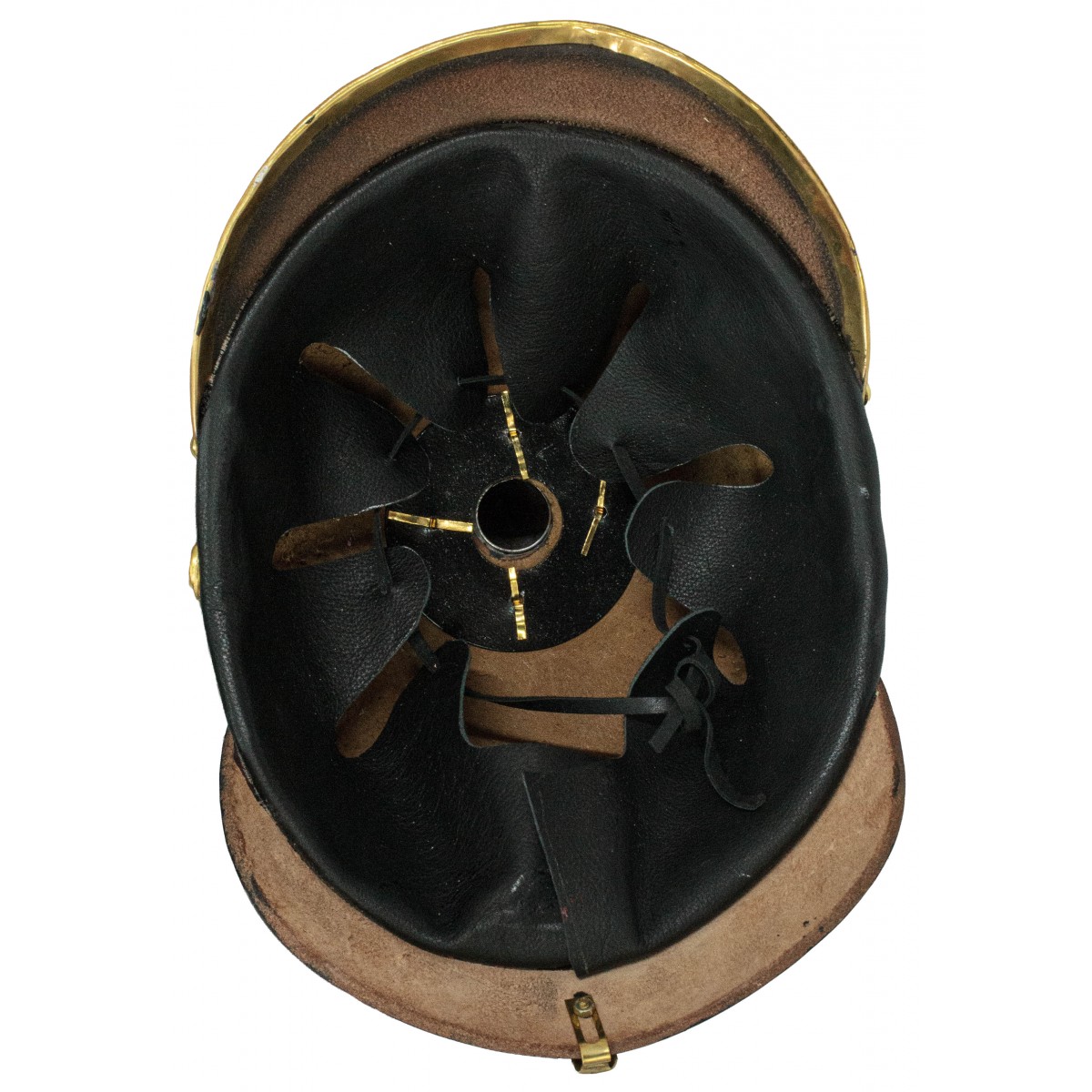
M1895 Pickelhaube of the Imperial German Schutztruppe
New
M1895 Pickelhaube of the Imperial German Schutztruppe, fitted with the Reichsadler to indicate direct service under the German Empire. The historical pattern combined a black lacquered leather skull with yellow-metal fittings, a spike, chinstrap and leather liner and was intended mainly for home-service and formal dress.
Warning: Last items in stock!
- Satisfied or refunded: we guarantee 100% secure protection on your purchases
- Free return: return your order free of charge within 30 days from receipt
- Secure payments: pay securely online with PayPal or credit cards

More info
The M1895 Pickelhaube of the Imperial German Schutztruppe followed the general construction of the spiked leather helmet worn by the Imperial German Army. Its principal distinction was the Reichsadler, identifying an organization serving the German Empire directly. The broad commercial expression “German Colonial Army” more accurately refers to the Imperial Schutztruppen.
Schutztruppe formations existed in German East Africa, German South-West Africa and Cameroon. They were not a regular component of the Prussian Army but answered to the imperial authorities responsible for colonial administration and, from 1907, the Imperial Colonial Office. In Togo and most German Pacific possessions, armed security duties were instead performed principally by colonial police forces.
The historical helmet was constructed from pressed and hardened leather with a glossy black lacquered finish. Its front and rear peaks were stitched to the skull and reinforced with metal edging. The spike, spike base, rear spine and side chinstrap posts completed the structure. The fittings were normally made from brass or a similar yellow-metal alloy.
On enlisted configurations derived from the M1895 pattern, a black leather chinstrap was attached to Model 1891 side posts. Officer versions could carry metal chinscales, more finely finished leather skulls and interiors composed of a leather sweatband and textile lining. The ordinary enlisted liner consisted of several leather tongues joined by a drawstring and offered only limited size adjustment.
The front carried the Imperial Reichsadler rather than the Prussian eagle found on standard Prussian regimental helmets. The emblem depicted the imperial eagle surmounted by the state crown and associated with the heraldic collar of the Order of the Black Eagle. It represented authority exercised on behalf of the Empire as a whole rather than an individual German state. A cockade in black, white and red provided a further national distinction.
In this context, the designation “M1895” principally describes the technical form of the helmet. It does not mean that every member of the Schutztruppe continuously wore this pattern from 1895 onward. Pickelhauben appeared in particular home-service and formal-dress regulations but were not the usual operational headgear in Germany’s African colonies.
In tropical service, German officers and NCOs more commonly wore broad-brimmed Schutztruppe hats, tropical helmets, field caps and other climate-appropriate headgear. African soldiers of the Schutztruppen, commonly known as Askari in German East Africa, wore different uniforms and headgear according to colony and period. The Pickelhaube was therefore associated principally with German personnel and formal service in Germany.
The Schutztruppen were used to impose and maintain German colonial rule, conduct campaigns against local resistance and defend Germany’s overseas territories during the First World War. The Reichsadler displayed on the helmet provided a visible expression of their subordination to the central imperial authorities.
During the First World War, the leather Pickelhaube offered inadequate protection against bullets and shell fragments. The M1915 introduced simplified grey metal fittings and a removable spike. From 1916, the Pickelhaube was progressively replaced among European combat troops by the Stahlhelm, while its function within the Schutztruppe remained predominantly formal.
The helmets could be manufactured in different head sizes. Interior markings might identify the manufacturer, size, year, administrative authority or the High Command of the Schutztruppen. Their presence and arrangement varied according to the helmet category and maker.
Historical note: the Pickelhaube had already been prescribed for the home uniform of the East African Schutztruppe in 1891 but disappeared from the 1896 regulations. It was reintroduced for home service in 1916, precisely when the regular German Army was replacing the Pickelhaube at the front with the steel helmet.
10 other products in the same category:

Helmets
- Germany
- Uniforms
- Medals, Orders and Decorations
- Badges and Pins
- ID Tags
- Arm Shields
- Helmets
- Helmet Decals
- Visor Caps and Hats
- Cap and Helmet Badges
- Collar Tabs Badges
- Collar Tabs, Shoulder Boards and Epaulettes
- Arm Bands
- Division Cuff Titles
- Buckles And Belts
- Buttons For Uniforms
- Stamps
- Gorgets
- Rings
- SS Honour Ring in 925 Silver - Collector's Set
- Poletops
- Flags
- Daggers and Knives (Ornamental)
- Field Marshal Batons
- Field and Personal Equipment
- Service Watches
- Presentation Cases
- Documents and Award Letters
- Busts, Eagles, Lighters and Miscellaneous
- Croatian and Ustasha Militaria
- Denazified Articles
- Commemorative Necklaces
- Spare Parts, Small Parts and Accessories
- Italy
- Medals and Decorations
- Brevets And Badges
- Battle Shields and Tags
- Gorgets
- Visor Caps and Hats
- Cap and Helmet Badges
- Helmets Decals
- Friezes for Collar Tabs
- Collar Tabs, Shoulder Boards and Epaulettes
- Buckles
- Belts
- Buttons For Uniforms
- Rings
- Poletops
- Italian Resistance
- Keyrings
- Wallshields
- Daggers and Knives
- Flags
- Busts and Eagles
- Souvenirs
- Commemorative Necklaces
- Imperial Germany
- Soviet Union
- Other Countries