
No products
Product successfully added to your shopping cart
There are 0 items in your cart. There is 1 item in your cart.
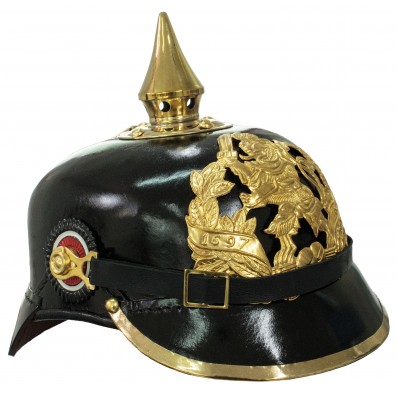
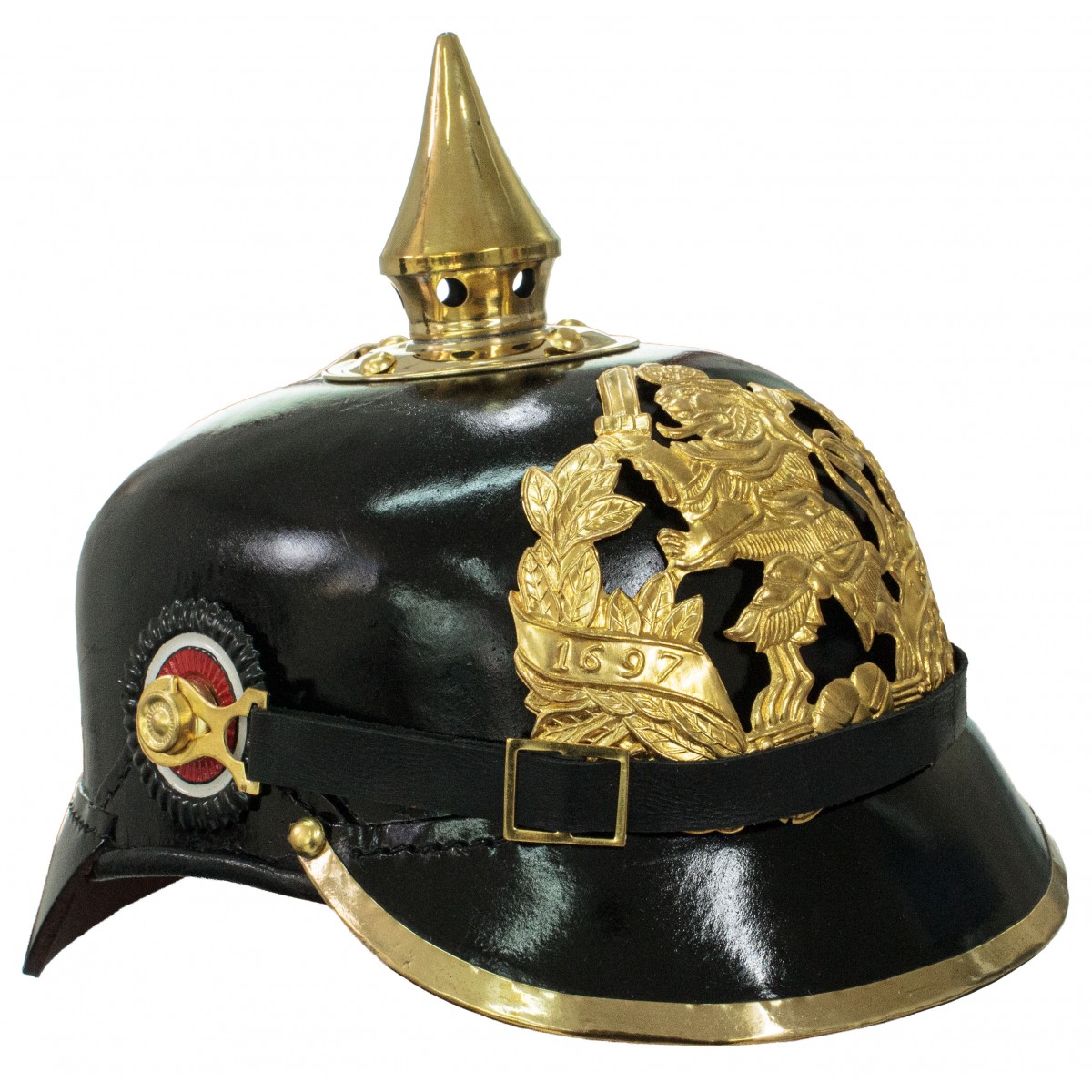
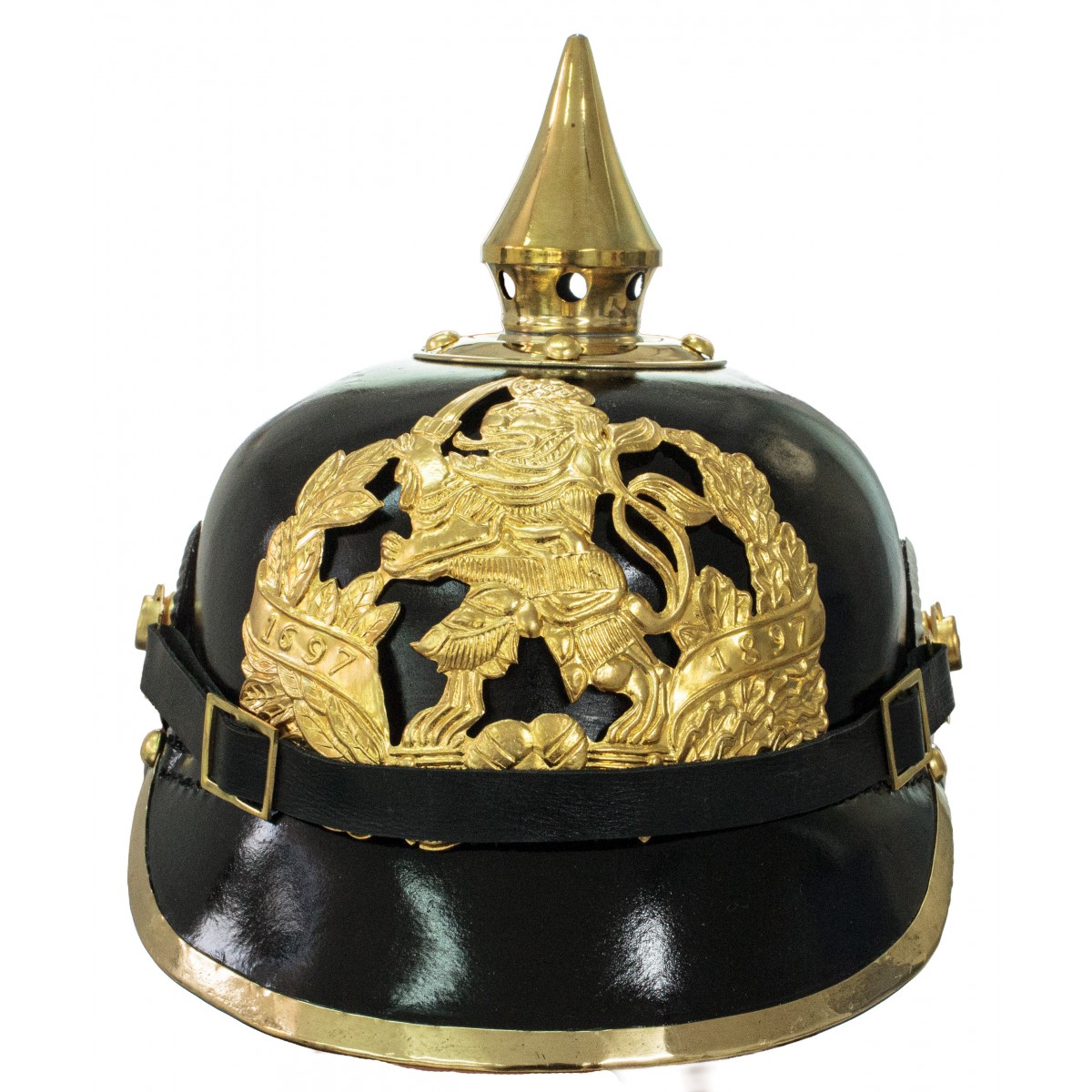
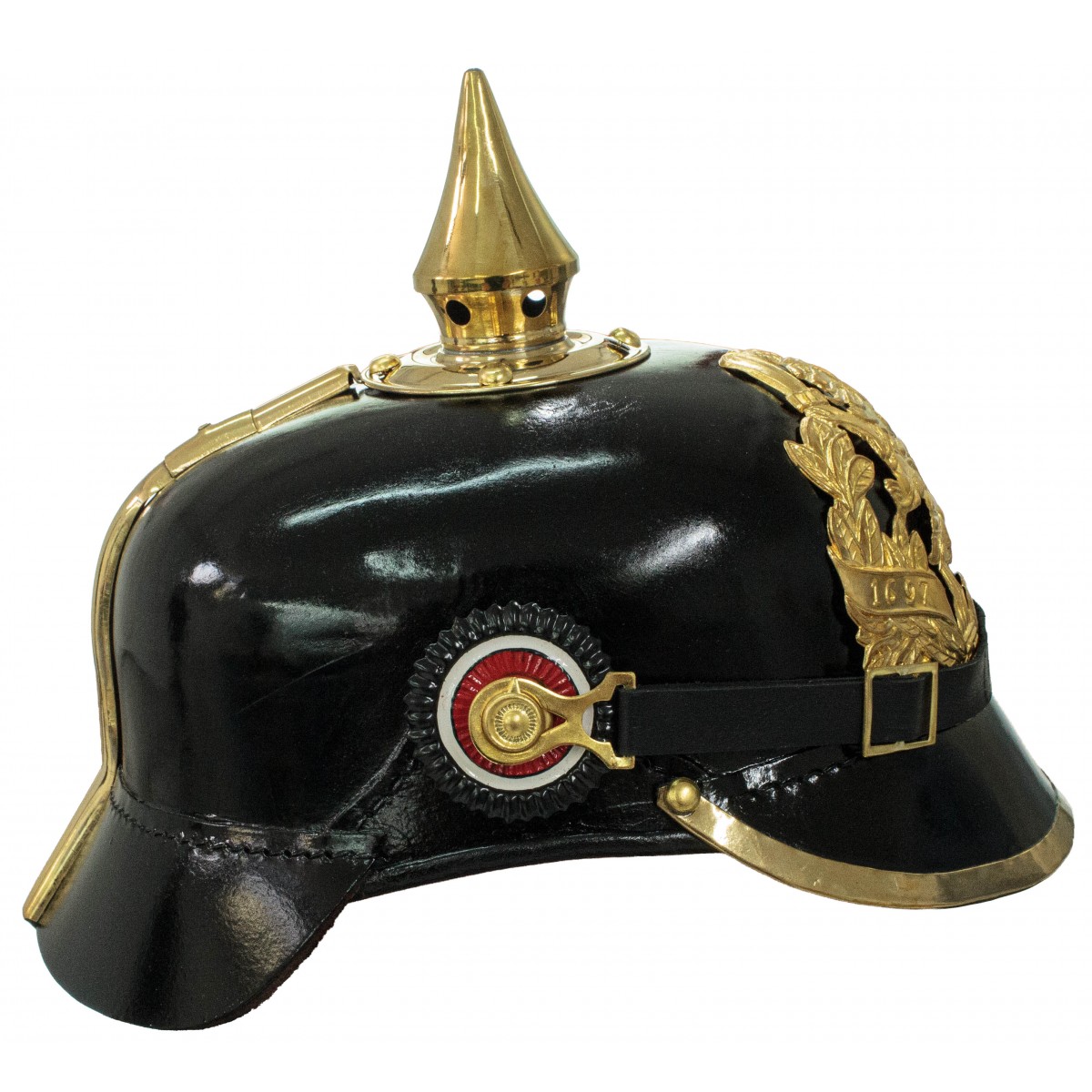
M1895 Pickelhaube of the Grand Duchy of Hesse
New
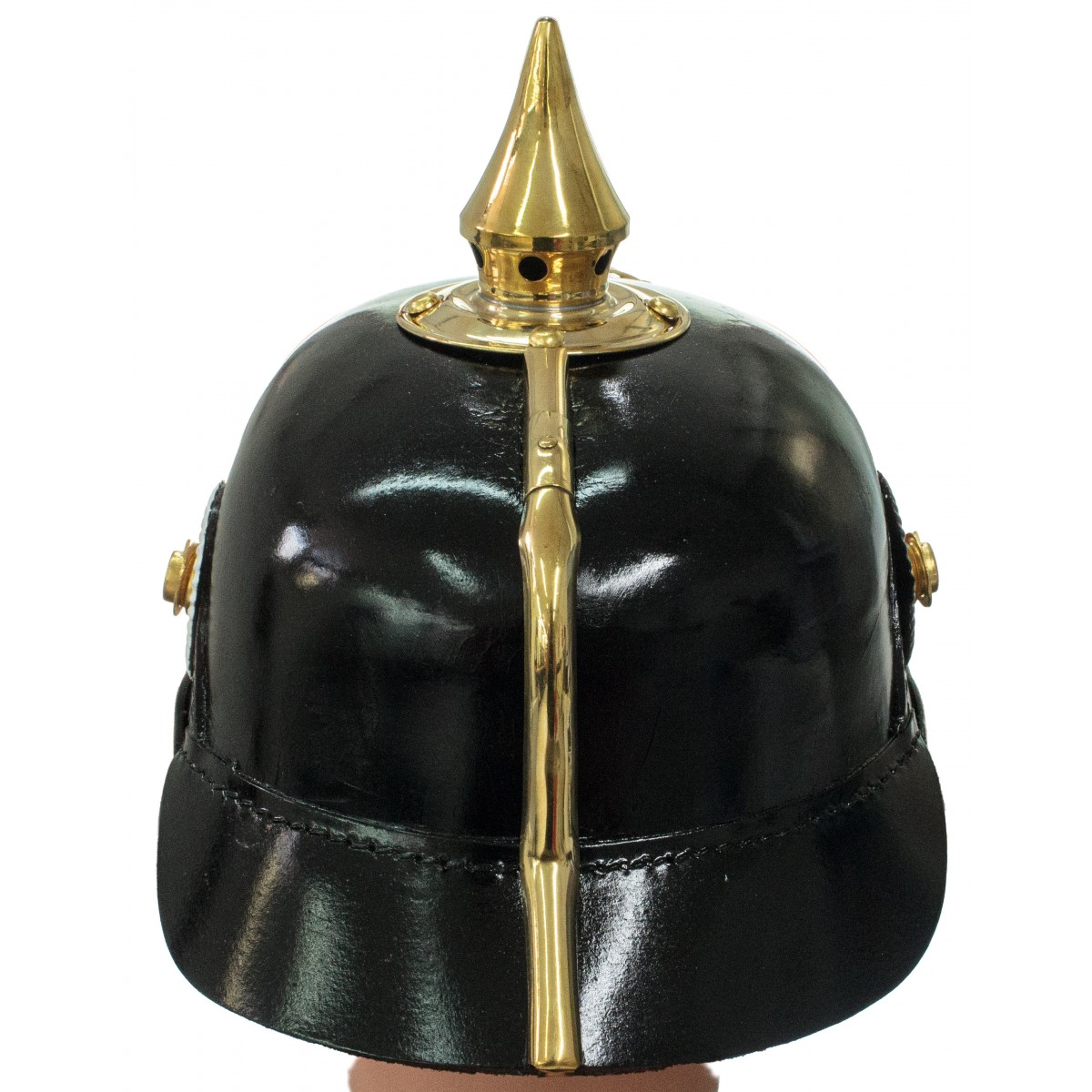
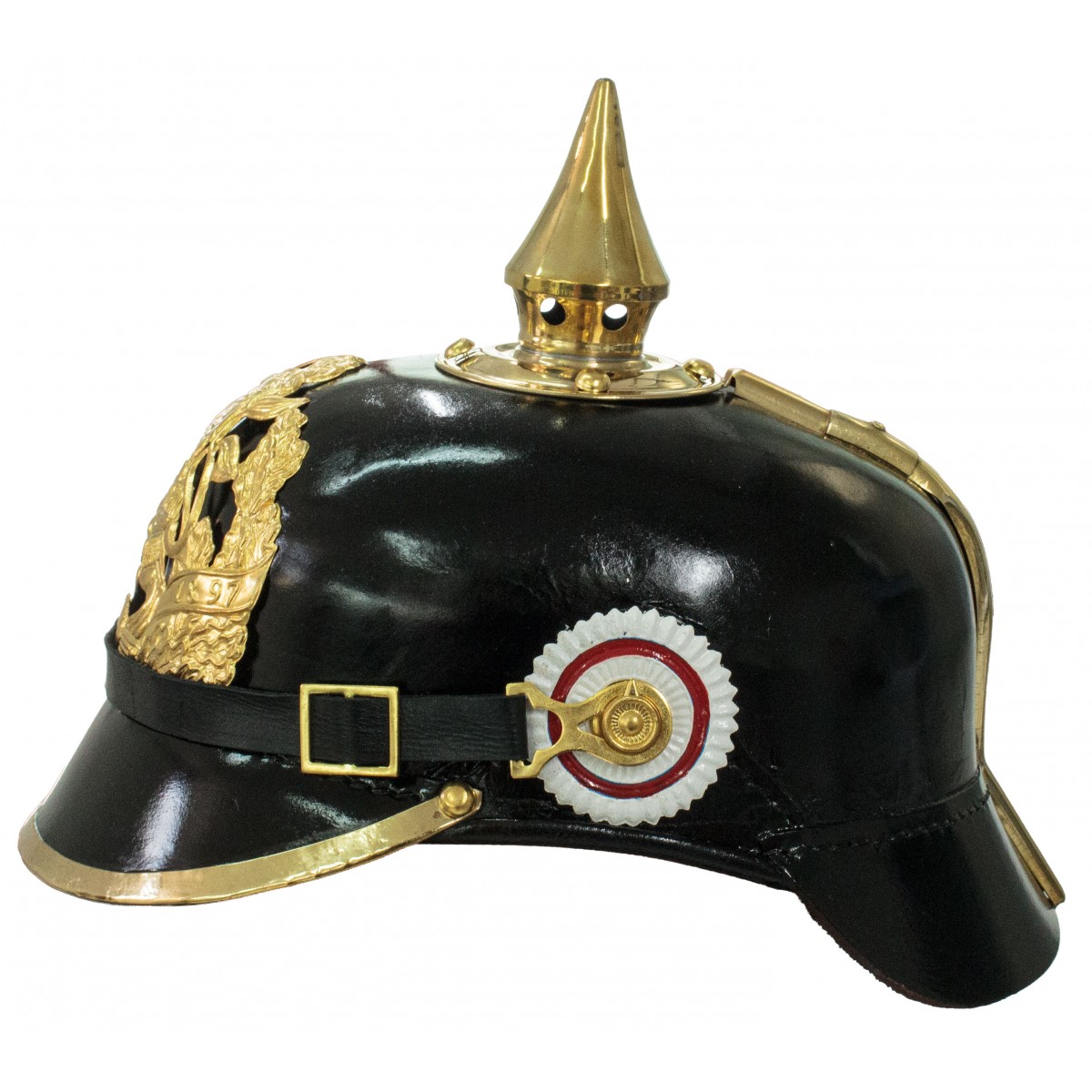
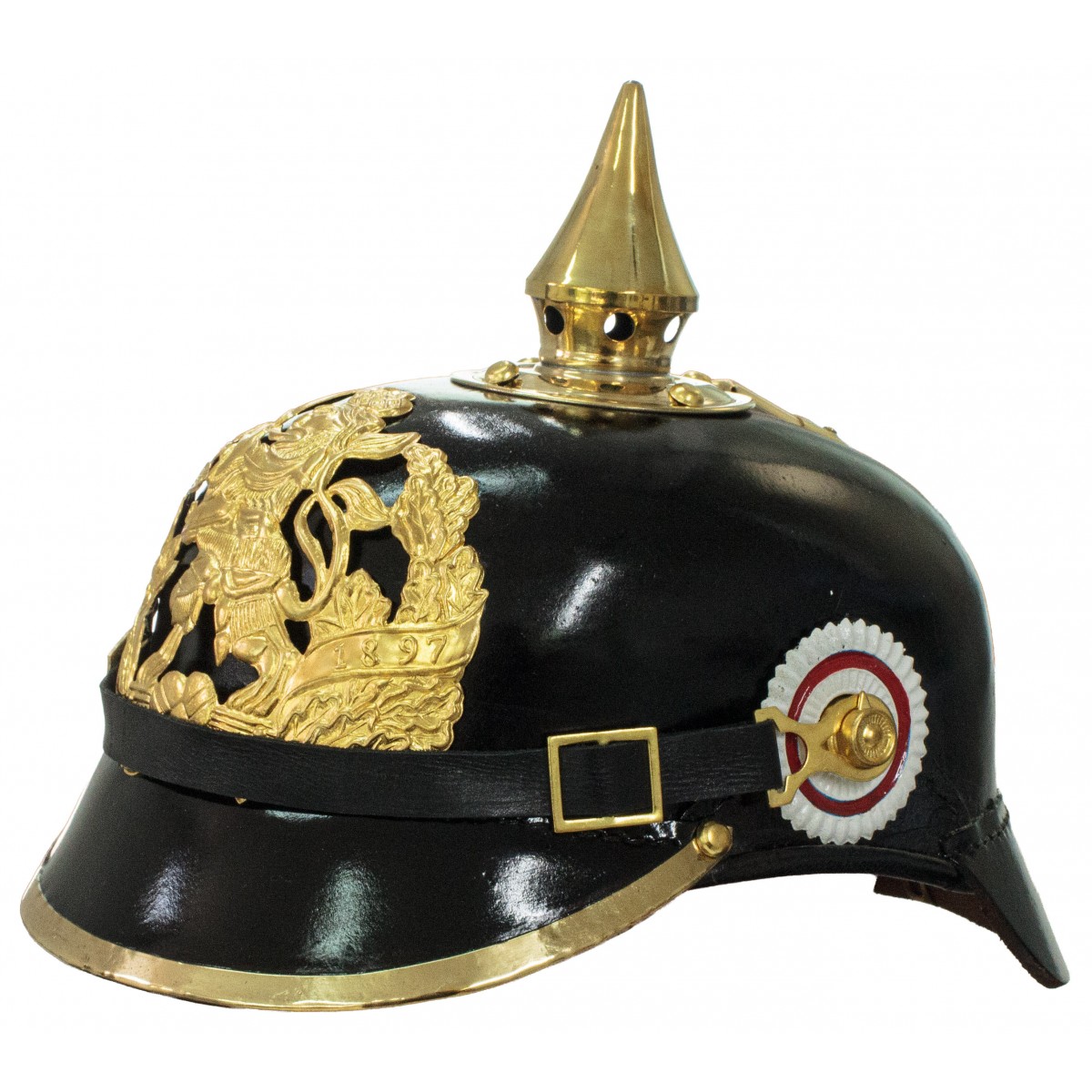
M1895 Pickelhaube of the Grand Duchy of Hesse, worn by the Hessian contingent of the Imperial German Army. The historical pattern featured a black leather skull, fluted spike on a cruciform base, metal fittings and a plate depicting the crowned, double-tailed Hessian lion holding a raised sword.
Warning: Last items in stock!
- Satisfied or refunded: we guarantee 100% secure protection on your purchases
- Free return: return your order free of charge within 30 days from receipt
- Secure payments: pay securely online with PayPal or credit cards

More info
The M1895 Pickelhaube of the Grand Duchy of Hesse was a state-specific version of the spiked helmet used by the Imperial German Army. Commonly known as Hesse-Darmstadt and officially styled the Grand Duchy of Hesse and by Rhine, the state retained its own heraldry and uniform distinctions even though its regiments were incorporated into the Prussian-oriented army structure and the XVIII Army Corps.
The historical helmet was formed from pressed and hardened leather with a glossy black lacquered finish. The front and rear peaks were stitched to the skull and reinforced by metal edging and fittings. A vertical rear spine strengthened the helmet and protected the rear seam. On enlisted helmets for foot troops, the M1895 spine incorporated an adjustable ventilation shutter, improving the flow of air inside the helmet.
A prominent Hessian feature was the cruciform spike base. While many Prussian enlisted helmets used a circular base, Hessian Pickelhauben normally carried a cross-shaped base supporting a fluted spike. The pointed fitting was associated principally with infantry and other foot troops. Field artillery used the related Kugelhaube, distinguished by a ball-shaped terminal in place of the spike.
The front plate depicted the crowned Hessian lion, shown rampant with two tails and a raised sword. The lion stood above a base and was surrounded by branches of laurel and oak. In the coloured state arms it was striped red and white, but on the helmet plate it appeared entirely in the colour of the metal. This emblem immediately distinguished Hessian troops from Prussian regiments wearing the eagle plate.
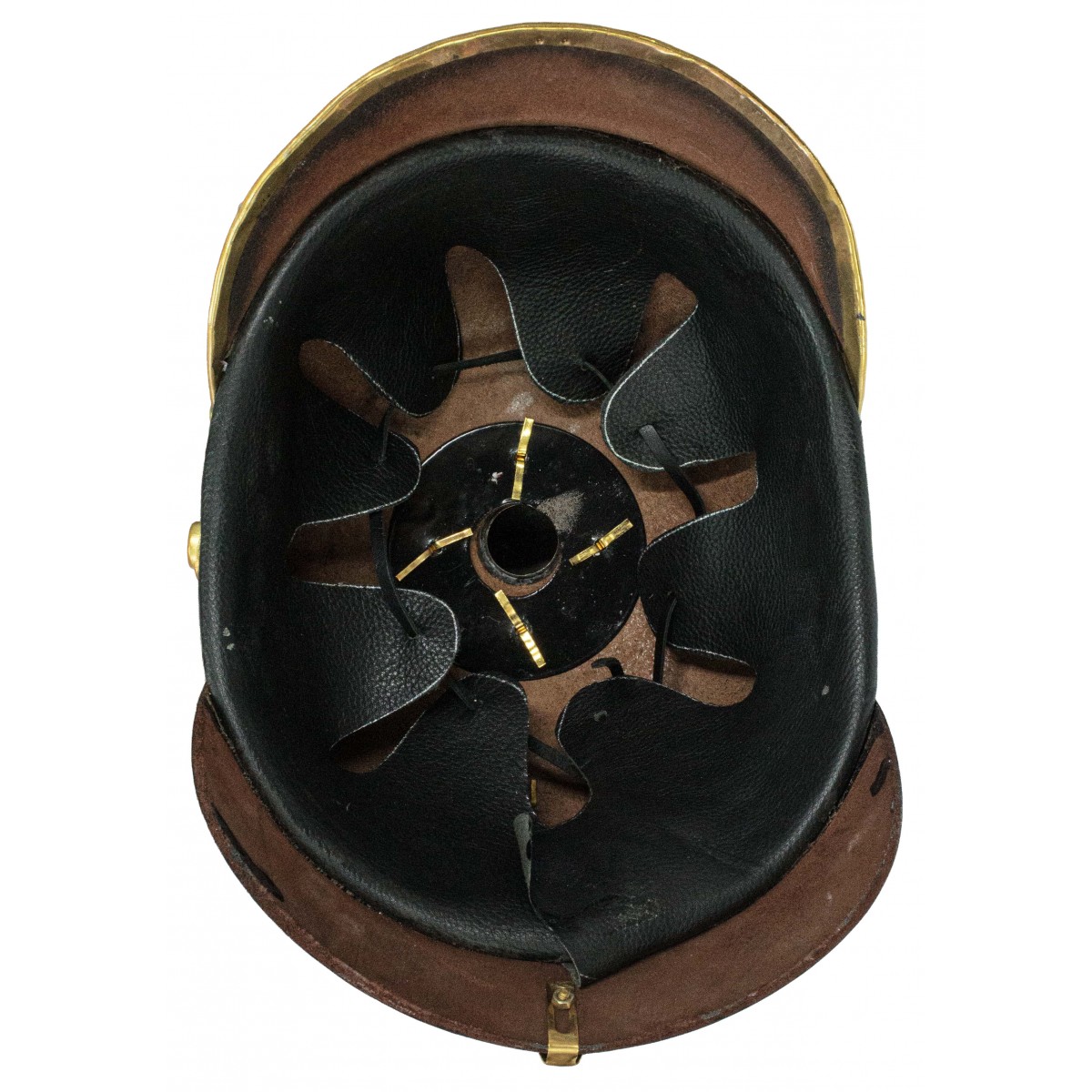
Standard enlisted versions generally used brass or yellow-metal fittings. A black leather chinstrap, adjustable through buckles, was attached to the Model 1891 side posts. Officers and certain NCO categories could wear metal chinscales, more finely finished leather skulls and different interior fittings. The ordinary enlisted liner consisted of multiple leather tongues joined at the top by a drawstring.
From 1897, the black, white and red Imperial cockade was worn on the right side. The Hessian state cockade, white with two red rings, was positioned on the left. Together they represented the soldier’s dual affiliation with the German Empire and the Grand Duchy of Hesse. Before the Imperial cockade was introduced, the Hessian cockade was worn alone on the right side.
Several rank and regimental variants existed. The Leibgarde-Infanterie-Regiment (1st Grand Ducal Hessian) No. 115, for example, used special helmets with silver-coloured fittings, the star of the Order of Ludwig and a scroll bearing the date 1621, referring to the regiment’s foundation. These features were regimental distinctions and did not belong to every Hessian M1895 helmet.
The M1895 represented the final general development of the Pickelhaube before the First World War. It remained in widespread use at the beginning of the conflict and was commonly covered in the field to conceal its glossy surfaces and metal fittings. Its leather construction provided shape and protection from the weather but was not designed to resist bullets or artillery fragments. The simplified M1915 pattern introduced grey steel fittings and a removable spike, while the Pickelhaube was progressively replaced in front-line service by the steel helmet from 1916.
The helmets were manufactured in different head sizes, usually indicated by a numerical marking. The drawstring liner offered only limited adjustment. Period examples could carry markings identifying the manufacturer, size, year, regiment, battalion or clothing depot, normally applied inside the skull or on the rear peak.
Historical note: although Hessian regiments were closely integrated into the Prussian military system, they retained the sword-bearing Hessian lion and their own state cockade. The Pickelhaube therefore provided a visible expression of the German Empire’s federal structure, in which individual states continued to display their identity through distinctive heraldry and colours.
10 other products in the same category:

Helmets
- Germany
- Uniforms
- Medals, Orders and Decorations
- Badges and Pins
- ID Tags
- Arm Shields
- Helmets
- Helmet Decals
- Visor Caps and Hats
- Cap and Helmet Badges
- Collar Tabs Badges
- Collar Tabs, Shoulder Boards and Epaulettes
- Arm Bands
- Division Cuff Titles
- Buckles And Belts
- Buttons For Uniforms
- Stamps
- Gorgets
- Rings
- SS Honour Ring in 925 Silver - Collector's Set
- Poletops
- Flags
- Daggers and Knives (Ornamental)
- Field Marshal Batons
- Field and Personal Equipment
- Service Watches
- Presentation Cases
- Documents and Award Letters
- Busts, Eagles, Lighters and Miscellaneous
- Croatian and Ustasha Militaria
- Denazified Articles
- Commemorative Necklaces
- Spare Parts, Small Parts and Accessories
- Italy
- Medals and Decorations
- Brevets And Badges
- Battle Shields and Tags
- Gorgets
- Visor Caps and Hats
- Cap and Helmet Badges
- Helmets Decals
- Friezes for Collar Tabs
- Collar Tabs, Shoulder Boards and Epaulettes
- Buckles
- Belts
- Buttons For Uniforms
- Rings
- Poletops
- Italian Resistance
- Keyrings
- Wallshields
- Daggers and Knives
- Flags
- Busts and Eagles
- Souvenirs
- Commemorative Necklaces
- Imperial Germany
- Soviet Union
- Other Countries