
No products
Product successfully added to your shopping cart
There are 0 items in your cart. There is 1 item in your cart.
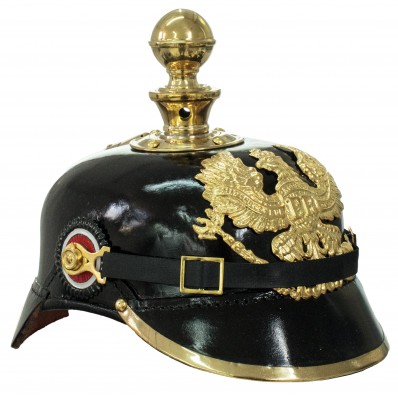
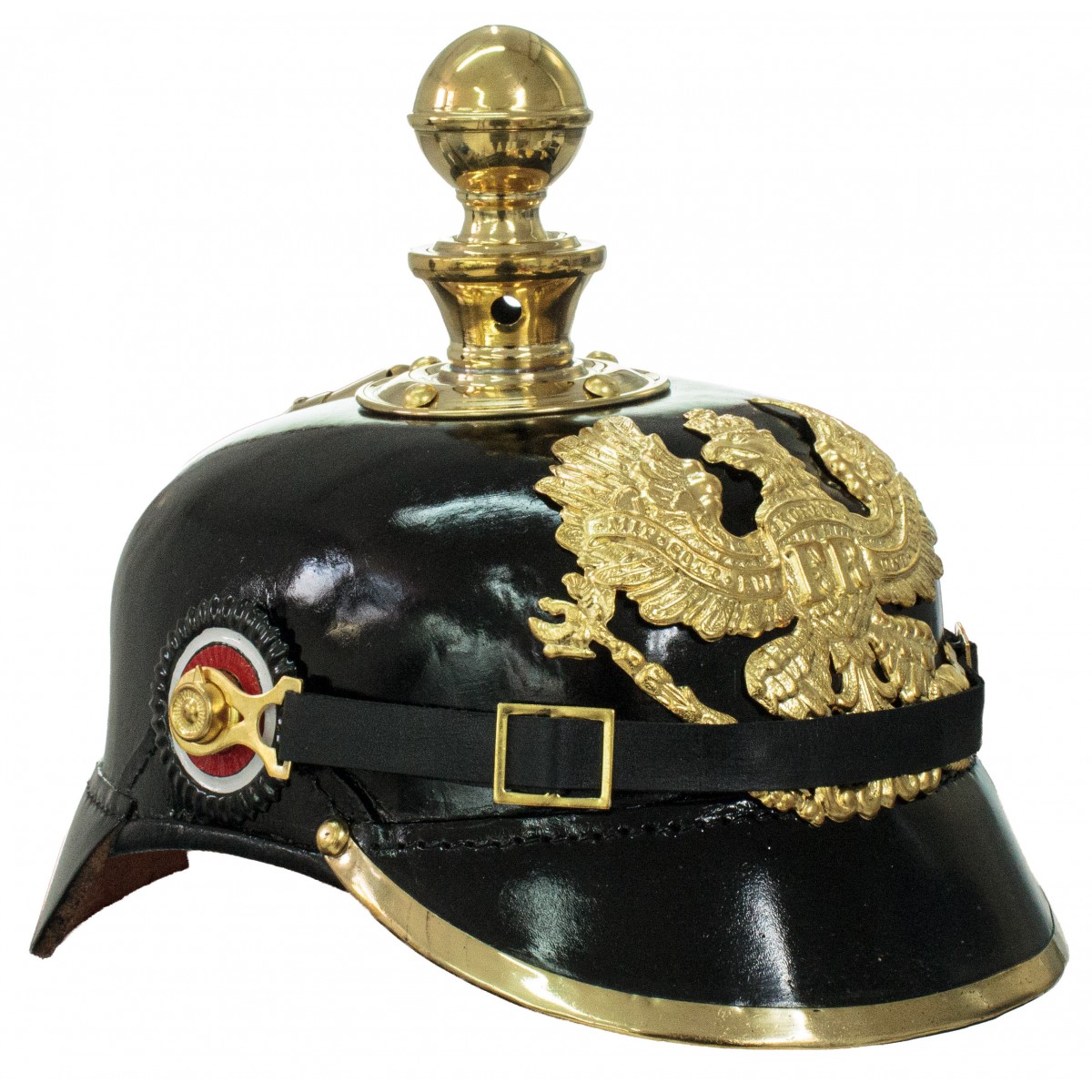
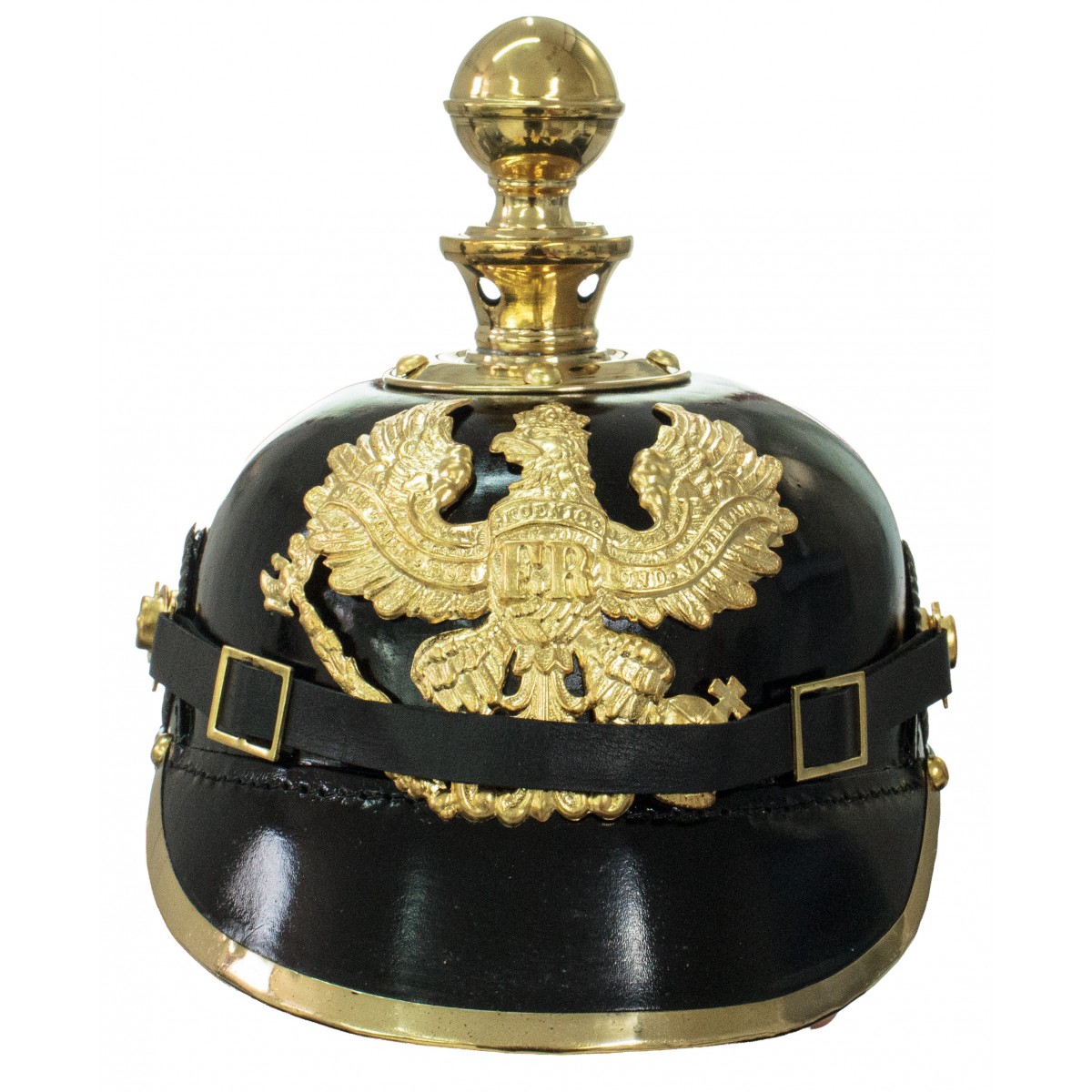
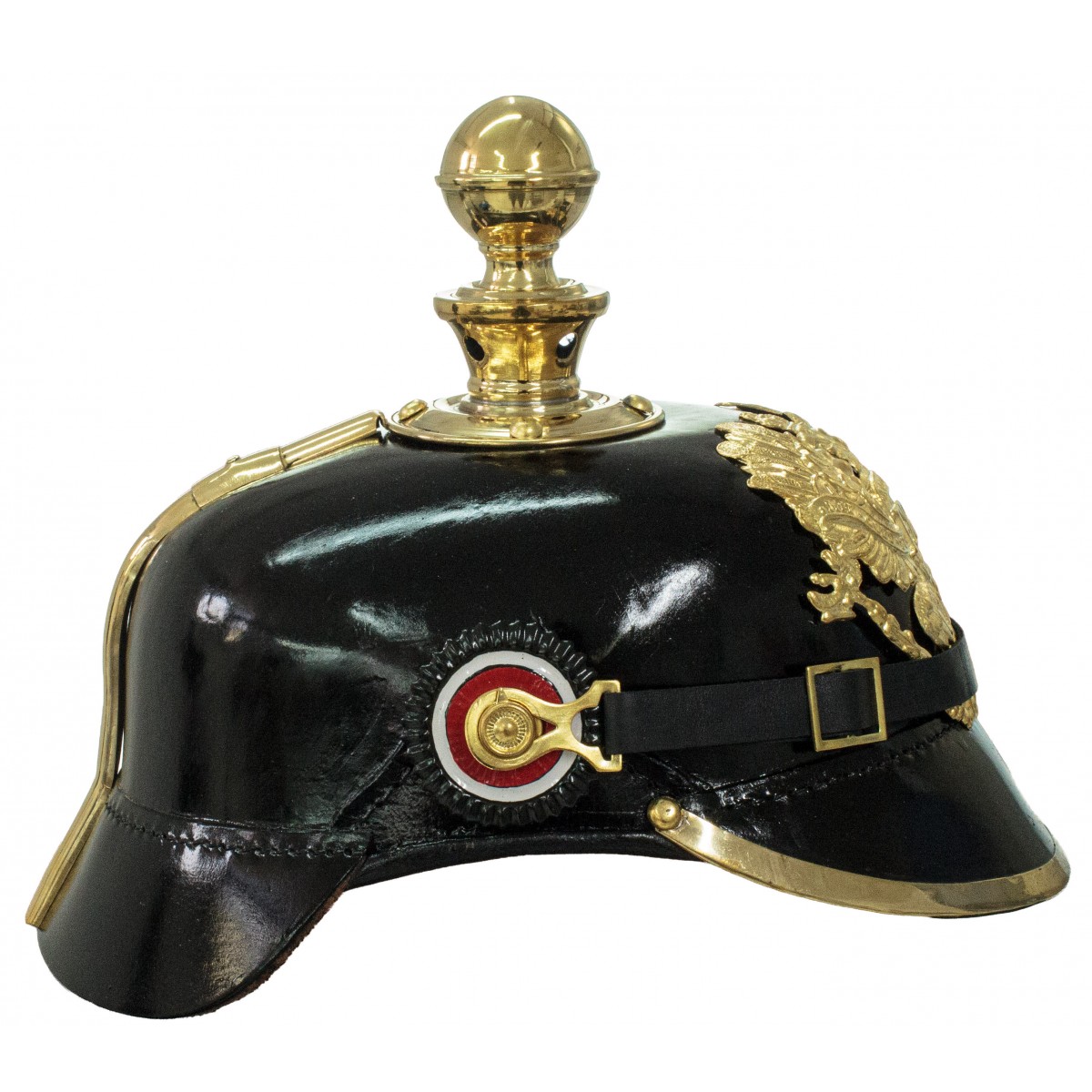
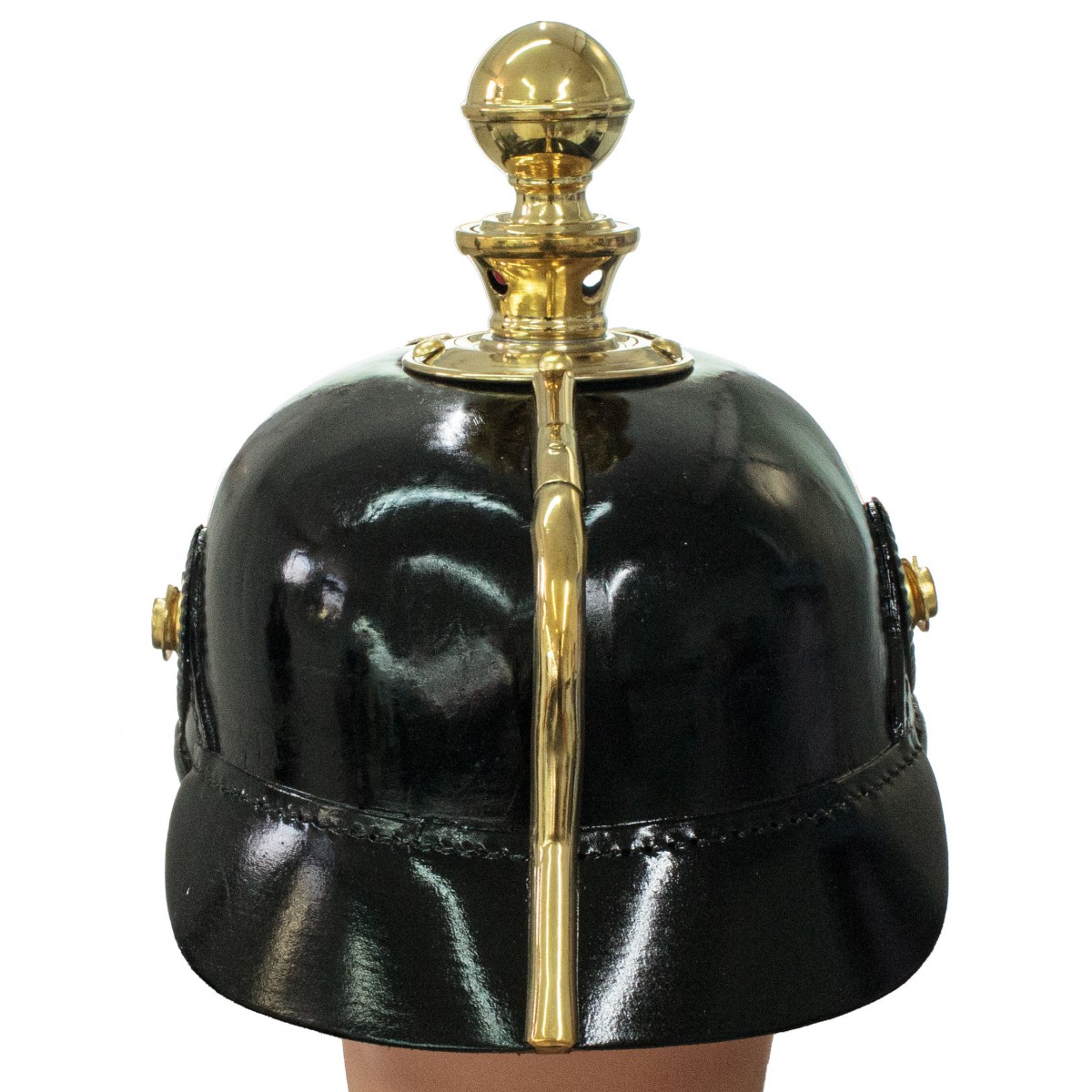
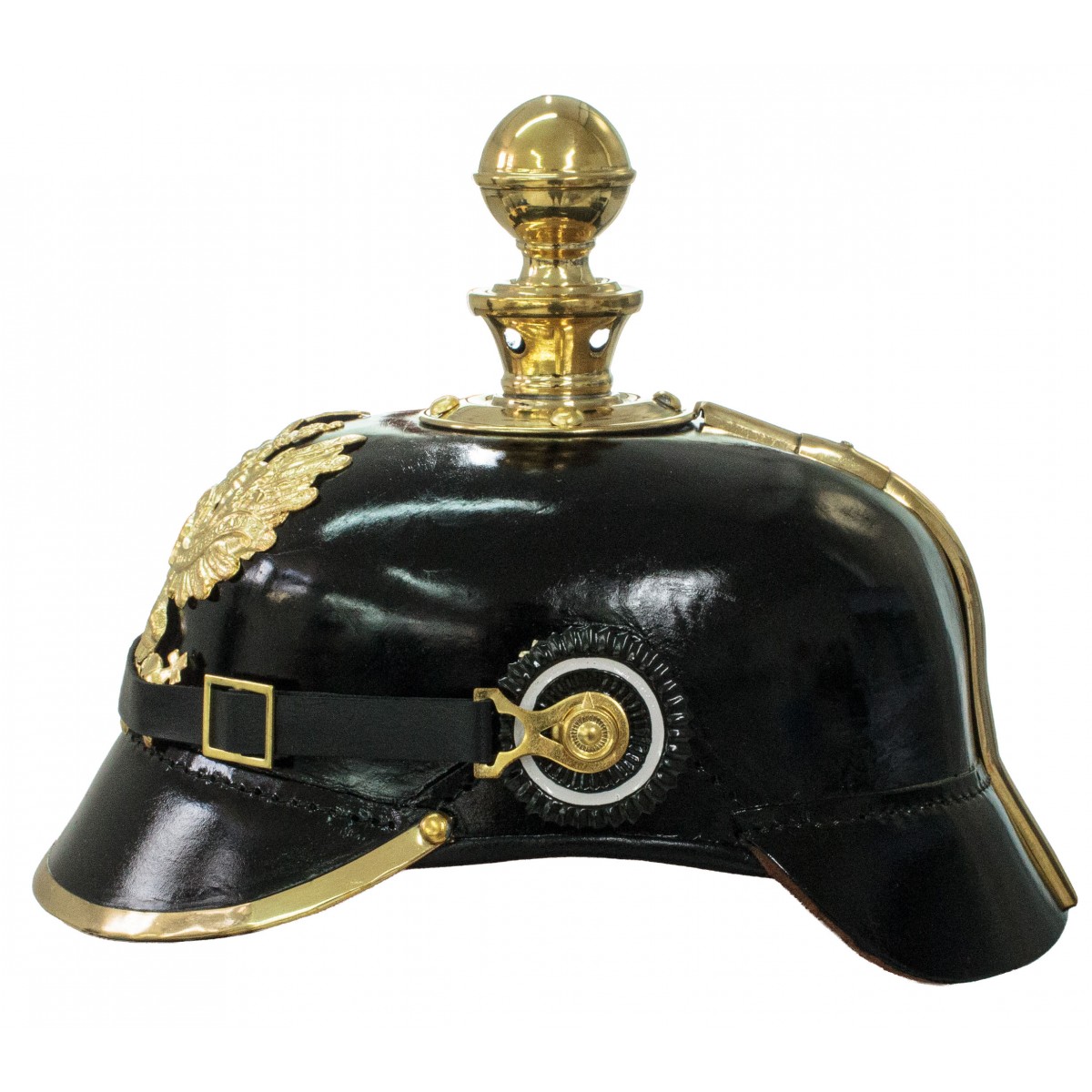
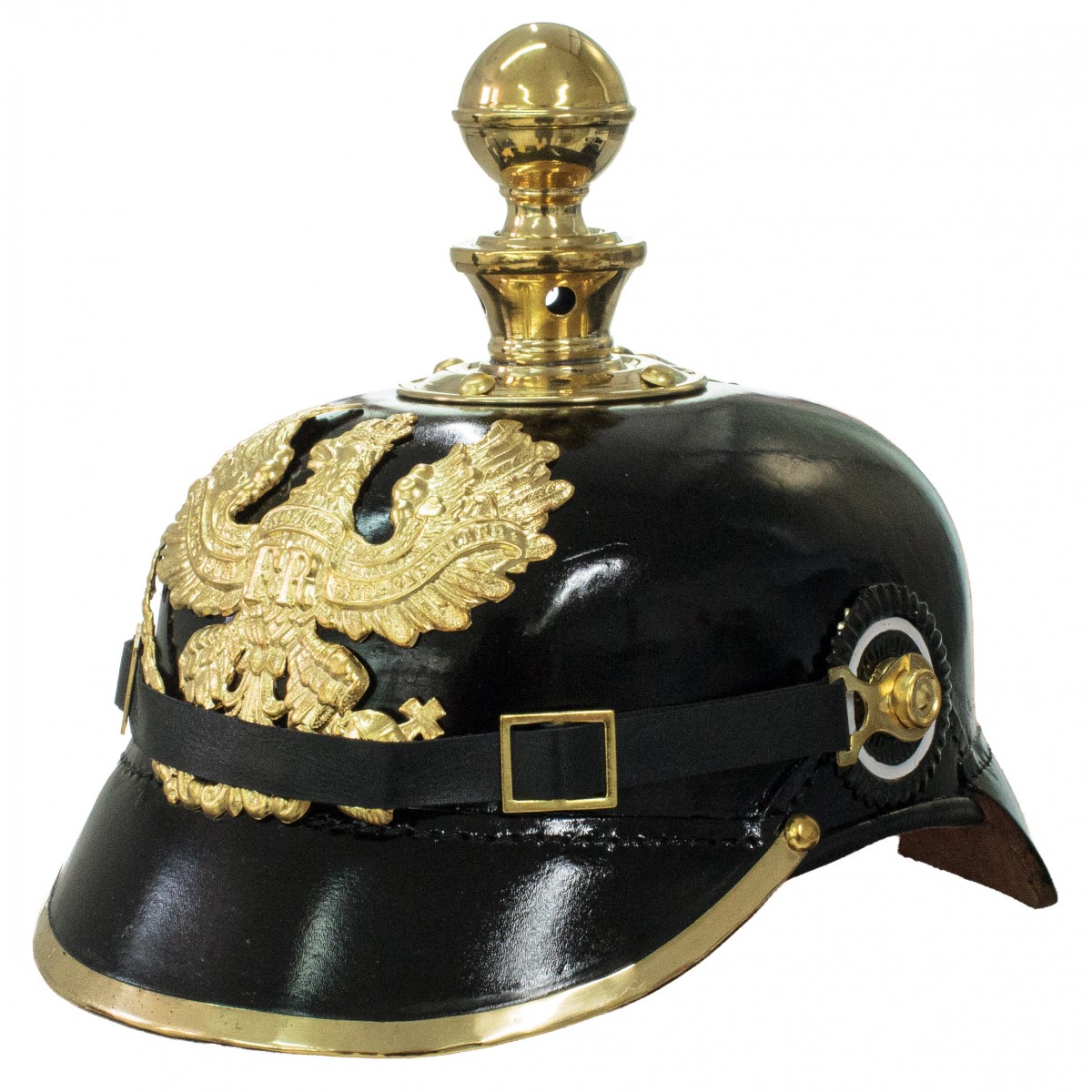
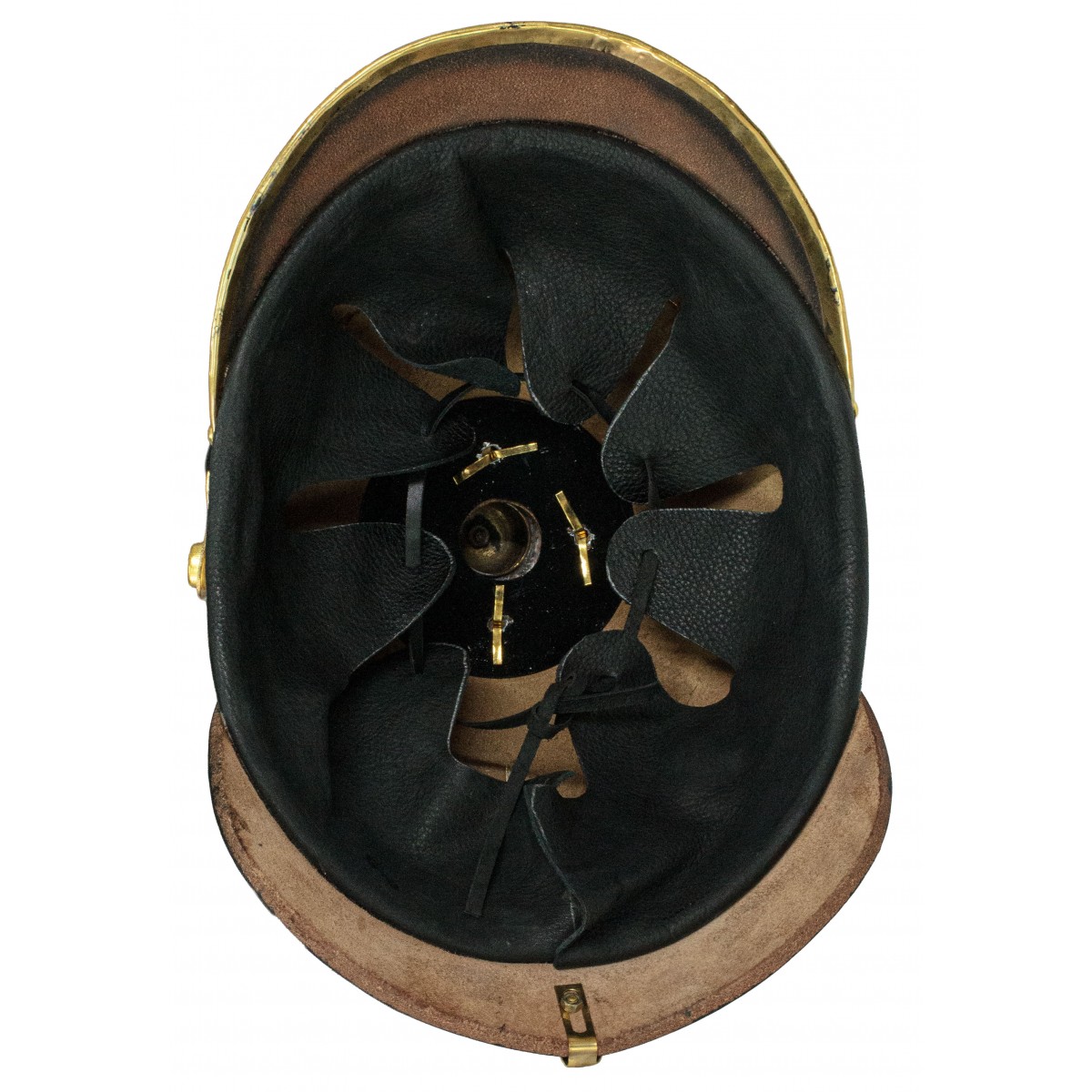
M1895 Kugelhelm of the Prussian Artillery for Enlisted Ranks and NCOs
New
M1895 Kugelhelm for enlisted ranks and NCOs of the Prussian artillery, with a metal ball finial replacing the conventional spike, a Prussian line eagle and the motto “Mit Gott für König und Vaterland.” The historical model featured a black leather shell, yellow-metal fittings, a leather chinstrap and two cockades.
Warning: Last items in stock!
- Satisfied or refunded: we guarantee 100% secure protection on your purchases
- Free return: return your order free of charge within 30 days from receipt
- Secure payments: pay securely online with PayPal or credit cards

More info
The M1895 Kugelhelm was the artillery version of the Prussian Pickelhaube. Its defining feature was the metal ball finial, or Kugel, which completely replaced the conventional conical spike. Consequently, the historically and uniformologically precise designation for this configuration is Artillery Kugelhelm.
The ball finial distinguishes the helmet from the patterns worn by infantry and numerous other service branches. On a true Kugelhelm, the complete sphere sits directly upon a short metal neck above the circular top base. This should not be confused with certain police, customs or civil-service helmets on which a narrow spike merely terminated in a small spherical knob.
The Kugel was introduced for the Prussian artillery in 1844 and became the principal identifying feature of that service branch. Its shape recalled a cannonball and allowed artillery personnel to be recognised immediately. Kugelhelme were worn by both the field artillery and the foot artillery. The ball finial alone therefore cannot determine which of these two branches used a particular helmet.
The historical shell was made from pressed leather, shaped and lacquered black, with separate front and rear visors. A circular plate secured by four fasteners supported the short metal neck and ball. On some versions, the ball could be unscrewed to accommodate a Trichter and parade plume, although fixed ball finials were also manufactured.
The front plate was the Prussian line eagle, displaying a crowned eagle with outstretched wings, sceptre and orb, the royal cipher FR upon its breast and the scroll “Mit Gott für König und Vaterland.” This was the emblem of the Kingdom of Prussia rather than the general Imperial German Reichsadler. The motto, added to this form of Prussian helmet eagle in 1860, means “With God for King and Fatherland.”
On issue helmets for enlisted ranks and NCOs, the eagle, ball finial, circular base, front visor trim and rear reinforcing spine were normally made from brass or aluminium bronze, giving the fittings a yellow-metal appearance. The M1895 eagle was generally secured by two loops passing through the shell and retained internally by small leather wedges.
The standard Prussian eagle identifies a helmet associated with the line artillery, but it does not establish a particular regiment. Guard artillery formations and certain titled regiments could carry additional stars, breast shields, royal ciphers, honour scrolls or other superimposed devices. A more precise attribution therefore requires distinctive plate details or verifiable issue markings.
The regulation chinstrap for enlisted ranks and NCOs was made from black leather and attached to M1891 side posts. From 1897, the black-white-red Imperial cockade was worn on the right and the black-and-white Prussian state cockade on the left. Senior NCO grades and privately purchased helmets could display different cockade details, chinscales or more finely finished fittings.
The interior was normally fitted with a tongued leather liner tightened by a drawstring. This allowed only limited adjustment, as the helmets were manufactured in several actual shell sizes. Issue helmets could bear size numbers, makers’ marks, dates, inspection stamps, depot marks or unit designations on the rear visor or inside the shell.
During manoeuvres and active service, the Kugelhelm was covered by a cloth Überzug intended to conceal the glossy black shell and reflective metal fittings. Artillery helmet covers could carry the regiment’s number. During the First World War, these conspicuous markings were progressively changed to less visible colours or omitted entirely.
The M1895 remained in use during the opening phase of the First World War. From 1915, simplified helmets appeared with non-reflective grey metal fittings. Beginning in 1916, the Kugelhelm was increasingly replaced in front-line service by the Stahlhelm, which provided substantially greater protection against shell fragments.
Curiosity: when the Prussian artillery ball finial was introduced in 1844, it initially had a noticeably elongated form. It became fully spherical only toward the end of the 1840s, creating the distinctive profile now associated with the Kugelhelm.
10 other products in the same category:

Helmets
- Germany
- Uniforms
- Medals, Orders and Decorations
- Badges and Pins
- ID Tags
- Arm Shields
- Helmets
- Helmet Decals
- Visor Caps and Hats
- Cap and Helmet Badges
- Collar Tabs Badges
- Collar Tabs, Shoulder Boards and Epaulettes
- Arm Bands
- Division Cuff Titles
- Buckles And Belts
- Buttons For Uniforms
- Stamps
- Gorgets
- Rings
- SS Honour Ring in 925 Silver - Collector's Set
- Poletops
- Flags
- Daggers and Knives (Ornamental)
- Field Marshal Batons
- Field and Personal Equipment
- Service Watches
- Presentation Cases
- Documents and Award Letters
- Busts, Eagles, Lighters and Miscellaneous
- Croatian and Ustasha Militaria
- Denazified Articles
- Commemorative Necklaces
- Spare Parts, Small Parts and Accessories
- Italy
- Medals and Decorations
- Brevets And Badges
- Battle Shields and Tags
- Gorgets
- Visor Caps and Hats
- Cap and Helmet Badges
- Helmets Decals
- Friezes for Collar Tabs
- Collar Tabs, Shoulder Boards and Epaulettes
- Buckles
- Belts
- Buttons For Uniforms
- Rings
- Poletops
- Italian Resistance
- Keyrings
- Wallshields
- Daggers and Knives
- Flags
- Busts and Eagles
- Souvenirs
- Commemorative Necklaces
- Imperial Germany
- Soviet Union
- Other Countries