
No products
Product successfully added to your shopping cart
There are 0 items in your cart. There is 1 item in your cart.
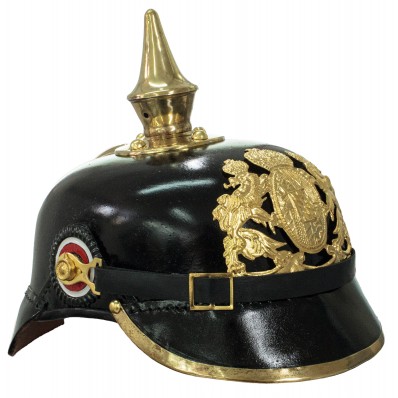
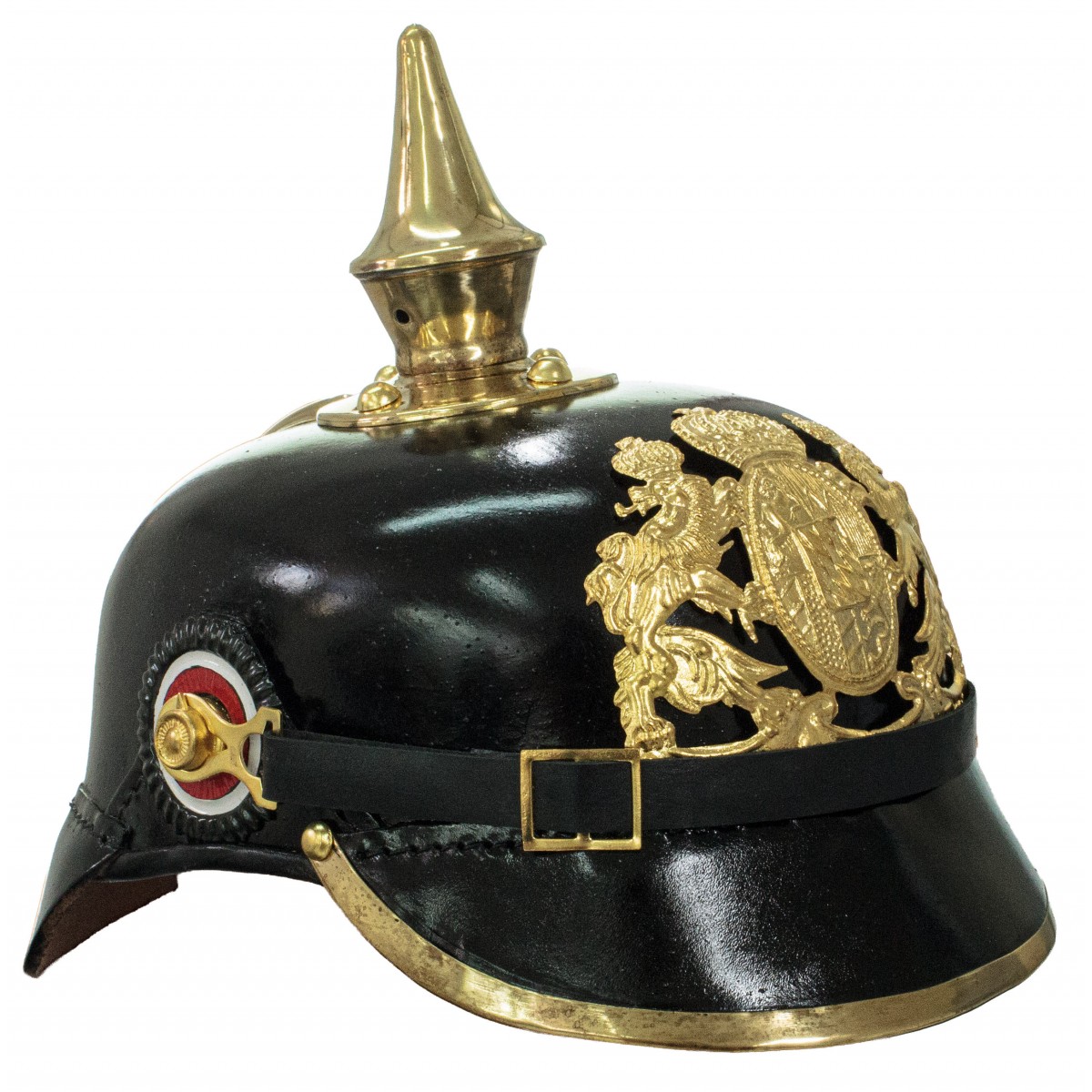
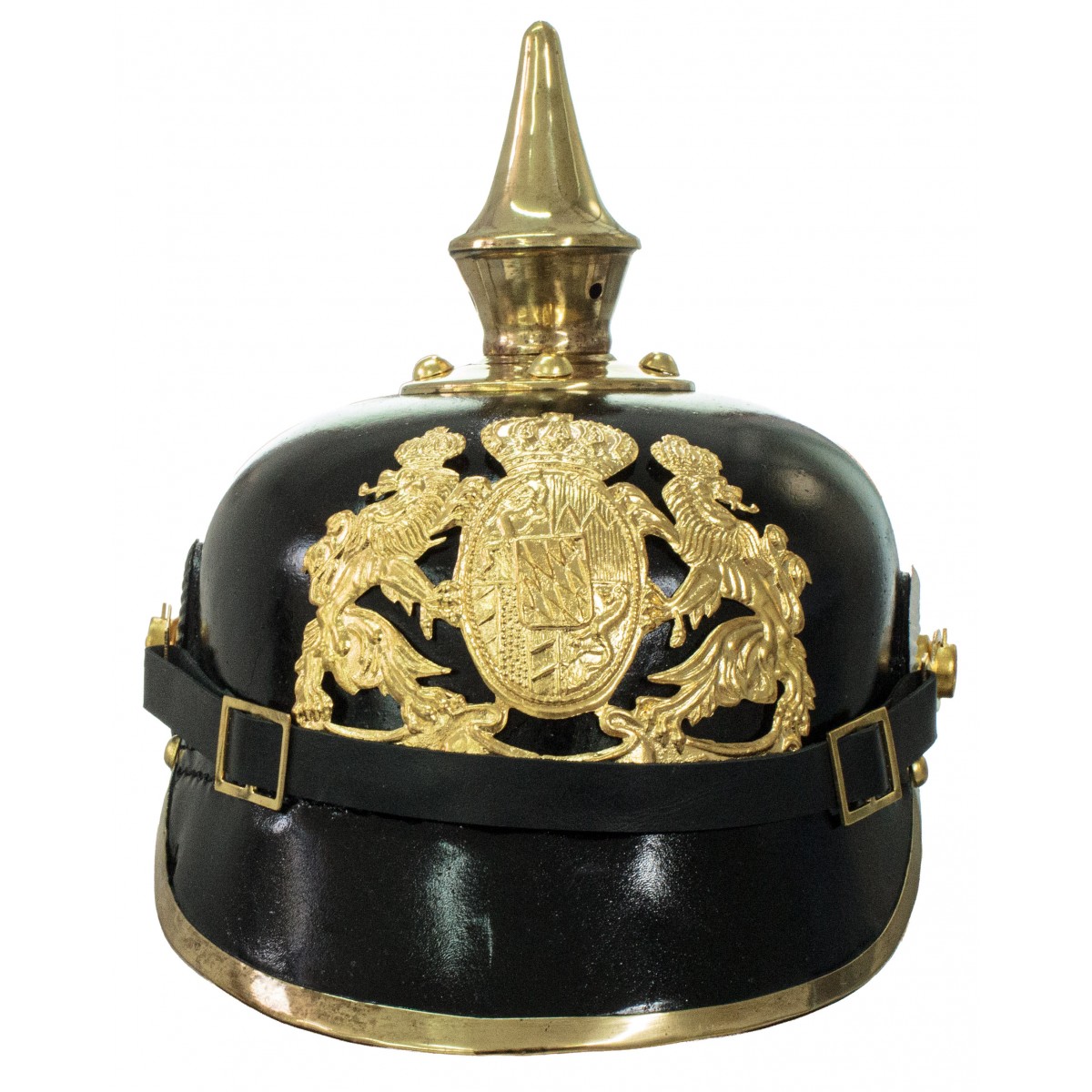
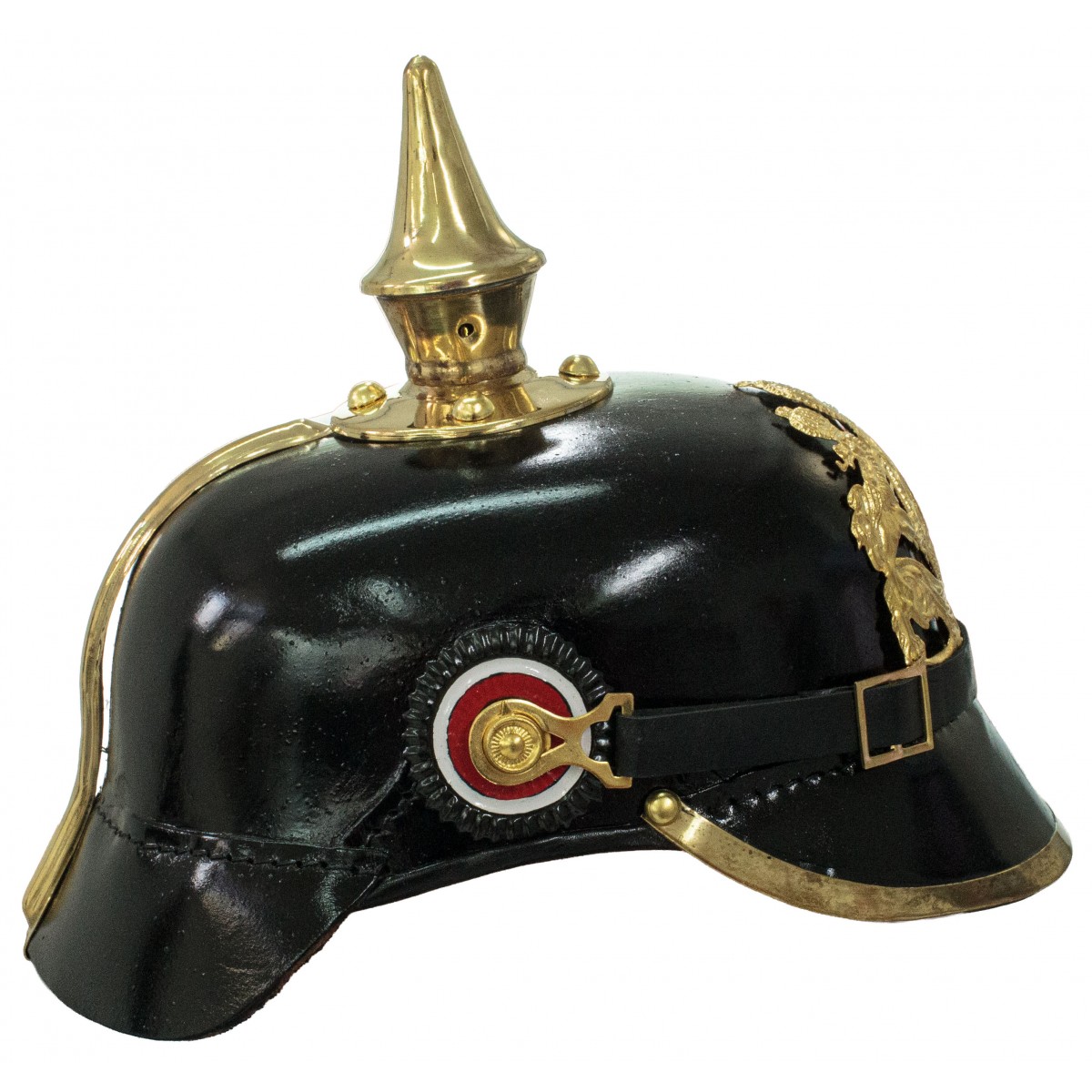
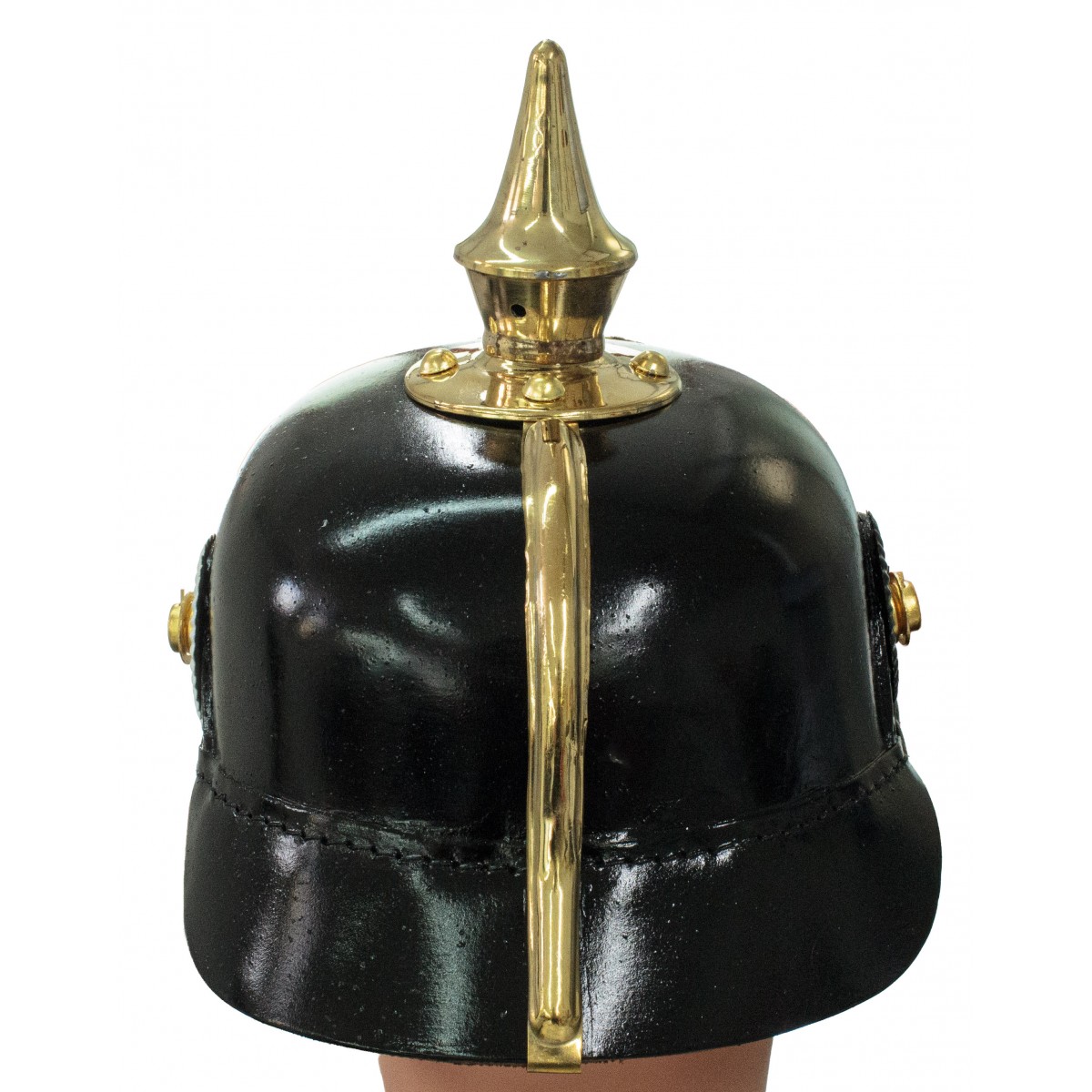
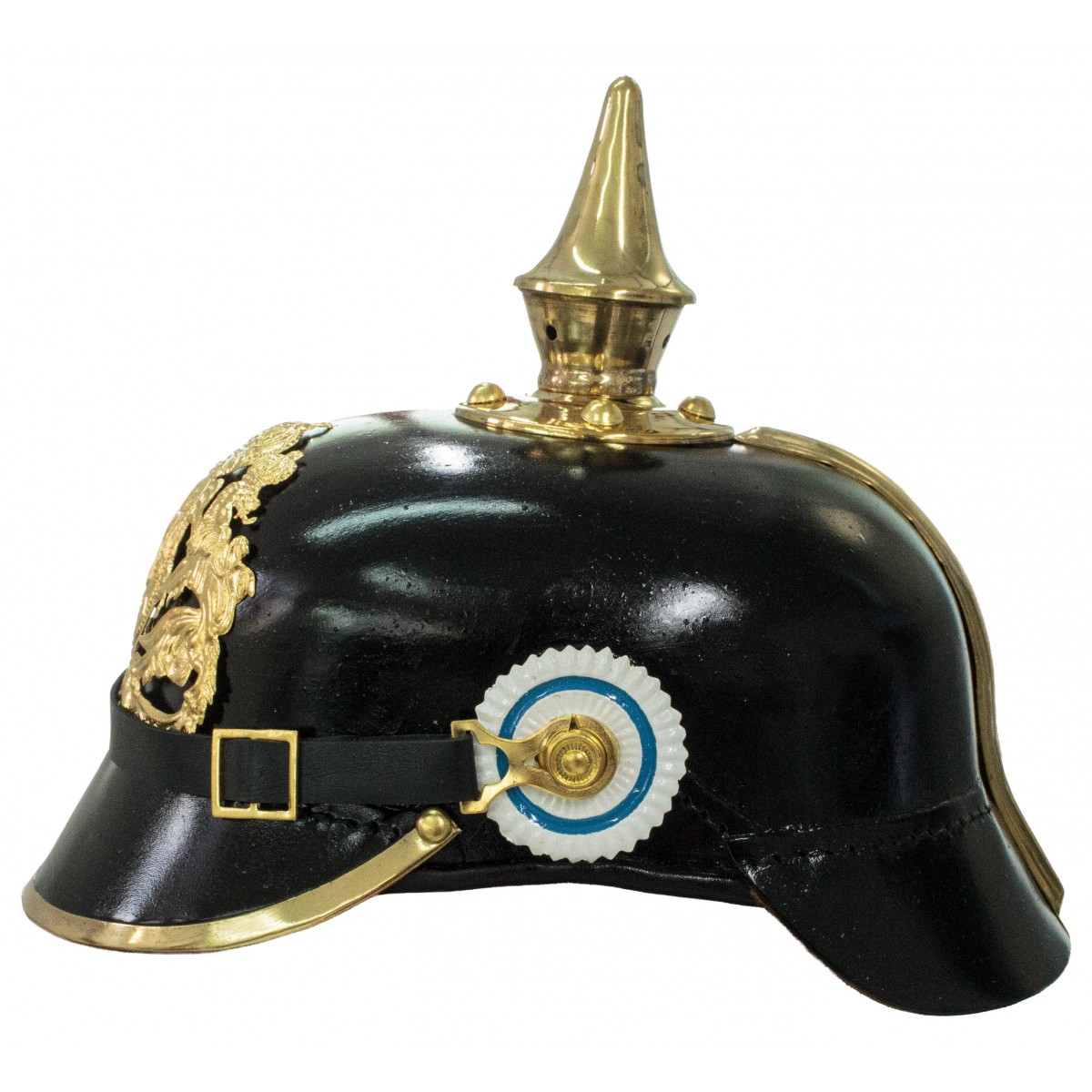
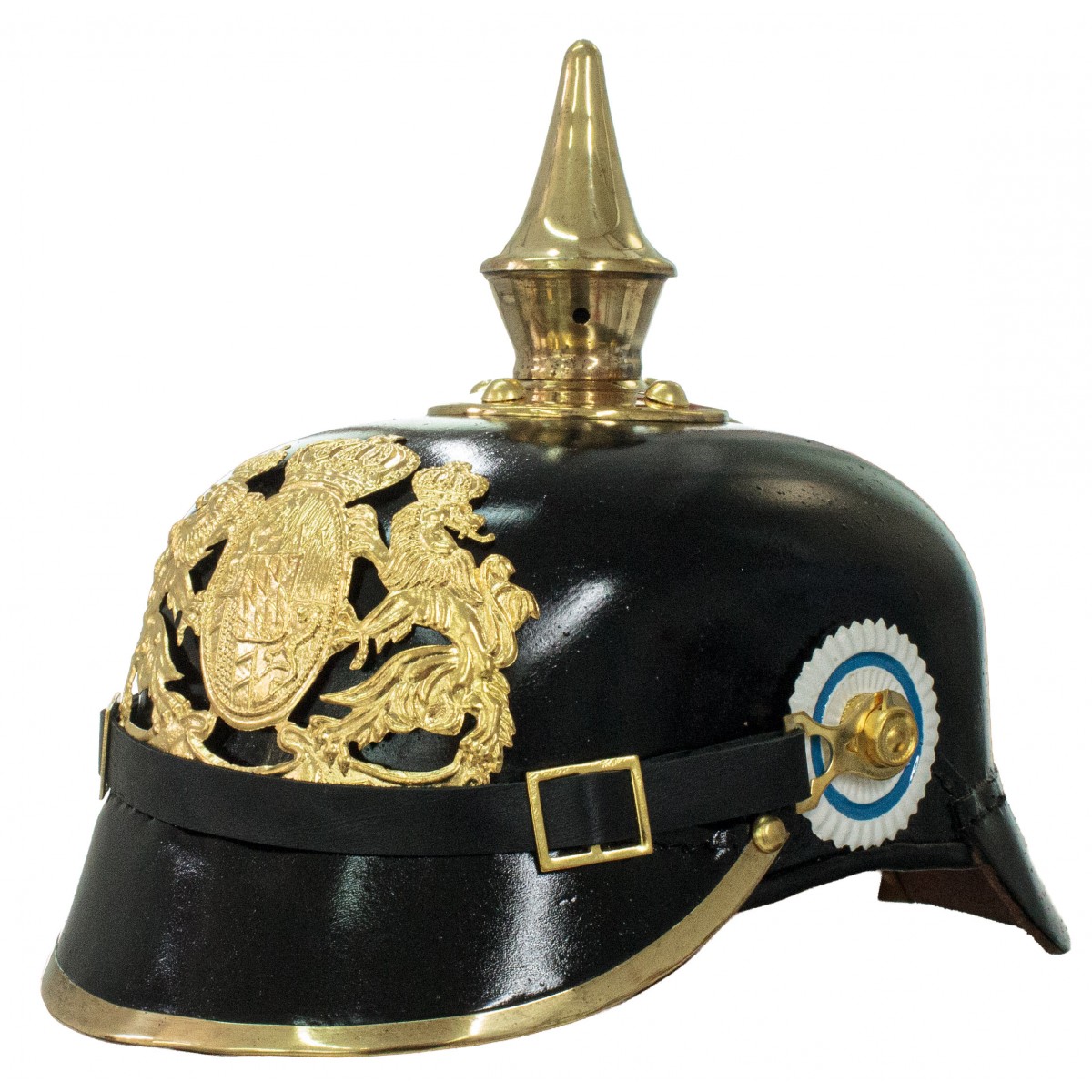
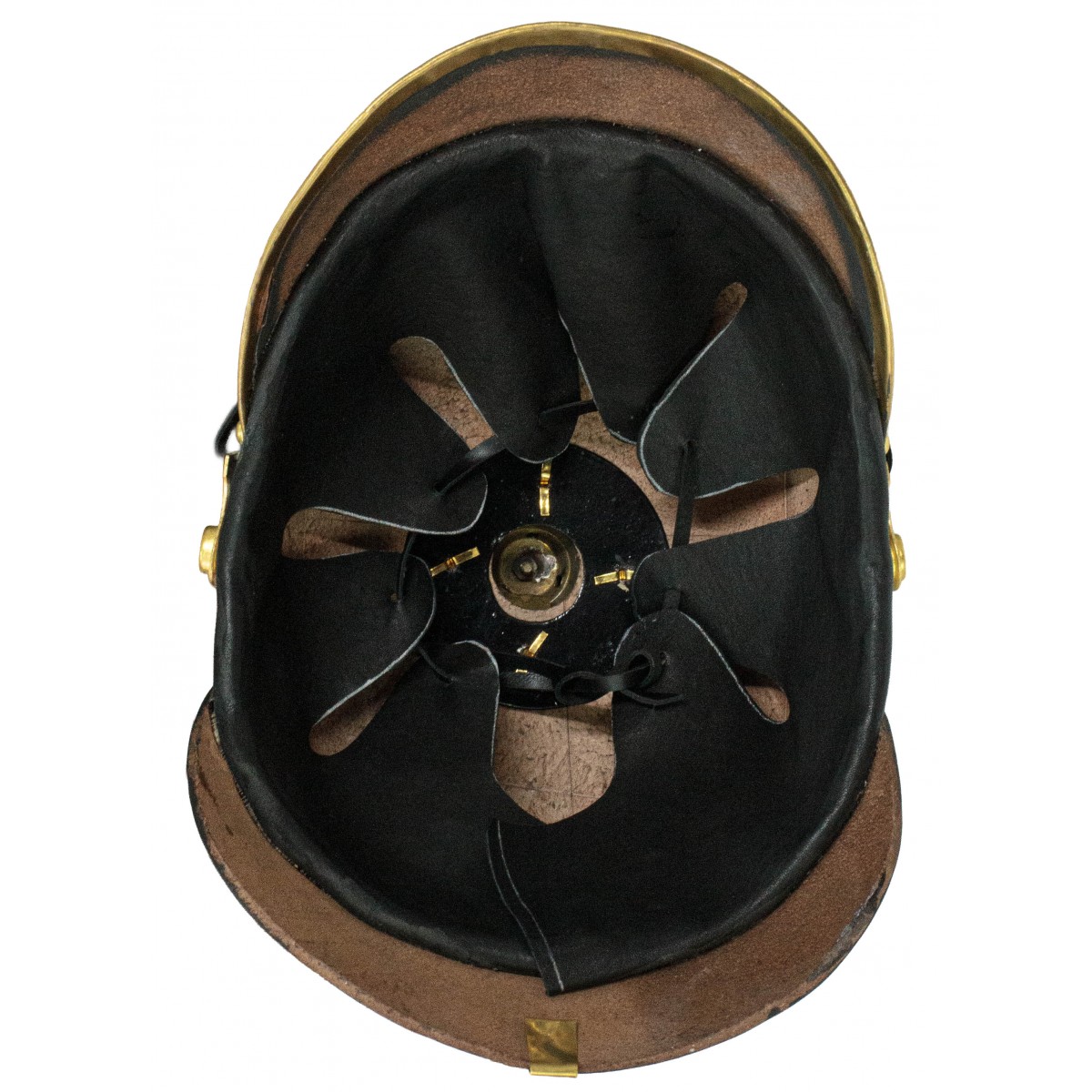
M1895 Pickelhaube of the Kingdom of Bavaria for Enlisted Ranks and NCOs
New
M1895 Pickelhaube for enlisted ranks and NCOs of the Kingdom of Bavaria, bearing the royal arms supported by two lions and the motto “In Treue fest.” The historical model featured a black-lacquered leather shell, yellow-metal fittings, a leather chinstrap and Imperial and Bavarian cockades.
Warning: Last items in stock!
- Satisfied or refunded: we guarantee 100% secure protection on your purchases
- Free return: return your order free of charge within 30 days from receipt
- Secure payments: pay securely online with PayPal or credit cards

More info
The M1895 Pickelhaube of the Kingdom of Bavaria was worn by enlisted ranks and non-commissioned officers of Bavarian formations serving within the Imperial German Army. Its construction followed the general late-19th-century leather helmet pattern while retaining the distinctive royal arms and state cockade of Bavaria.
Even after the establishment of the German Empire in 1871, Bavaria preserved its own army, Ministry of War and numerous uniform traditions. In wartime, Bavarian forces came under Imperial command but remained readily identifiable through their helmet plates, cockades, belt buckles and other uniform details.
The historical helmet had a shell made from pressed leather lacquered black, with separate front and rear visors stitched to the main body. A conical metal spike was mounted on a circular base normally secured by four fasteners.
Its principal identifying feature was the large Bavarian state plate. This displayed the crowned royal shield supported by two rampant heraldic lions. At its centre was the inescutcheon bearing the characteristic white-and-blue Wittelsbach lozenges, surrounded by the other territorial elements incorporated into the royal arms adopted in 1835.
Beneath the arms appeared the motto “In Treue fest,” meaning “Steadfast in loyalty.” The phrase was closely associated with the Bavarian monarchy and the House of Wittelsbach and also appeared on belt buckles, standards and other items of military equipment.
On issue helmets for enlisted ranks and NCOs, the plate, spike, front visor trim and rear reinforcing spine were normally manufactured from brass or a comparable yellow-metal alloy. The plate was generally fitted with two rear loops passing through the shell and secured internally by small leather wedges.
The conventional conical spike identifies the configuration used principally by the infantry and other Bavarian foot troops. The Bavarian arms alone do not establish a particular regiment. Reserve crosses, additional scrolls, distinctive plate details and verifiable issue markings may permit a more precise attribution.
The regulation chinstrap for enlisted ranks and NCOs was made from black leather and attached to M1891 side posts. Officers’ helmets and certain privately purchased examples generally featured more finely finished fittings, metal chinscales and differently constructed liners.
From 1897, the black-white-red Imperial cockade was worn on the right side and the white-and-blue Bavarian state cockade on the left. Together they represented affiliation with both the German Empire and the Kingdom of Bavaria.
The interior normally contained a nine-tongued leather liner tightened by a drawstring. This allowed limited adjustment, although helmets were manufactured in different actual shell sizes. Size numbers, makers’ marks, dates, depot stamps and unit markings could appear inside the shell or on the rear visor.
During manoeuvres and active service, the Pickelhaube was covered with a light-coloured or grey-green cloth Überzug. This concealed the glossy leather shell and reflective metal fittings. The cover could display the regiment’s number, initially in red and subsequently in green.
Wartime shortages led to the manufacture of Ersatz helmets from felt, sheet metal, vulcanised fibre and pressed materials. In 1915, non-reflective grey steel fittings and a removable spike were introduced. From 1916 onward, the Pickelhaube was progressively replaced in front-line service by the Stahlhelm.
Curiosity: Bavaria did not adopt the Pickelhaube until 1886, following the death of King Ludwig II, making it one of the last major German states to replace the traditional Raupenhelm, distinguished by its prominent wool or horsehair crest.
10 other products in the same category:

Helmets
- Germany
- Uniforms
- Medals, Orders and Decorations
- Badges and Pins
- ID Tags
- Arm Shields
- Helmets
- Helmet Decals
- Visor Caps and Hats
- Cap and Helmet Badges
- Collar Tabs Badges
- Collar Tabs, Shoulder Boards and Epaulettes
- Arm Bands
- Division Cuff Titles
- Buckles And Belts
- Buttons For Uniforms
- Stamps
- Gorgets
- Rings
- SS Honour Ring in 925 Silver - Collector's Set
- Poletops
- Flags
- Daggers and Knives (Ornamental)
- Field Marshal Batons
- Field and Personal Equipment
- Service Watches
- Presentation Cases
- Documents and Award Letters
- Busts, Eagles, Lighters and Miscellaneous
- Croatian and Ustasha Militaria
- Denazified Articles
- Commemorative Necklaces
- Spare Parts, Small Parts and Accessories
- Italy
- Medals and Decorations
- Brevets And Badges
- Battle Shields and Tags
- Gorgets
- Visor Caps and Hats
- Cap and Helmet Badges
- Helmets Decals
- Friezes for Collar Tabs
- Collar Tabs, Shoulder Boards and Epaulettes
- Buckles
- Belts
- Buttons For Uniforms
- Rings
- Poletops
- Italian Resistance
- Keyrings
- Wallshields
- Daggers and Knives
- Flags
- Busts and Eagles
- Souvenirs
- Commemorative Necklaces
- Imperial Germany
- Soviet Union
- Other Countries