
No products
Product successfully added to your shopping cart
There are 0 items in your cart. There is 1 item in your cart.
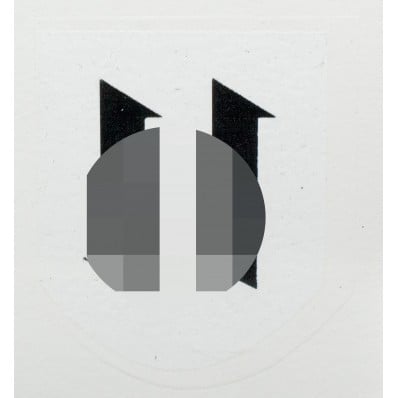
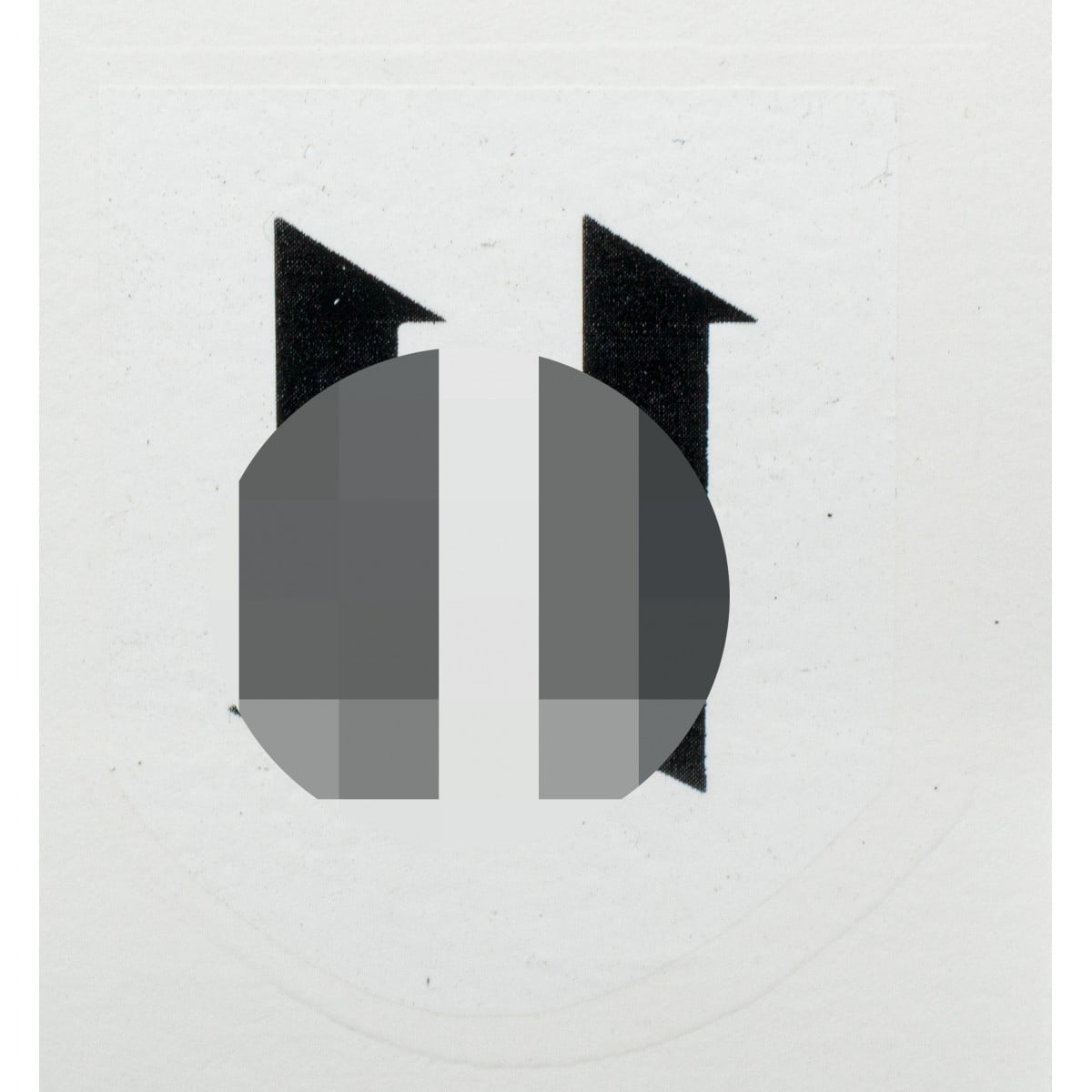
Helmet Decal - Einsatzstaffel der Deutschen Mannschaft
New
Helmet decal for the Einsatzstaffel der Deutschen Mannschaft, a formation of ethnic Germans in the Independent State of Croatia. Reproduces its distinctive insignia of two vertical Wolfsangel symbols. Immerse in water for about one minute, slide from the backing paper onto the helmet and allow to dry. A clear protective coat may optionally be applied with a brush.
- Satisfied or refunded: we guarantee 100% secure protection on your purchases
- Free return: return your order free of charge within 30 days from receipt
- Secure payments: pay securely online with PayPal or credit cards

More info
This helmet decal reproduces the distinctive insignia of the Einsatzstaffel der Deutschen Mannschaft (ES der DM), a paramilitary formation established in the Independent State of Croatia during World War II and composed primarily of members of the local ethnic German, or Volksdeutsche, community.
The Einsatzstaffel was established on 31 July 1941 as part of the Deutsche Mannschaft, the principal organisation of the ethnic German community in Croatia. Militarily it formed part of the Ustaška vojnica, the Croatian Ustaša militia, while maintaining a strongly German identity and increasingly close links with SS organisations.
Many of its personnel came from Slavonia, Syrmia and other areas of former Yugoslavia with substantial ethnic German populations. Its first commander was Jakob Lichtenberger, appointed by Volksgruppenführer Branimir Altgayer.
During its early period, members of the Einsatzstaffel wore locally manufactured uniforms broadly similar to those of the Croatian Domobranstvo. From early 1942, uniforms patterned after those of the Waffen-SS were increasingly introduced.
The formation's most characteristic identifying device consisted of two simple vertical Wolfsangel symbols placed side by side. The same design appeared on the right collar patch, normally in white or silver on black cloth, and was also used as an insignia on the formation's steel helmets.
The Wolfsangel is a much older Germanic symbol that was later adopted in various forms by a number of German organisations and military formations during the 20th century. In the case of the Einsatzstaffel, the distinctive double vertical Wolfsangel served as a specific unit emblem and should not be confused with standard SS runes.
Historically, it is also important to note that the Einsatzstaffel was not originally a regular Waffen-SS formation. It began as a Volksdeutsche unit within the armed structure of the Independent State of Croatia. Its relationship with the Waffen-SS became progressively closer as the war continued.
In 1943, the Einsatzstaffel ceased to exist as an independent formation. A substantial proportion of its personnel was subsequently absorbed into Waffen-SS and police units, particularly the 7th SS Volunteer Mountain Division “Prinz Eugen”.
Original Einsatzstaffel helmets are particularly scarce today, partly because the formation existed independently for only a short period between 1941 and 1943. Its unusual double-Wolfsangel insignia therefore represents one of the more distinctive helmet markings associated with Volksdeutsche formations in the Balkans during the war.
Collector's note: the two symbols depicted on the decal are not conventional SS runes. They are two vertical Wolfsangel emblems, used as a distinctive marking of the Einsatzstaffel on both uniform insignia and steel helmets.
Water-transfer decals consist of a thin decorated film placed on backing paper. For application, the decal should be immersed in water for about one minute, then carefully slid from the backing paper onto the surface of the helmet. Once positioned, it should be allowed to dry completely.
To increase protection and better preserve the surface of the decal, a thin coat of clear protective finish applied with a brush may be added afterwards. This step is not mandatory, but it can be useful in cases of frequent handling or prolonged exposure.
Data sheet
| Lenght | 40 mm |
| Width | 35 mm |
30 other products in the same category:

Helmet Decals
- Germany
- Uniforms
- Medals, Orders and Decorations
- Badges and Pins
- ID Tags
- Arm Shields
- Helmets
- Helmet Decals
- Visor Caps and Hats
- Cap and Helmet Badges
- Collar Tabs Badges
- Collar Tabs, Shoulder Boards and Epaulettes
- Arm Bands
- Division Cuff Titles
- Buckles And Belts
- Buttons For Uniforms
- Stamps
- Gorgets
- Rings
- SS Honour Ring in 925 Silver - Collector's Set
- Poletops
- Flags
- Firearms (Inert Replicas)
- Daggers and Knives (Ornamental)
- Field Marshal Batons
- Field and Personal Equipment
- Service Watches
- Presentation Cases
- Documents and Award Letters
- Busts, Eagles, Lighters and Miscellaneous
- Croatian and Ustasha Militaria
- Denazified Articles
- Commemorative Necklaces
- Spare Parts, Small Parts and Accessories
- Italy
- Medals and Decorations
- Brevets And Badges
- Battle Shields and Tags
- Gorgets
- Visor Caps and Hats
- Cap and Helmet Badges
- Helmets Decals
- Friezes for Collar Tabs
- Collar Tabs, Shoulder Boards and Epaulettes
- Buckles
- Belts
- Buttons For Uniforms
- Rings
- Poletops
- Italian Resistance
- Keyrings
- Wallshields
- Daggers and Knives
- Flags
- Busts and Eagles
- Souvenirs
- Commemorative Necklaces
- Imperial Germany
- Soviet Union
- Other Countries