
No products
Product successfully added to your shopping cart
There are 0 items in your cart. There is 1 item in your cart.
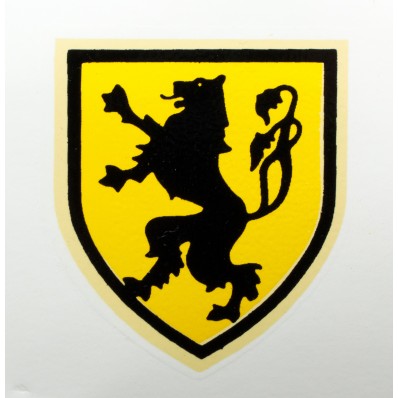
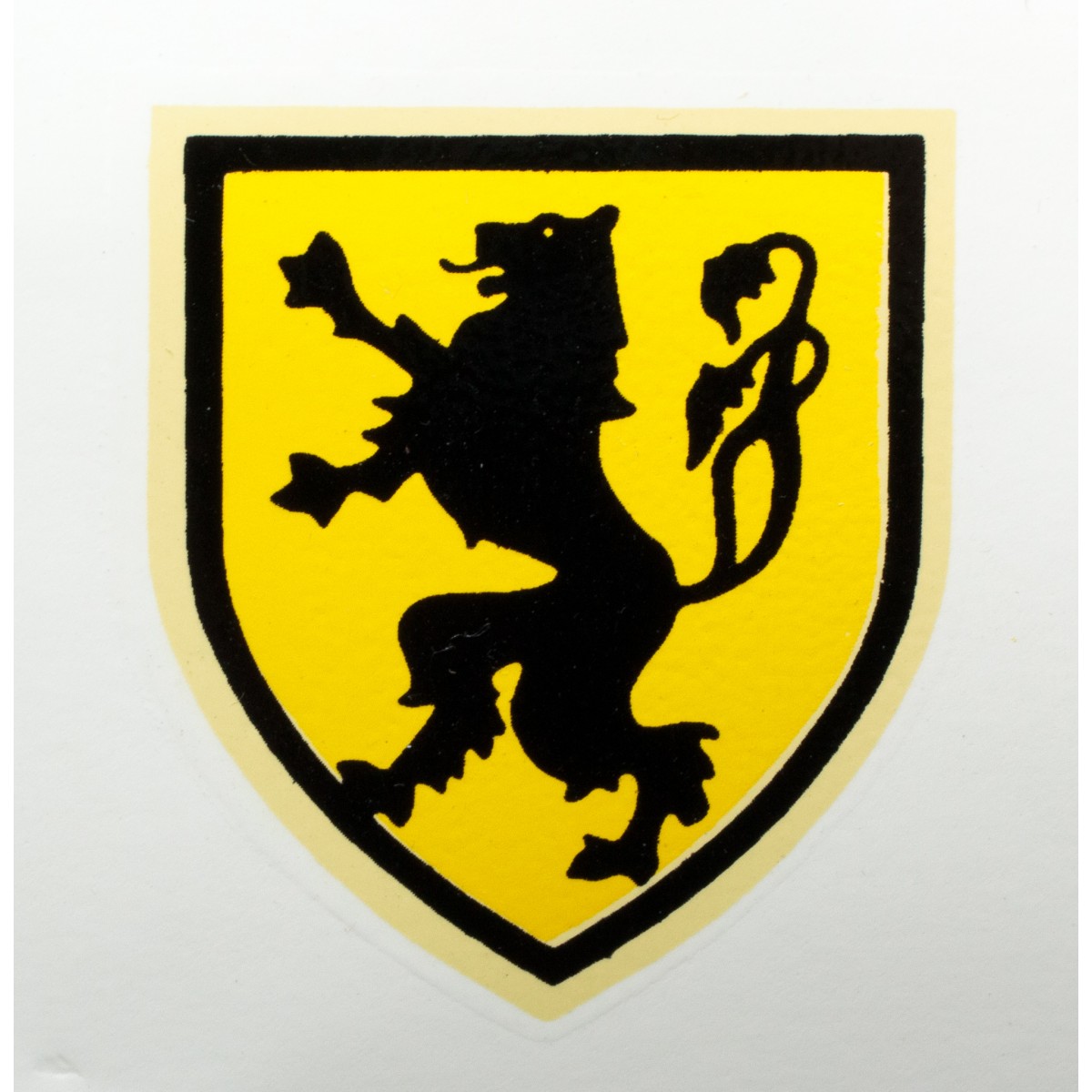
Helmet Decal - Flemish Volunteers Belgium Flanders
New
Water-transfer helmet decal for Flemish volunteers Belgium Flanders. Soak in water for about one minute, slide it from the backing paper onto the helmet and let it dry. For added protection, a clear brush-on coating may be applied, but it is not mandatory.
- Satisfied or refunded: we guarantee 100% secure protection on your purchases
- Free return: return your order free of charge within 30 days from receipt
- Secure payments: pay securely online with PayPal or credit cards

More info
Water-transfer helmet decal associated with Flemish volunteers, often referred to internationally as Belgium Flanders. This type of decal is connected with helmet configurations used to identify the Flemish origin of volunteer personnel from northern Belgium, incorporated at different stages of the war into German or German-led volunteer formations.
The reference to Flanders recalls the Flemish part of Belgium, distinct in linguistic, cultural and regional terms from the Walloon component. During the Second World War, volunteers from Flanders served in foreign volunteer formations, where national or regional insignia helped indicate the origin of personnel within broader military structures.
Decals of this type belong to the category of national or regional shields for foreign volunteers, similar to insignia associated with French, Spanish, Walloon, Dutch or other volunteer contingents. Their primary function was not to identify a regular branch such as the Heer, Luftwaffe, Kriegsmarine or Polizei, but to show a specific national or regional origin.
The Belgium Flanders decal is therefore linked to the identification of Flemish volunteers and to helmet configurations associated with such formations. Depending on period, unit and method of application, these shields could appear on German M35, M40 and M42 steel helmets, or in configurations reconstructed according to documented patterns and uniformological variants of the period.
From a uniformological perspective, foreign volunteer insignia form a very specific area of German helmet markings. Compared with standard decals of the regular armed forces, these shields had a more national or regional character, connected with the origin of the volunteer and the need to visually distinguish the different foreign components within German formations.
Water-transfer decals consist of a thin printed film applied to a paper backing. Before application, the decal should be immersed in water for about one minute, allowing the printed film to separate from the backing paper. The decorated layer is then carefully slid onto the helmet surface, aligned correctly and left to dry completely.
Once dry, the decal adheres to the helmet surface. To improve durability and protect the decoration from handling, dust or light rubbing, a thin clear protective coating may be applied with a brush. This step is optional, but it can help preserve the finish over time.
Data sheet
| Width | 38.50 mm |
| Lenght | 44 mm |
29 other products in the same category:

Customers who bought this product also bought:
Helmet Decals
- Germany
- Uniforms
- Medals, Orders and Decorations
- Badges and Pins
- ID Tags
- Arm Shields
- Helmets
- Helmet Decals
- Visor Caps and Hats
- Cap and Helmet Badges
- Collar Tabs Badges
- Collar Tabs, Shoulder Boards and Epaulettes
- Arm Bands
- Division Cuff Titles
- Buckles And Belts
- Buttons For Uniforms
- Stamps
- Gorgets
- Rings
- SS Honour Ring in 925 Silver - Collector's Set
- Poletops
- Flags
- Daggers and Knives (Ornamental)
- Field Marshal Batons
- Field and Personal Equipment
- Service Watches
- Presentation Cases
- Documents and Award Letters
- Busts, Eagles, Lighters and Miscellaneous
- Croatian and Ustasha Militaria
- Denazified Articles
- Commemorative Necklaces
- Spare Parts, Small Parts and Accessories
- Italy
- Medals and Decorations
- Brevets And Badges
- Battle Shields and Tags
- Gorgets
- Visor Caps and Hats
- Cap and Helmet Badges
- Helmets Decals
- Friezes for Collar Tabs
- Collar Tabs, Shoulder Boards and Epaulettes
- Buckles
- Belts
- Buttons For Uniforms
- Rings
- Poletops
- Italian Resistance
- Keyrings
- Wallshields
- Daggers and Knives
- Flags
- Busts and Eagles
- Souvenirs
- Commemorative Necklaces
- Imperial Germany
- Soviet Union
- Other Countries