
No products
Product successfully added to your shopping cart
There are 0 items in your cart. There is 1 item in your cart.
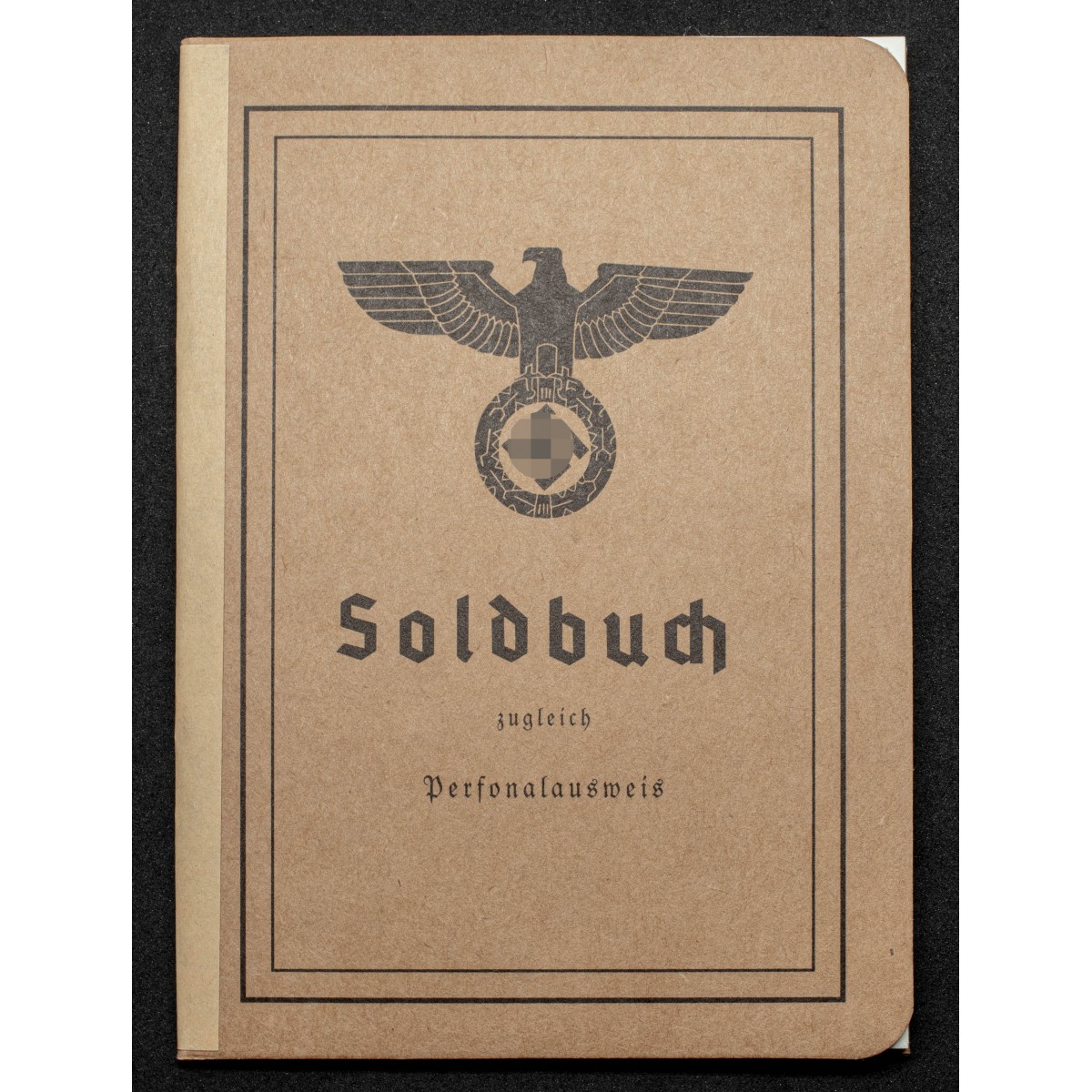
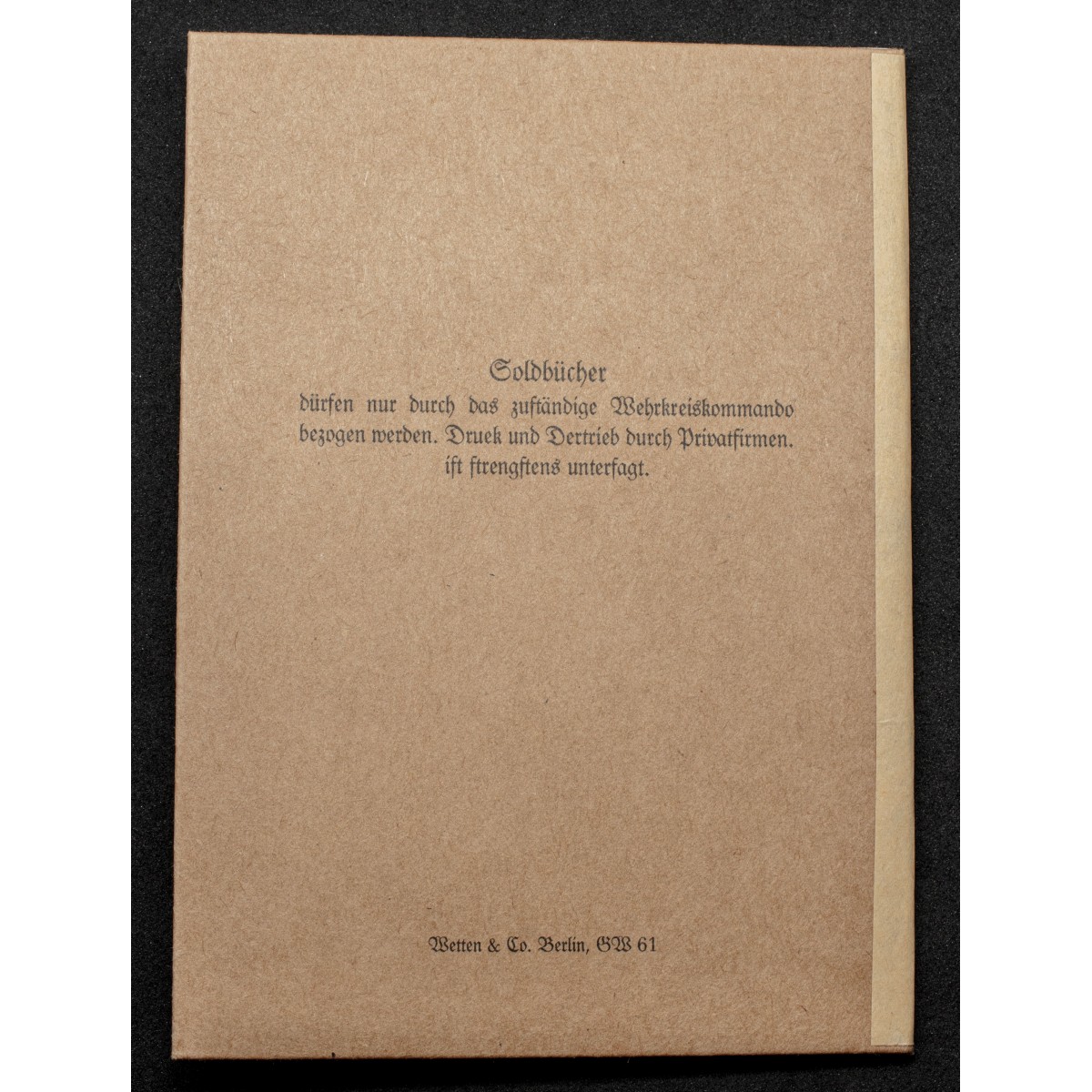
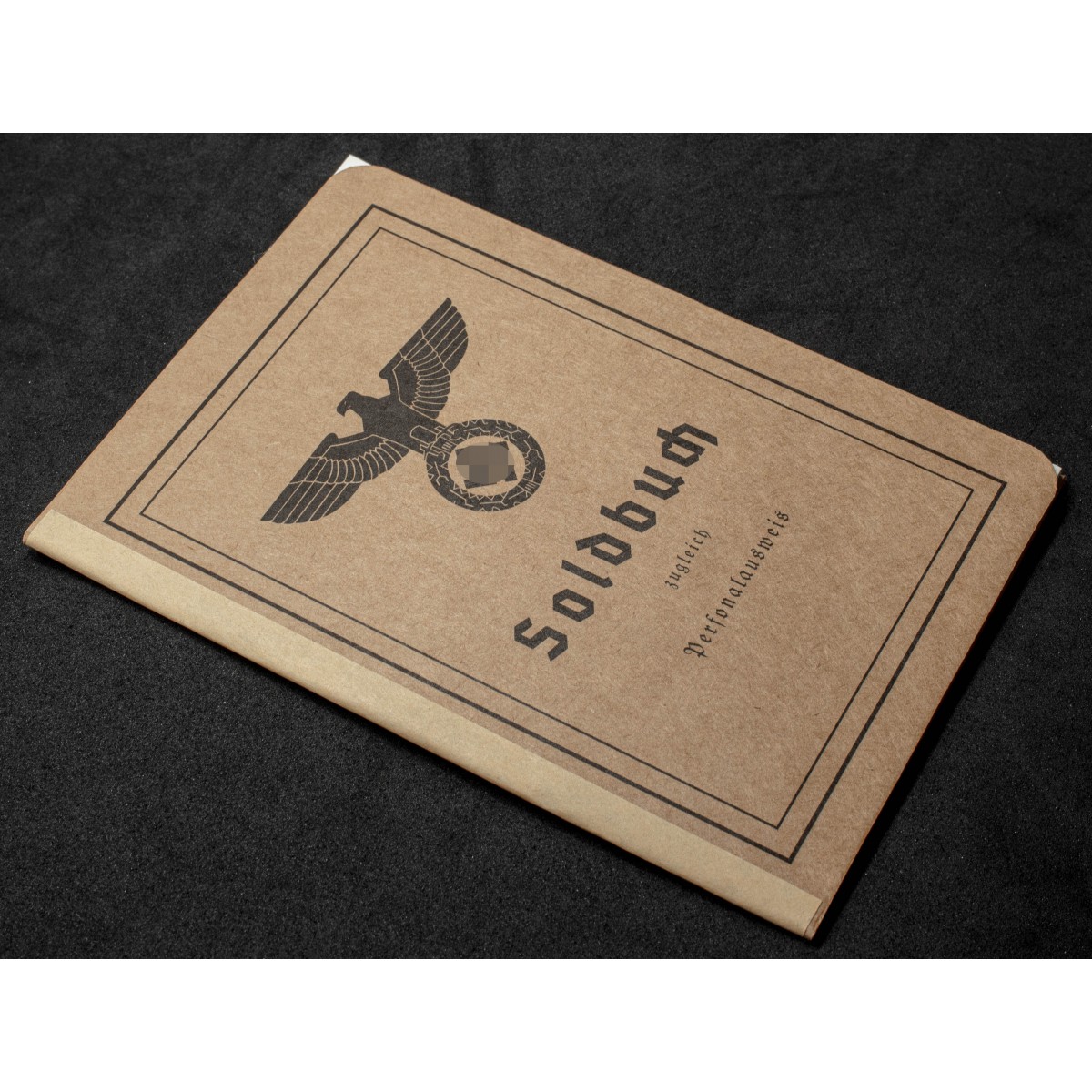
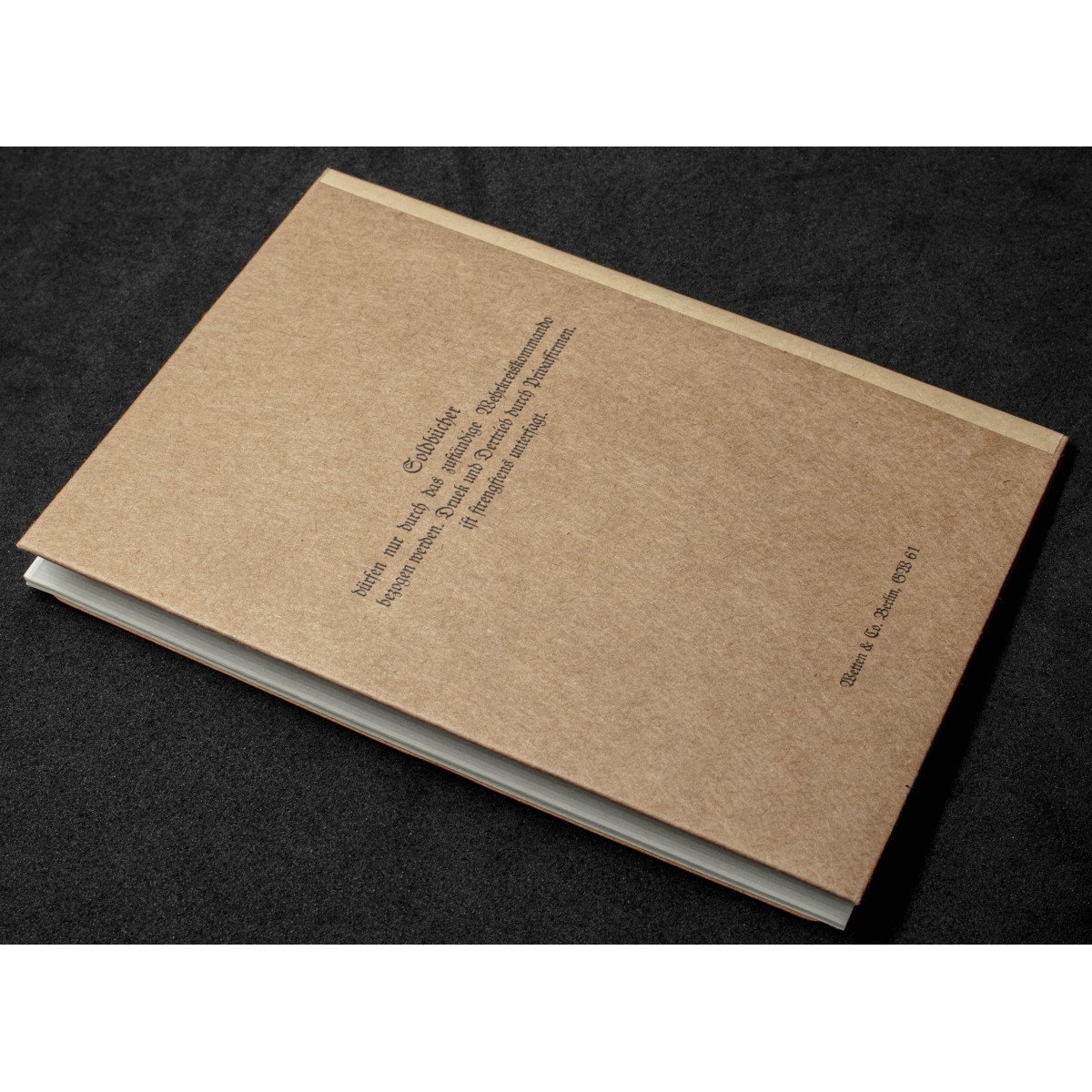
Wehrmacht Soldbuch – Second World War Pay Book and Identity Document
New
Wehrmacht Soldbuch from the Second World War, serving as both a military pay book and an identity document. It recorded personal and service details, rank, units, pay group, issued clothing and weapons, vaccinations, hospital stays, leave and awards.
- Satisfied or refunded: we guarantee 100% secure protection on your purchases
- Free return: return your order free of charge within 30 days from receipt
- Secure payments: pay securely online with PayPal or credit cards

More info
The Wehrmacht Soldbuch was the personal document issued to German military personnel during active service. The wording “Soldbuch zugleich Personalausweis,” found on the covers of many versions, identified its dual purpose as proof of entitlement to military pay and as a service identity document.
Despite its conventional translation as “pay book,” it was not primarily a ledger recording every payment received. Its principal financial function was to authorise the holder to draw military pay from the appropriate pay offices, including when temporarily separated from his own unit. The serviceman carried the document and was required to present it whenever requested by the relevant military authorities.
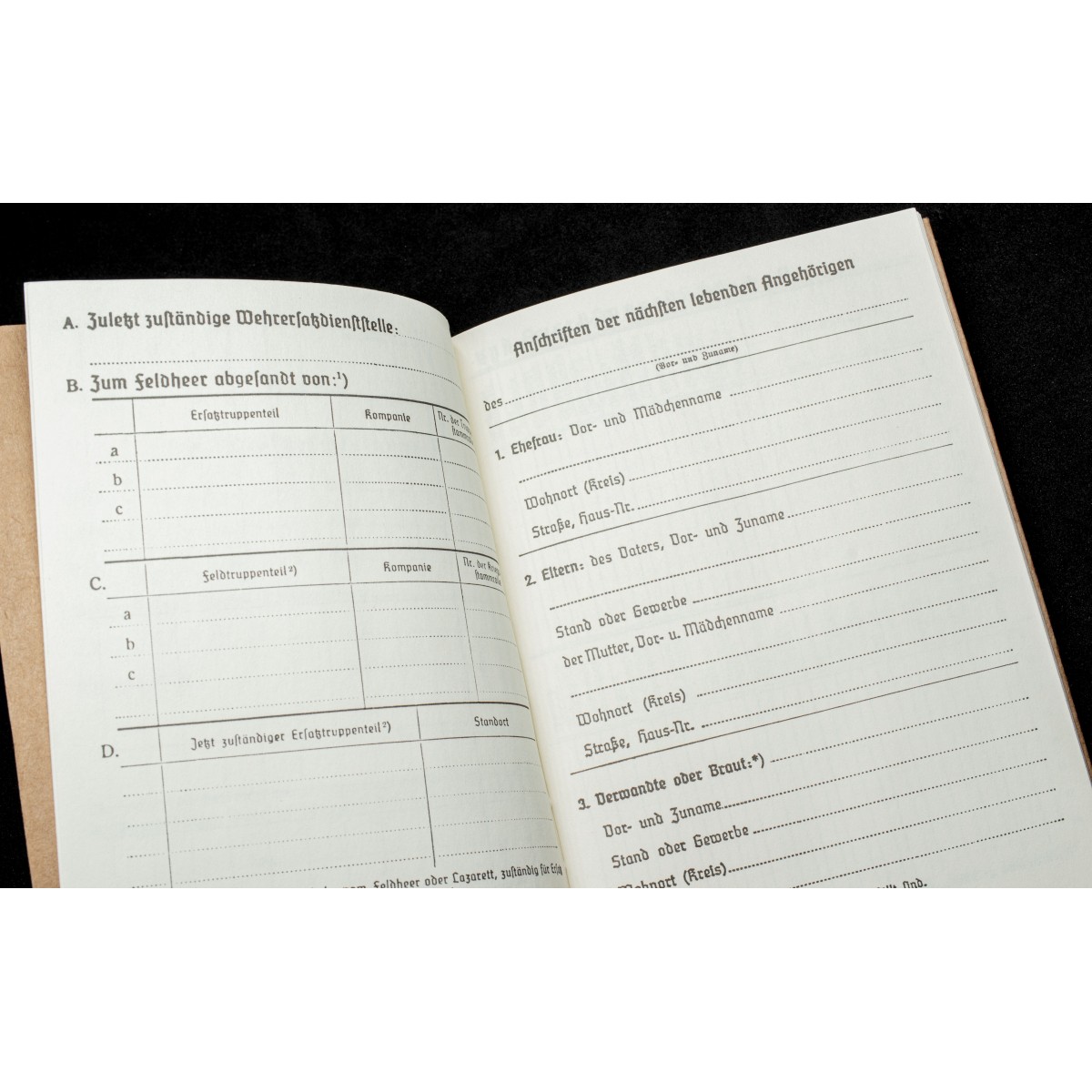
The historical Soldbuch was produced as a compact pocket booklet, commonly consisting of 24 pre-printed pagesenclosed by a card cover. Information was entered by hand or typewriter and validated with signatures, official stamps and unit seals. During certain periods of the war, a portrait photograph of the holder was also attached inside the cover and authenticated with the issuing unit’s stamp.
The opening pages recorded the serviceman’s personal details, rank, identity-disc number, blood group and the unit responsible for issuing the document. Subsequent sections listed the units responsible for the holder, changes of rank and the Wehrsoldgruppe, or administrative pay group used to determine his military allowance.
Separate pages recorded clothing and equipment issued to the serviceman. These entries could include uniform garments, footwear, field equipment, personal weapons, gas mask and other items placed in his custody. They allowed different units and administrative offices to establish which articles had already been issued and which required replacement or supplementation.
The Soldbuch also contained medical information, including vaccinations, examinations, dental treatment and periods spent in military hospitals or Lazarette. Other sections were provided for leave, special allowances, decorations and additional service-related entries. The precise contents varied according to the branch of service, edition of the form and individual career of the holder.
Superseded entries were frequently crossed out without being completely erased and replaced by new handwritten information, stamps or signatures. This method of amendment could preserve a chronological record of transfers, changes of unit, promotions, hospital admissions and other stages of military service.
The Soldbuch differed from the Wehrpass, which contained a more extensive record of military status, training and service history. The Wehrpass was not normally carried by the serviceman during daily active duty, whereas the Soldbuch remained in his possession and fulfilled an immediate identification and administrative function.
The German Army, Air Force and Navy used their own versions of the Soldbuch. Forms issued to the Heer, Luftwaffe and Kriegsmarine could differ in cover inscription, colour, page arrangement and internal terminology while retaining the same general purpose. Unit stamps, abbreviations and handwritten amendments therefore provide the principal means of interpreting the service history recorded within the document.
Data sheet
| Width | 10.5 cm |
| Lenght | 14.5 cm |
13 other products in the same category:

Customers who bought this product also bought:
Documents and Award Letters
- Germany
- Uniforms
- Medals, Orders and Decorations
- Badges and Pins
- ID Tags
- Arm Shields
- Helmets
- Helmet Decals
- Visor Caps and Hats
- Cap and Helmet Badges
- Collar Tabs Badges
- Collar Tabs, Shoulder Boards and Epaulettes
- Arm Bands
- Division Cuff Titles
- Buckles And Belts
- Buttons For Uniforms
- Stamps
- Gorgets
- Rings
- SS Honour Ring in 925 Silver - Collector's Set
- Poletops
- Flags
- Daggers and Knives (Ornamental)
- Field Marshal Batons
- Field and Personal Equipment
- Service Watches
- Presentation Cases
- Documents and Award Letters
- Busts, Eagles, Lighters and Miscellaneous
- Croatian and Ustasha Militaria
- Denazified Articles
- Commemorative Necklaces
- Spare Parts, Small Parts and Accessories
- Italy
- Medals and Decorations
- Brevets And Badges
- Battle Shields and Tags
- Gorgets
- Visor Caps and Hats
- Cap and Helmet Badges
- Helmets Decals
- Friezes for Collar Tabs
- Collar Tabs, Shoulder Boards and Epaulettes
- Buckles
- Belts
- Buttons For Uniforms
- Rings
- Poletops
- Italian Resistance
- Keyrings
- Wallshields
- Daggers and Knives
- Flags
- Busts and Eagles
- Souvenirs
- Commemorative Necklaces
- Imperial Germany
- Soviet Union
- Other Countries