
No products
Product successfully added to your shopping cart
There are 0 items in your cart. There is 1 item in your cart.
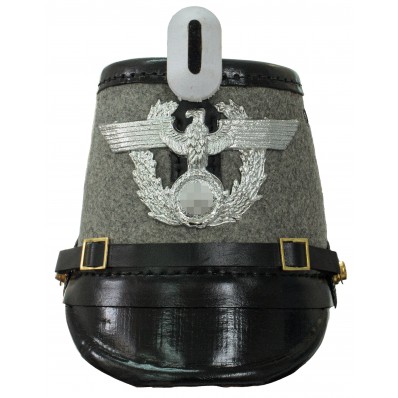
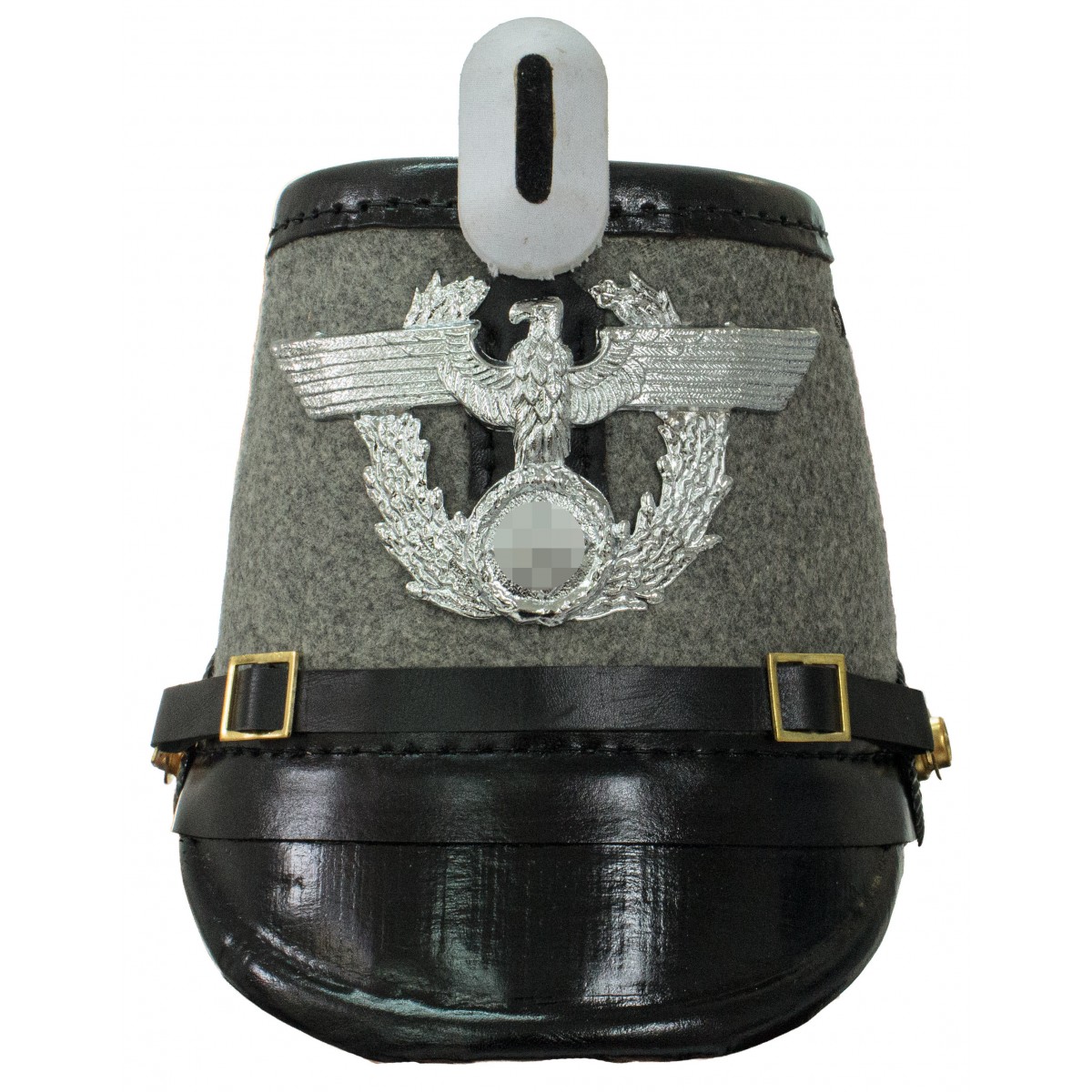
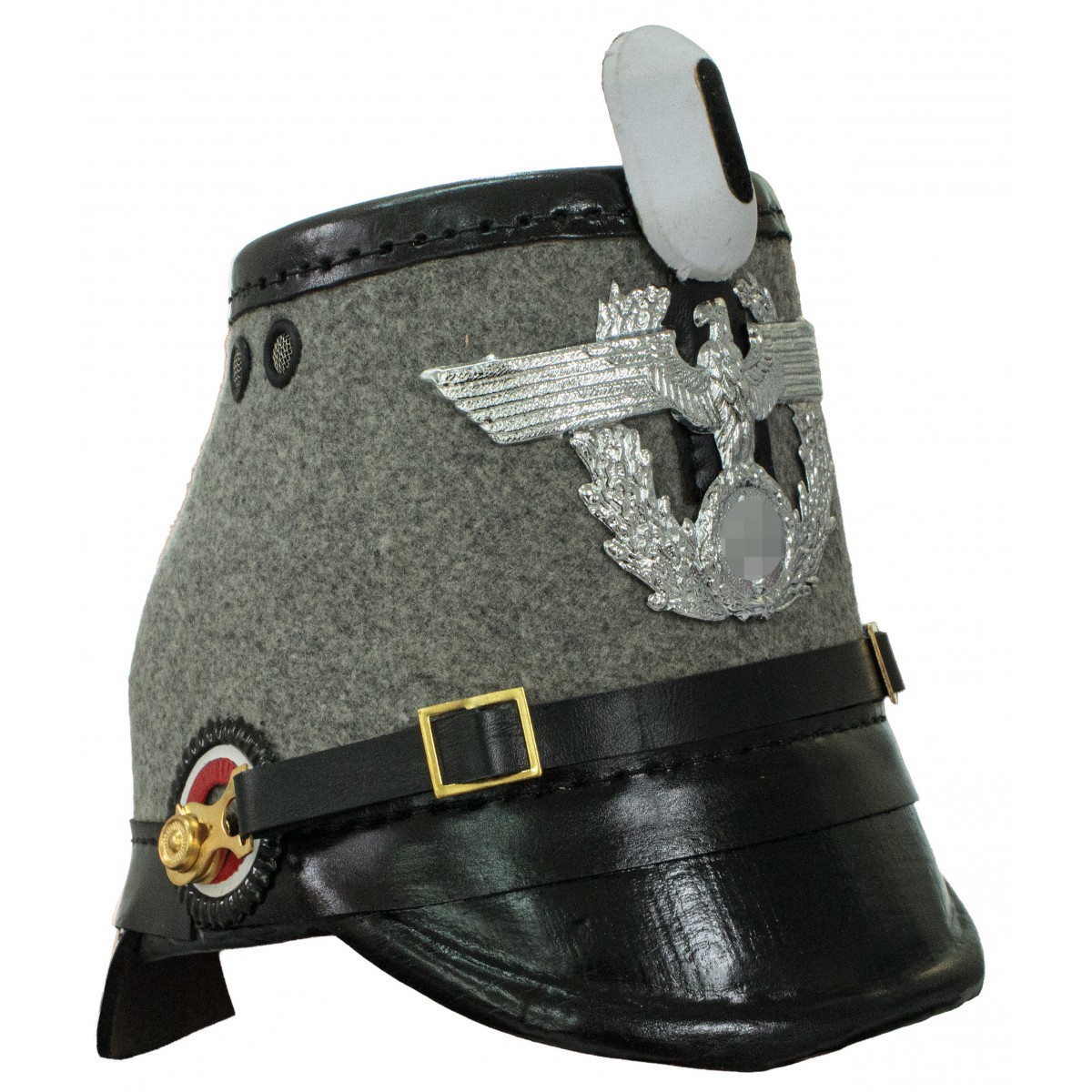
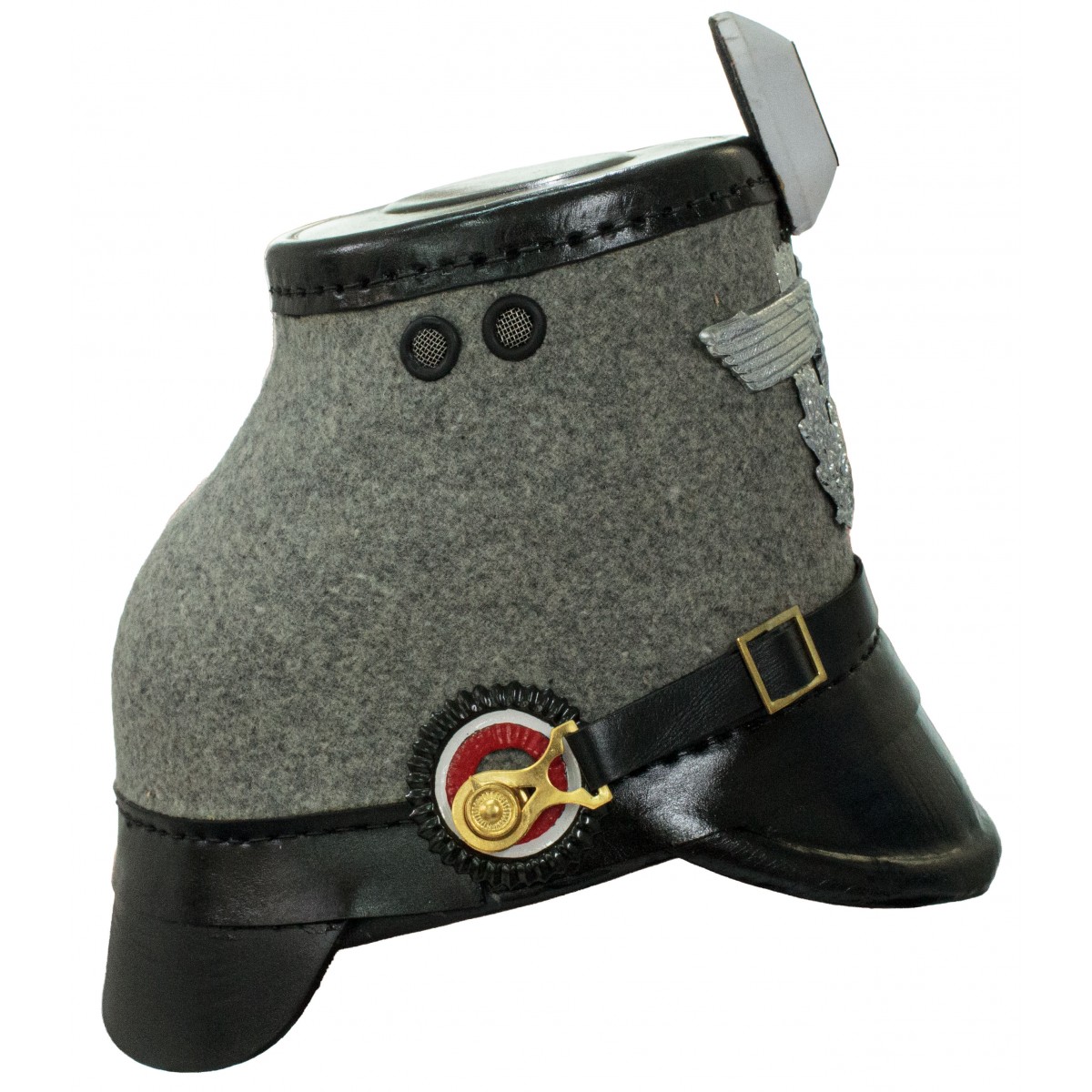
M1936 Schutzpolizei Shako for Enlisted Ranks and NCOs
New
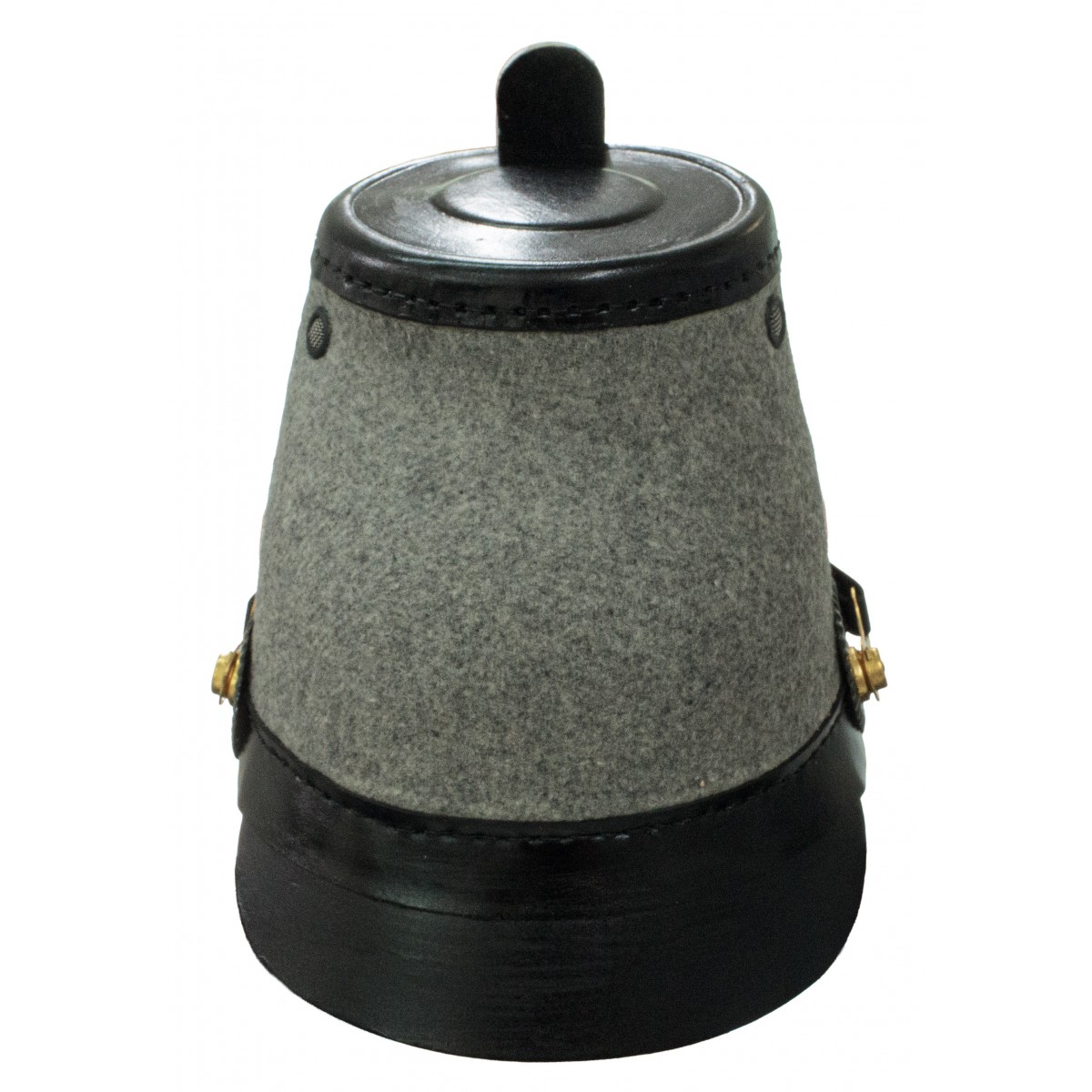
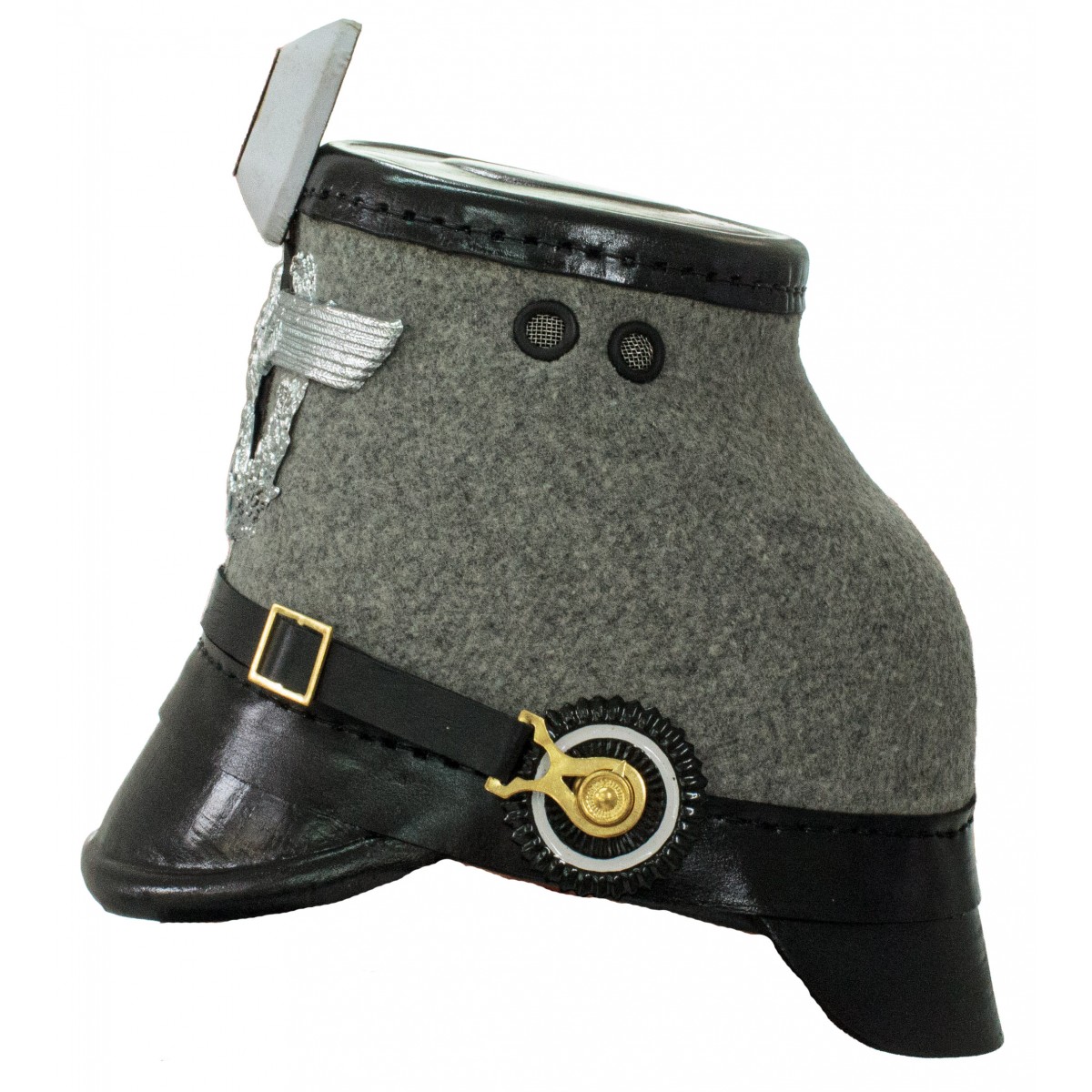
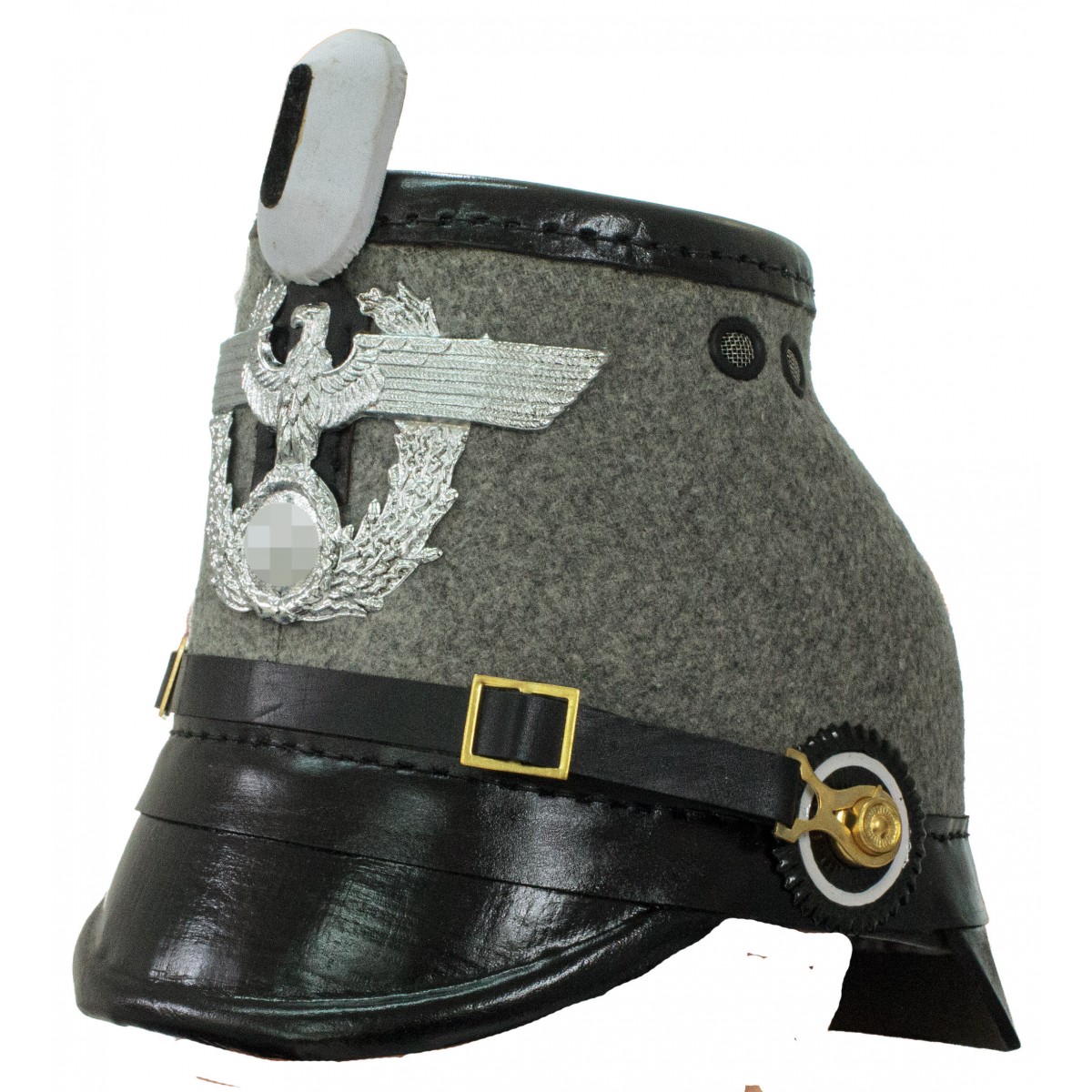
M1936 shako for enlisted and NCO ranks of the Schutzpolizei, a uniformed branch of the Ordnungspolizei. The historical pattern combined a police-green cloth-covered fibre body with black fittings, a leather chinstrap and a large silver-coloured police eagle.
Product temporarily out of stock.
- Satisfied or refunded: we guarantee 100% secure protection on your purchases
- Free return: return your order free of charge within 30 days from receipt
- Secure payments: pay securely online with PayPal or credit cards

More info
The M1936 police shako was associated with the Schutzpolizei, the principal uniformed police branch responsible for regular duties in cities and larger towns. The Schutzpolizei formed part of the Ordnungspolizei, the umbrella organization encompassing Germany’s uniformed police services. It was not the characteristic service headdress of the Sicherheitspolizei, which included the Gestapo and Kriminalpolizei.
The historical pattern was constructed around a rigid shell, normally moulded from vulcanized fibre and covered with police-green wool cloth or felt. This colour was a grey-green shade distinct from the Army’s field grey. The shako had a tall, compact profile with a flat crown, a short front peak and a downward-sloping rear peak protecting the neck. The crown, peaks, edging and reinforcing elements were finished in black lacquered fibre and black leather. Screened ventilation openings were normally positioned on both sides.
The front carried the national German police emblem introduced in 1936. Usually manufactured from aluminium or another lightweight alloy with a silver-coloured finish, it depicted a spread-winged eagle placed over a vertical, open-topped oak-leaf wreath. The eagle held a swastika surrounded by a second wreath. A complete period configuration also included an elongated oval national cockade in black, white and red above the eagle. Depending on the manufacturer, the insignia could be secured by threaded posts, folding prongs or similar fittings.
The plain black leather chinstrap identified the version intended for enlisted and NCO ranks. It was adjustable through metal sliding buckles and attached to side posts derived from the Model 1891 system. Commissioned officers used a silver-coloured metal scale chain instead of the leather strap, while generals wore gilt fittings. The chinstrap or scale-chain arrangement is consequently one of the principal features used to distinguish rank versions of the shako.
Black fittings were associated with the urban Schutzpolizei and municipal police services. The Gendarmerie, whose duties were concentrated primarily in rural districts, used corresponding patterns with medium-brown crowns, peaks and chinstraps. The Traffic Police also had a white shako, initially worn for traffic duties and later retained mainly for ceremonial use. The Schutzpolizei des Reiches and the Schutzpolizei der Gemeinden were distinguished principally through branch colours, uniform insignia and administrative markings rather than through the basic form of the shako.
The pattern was introduced during the reorganization and standardization of the German police beginning in 1936. It gradually replaced earlier regional and Weimar-period shakos, which commonly displayed police stars incorporating the arms of individual German states. On the standardized design, the national police eagle occupied most of the front surface.
The shako was worn with several forms of service, reporting and parade dress. When regulations required a ceremonial configuration, a plume could be mounted on the crown. During the war it was increasingly replaced for field duties and operational deployments by the steel helmet, peaked cap or other more practical headgear, although it remained prescribed for particular forms of police service.
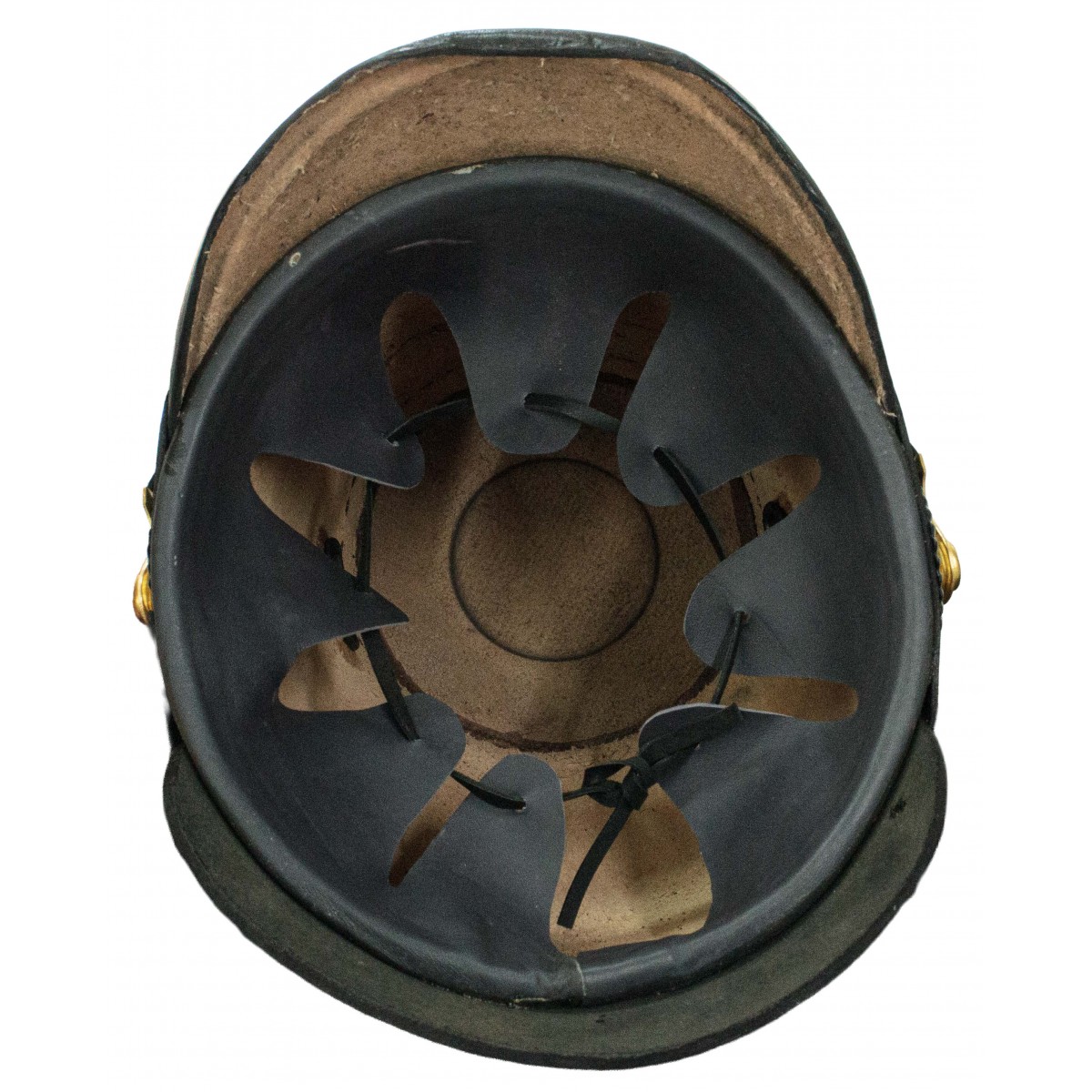
Period-manufactured examples could contain a leather sweatband and a fingered leather liner. Interior markings might identify the maker, head size, year of manufacture, police depot, acceptance authority or issuing unit. Documented manufacturers included Robert Lubstein of Berlin, using the EREL trademark, and Hans Römer of Neu-Ulm. The presence and arrangement of such markings varied according to manufacturer and supply contract.
30 other products in the same category:

Customers who bought this product also bought:
Visor Caps and Hats
- Germany
- Uniforms
- Medals, Orders and Decorations
- Badges and Pins
- ID Tags
- Arm Shields
- Helmets
- Helmet Decals
- Visor Caps and Hats
- Cap and Helmet Badges
- Collar Tabs Badges
- Collar Tabs, Shoulder Boards and Epaulettes
- Arm Bands
- Division Cuff Titles
- Buckles And Belts
- Buttons For Uniforms
- Stamps
- Gorgets
- Rings
- SS Honour Ring in 925 Silver - Collector's Set
- Poletops
- Flags
- Daggers and Knives (Ornamental)
- Field Marshal Batons
- Field and Personal Equipment
- Service Watches
- Presentation Cases
- Documents and Award Letters
- Busts, Eagles, Lighters and Miscellaneous
- Croatian and Ustasha Militaria
- Denazified Articles
- Commemorative Necklaces
- Spare Parts, Small Parts and Accessories
- Italy
- Medals and Decorations
- Brevets And Badges
- Battle Shields and Tags
- Gorgets
- Visor Caps and Hats
- Cap and Helmet Badges
- Helmets Decals
- Friezes for Collar Tabs
- Collar Tabs, Shoulder Boards and Epaulettes
- Buckles
- Belts
- Buttons For Uniforms
- Rings
- Poletops
- Italian Resistance
- Keyrings
- Wallshields
- Daggers and Knives
- Flags
- Busts and Eagles
- Souvenirs
- Commemorative Necklaces
- Imperial Germany
- Soviet Union
- Other Countries