
No products
Product successfully added to your shopping cart
There are 0 items in your cart. There is 1 item in your cart.
German-American Bund Decoration Prototype – Commander Class
New
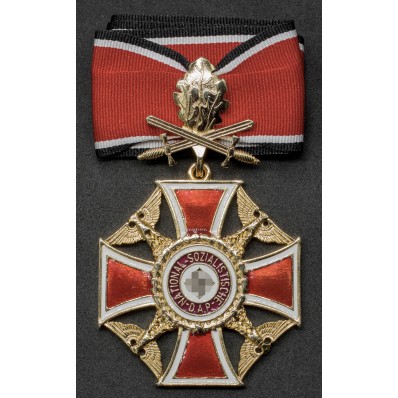
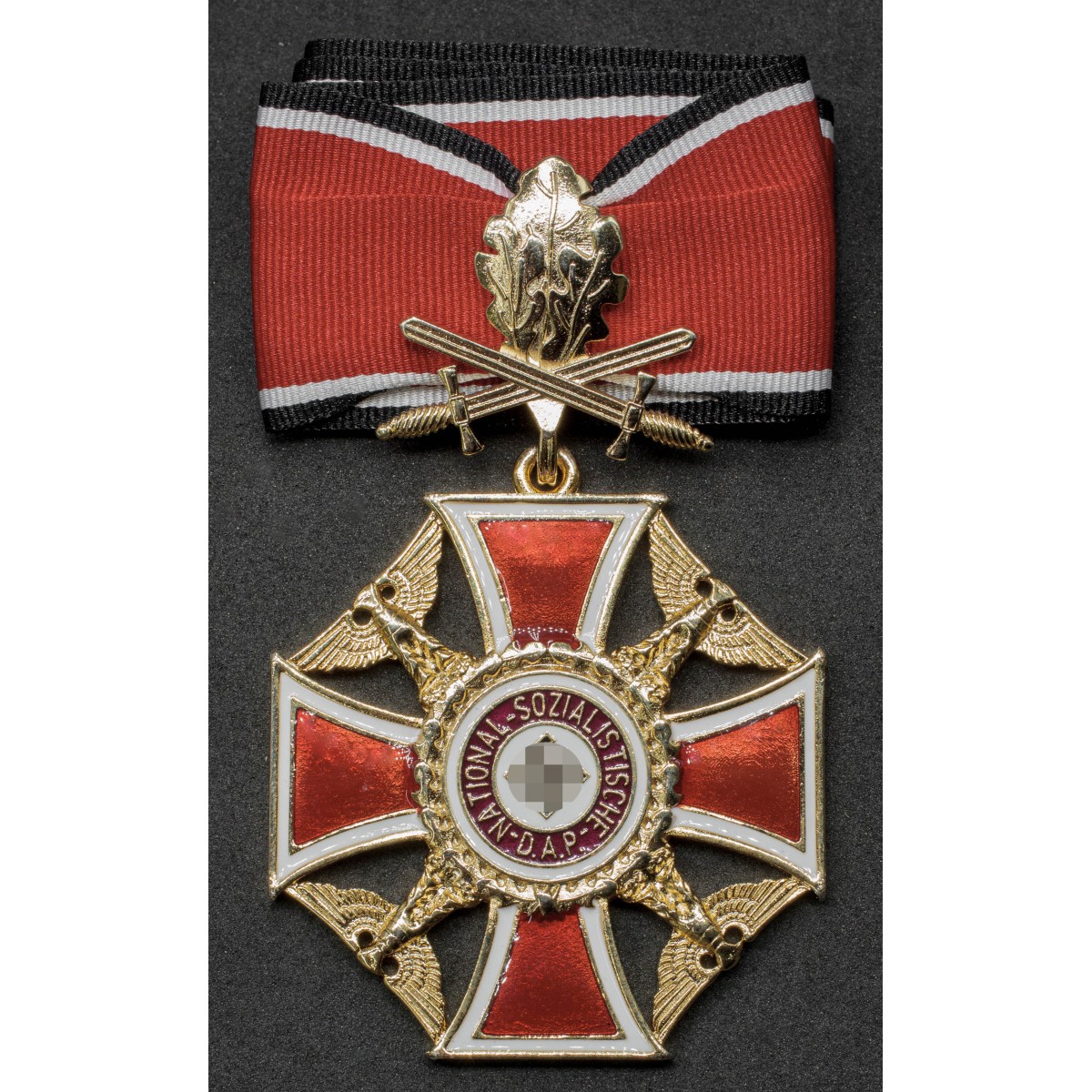
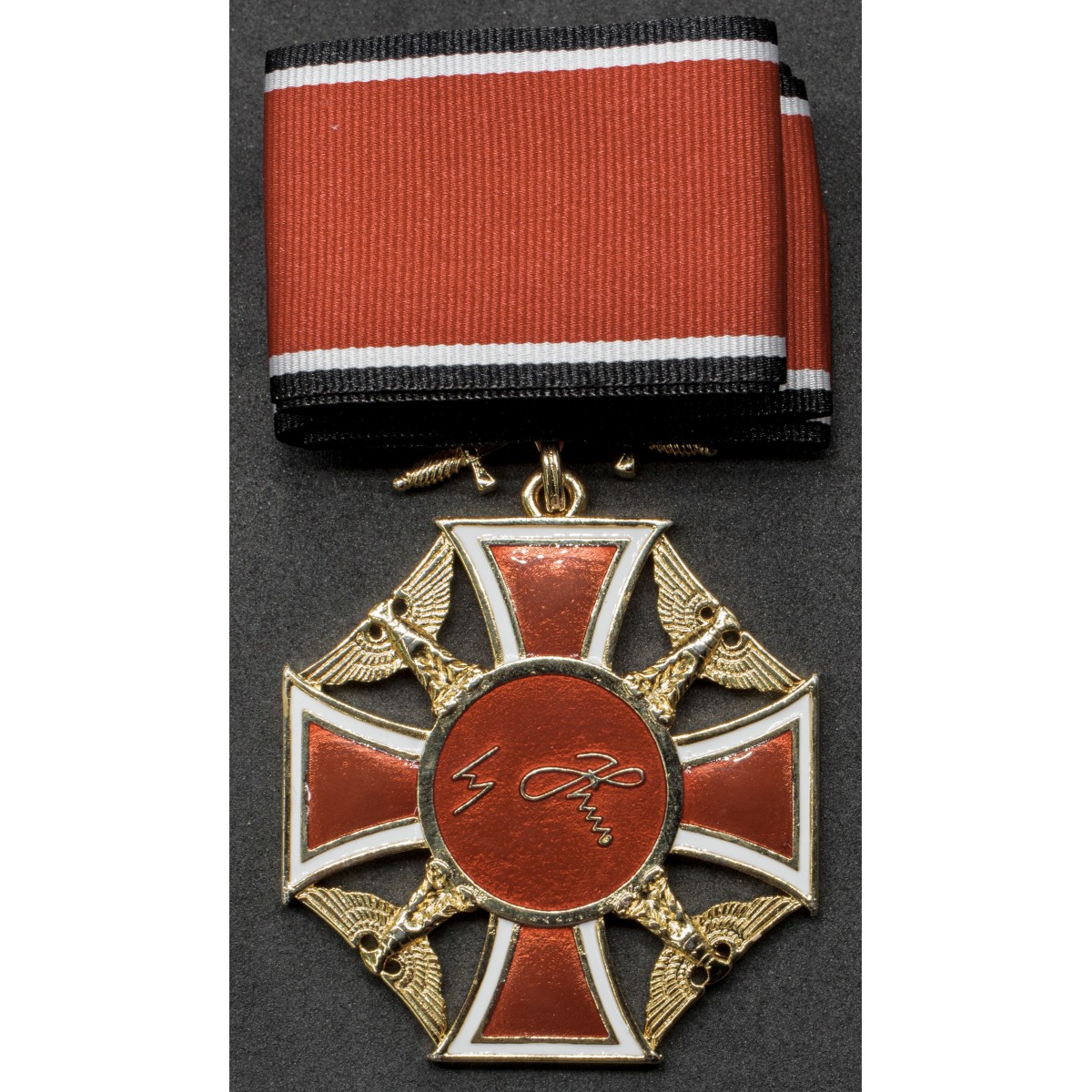
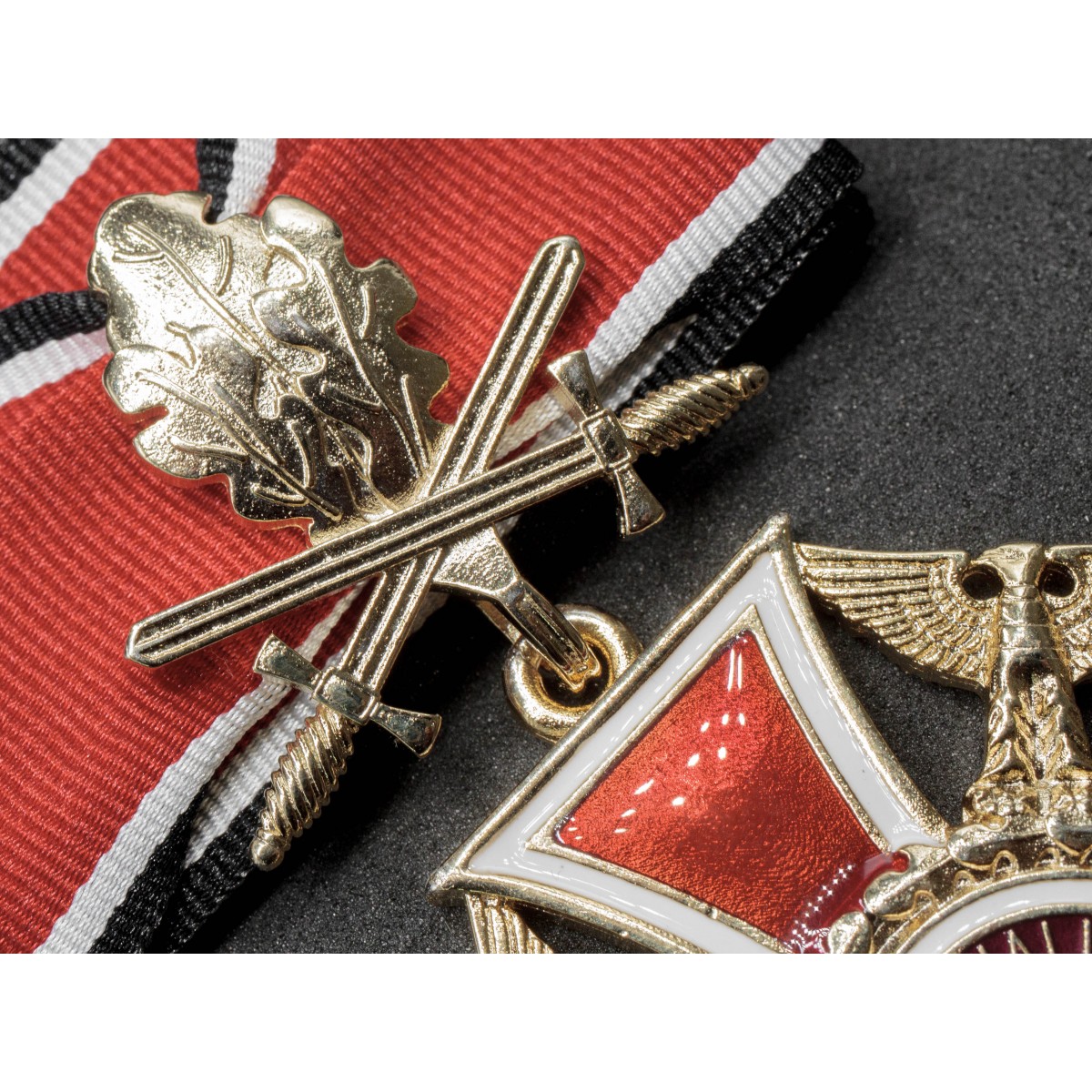
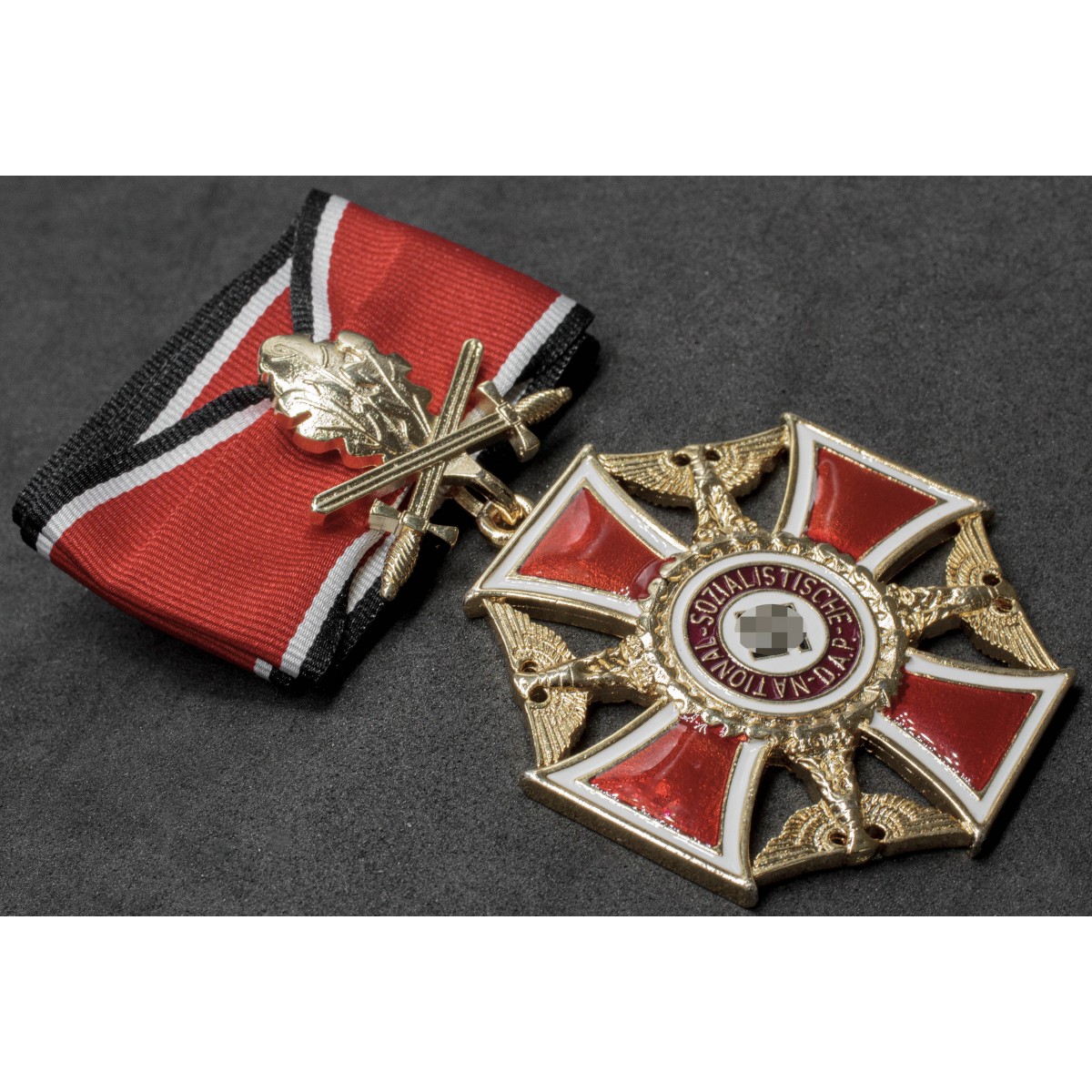
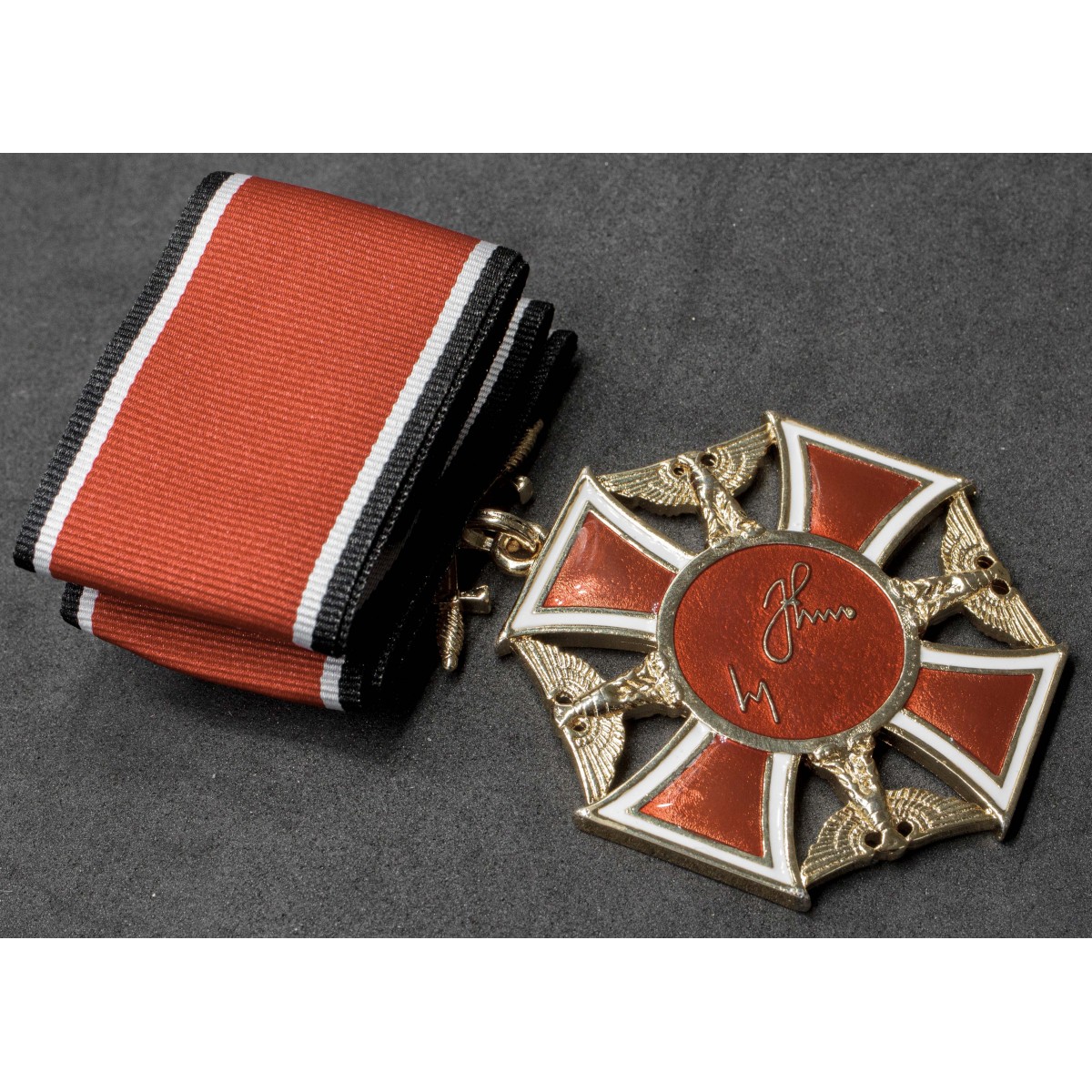
Extremely rare prototype Commander-class decoration attributed to the German-American Bund, based on elements of the Order of Merit of the German Eagle. Large enamelled neck cross with four eagles, political medallion and, on the opposite face, a facsimile of Adolf Hitler’s signature.
- Satisfied or refunded: we guarantee 100% secure protection on your purchases
- Free return: return your order free of charge within 30 days from receipt
- Secure payments: pay securely online with PayPal or credit cards

More info
This exceptional object belongs to one of the most enigmatic areas of 1930s German phaleristics: a prototype high-level decoration attributed to the German-American Bund, designed using many of the visual elements associated with the Order of Merit of the German Eagle.
The Verdienstorden vom Deutschen Adler was instituted on 1 May 1937, primarily to recognise foreign nationals who had rendered particular services to Germany. It subsequently developed into a multi-grade order including Grand Crosses, breast stars, neck decorations and lower classes.
This prototype clearly adopts several fundamental elements of that Order while departing so substantially from its regulation forms that it must be considered a separate unadopted experimental design.
Its size and method of suspension correspond to what phalerists would describe as a Commander or neck-badge class. “Commander Class” should therefore be understood primarily as a description of its form and method of wear rather than as a proven official title for the proposed decoration.
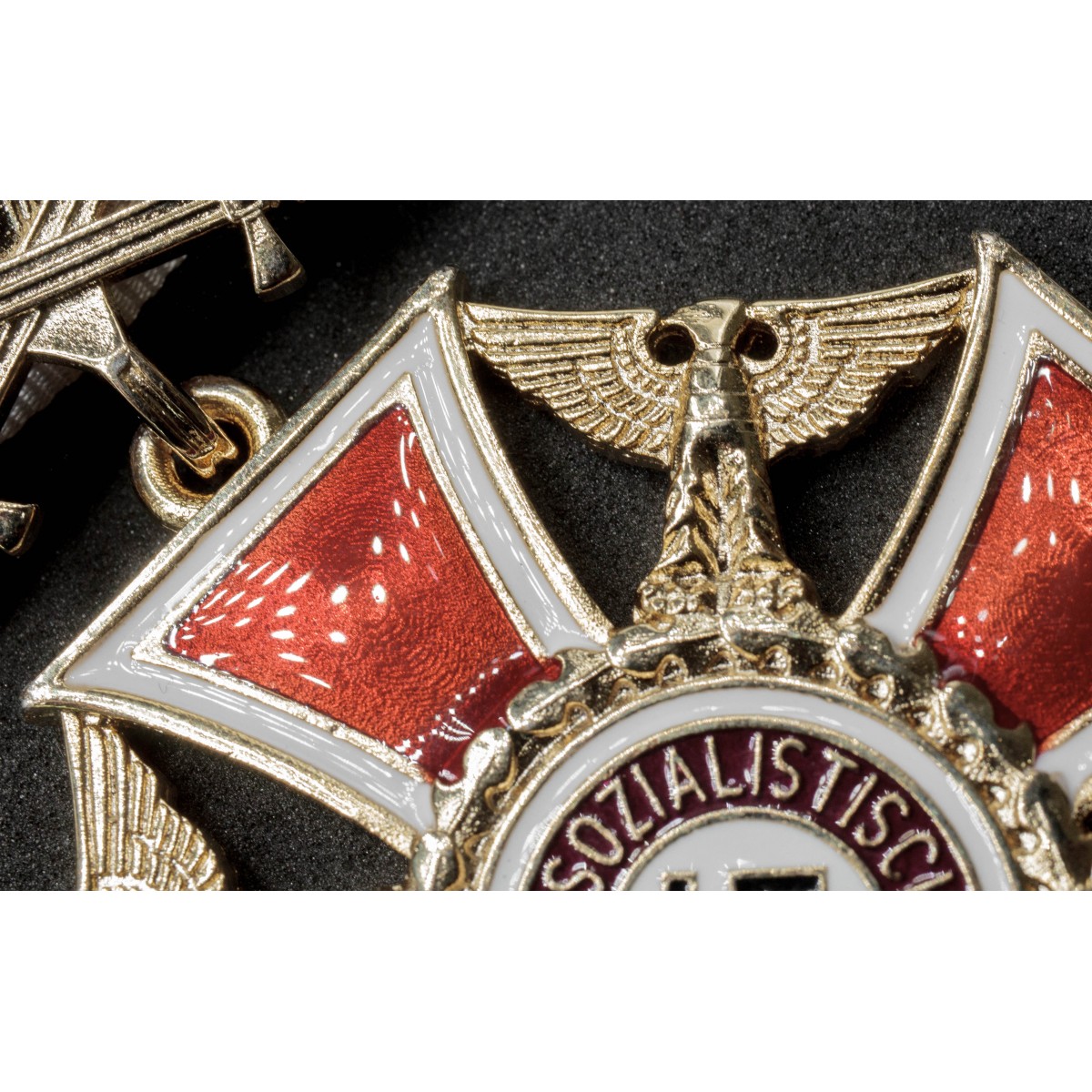
The four arms contain red enamel panels, surrounded by white enamel borders and gold-coloured metal divisions. Between the arms are four separately modelled eagles, creating an elaborate open construction.
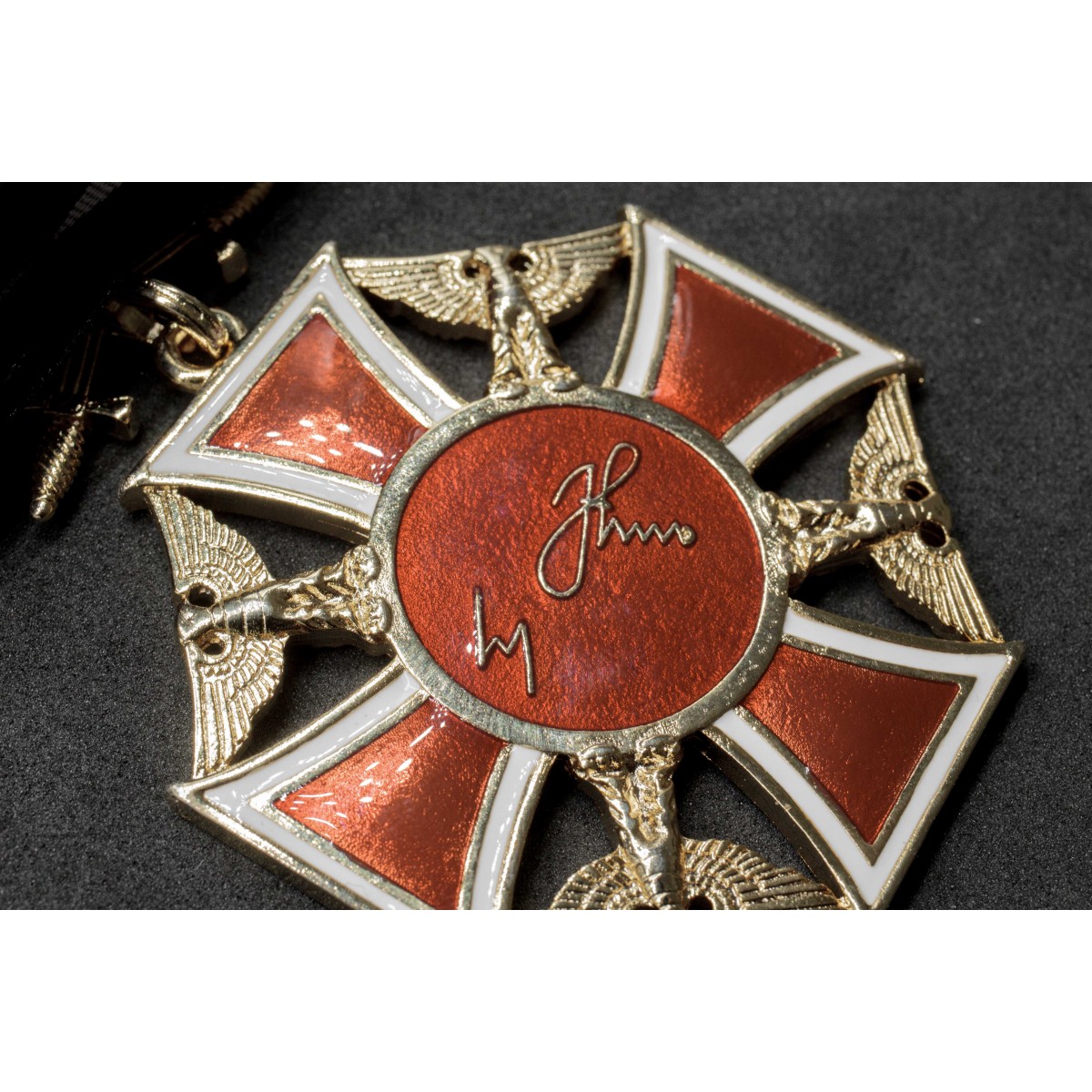
The two central medallions are completely different. One side carries the circular inscription “NATIONAL-SOZIALISTISCHE D.A.P.” surrounding the central political emblem. The opposite side features a red medallion bearing a facsimile of Adolf Hitler’s signature.
This signature is one of the most important features of the design. It is not the signature of German-American Bund leader Fritz Kuhn, but a reproduction of Hitler’s characteristic signature, giving the decoration a direct symbolic association with the highest political authority in Germany.
Its presence does not, by itself, prove that Hitler personally approved the design or that any decoration was actually awarded by him. In the absence of an institution decree or documented recipient, the signature is best understood as part of the planned iconography of the prototype.
The suspension is equally unusual. Between the ribbon and the cross is a separate element composed of oak leaves and two crossed swords, a configuration considerably more elaborate than that found on normal neck grades of the Order of the German Eagle.
The broad red neck ribbon with narrow white and black edge stripes, however, closely reflects the characteristic ribbon colours associated with the German Eagle Order.
The design is known principally through specialist phaleristic literature. It was described by Dr. Kurt-Gerhard Klietmann, author of the reference work Auszeichnungen des Deutschen Reiches 1936–1945, and was later included in the extensive cataloguing work of Jörg Nimmergut, Deutsche Orden und Ehrenzeichen bis 1945.
In Italian specialist literature the piece also appeared in issue 90 of Uniformi, one of the very few publications to illustrate and discuss this unusual proposed decoration.
No documented recipients are known, and there is no evidence of normal serial manufacture. This has led to the interpretation that a single presentation or sample piece, or at most a very small number of prototypes, may have been produced before the project was abandoned.
The political context may help explain why such a design never progressed. The German-American Bund, founded in 1936, increasingly became a diplomatic liability in relations between Germany and the United States. A decoration combining Bund associations, the appearance of a German state order and the facsimile signature of Adolf Hitlerwould have represented an unusually explicit political connection.
There is no documentary evidence proving that this was the reason the project was abandoned, however, and it should therefore be treated as historical context rather than a confirmed explanation.
Exceptional construction and craftsmanship
The complexity of this decoration goes far beyond that of a conventional enamelled cross.
Its structure combines four separate cross arms, four three-dimensional eagles, multiple enamel compartments, two completely different central medallions and an independent oak-leaf and crossed-sword suspension.
The four eagles require exceptionally accurate positioning. Each must remain perfectly aligned within the radial geometry of the cross while preserving clearly visible feather, wing, head and body detail.
The enamelling process is equally demanding. Translucent red panels, opaque white borders, darker central fields and extremely small decorative details must remain precisely contained within narrow raised metal divisions.
The two medallions add another level of difficulty. One requires minute circular lettering to remain sharply legible, while the other reproduces the delicate facsimile of Adolf Hitler’s signature within a very restricted area.
Both sides of the decoration are fully finished. There is therefore no simplified technical reverse: each face functions as a complete display surface.
The upper suspension is almost a separate object in itself. The oak leaf, crossed swords, sword hilts, blades and connecting elements must be individually formed and assembled before being aligned with the cross and broad neck ribbon.
The combination of miniature details, openwork construction, multiple enamel fields, three-dimensional elements and two different central medallions makes this one of the most technically demanding decorations of its type.
A particularly little-known feature is the use of Hitler’s facsimile signature directly on the decoration itself. On conventional state orders, the authority behind an award was normally expressed through its statutes and award documents rather than by reproducing a personal signature on the badge. Its presence here is therefore highly unusual and reinforces the experimental nature of the proposed design.
Data sheet
| Lenght | 61.20 mm (Clip: 33.70 x 32.60 x 3 mm) |
| Width | 55.30 mm |
| Thickness | 3.66 mm |
| Weight | 45.7 gr |
| Material | Zamak |
30 other products in the same category:

Medals With Ribbon
- Germany
- Uniforms
- Medals, Orders and Decorations
- Badges and Pins
- ID Tags
- Arm Shields
- Helmets
- Helmet Decals
- Visor Caps and Hats
- Cap and Helmet Badges
- Collar Tabs Badges
- Collar Tabs, Shoulder Boards and Epaulettes
- Arm Bands
- Division Cuff Titles
- Buckles And Belts
- Buttons For Uniforms
- Stamps
- Gorgets
- Rings
- SS Honour Ring in 925 Silver - Collector's Set
- Poletops
- Flags
- Daggers and Knives (Ornamental)
- Field Marshal Batons
- Field and Personal Equipment
- Service Watches
- Presentation Cases
- Documents and Award Letters
- Busts, Eagles, Lighters and Miscellaneous
- Croatian and Ustasha Militaria
- Denazified Articles
- Commemorative Necklaces
- Spare Parts, Small Parts and Accessories
- Italy
- Medals and Decorations
- Brevets And Badges
- Battle Shields and Tags
- Gorgets
- Visor Caps and Hats
- Cap and Helmet Badges
- Helmets Decals
- Friezes for Collar Tabs
- Collar Tabs, Shoulder Boards and Epaulettes
- Buckles
- Belts
- Buttons For Uniforms
- Rings
- Poletops
- Italian Resistance
- Keyrings
- Wallshields
- Daggers and Knives
- Flags
- Busts and Eagles
- Souvenirs
- Commemorative Necklaces
- Imperial Germany
- Soviet Union
- Other Countries