
No products
Product successfully added to your shopping cart
There are 0 items in your cart. There is 1 item in your cart.
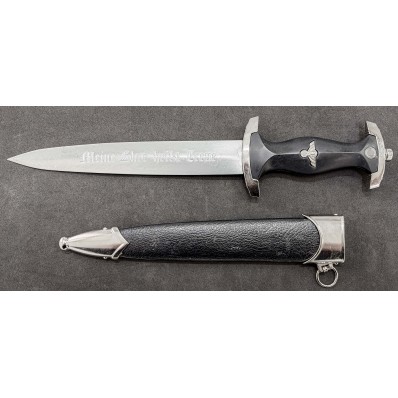
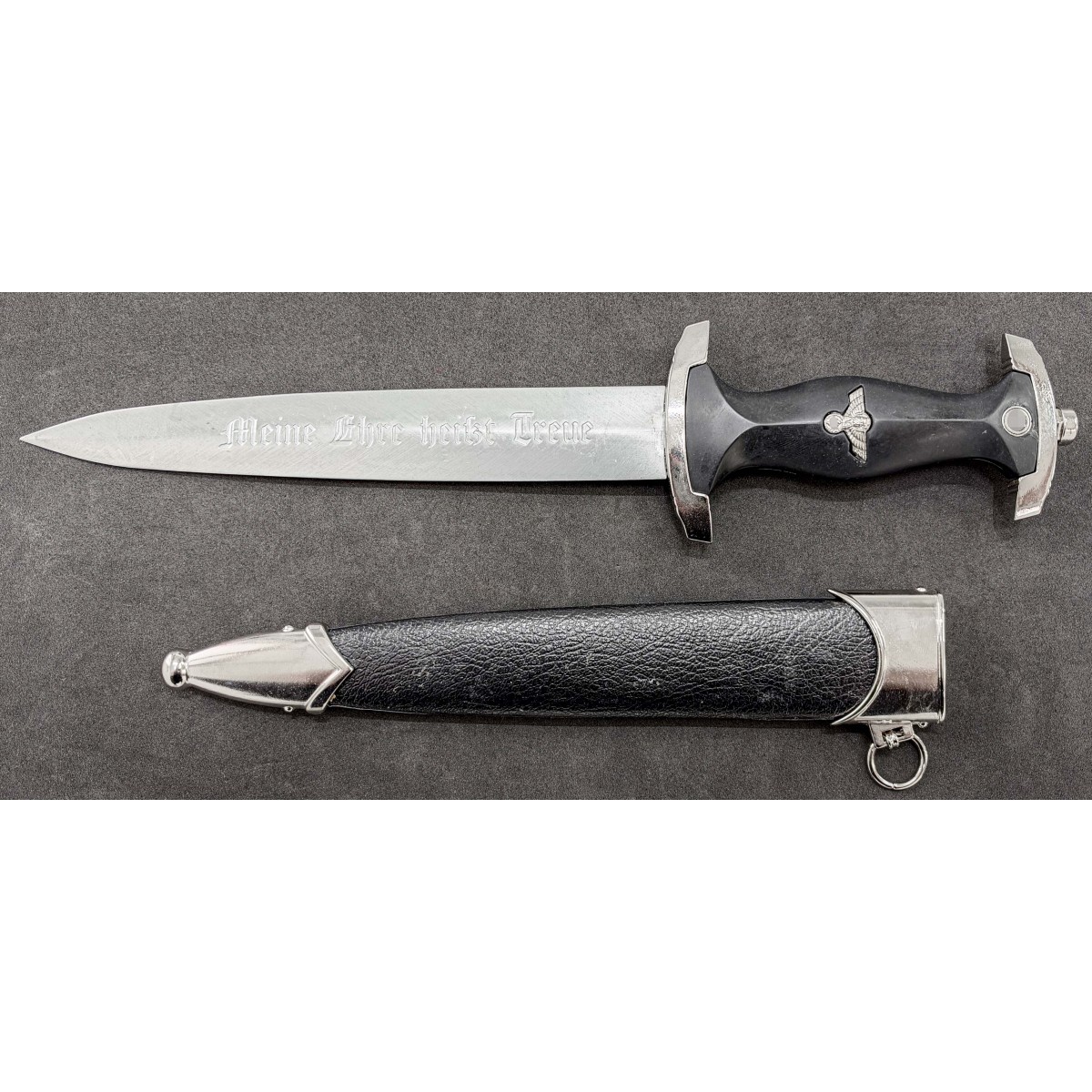
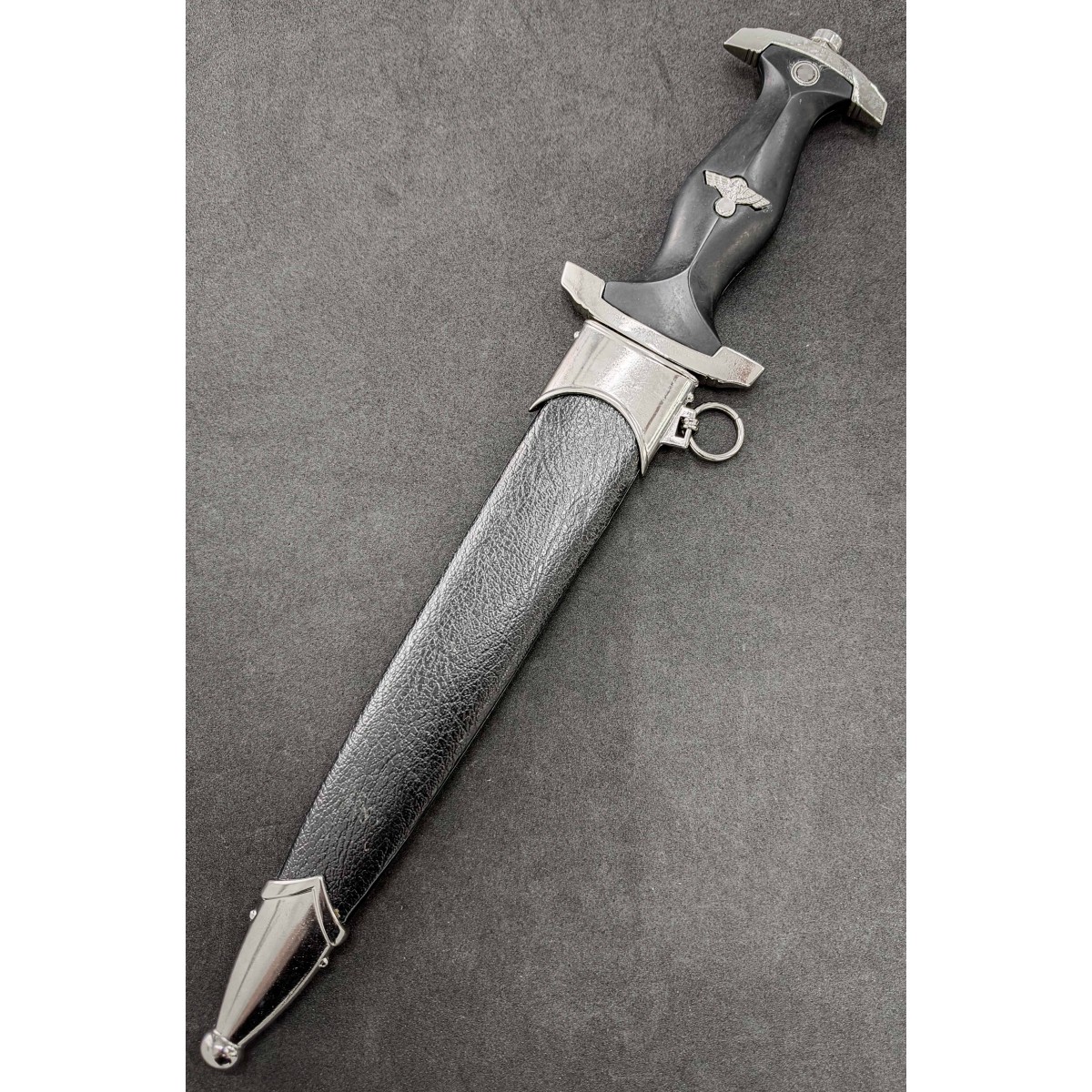
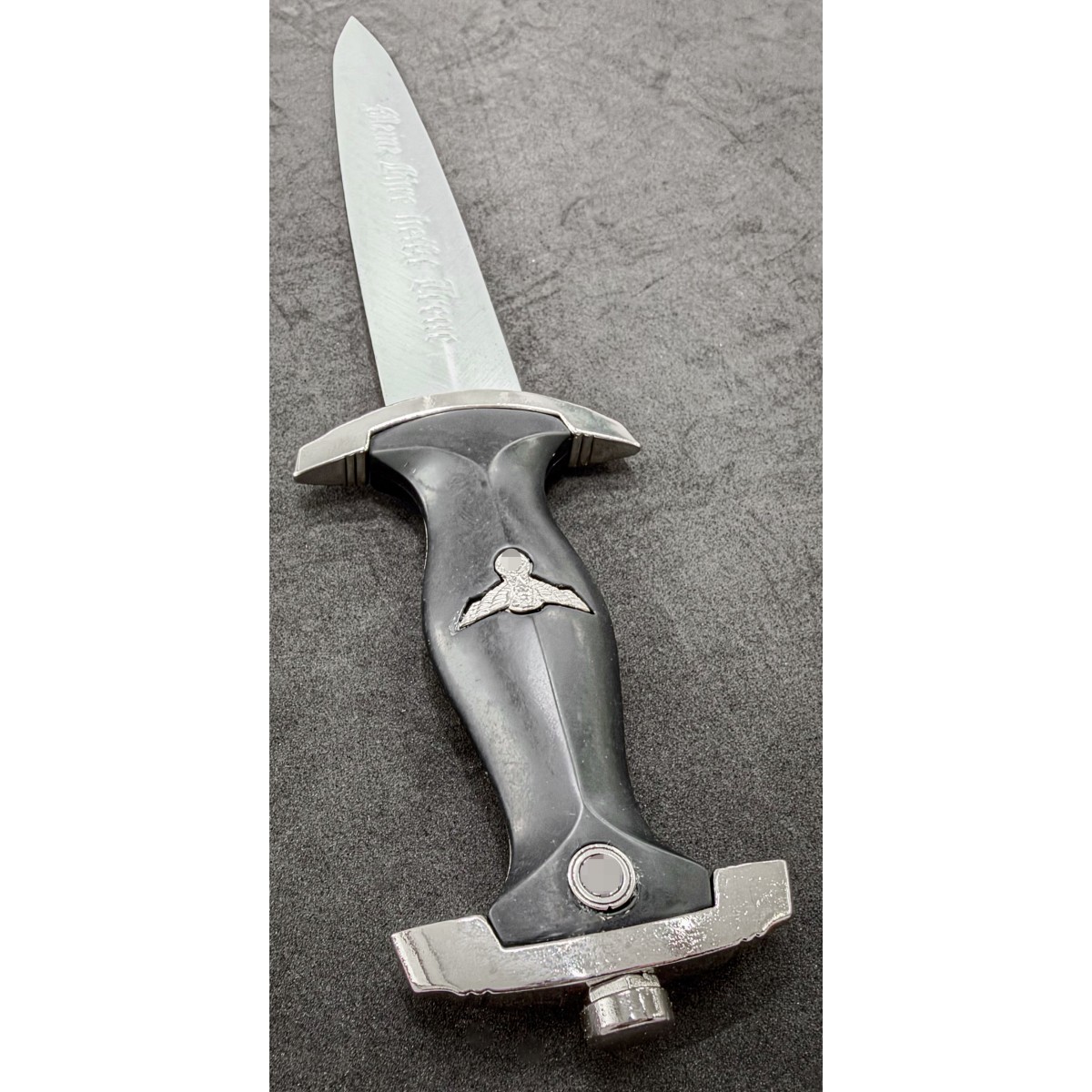
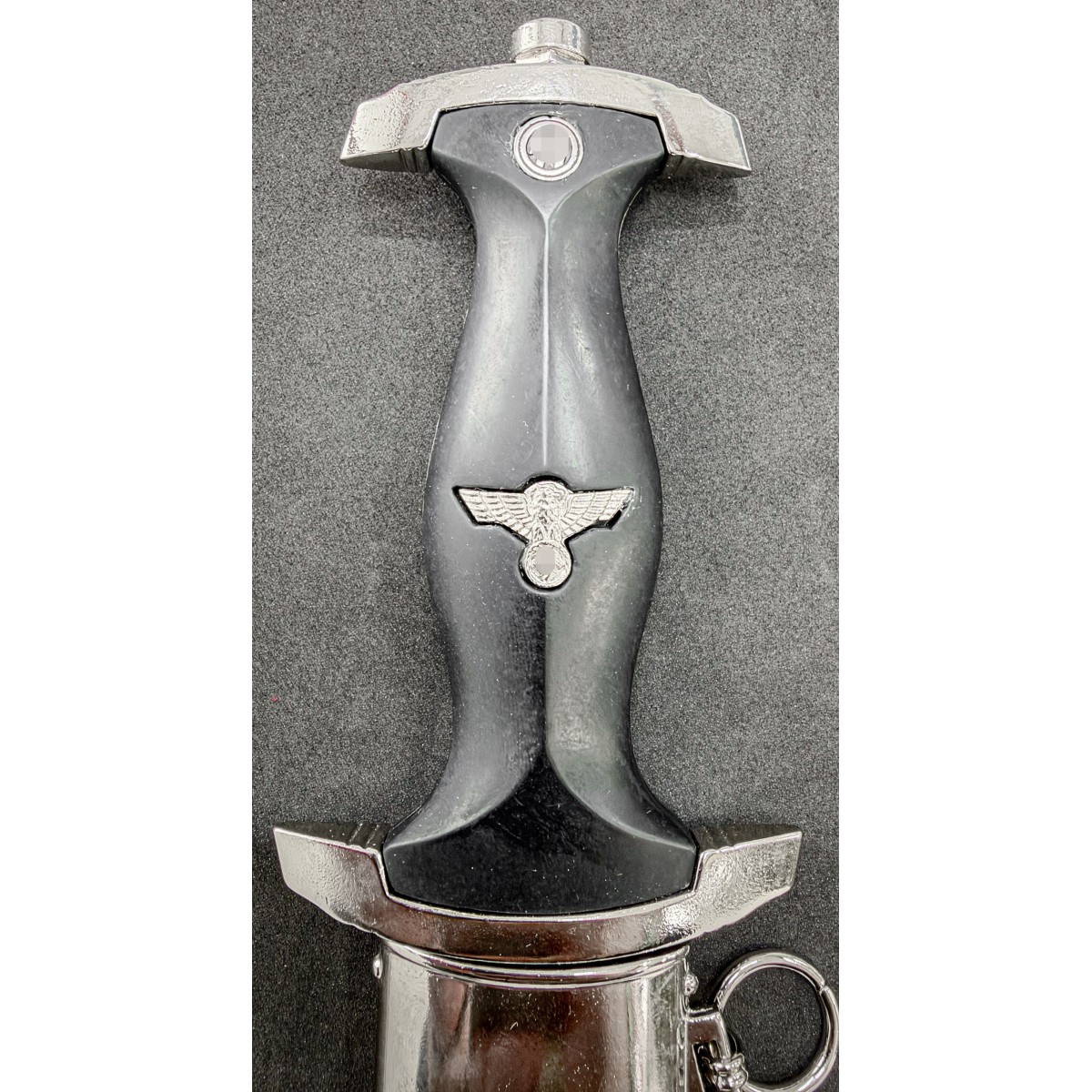
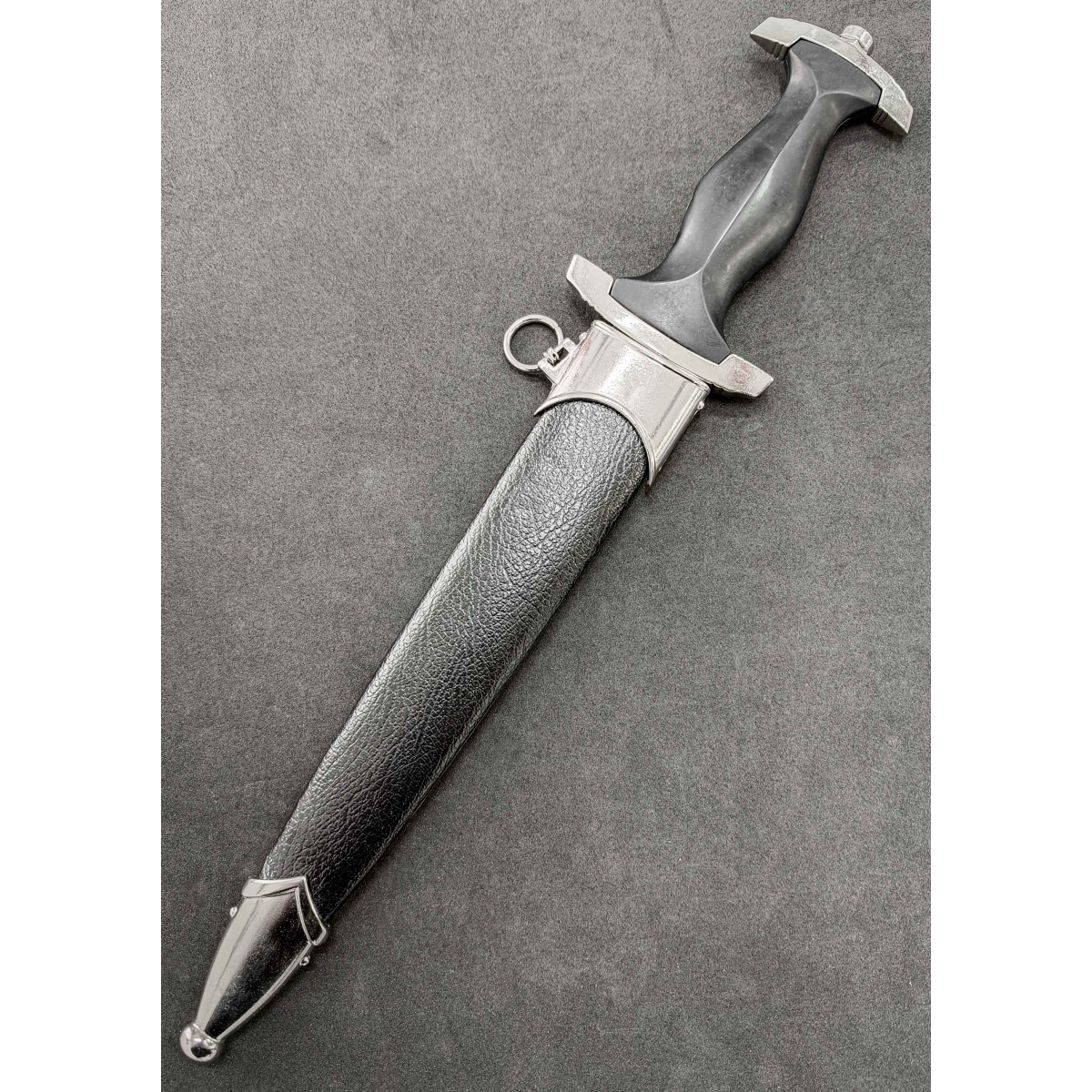
SS M33 Service Dagger
New
Reproduction of the SS M33 Service Dagger, introduced in 1933. Made from metal with a black plastic grip, SS runes, eagle emblem, black scabbard and the historical motto reproduced on the blade. Overall length 38 cm, weight approximately 280 g.
- Satisfied or refunded: we guarantee 100% secure protection on your purchases
- Free return: return your order free of charge within 30 days from receipt
- Secure payments: pay securely online with PayPal or credit cards

More info
The SS M33 Service Dagger, officially known as the SS-Dienstdolch Modell 1933, was introduced on 15 December 1933 as a ceremonial sidearm for members of the Schutzstaffel. Its black grip and scabbard combined with silver-coloured metal fittings made it a distinctive element of SS uniform insignia during the 1930s.
The design is attributed to German artist and graphic designer Paul Casberg, born Paul Krause. Like the contemporary SA service dagger, the M33 drew heavily upon the historical Holbein-style Swiss dagger, particularly in the curved form of its guard and pommel.
The original grip incorporated a circular SS rune badge near the pommel and the German national eagle and swastika below it. Early examples generally used dark or blackened wooden grips, while materials and manufacturing techniques changed during later production.
The front of the blade carried the SS motto “Meine Ehre heißt Treue”, one of the principal identifying features of the M33 throughout its production history.
The dagger functioned primarily as a service and ceremonial item rather than conventional field equipment. The right to wear it followed final admission into the SS, and presentation traditionally took place during ceremonies held on 9 November. Members were required to purchase their own dagger through official administrative channels.
Original M33 daggers are generally divided into three major production periods. Early examples from 1933-1935 commonly featured solid nickel fittings and a manufacturer's trademark on the blade. Transitional production from 1936-1938 increasingly incorporated RZM markings, while later examples made greater use of zinc and aluminium alloys.
Numerous German manufacturers participated in production, particularly firms based around Solingen, Germany's traditional centre of edged-weapon manufacture. Carl Eickhorn was among the best-known makers, although many other authorised companies produced examples.
A separate SS M36 Service Dagger was introduced in 1936. Commonly known as the Kettendolch, it incorporated an elaborate chain suspension decorated with SS runes and Totenkopf motifs. The earlier M33 retained the simpler suspension arrangement attached to the single ring on the scabbard.
Serial production continued into the early years of World War II and ended around 1942. Museum sources estimate total production across the different manufacturing periods at almost 220,000 daggers.
This reproduction presents the classic M33 configuration with a black grip, SS rune badge, eagle emblem, metal fittings and a black scabbard with suspension ring. The decorative metal blade carries a reproduction of the historical motto.
Overall length is 38 cm, with a weight of approximately 280 g.
Collector's note: the distinctive M33 profile was not created entirely from scratch in the 1930s. Its curved guard and pommel were inspired by the historical Holbein-style Swiss dagger, a Renaissance weapon whose form was revived for several German ceremonial dagger designs.
Technical specifications
Model reproduced: SS-Dienstdolch M33 / Model 1933
Original introduced: 15 December 1933
Historical period: Germany, 1930s and World War II
Materials: metal and plastic
Grip: black plastic
Scabbard: black with metal fittings
Blade: decorative metal, unsharpened
Overall length: 38 cm
Weight: approx. 280 g
Suspension: scabbard ring
EAN: 8435089740349
Data sheet
| Disclaimer | Ornamental display item with no sharp edge, offensive point or cutting/piercing function. Not a weapon or object suitable for offence; sold in compliance with D.Lgs. 54/2011 and Directive 2009/48/EC, where applicable. |
| EAN | 8435089740349 |
30 other products in the same category:

Customers who bought this product also bought:
Daggers and Knives (Ornamental)
- Germany
- Uniforms
- Medals, Orders and Decorations
- Badges and Pins
- ID Tags
- Arm Shields
- Helmets
- Helmet Decals
- Visor Caps and Hats
- Cap and Helmet Badges
- Collar Tabs Badges
- Collar Tabs, Shoulder Boards and Epaulettes
- Arm Bands
- Division Cuff Titles
- Buckles And Belts
- Buttons For Uniforms
- Stamps
- Gorgets
- Rings
- SS Honour Ring in 925 Silver - Collector's Set
- Poletops
- Flags
- Firearms (Inert Replicas)
- Daggers and Knives (Ornamental)
- Field Marshal Batons
- Field and Personal Equipment
- Service Watches
- Presentation Cases
- Documents and Award Letters
- Busts, Eagles, Lighters and Miscellaneous
- Croatian and Ustasha Militaria
- Denazified Articles
- Commemorative Necklaces
- Spare Parts, Small Parts and Accessories
- Italy
- Medals and Decorations
- Brevets And Badges
- Battle Shields and Tags
- Gorgets
- Visor Caps and Hats
- Cap and Helmet Badges
- Helmets Decals
- Friezes for Collar Tabs
- Collar Tabs, Shoulder Boards and Epaulettes
- Buckles
- Belts
- Buttons For Uniforms
- Rings
- Poletops
- Italian Resistance
- Keyrings
- Wallshields
- Daggers and Knives
- Flags
- Busts and Eagles
- Souvenirs
- Commemorative Necklaces
- Imperial Germany
- Soviet Union
- Other Countries