
No products
Product successfully added to your shopping cart
There are 0 items in your cart. There is 1 item in your cart.
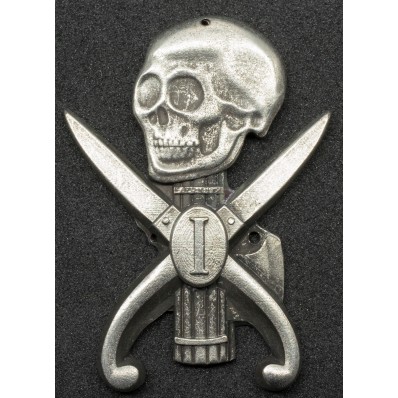
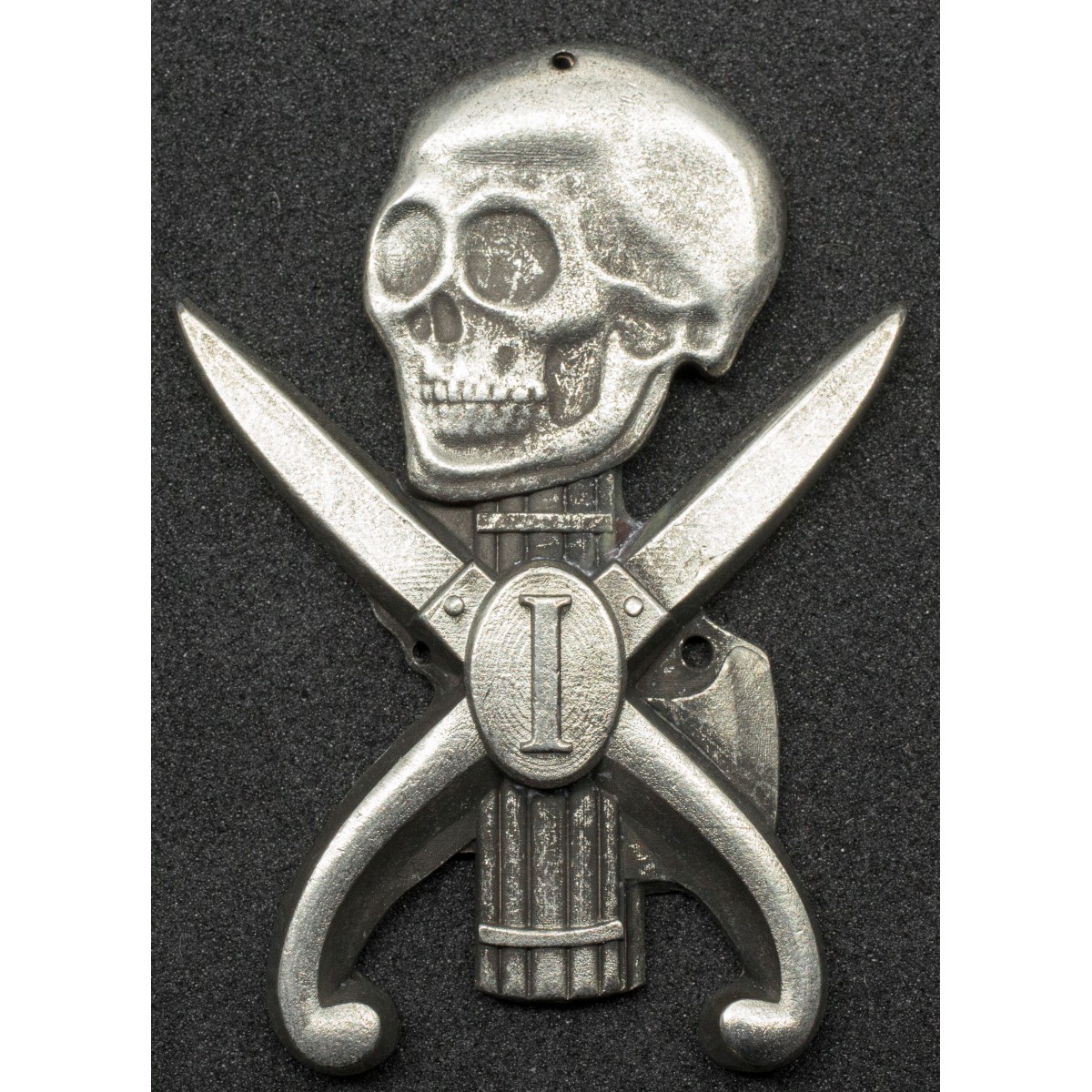
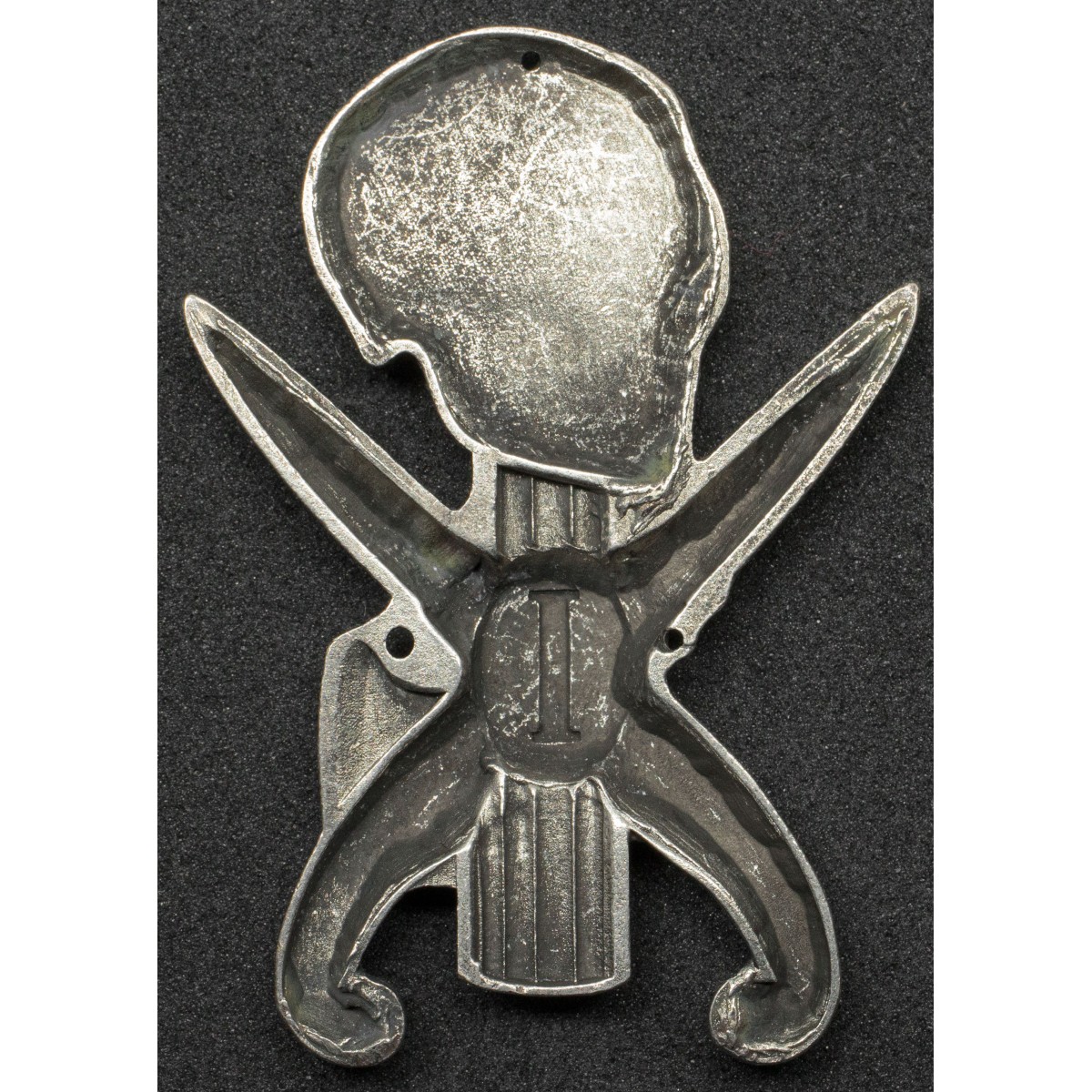
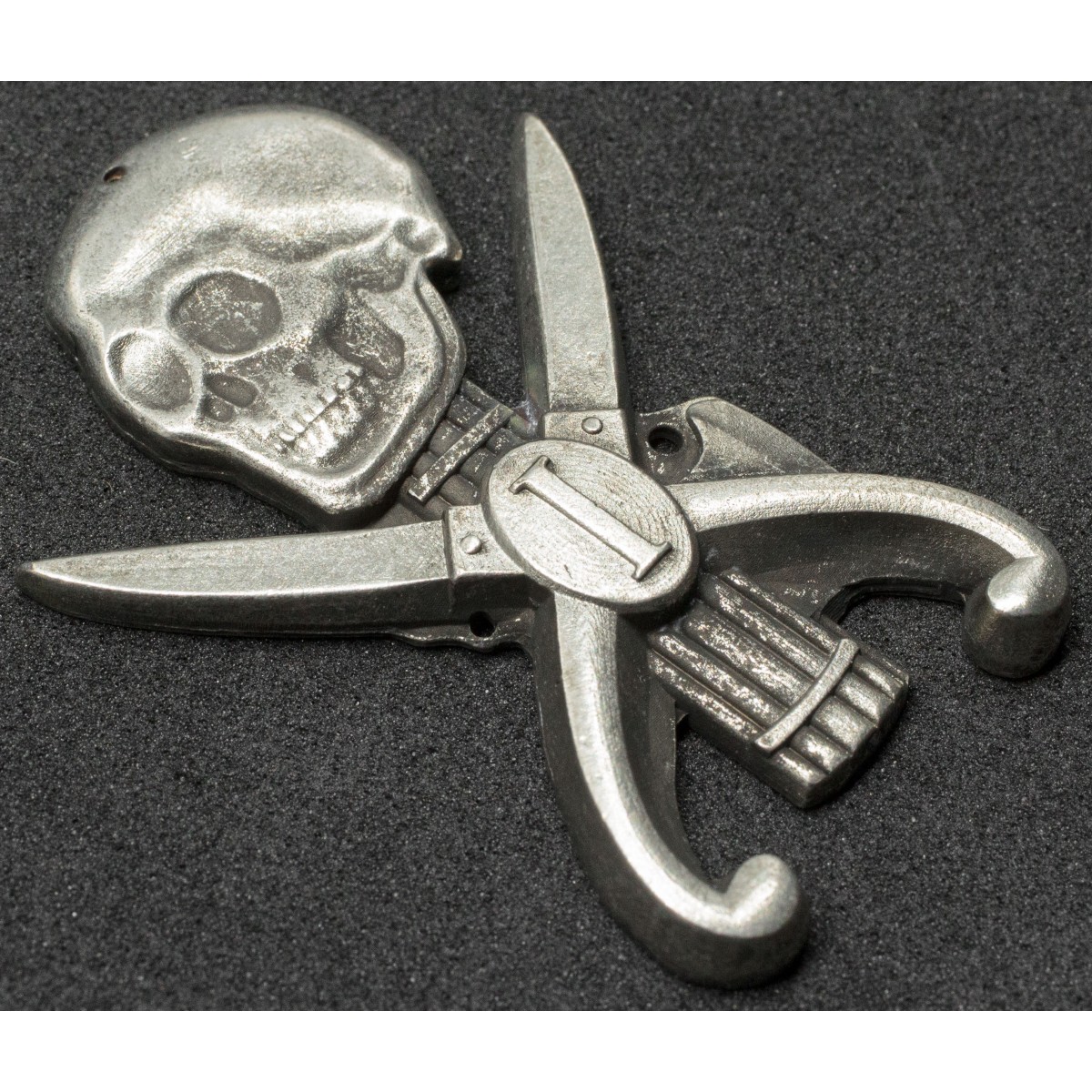
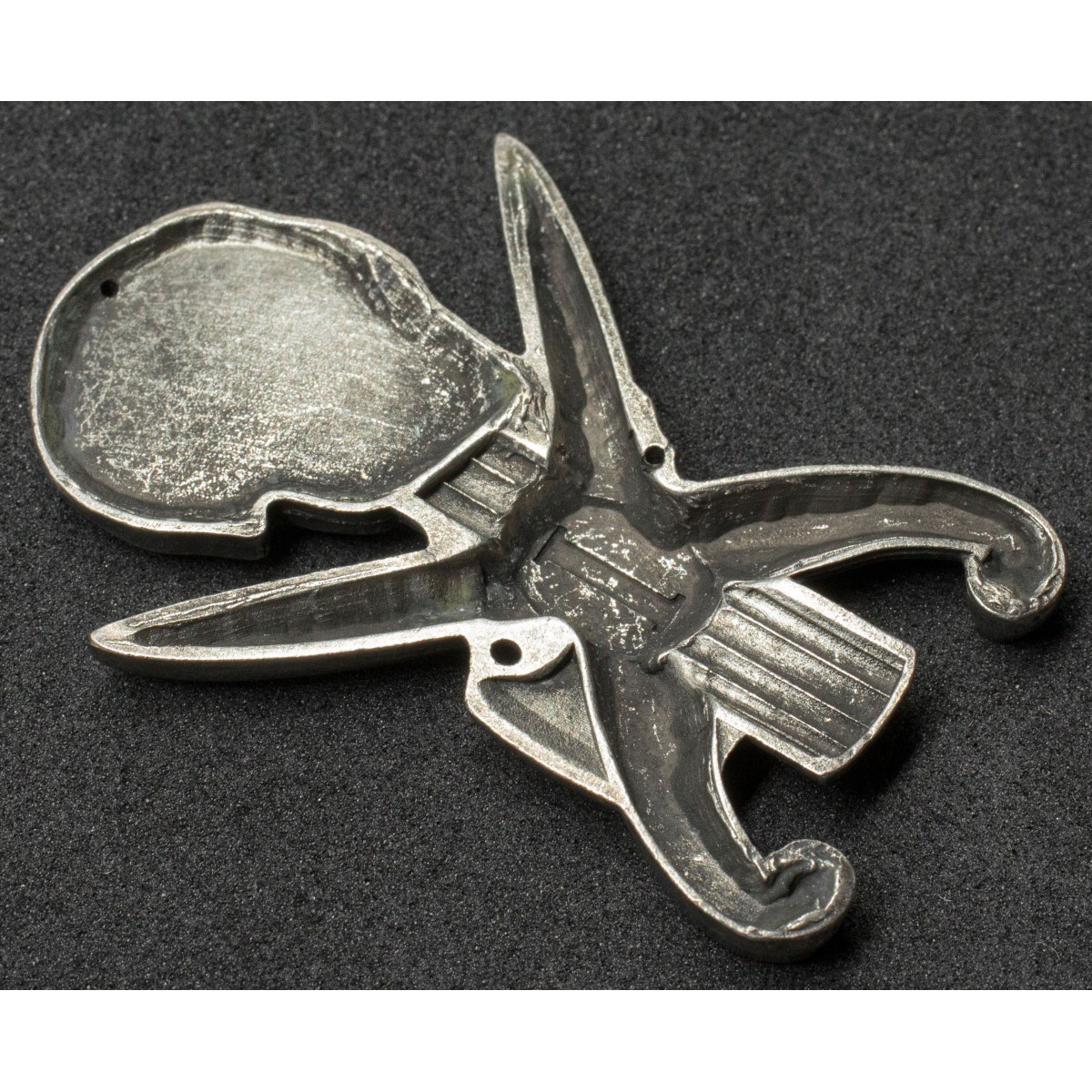
Uniform badge of the “Volontari di Sardegna – Giovanni Maria Angioy” Battalion
New
Uniform badge of the “Volontari di Sardegna – Giovanni Maria Angioy” Battalion. The emblem features a skull above a fasces and two crossed Sardinian “pattadesi” knives, identifying the battalion formed by Sardinian volunteers within the Italian Social Republic in 1943 and deployed in the Adriatic Littoral operational zone.
- Satisfied or refunded: we guarantee 100% secure protection on your purchases
- Free return: return your order free of charge within 30 days from receipt
- Secure payments: pay securely online with PayPal or credit cards

More info
Uniform Badge of the “Volontari di Sardegna – Giovanni Maria Angioy” Battalion
This badge reproduces the distinctive emblem worn by members of the “Volontari di Sardegna – Giovanni Maria Angioy” Battalion, a military unit formed in autumn 1943 after the Italian armistice and composed mainly of volunteers from the island of Sardinia. The battalion served within the armed forces of the Italian Social Republic (RSI).
The formation originated from groups of Sardinian soldiers left without organized units after the collapse of the Italian army in September 1943. Around a thousand men chose to enlist in the newly created RSI forces, forming the core of the battalion, which was named after Giovanni Maria Angioy, a historical Sardinian political leader associated with the anti-feudal uprising of 1796.
The unit was equipped with standard Italian infantry weapons such as Carcano Model 91 rifles, Beretta submachine guns and Breda machine guns, and was later transferred to the Adriatic Littoral operational zone, where it operated in the regions of Istria and Venezia Giulia under Italian and German command structures.
The battalion’s uniform insignia was particularly distinctive. The badge consisted of a fasces placed over two crossed Sardinian folding knives known as “pattadesi”, traditional blades associated with the island’s culture, surmounted by a skull. This composition combined political symbolism with references to Sardinian martial tradition.
The battalion’s operational life was relatively short. By February 1944 the unit was disbanded, and its personnel redistributed to other RSI formations; some members were also involved in intelligence missions carried out in Sardinia.
Today the emblem with skull and crossed pattadesi knives remains one of the most recognizable insignia associated with regional volunteer formations active in Italy during the final phase of the Second World War.
Data sheet
| Width | 36.20 mm |
| Lenght | 50.70 mm |
| Thickness | 1.34 mm |
| Weight | 12gr |
| Material | Zamak |
30 other products in the same category:

Customers who bought this product also bought:
Brevets And Badges
- Germany
- Medals, Orders and Decorations
- Badges and Pins
- ID Tags
- Arm Shields
- Helmets
- Visor Caps and Hats
- Cap and Helmet Badges
- Collar Tabs Cyphers
- Collar Tabs, Shoulder Boards and Epaulettes
- Arm Bands
- Division Cuff Titles
- Buckles And Belts
- Buttons For Uniforms
- Stamps
- Gorgets
- Rings
- SS Honour Ring in 925 Silver - Collector's Set
- Poletops
- Flags
- Daggers and Knives (Ornamental)
- Field Marshal Batons
- Field and Personal Equipment
- Service Watches
- Presentation Cases
- Documents and Award Letters
- Busts, Eagles, Lighters and Miscellaneous
- Croatian and Ustasha Militaria
- Denazified Articles
- Commemorative Necklaces
- Spare Parts, Small Parts and Accessories
- Italy
- Medals and Decorations
- Brevets And Badges
- Battle Shields and Tags
- Gorgets
- Visor Caps and Hats
- Cap and Helmet Badges
- Friezes for Collar Tabs
- Collar Tabs, Shoulder Boards and Epaulettes
- Buckles
- Belts
- Buttons For Uniforms
- Rings
- Poletops
- Italian Resistance
- Keyrings
- Wallshields
- Daggers and Knives
- Flags
- Busts and Eagles
- Souvenirs
- Commemorative Necklaces
- Imperial Germany
- Soviet Union
- Other Countries