
No products
Product successfully added to your shopping cart
There are 0 items in your cart. There is 1 item in your cart.
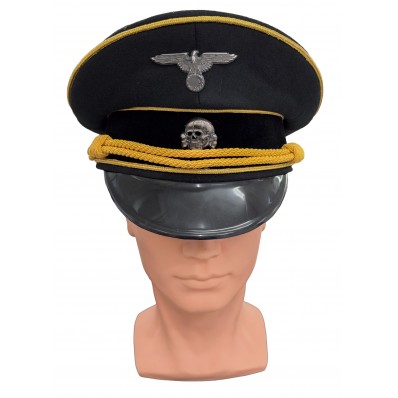
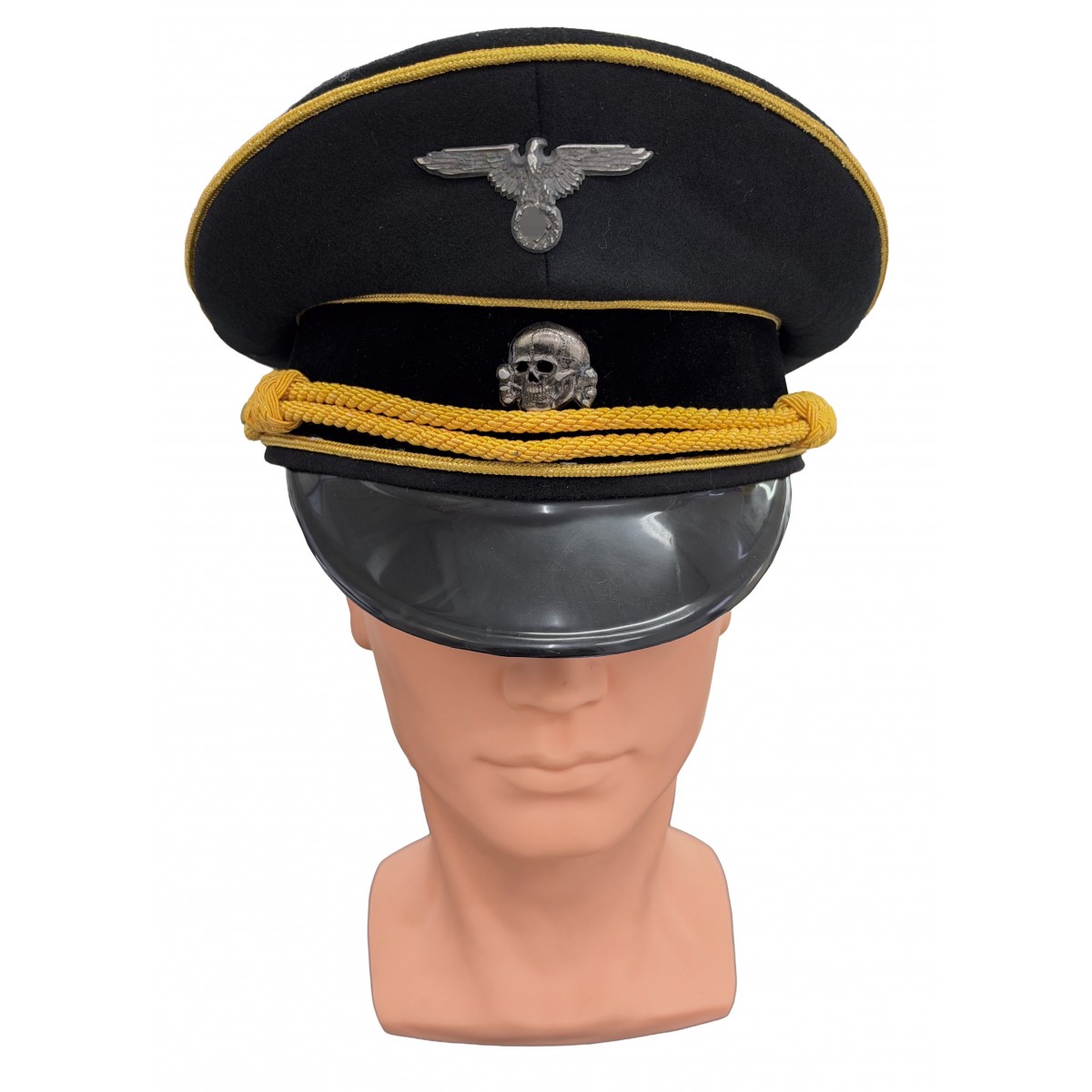
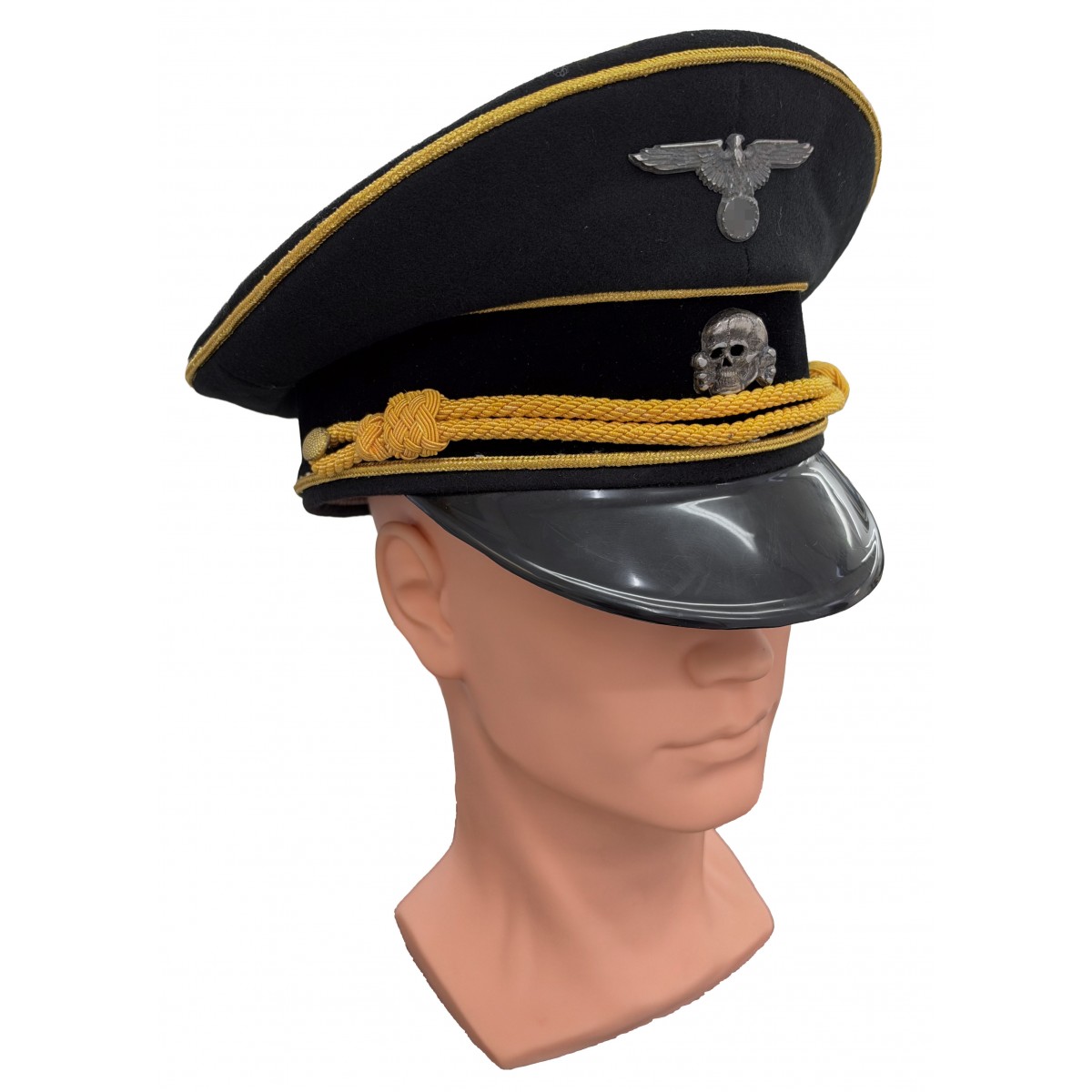
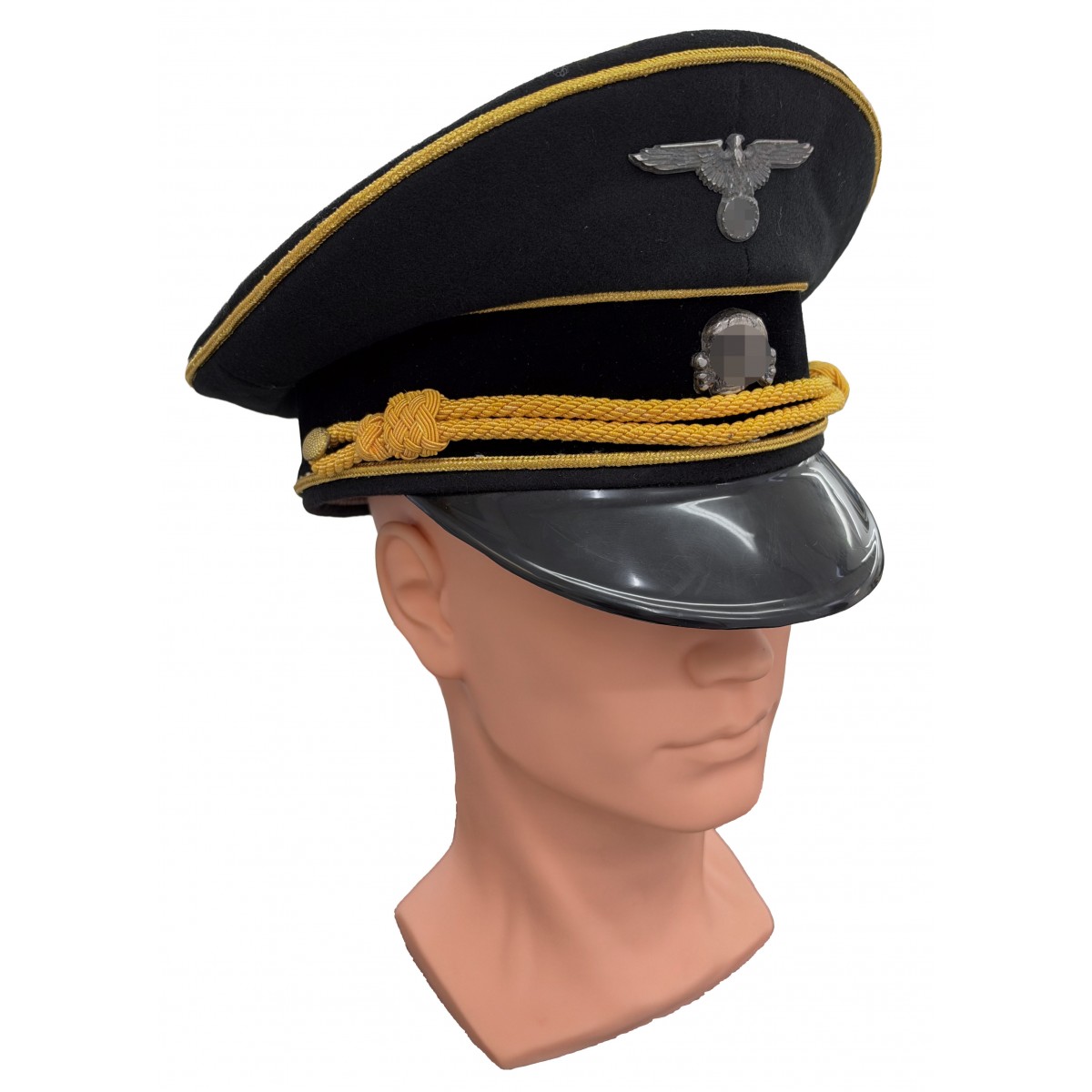
Allgemeine-SS General Officer Visor Cap
New
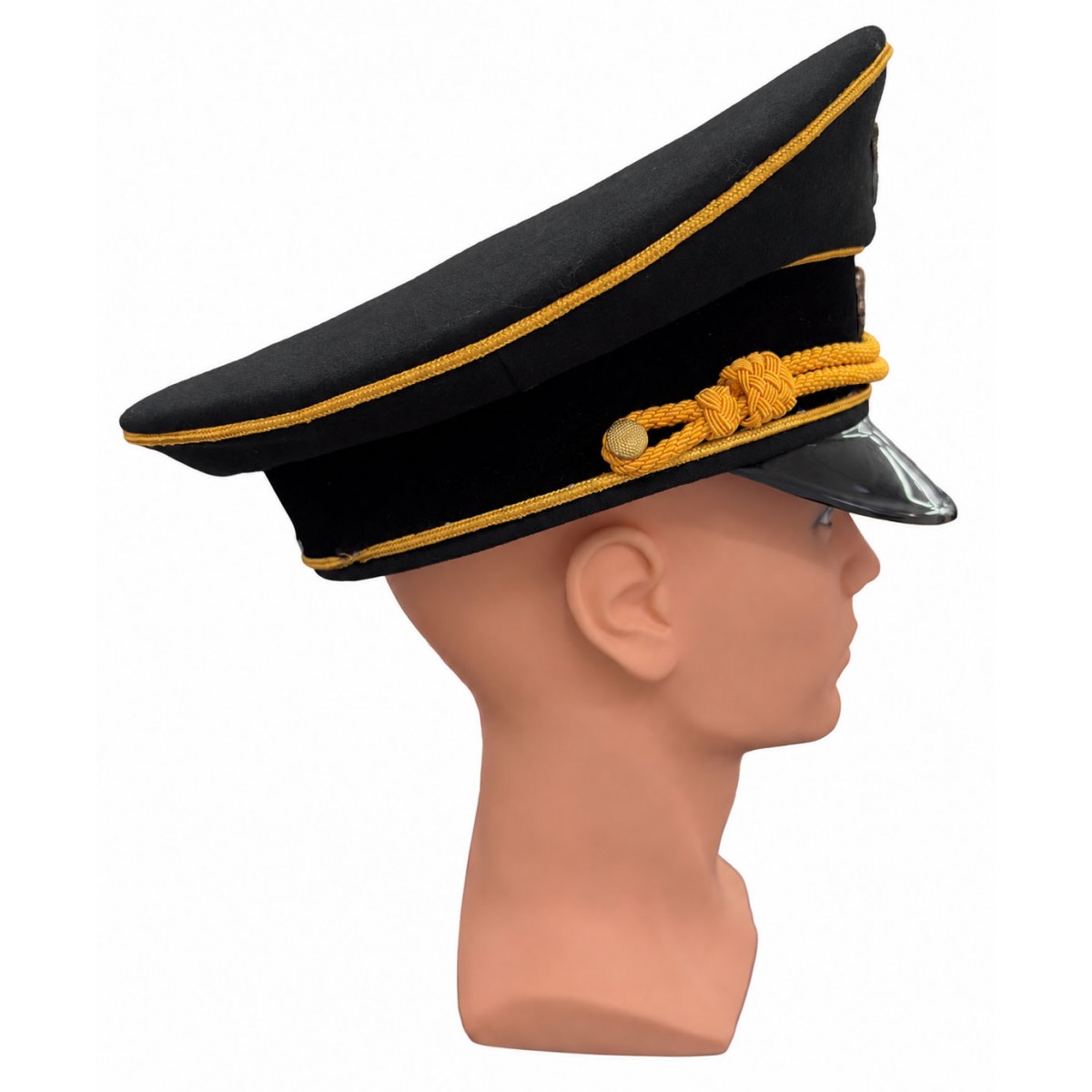
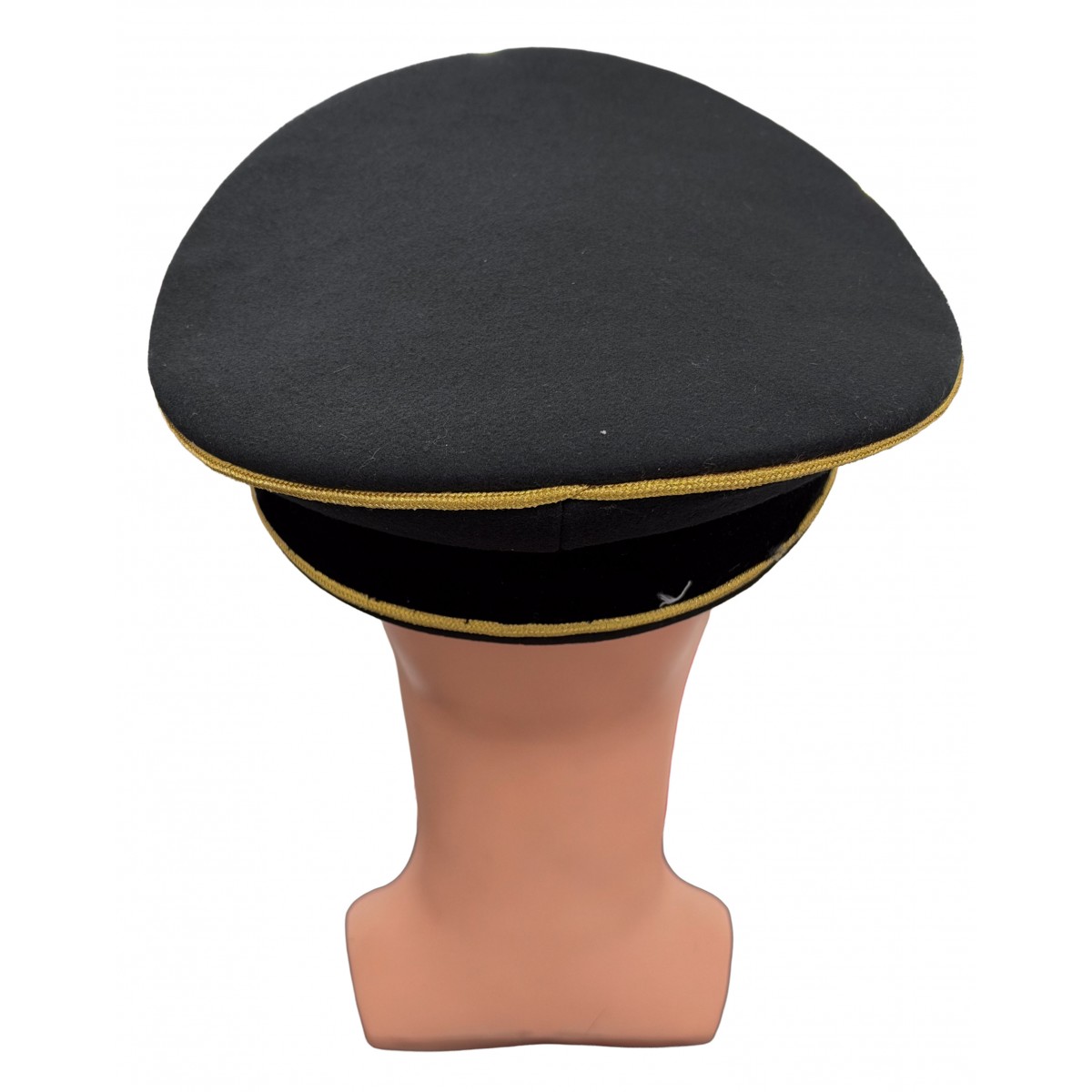
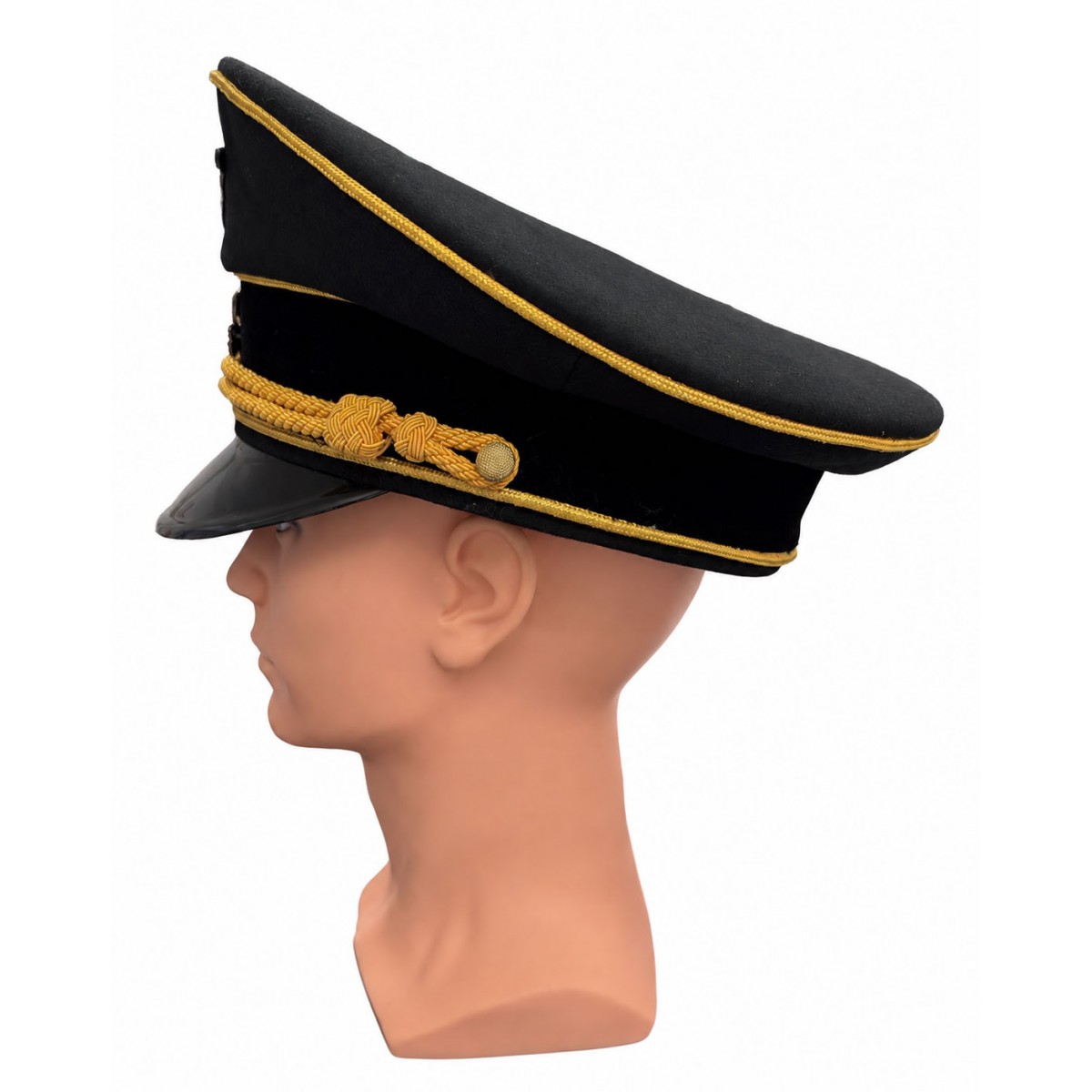
Black Allgemeine-SS visor cap for senior ranks, featuring a black velvet cap band, gold piping and gold cap cord, black peak and metal eagle and Totenkopf insignia. The gold configuration represents a special variation from the more typical silver trim associated with senior Allgemeine-SS ranks.
- Satisfied or refunded: we guarantee 100% secure protection on your purchases
- Free return: return your order free of charge within 30 days from receipt
- Secure payments: pay securely online with PayPal or credit cards

More info
The black Allgemeine-SS visor cap, or Schirmmütze, was one of the most distinctive elements of the organisation’s service uniform during the 1930s.
Its construction followed the rigid officer-style form that developed into the characteristic saddle shape, with a raised front, oval crown and gently curved peak. Higher-quality examples were produced from fine wool, gabardine or black tricot, while the central cap band could be made from black velvet.
Two principal metal insignia were positioned on the front: the Totenkopf on the central band and the SS national eagleabove it. Both insignia evolved during the 1930s, with the later eagle pattern introduced during the middle of the decade becoming characteristic of caps worn in subsequent years.
The piping was an important feature for identifying both rank and period. From 15 October 1934, personnel holding the rank of SS-Oberführer and above were prescribed metallic silver-coloured piping, which became the typical regulation configuration for senior Allgemeine-SS leaders and general officers.
Gold piping, however, represents a more unusual configuration. Gold was not the standard regulation colour for all Allgemeine-SS generals, whose caps were normally associated with silver trim. Special or privately purchased caps for particularly senior personalities are nevertheless known with gold piping, cords or other gold-coloured details.
The front cap cord was secured above the peak by two small metal side buttons. Standard officer and general officer examples generally used silver or aluminium-coloured cords, making a gold cord an immediately noticeable departure from the ordinary configuration.
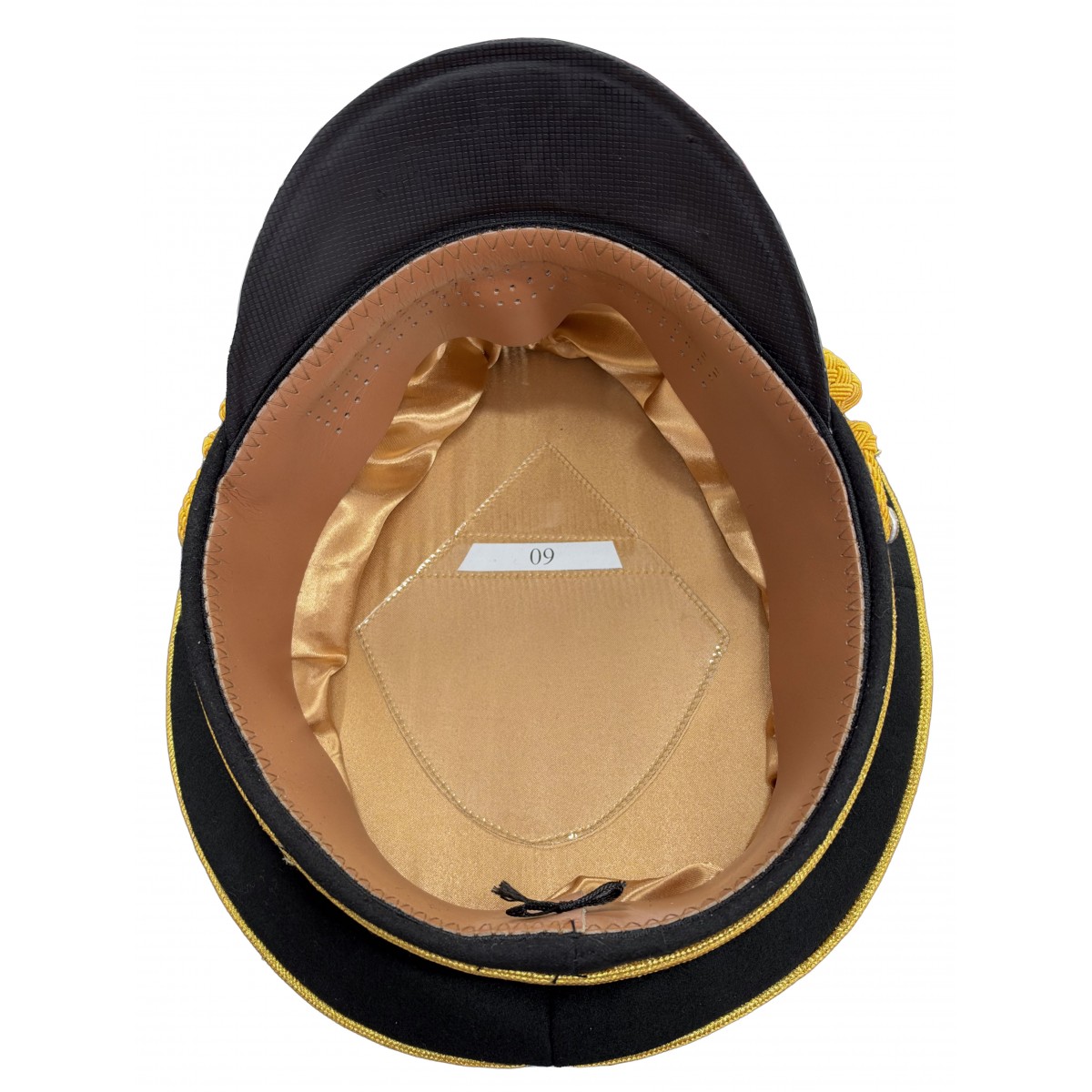
The rigid peak was commonly manufactured from vulcanised fibre and finished with a black lacquered surface. The colour and finish of the underside varied between manufacturers and production periods.
Typical interior construction included a leather sweatband, cloth or artificial-silk lining and, on higher-quality examples, a transparent celluloid diamond protecting the maker’s marking or owner identification.
One of the best-known manufacturers was the Berlin firm Robert Lubstein, widely recognised through the ERELtrademark. The company became one of Germany’s major producers of military and paramilitary headgear. EREL caps are often distinguished by high-quality materials, characteristic internal construction and identifiable manufacturer markings.
In addition to officially supplied caps, officers frequently purchased privately tailored examples. These could vary substantially in crown height, saddle shape, peak curvature, stiffness, cloth quality and finishing.
As grey uniforms became increasingly associated with militarised SS formations, field-grey visor caps appeared alongside them, while the traditional black visor cap remained closely associated with the Allgemeine-SS.
A lesser-known detail concerns the use of gold itself: gold piping was not automatically the standard identifier of an Allgemeine-SS general. Regulation senior-rank caps were primarily associated with silver trim, while gold could appear on special, privately commissioned or exceptional high-ranking configurations. The black-and-gold combination should therefore be distinguished from the normal silver-trimmed general officer visor cap.
30 other products in the same category:

Visor Caps and Hats
- Germany
- Uniforms
- Medals, Orders and Decorations
- Badges and Pins
- ID Tags
- Arm Shields
- Helmets
- Helmet Decals
- Visor Caps and Hats
- Cap and Helmet Badges
- Collar Tabs Badges
- Collar Tabs, Shoulder Boards and Epaulettes
- Arm Bands
- Division Cuff Titles
- Buckles And Belts
- Buttons For Uniforms
- Stamps
- Gorgets
- Rings
- SS Honour Ring in 925 Silver - Collector's Set
- Poletops
- Flags
- Daggers and Knives (Ornamental)
- Field Marshal Batons
- Field and Personal Equipment
- Service Watches
- Presentation Cases
- Documents and Award Letters
- Busts, Eagles, Lighters and Miscellaneous
- Croatian and Ustasha Militaria
- Denazified Articles
- Commemorative Necklaces
- Spare Parts, Small Parts and Accessories
- Italy
- Medals and Decorations
- Brevets And Badges
- Battle Shields and Tags
- Gorgets
- Visor Caps and Hats
- Cap and Helmet Badges
- Helmets Decals
- Friezes for Collar Tabs
- Collar Tabs, Shoulder Boards and Epaulettes
- Buckles
- Belts
- Buttons For Uniforms
- Rings
- Poletops
- Italian Resistance
- Keyrings
- Wallshields
- Daggers and Knives
- Flags
- Busts and Eagles
- Souvenirs
- Commemorative Necklaces
- Imperial Germany
- Soviet Union
- Other Countries