
No products
Product successfully added to your shopping cart
There are 0 items in your cart. There is 1 item in your cart.
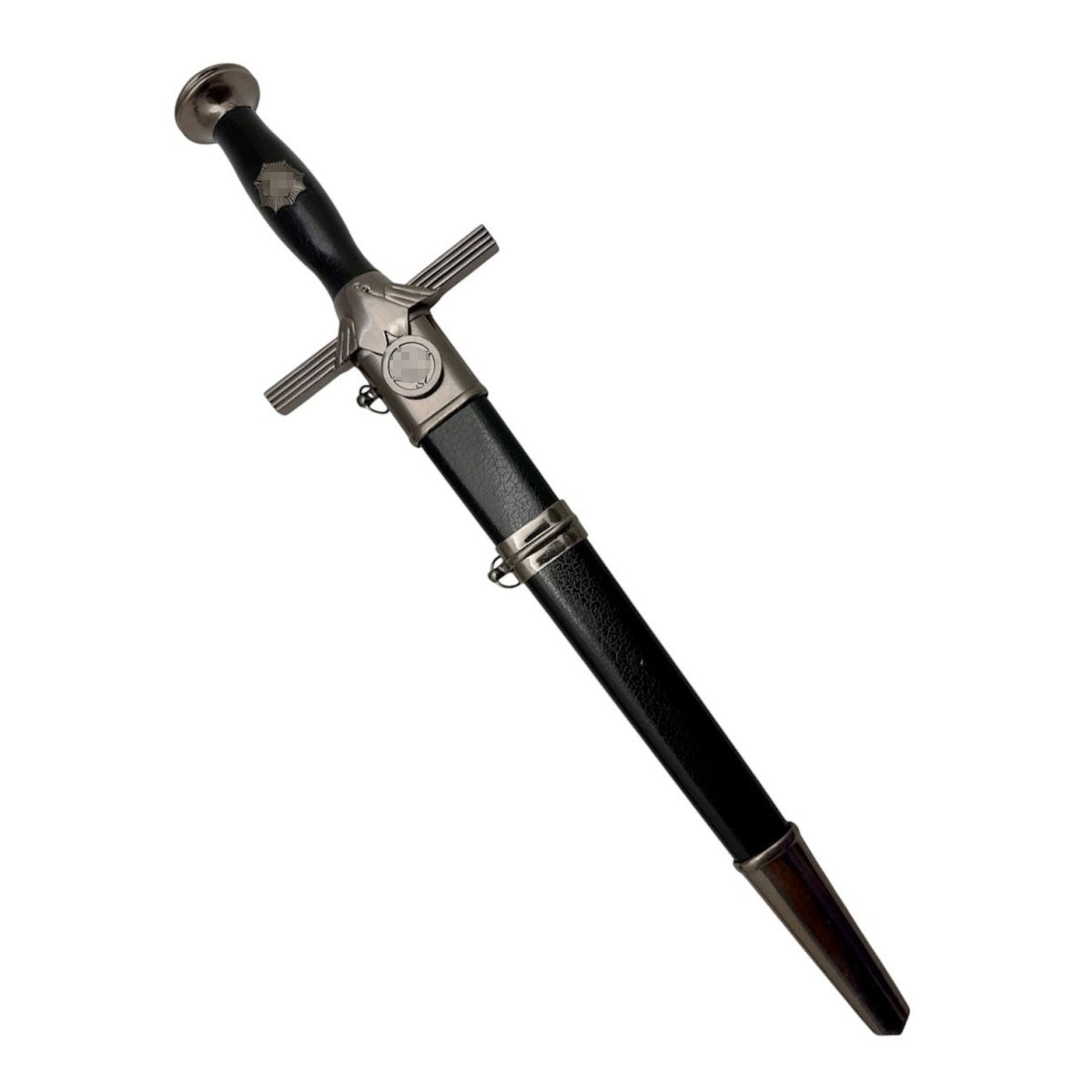
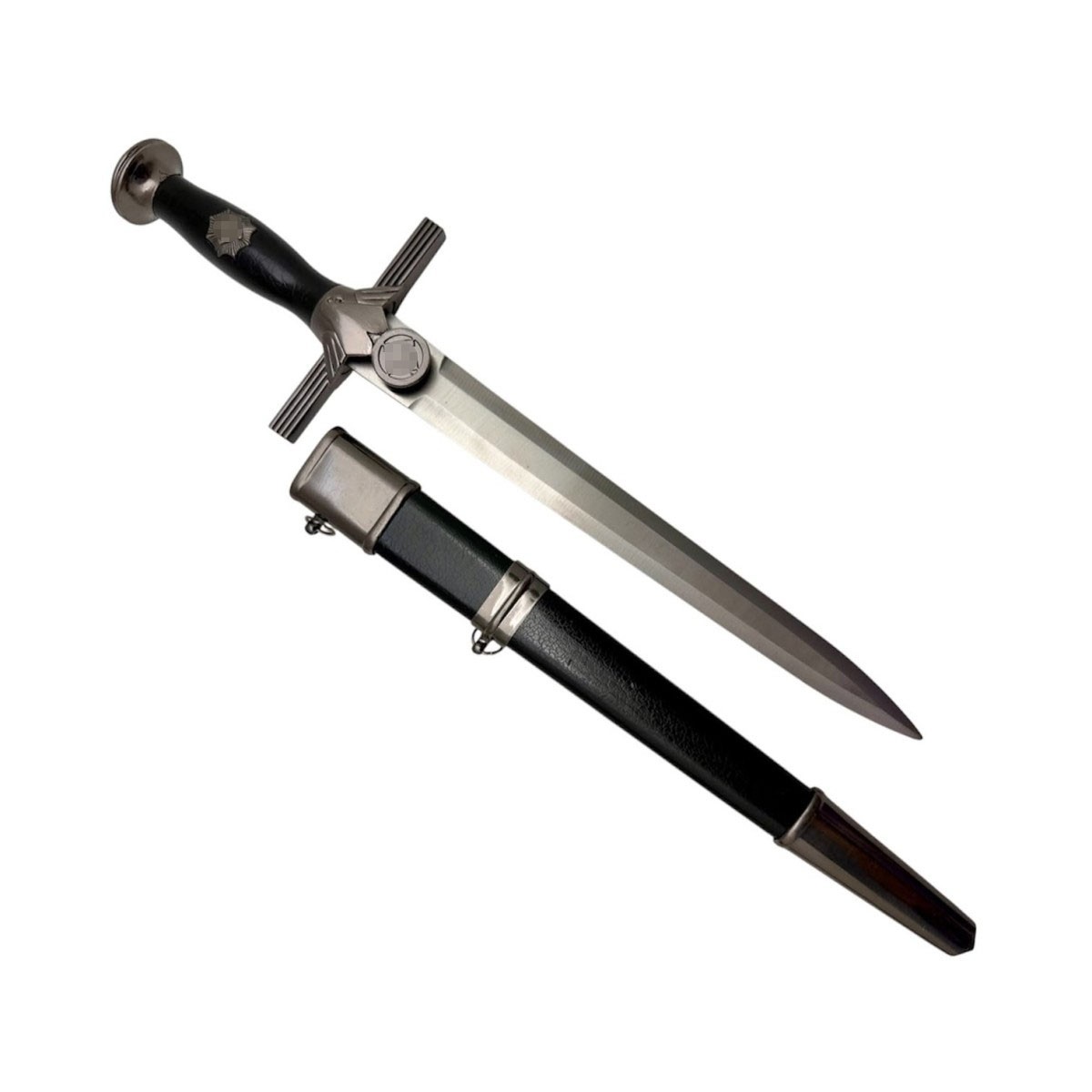
RLB Officer Dagger – 1st Model 1936
New
Reichsluftschutzbund (RLB) officer’s dagger, first model introduced in 1936. Distinguished by the early RLB grip emblem, silver-coloured fittings, dark leather covering and single suspension arrangement, preceding the revised 1938 pattern.
- Satisfied or refunded: we guarantee 100% secure protection on your purchases
- Free return: return your order free of charge within 30 days from receipt
- Secure payments: pay securely online with PayPal or credit cards

More info
The 1st Model RLB Officer or Leader Dagger was introduced in 1936 for leaders and senior officials of the Reichsluftschutzbund.
Founded in 1933, the Reichsluftschutzbund was responsible for preparing the civilian population for air-raid defence. Its activities included instruction in firefighting, first aid, gas protection, blackout procedures and other measures intended to reduce the effects of aerial attack.
As the organisation developed its own uniform system, distinctive edged weapons were introduced for different rank groups. The officer or leader version was considerably more elaborate than the dagger worn by subordinate personnel.
The grip was constructed around a solid core and covered in very dark leather, generally appearing black or blue-black. At its centre was the characteristic first-pattern RLB emblem.
This insignia is one of the principal identifying features of the 1936 pattern. It consists of an eight-pointed radiating star containing the letters RLB, with a small swastika positioned beneath them. When the insignia was redesigned in 1938, the letters were removed and replaced by a much larger central swastika.
The crossguard takes the form of a highly stylised eagle, with its extended wings forming the guard itself. The eagle holds a wreath containing a swastika in its talons. Its strongly geometric appearance is one of the most distinctive elements of the entire design.
The officer version also features a comparatively flat, oval-shaped pommel, differing from the simpler configuration used on subordinate-pattern RLB daggers.
The metal fittings were normally silver plated, contrasting with the dark leather covering of the grip and scabbard. The scabbard incorporated matching dark panels together with silver-coloured throat and lower fittings.
One of the most useful features for distinguishing the 1st Model officer dagger from the later type is the suspension system. The 1936 scabbard does not have a central metal suspension band and uses a simpler single-point hanger. The 2nd Model introduced in 1938 added a central scabbard fitting and second suspension ring for a more elaborate double hanger.
The blade is straight, double edged and centrally ridged, with no regulation motto or decorative inscription. Its narrow and symmetrical profile contributes to the particularly restrained appearance of the dagger.
Known period examples show construction differences associated with individual manufacturers. Officer daggers are documented from major Solingen firms including Paul Weyersberg, Alcoso and Ernst Witte. Differences can occur in the contours of the fittings, eagle details, quality and tone of the silver plating, leather texture and maker markings.
Paul Weyersberg belonged to one of Solingen’s long-established edged-weapon manufacturing families, while Alcoso – Alexander Coppel Solingen was another major producer of swords, daggers and uniform edged weapons.
The introduction of the 1938 pattern did not necessarily result in the complete withdrawal of the earlier dagger. A significant number of first-pattern pieces were converted or updated, particularly by replacing the early grip insignia and, in some cases, altering components associated with the suspension system.
A lesser-known feature of the 1st Model is therefore its survival rate in completely original configuration.Because many 1936 daggers were later brought into line with the revised pattern, identification should not rely solely on the grip badge. The absence of the central scabbard band, the single suspension arrangement and evidence of later conversion are equally important when distinguishing an untouched first-pattern dagger.
Data sheet
| Lenght | 46 cm |
| Material | Steel |
| Disclaimer | Ornamental display item with no sharp edge, offensive point or cutting/piercing function. Not a weapon or object suitable for offence; sold in compliance with D.Lgs. 54/2011 and Directive 2009/48/EC, where applicable. |
30 other products in the same category:

Customers who bought this product also bought:
Daggers and Knives (Ornamental)
- Germany
- Uniforms
- Medals, Orders and Decorations
- Badges and Pins
- ID Tags
- Arm Shields
- Helmets
- Helmet Decals
- Visor Caps and Hats
- Cap and Helmet Badges
- Collar Tabs Badges
- Collar Tabs, Shoulder Boards and Epaulettes
- Arm Bands
- Division Cuff Titles
- Buckles And Belts
- Buttons For Uniforms
- Stamps
- Gorgets
- Rings
- SS Honour Ring in 925 Silver - Collector's Set
- Poletops
- Flags
- Daggers and Knives (Ornamental)
- Field Marshal Batons
- Field and Personal Equipment
- Service Watches
- Presentation Cases
- Documents and Award Letters
- Busts, Eagles, Lighters and Miscellaneous
- Croatian and Ustasha Militaria
- Denazified Articles
- Commemorative Necklaces
- Spare Parts, Small Parts and Accessories
- Italy
- Medals and Decorations
- Brevets And Badges
- Battle Shields and Tags
- Gorgets
- Visor Caps and Hats
- Cap and Helmet Badges
- Helmets Decals
- Friezes for Collar Tabs
- Collar Tabs, Shoulder Boards and Epaulettes
- Buckles
- Belts
- Buttons For Uniforms
- Rings
- Poletops
- Italian Resistance
- Keyrings
- Wallshields
- Daggers and Knives
- Flags
- Busts and Eagles
- Souvenirs
- Commemorative Necklaces
- Imperial Germany
- Soviet Union
- Other Countries