
No products
Product successfully added to your shopping cart
There are 0 items in your cart. There is 1 item in your cart.
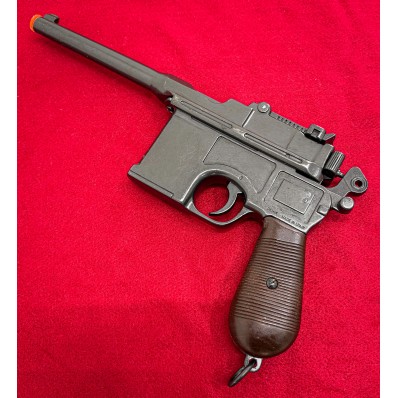
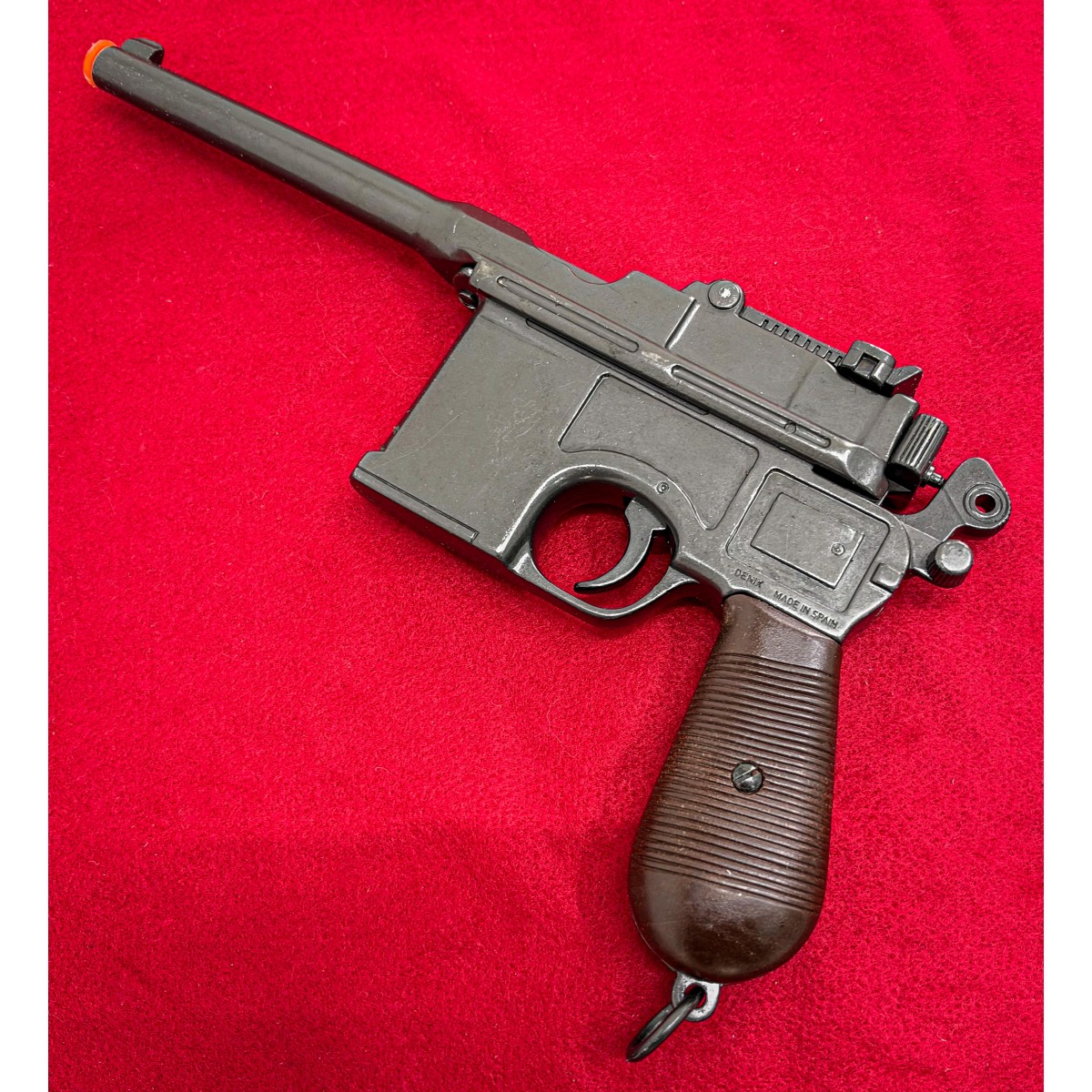
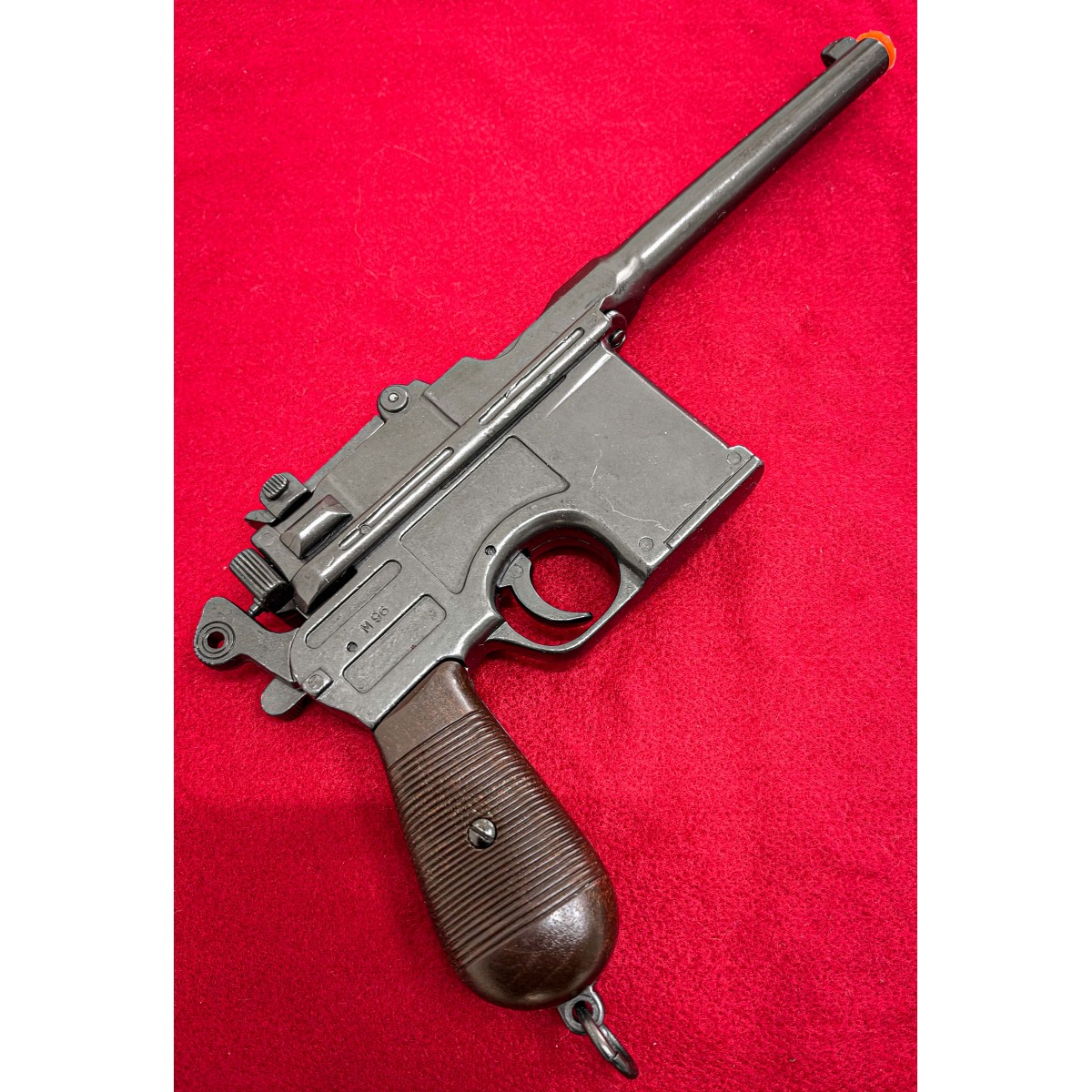
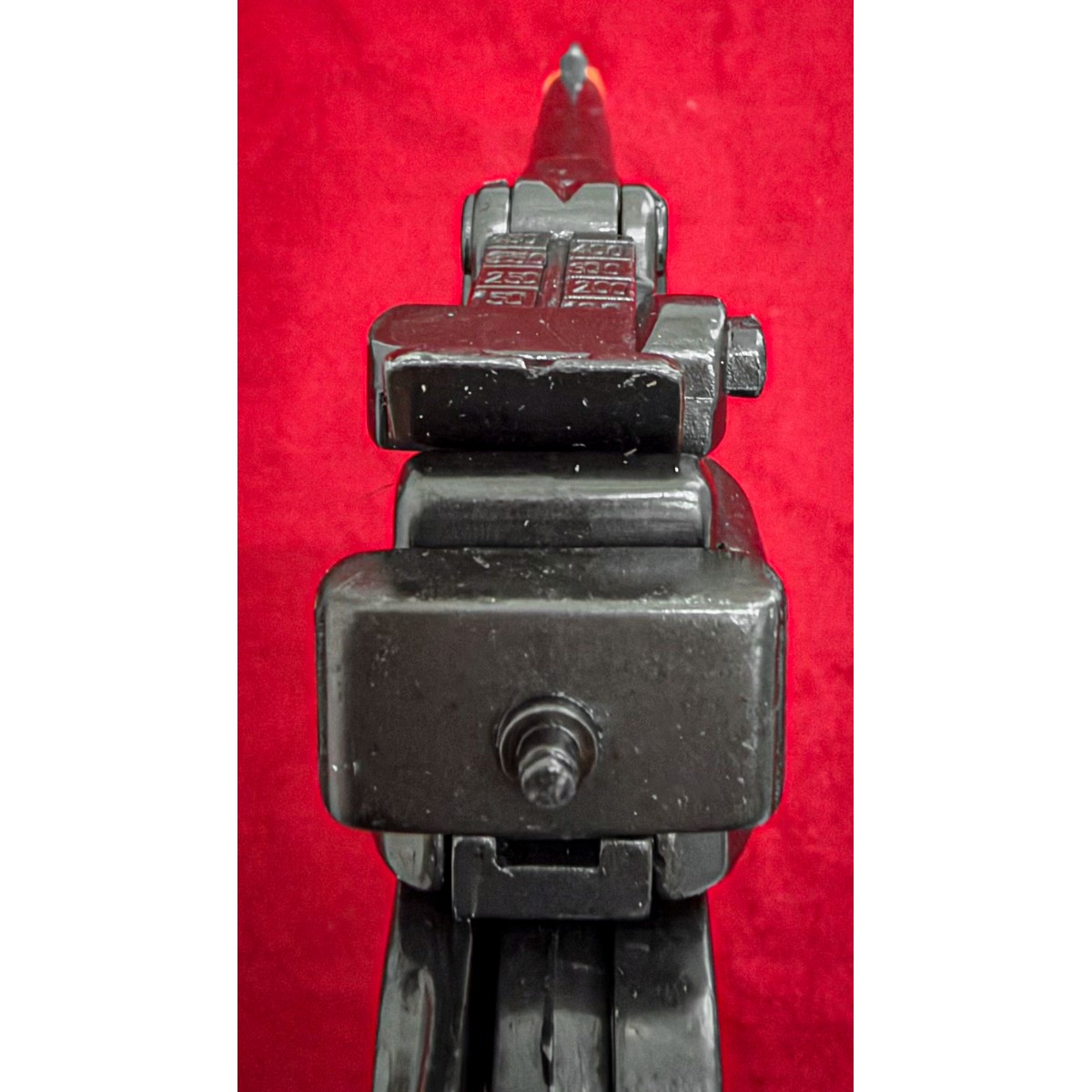
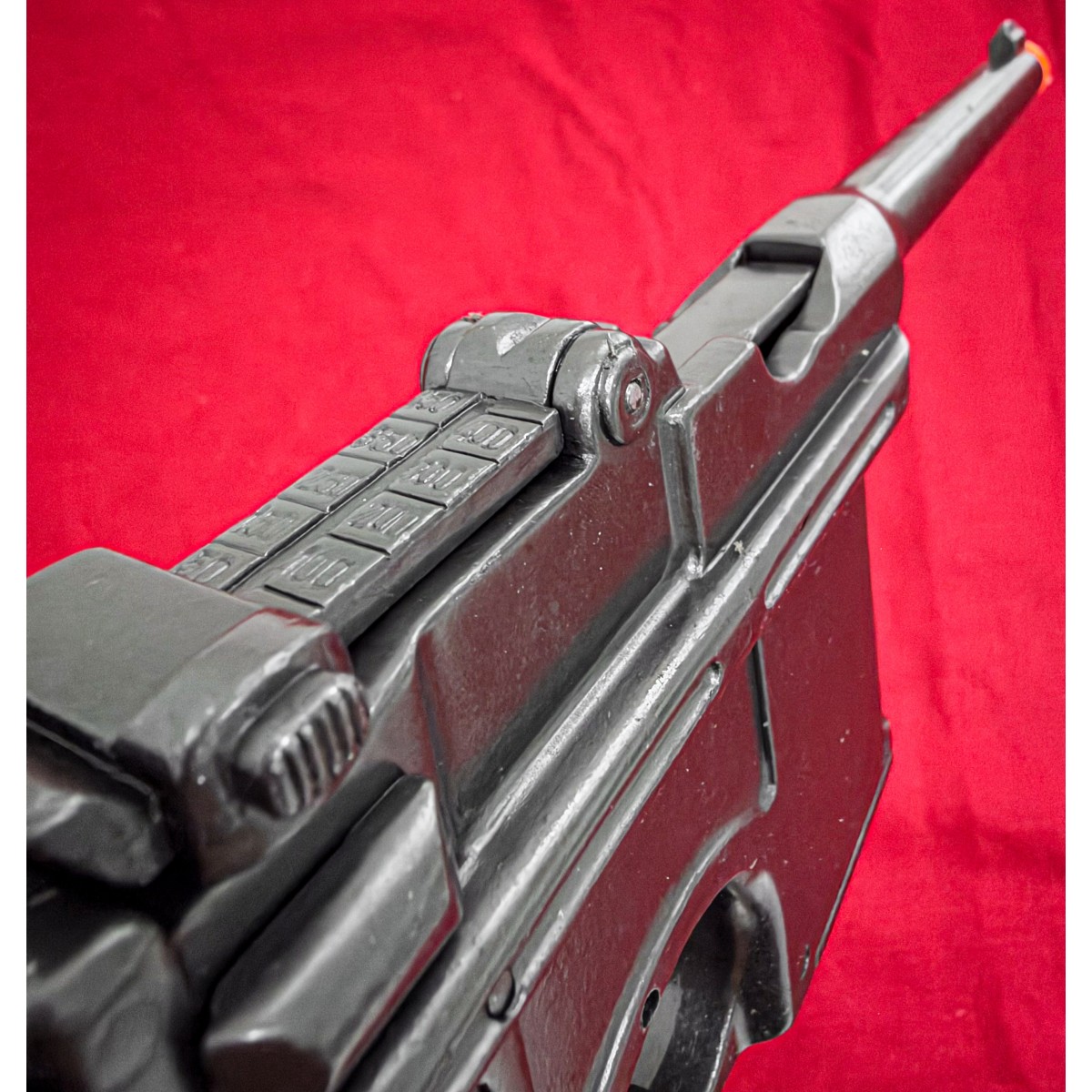
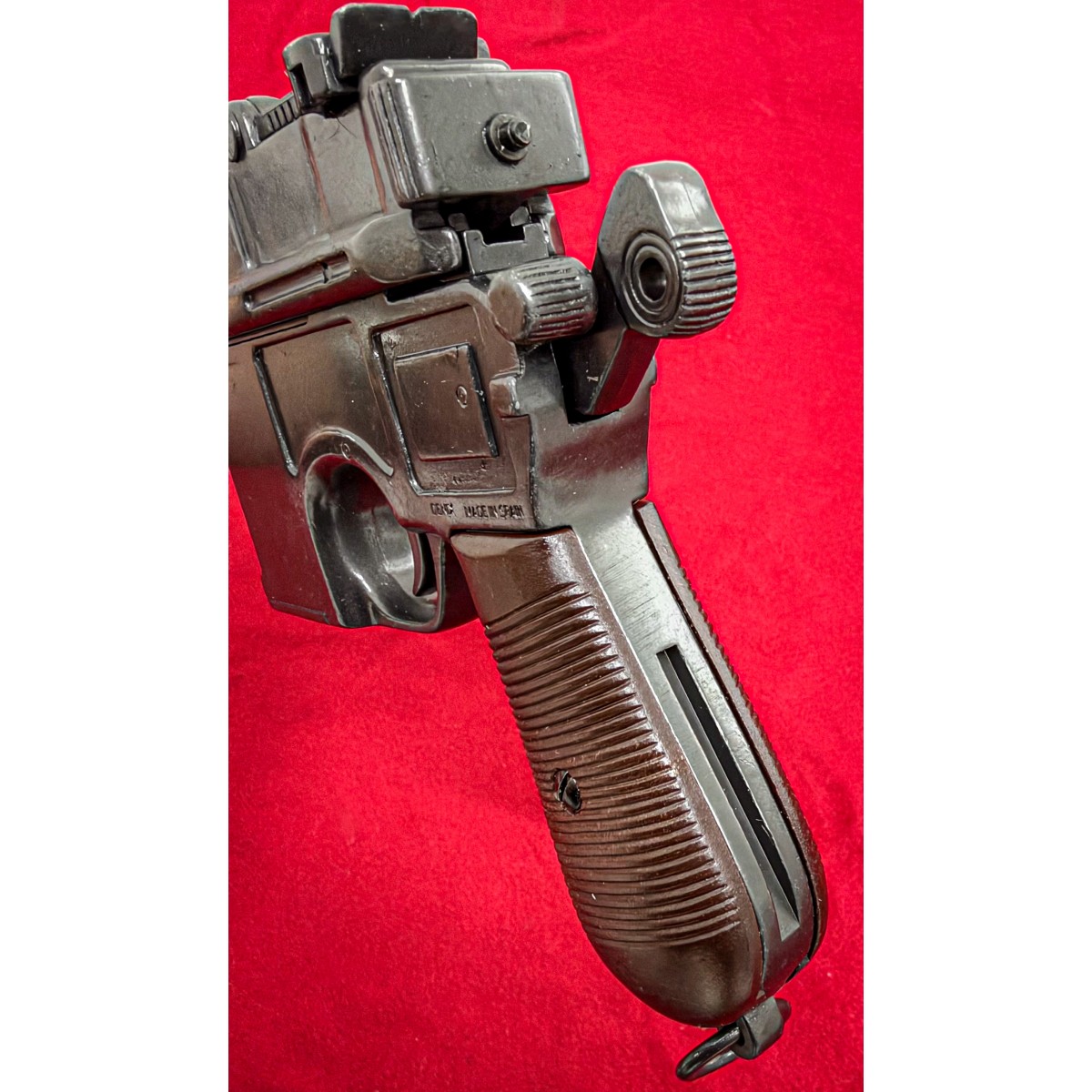
Mauser C96 Pistol with Genuine Wood Grips – Inert Replica
New
Inert replica of the Mauser C96 made from metal with genuine wood grips and simulated loading and trigger action. Measuring 32 cm and weighing 1,120 g, it reproduces the famous German semi-automatic pistol introduced in 1896, widely known as the “Broomhandle” because of its distinctive grip.
Warning: Last items in stock!
- Satisfied or refunded: we guarantee 100% secure protection on your purchases
- Free return: return your order free of charge within 30 days from receipt
- Secure payments: pay securely online with PayPal or credit cards

More info
The Mauser C96 is one of the most distinctive and recognizable semi-automatic pistols of the first half of the 20th century. Patented in 1895 and produced from 1896 at the Mauser works in Oberndorf am Neckar, it was among the early self-loading pistols to achieve significant international success.
Much of the design was developed by the brothers Fidel, Friedrich and Josef Feederle, technicians employed at Mauser, while Paul Mauser subsequently oversaw its patenting and production. The C96 featured a highly unconventional layout for its time, markedly different from the semi-automatic pistols that would become standard during the following decades.
One of its most recognizable features was the fixed magazine positioned ahead of the trigger guard. On the classic versions it was loaded from above using a stripper clip. The narrow grip with its characteristic grooved wooden panels gave the pistol its famous English nickname, the “Broomhandle” Mauser.
The cartridge most closely associated with the C96 was the 7.63 × 25 mm Mauser, which achieved remarkably high velocity by contemporary handgun standards. Numerous variants were nevertheless manufactured with different magazine capacities and chamberings.
The C96 saw one of its first significant military uses during the Second Boer War, where it became particularly popular among British officers. It subsequently appeared in numerous conflicts and achieved widespread military and commercial distribution throughout Europe and Asia.
During World War I, Germany's requirement for additional service pistols led to the use of a C96 variant chambered for 9 × 19 mm Parabellum. Approximately 150,000 pistols were marked with a large number “9” cut into the wooden grips and filled with red paint. This marking warned users not to load the pistols with 7.63 mm ammunition. These examples are now widely known as the “Red 9” or “Rote Neun”.
The C96 also became particularly important in Russia and China. During the 1920s, shorter versions associated with the Soviet market acquired the Western nickname “Bolo Mauser”, generally linked to the word “Bolshevik”. In China, the pistol became so popular that numerous local variants and copies were produced.
Despite being a design originating in the late 19th century, C96 pistols remained in service in various parts of the world during World War II, more than four decades after their introduction.
This inert replica is constructed primarily from metal and fitted with genuine wood grip panels featuring the characteristic grooved pattern. Its movable mechanism simulates loading and trigger operation without being capable of firing projectiles.
The replica measures 32 cm in overall length and weighs approximately 1,120 g, reproducing the substantial dimensions and unmistakable appearance of the historical pistol.
Collector's note: the distinctive C96 silhouette later gained an unexpected place in cinema history. A modified C96 served as the basis for Han Solo's famous DL-44 blaster in the original Star Wars trilogy, making the “Broomhandle” profile recognizable far beyond the field of historical arms collecting.
Technical specifications
Type: inert collector's replica
Model reproduced: Mauser C96
Original model introduced: 1896
Materials: metal and wood
Grip panels: genuine wood
Overall length: 32 cm
Weight: 1,120 g
Mechanism: simulated loading and trigger action
Operation: incapable of firing projectiles
Historical period: World War I and World War II
EAN: 8435089790245
Data sheet
| Disclaimer | Inert collector replica – 18+. Non-convertible and incapable of firing; permanently obstructed barrel, unable to chamber ammunition, with non-removable red muzzle plug. Compliant with Italian Law 110/1975; not a firearm or toy under EU law. |
| EAN | 8435089790245 |
11 other products in the same category:

Firearms (Inert Replicas)
- Germany
- Uniforms
- Medals, Orders and Decorations
- Badges and Pins
- ID Tags
- Arm Shields
- Helmets
- Helmet Decals
- Visor Caps and Hats
- Cap and Helmet Badges
- Collar Tabs Badges
- Collar Tabs, Shoulder Boards and Epaulettes
- Arm Bands
- Division Cuff Titles
- Buckles And Belts
- Buttons For Uniforms
- Stamps
- Gorgets
- Rings
- SS Honour Ring in 925 Silver - Collector's Set
- Poletops
- Flags
- Firearms (Inert Replicas)
- Daggers and Knives (Ornamental)
- Field Marshal Batons
- Field and Personal Equipment
- Service Watches
- Presentation Cases
- Documents and Award Letters
- Busts, Eagles, Lighters and Miscellaneous
- Croatian and Ustasha Militaria
- Denazified Articles
- Commemorative Necklaces
- Spare Parts, Small Parts and Accessories
- Italy
- Medals and Decorations
- Brevets And Badges
- Battle Shields and Tags
- Gorgets
- Visor Caps and Hats
- Cap and Helmet Badges
- Helmets Decals
- Friezes for Collar Tabs
- Collar Tabs, Shoulder Boards and Epaulettes
- Buckles
- Belts
- Buttons For Uniforms
- Rings
- Poletops
- Italian Resistance
- Keyrings
- Wallshields
- Daggers and Knives
- Flags
- Busts and Eagles
- Souvenirs
- Commemorative Necklaces
- Imperial Germany
- Soviet Union
- Other Countries