
No products
Product successfully added to your shopping cart
There are 0 items in your cart. There is 1 item in your cart.
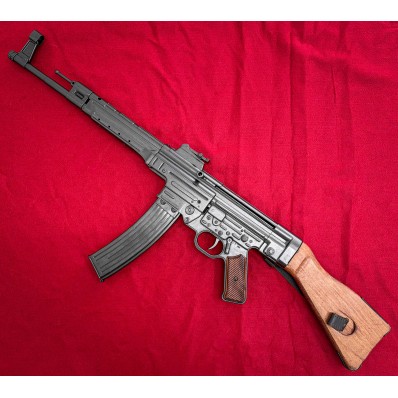
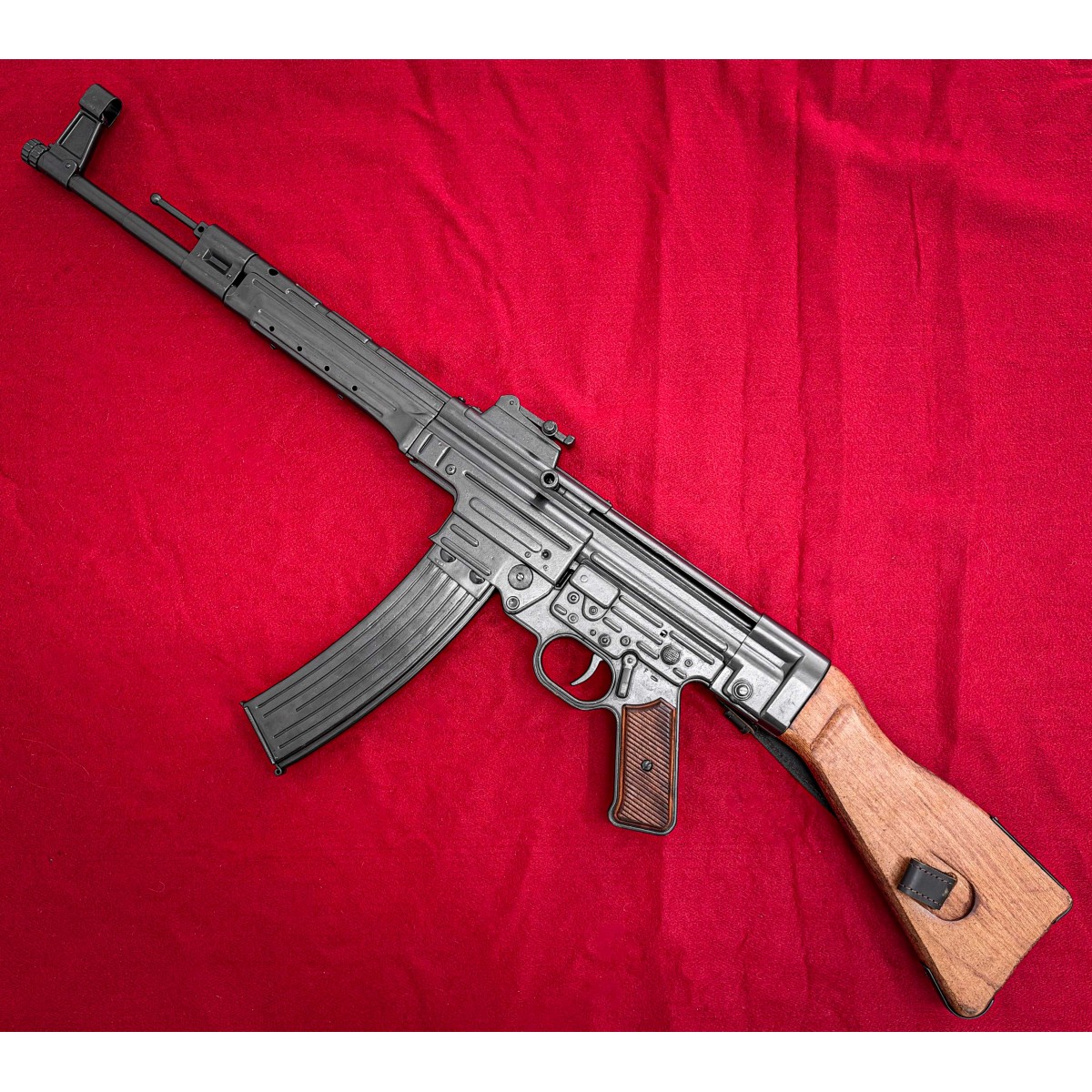
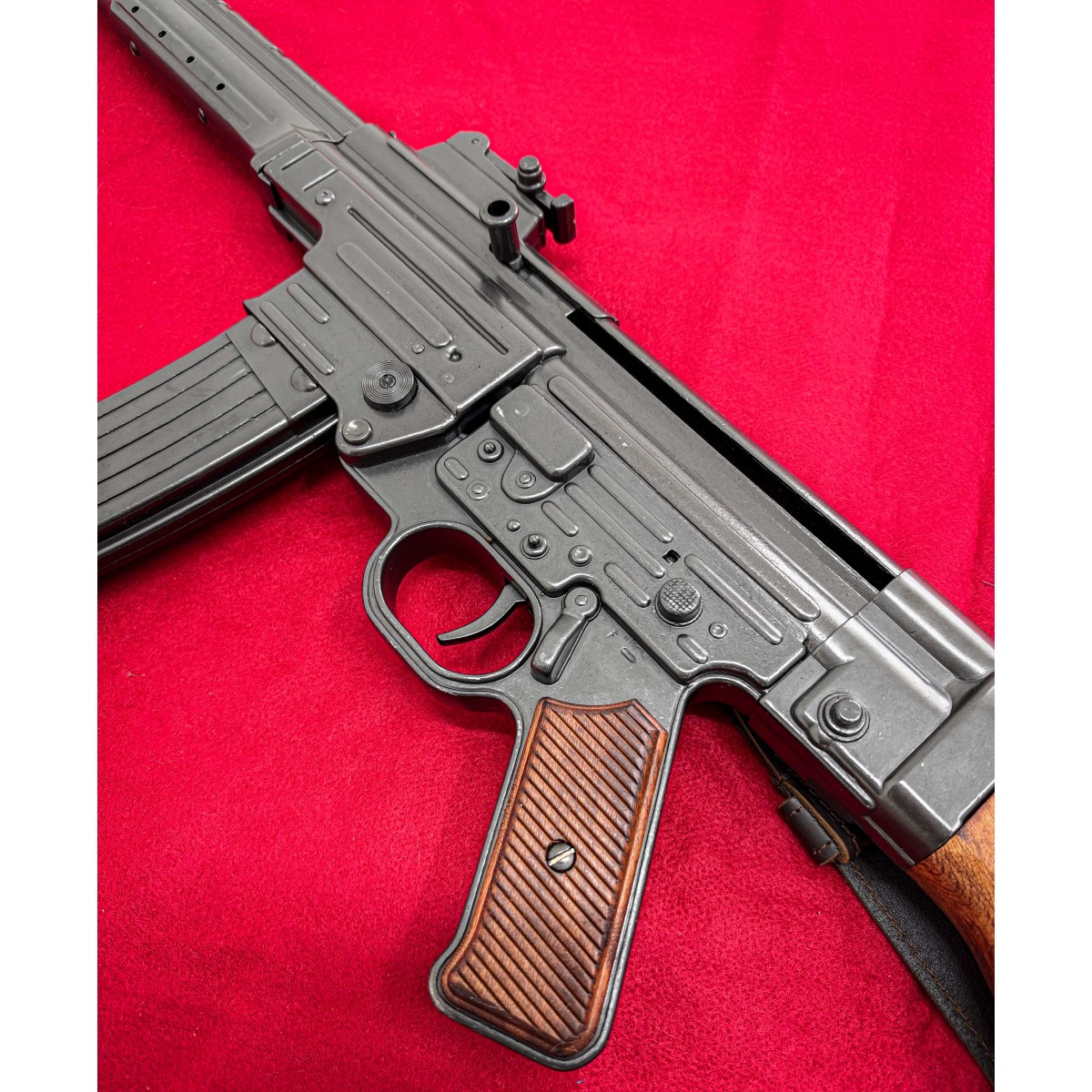
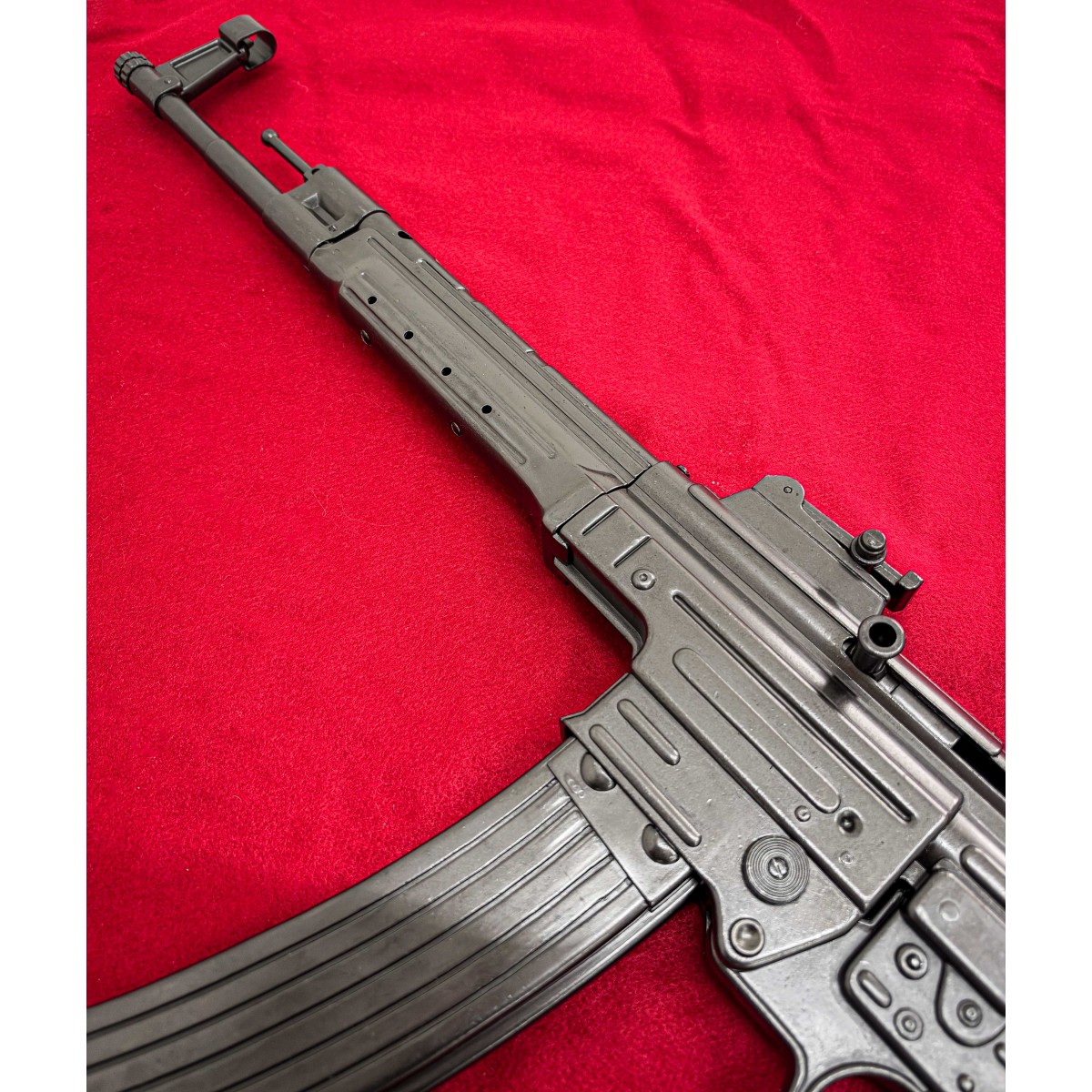
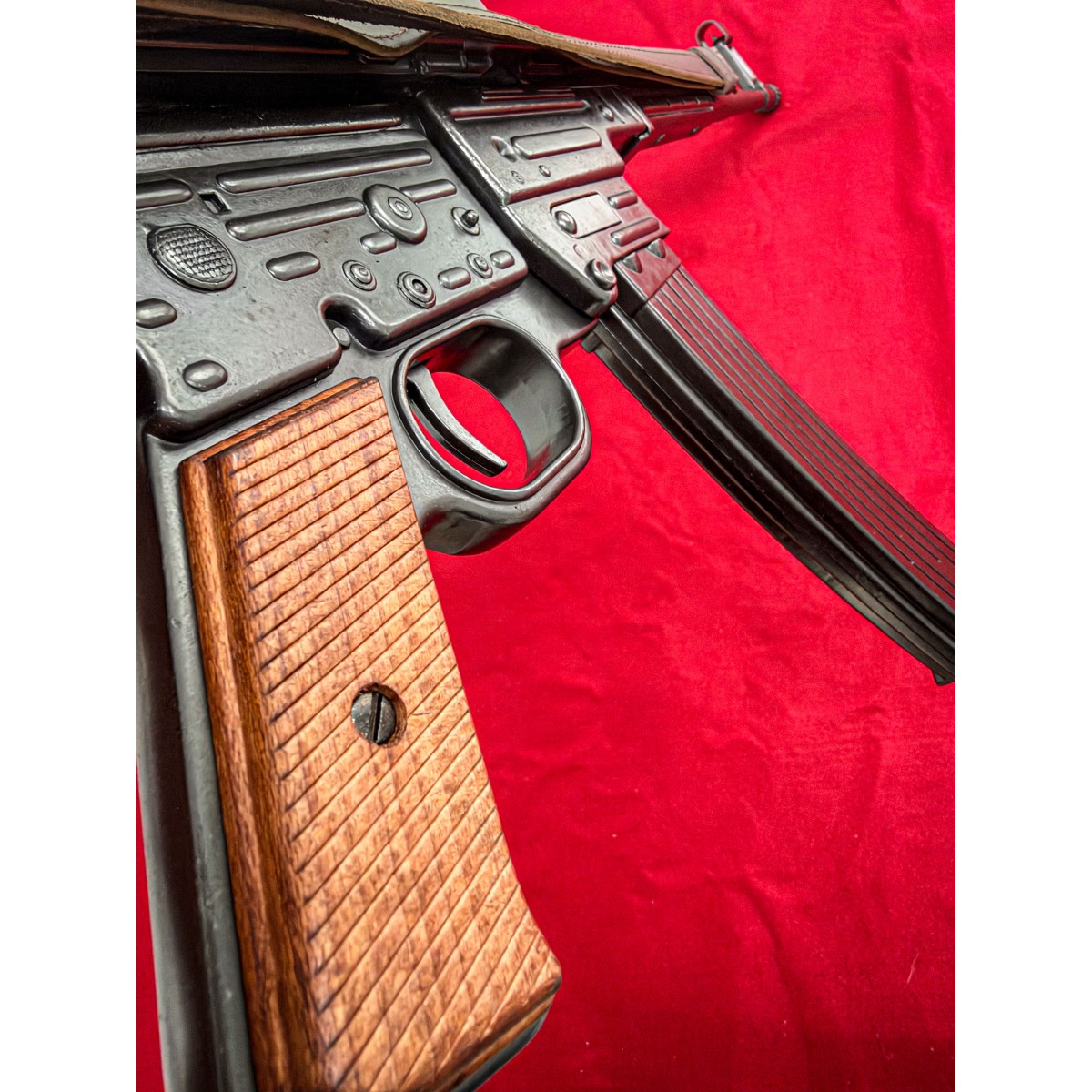
Sturmgewehr 44 Assault Rifle with Leather Sling – Inert Replica
New
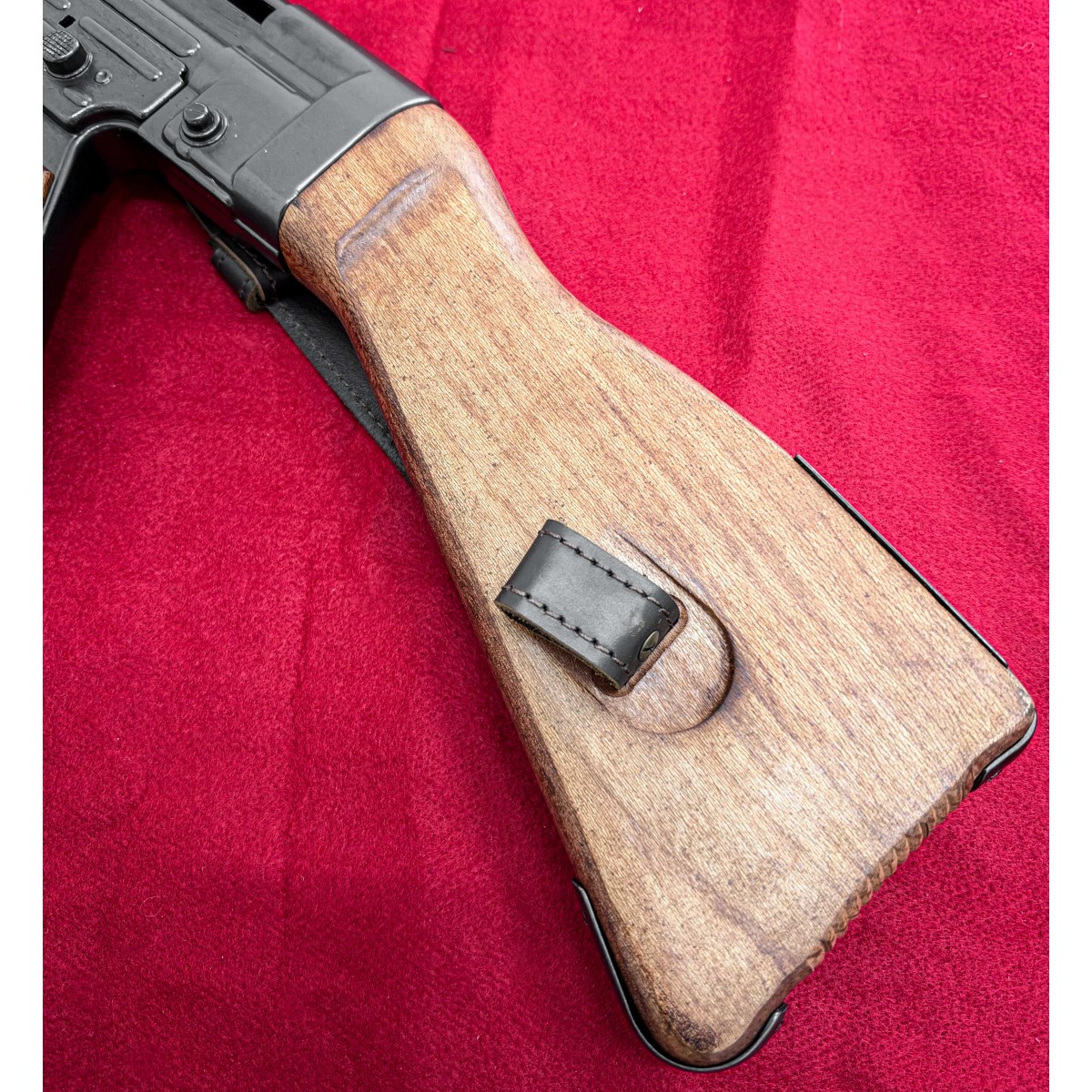
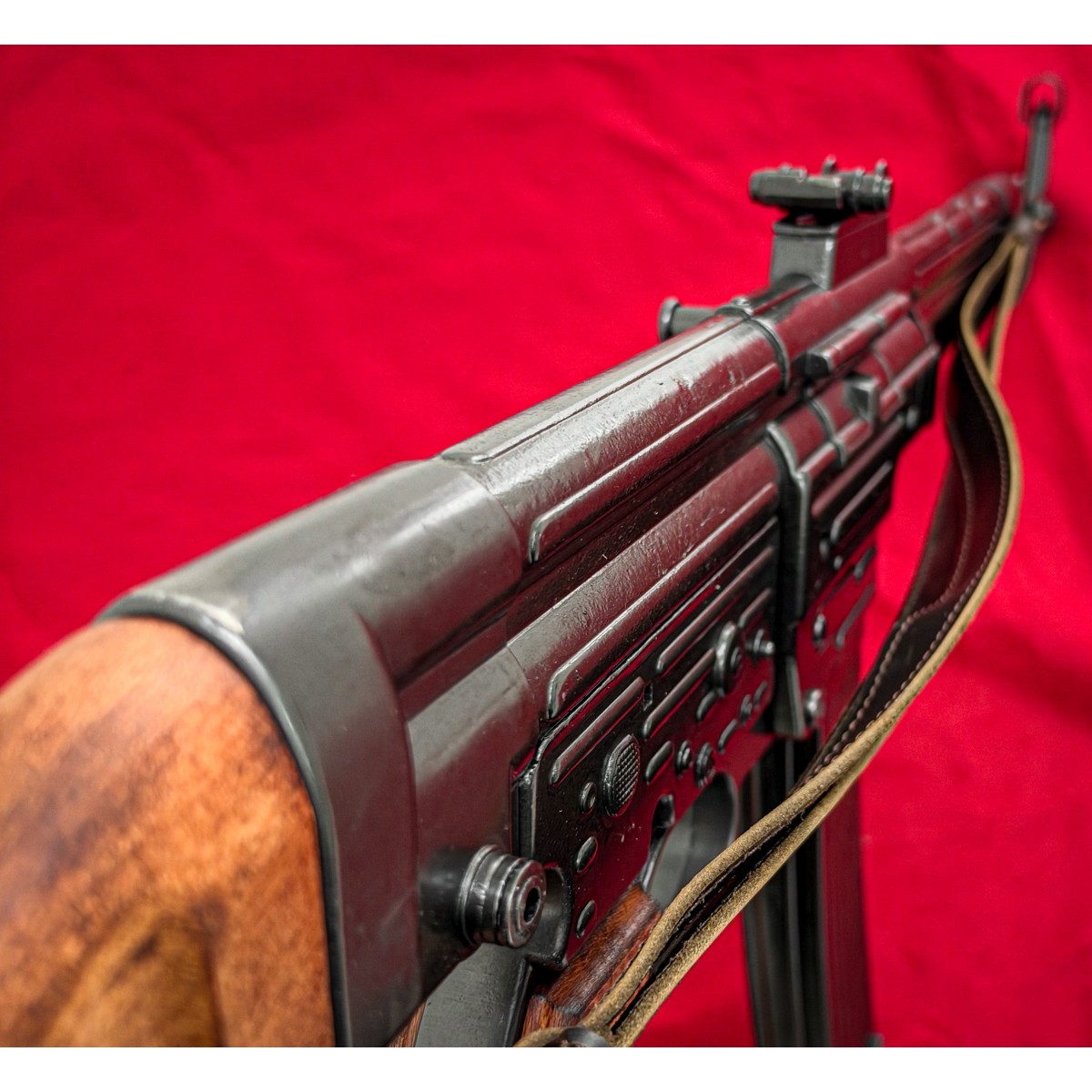
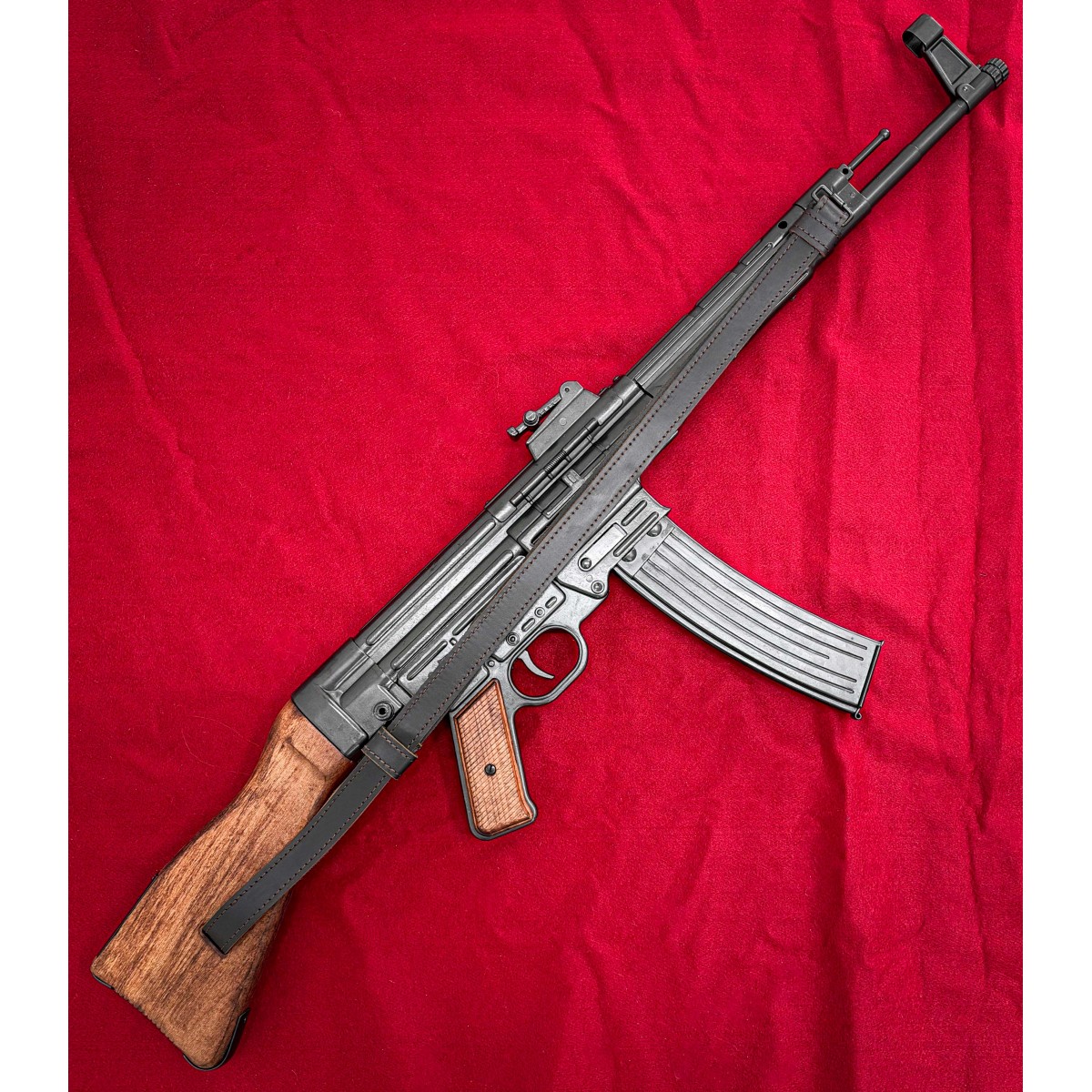
Inert replica of the Sturmgewehr 44 with metal construction, wooden stock and included leather sling. Features a removable magazine and simulated loading and trigger action. Measuring 93 cm and weighing 4,824 g, it reproduces one of the most important precursors of the modern assault rifle.
Warning: Last items in stock!
- Satisfied or refunded: we guarantee 100% secure protection on your purchases
- Free return: return your order free of charge within 30 days from receipt
- Secure payments: pay securely online with PayPal or credit cards

More info
The Sturmgewehr 44, generally abbreviated StG 44, represented one of the most important developments in infantry small arms during World War II and is widely regarded as the first modern assault rifle to be manufactured and deployed on a substantial scale.
Its development was closely linked to the 7.92 × 33 mm Kurz intermediate cartridge, designed to provide greater power and range than a pistol cartridge while producing less recoil and weight than the full-power rifle ammunition then commonly used. The result allowed effective semi-automatic fire to be combined with controllable automatic fire.
The German development programme produced the MKb 42 Maschinenkarabiner prototypes in 1942, with competing designs developed principally by C.G. Haenel, where Hugo Schmeisser worked, and Walther. Experience gained during trials eventually resulted in an improved weapon introduced in 1943 under the designation MP43.
The designation subsequently became MP44, before being changed again in late 1944 to Sturmgewehr 44. The German term Sturmgewehr, literally “assault rifle”, subsequently helped establish the name used for an entire class of infantry weapons combining an intermediate cartridge, detachable magazine and selectable firing modes.
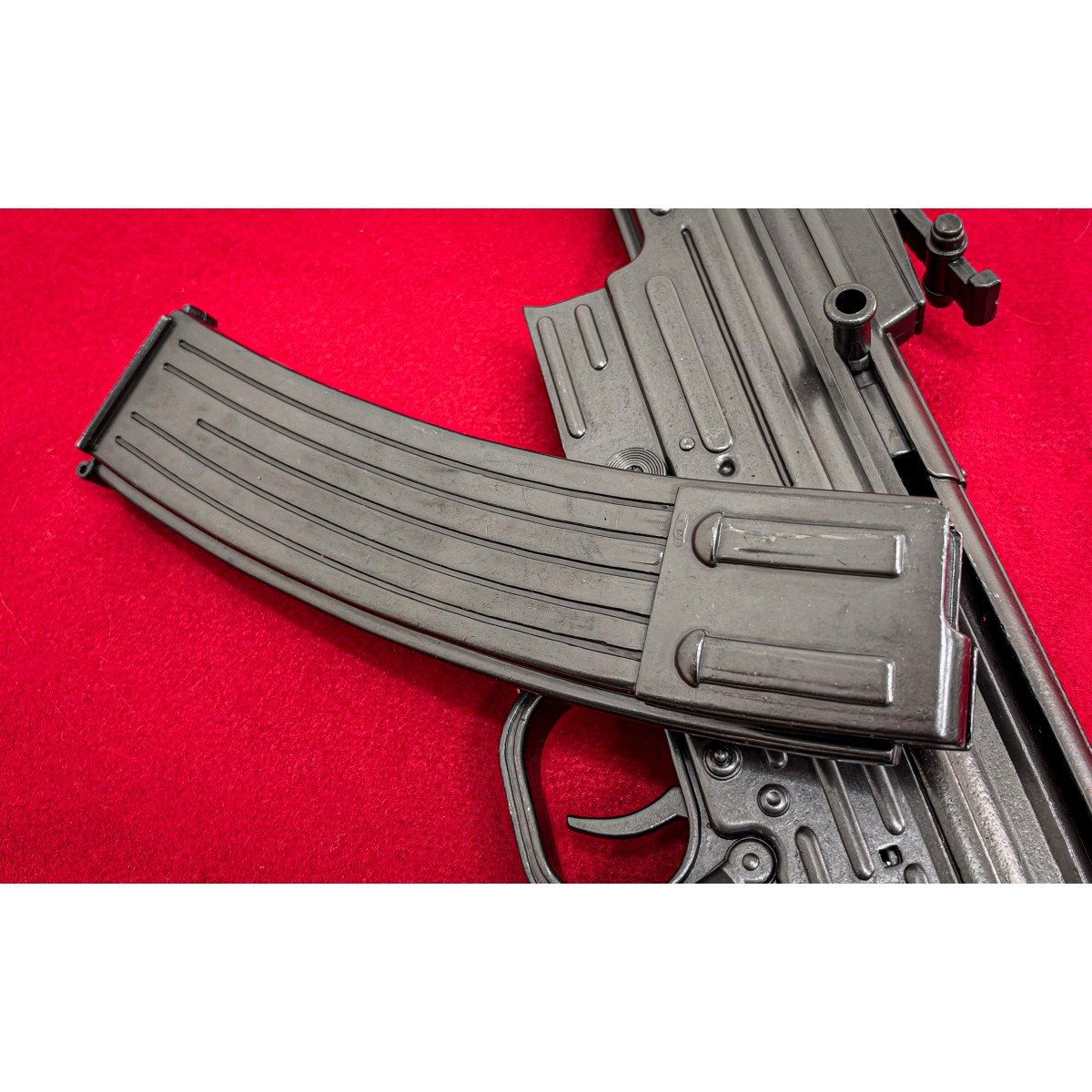
The historical weapon was gas-operated, fired from a closed bolt and offered both semi-automatic and automatic fire. Ammunition was supplied through its distinctive curved detachable 30-round magazine, while its cyclic rate of fire was approximately 500–600 rounds per minute.
The StG 44 also made extensive use of stamped sheet-steel components, reducing the amount of machining required compared with many conventional military rifles. Its buttstock, however, remained constructed from wood.
The weapon entered service during the final phase of World War II, with increasing numbers reaching German troops from 1943–44 onwards. Counting weapons produced under the MP43, MP44 and StG 44 designations, more than 400,000 examples were manufactured before the end of the war.
Its basic concept proved highly influential: the weapon offered considerably greater range and power than a submachine gun without requiring the full-power ammunition of a conventional infantry rifle. This combination would become a defining feature of post-war military rifle development.
This inert replica reproduces the characteristic StG 44 configuration with a predominantly metal construction, wooden stock and leather sling. Its distinctive curved magazine can be removed, while the movable mechanism simulates loading and trigger operation without being capable of firing projectiles.
Measuring 93 cm in overall length and weighing approximately 4,824 g, the replica has the substantial dimensions and weight that characterize the historical weapon.
Collector's note: several highly unusual accessories were developed for the StG 44 during the war. These included the Zielgerät 1229 “Vampir”, an early military infrared night-sighting system, and the Krummlauf, a curved-barrel attachment with a dedicated sighting system designed to permit firing without directly exposing the user.
Technical specifications
Type: inert collector's replica
Model reproduced: Sturmgewehr 44 / StG 44
Historical period: World War II
Materials: metal, wood and leather
Stock: wood
Sling: leather, included
Overall length: 93 cm
Weight: 4,824 g
Magazine: removable
Mechanism: simulated loading and trigger action
Operation: inert replica, incapable of firing projectiles
EAN: 8435089791259
Data sheet
| Disclaimer | Inert collector replica – 18+. Non-convertible and incapable of firing; permanently obstructed barrel, unable to chamber ammunition, with non-removable red muzzle plug. Compliant with Italian Law 110/1975; not a firearm or toy under EU law. |
| EAN | 8435089791259 |
11 other products in the same category:

Firearms (Inert Replicas)
- Germany
- Uniforms
- Medals, Orders and Decorations
- Badges and Pins
- ID Tags
- Arm Shields
- Helmets
- Helmet Decals
- Visor Caps and Hats
- Cap and Helmet Badges
- Collar Tabs Badges
- Collar Tabs, Shoulder Boards and Epaulettes
- Arm Bands
- Division Cuff Titles
- Buckles And Belts
- Buttons For Uniforms
- Stamps
- Gorgets
- Rings
- SS Honour Ring in 925 Silver - Collector's Set
- Poletops
- Flags
- Firearms (Inert Replicas)
- Daggers and Knives (Ornamental)
- Field Marshal Batons
- Field and Personal Equipment
- Service Watches
- Presentation Cases
- Documents and Award Letters
- Busts, Eagles, Lighters and Miscellaneous
- Croatian and Ustasha Militaria
- Denazified Articles
- Commemorative Necklaces
- Spare Parts, Small Parts and Accessories
- Italy
- Medals and Decorations
- Brevets And Badges
- Battle Shields and Tags
- Gorgets
- Visor Caps and Hats
- Cap and Helmet Badges
- Helmets Decals
- Friezes for Collar Tabs
- Collar Tabs, Shoulder Boards and Epaulettes
- Buckles
- Belts
- Buttons For Uniforms
- Rings
- Poletops
- Italian Resistance
- Keyrings
- Wallshields
- Daggers and Knives
- Flags
- Busts and Eagles
- Souvenirs
- Commemorative Necklaces
- Imperial Germany
- Soviet Union
- Other Countries