
No products
Product successfully added to your shopping cart
There are 0 items in your cart. There is 1 item in your cart.
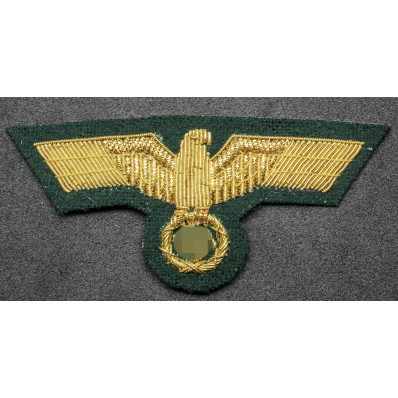
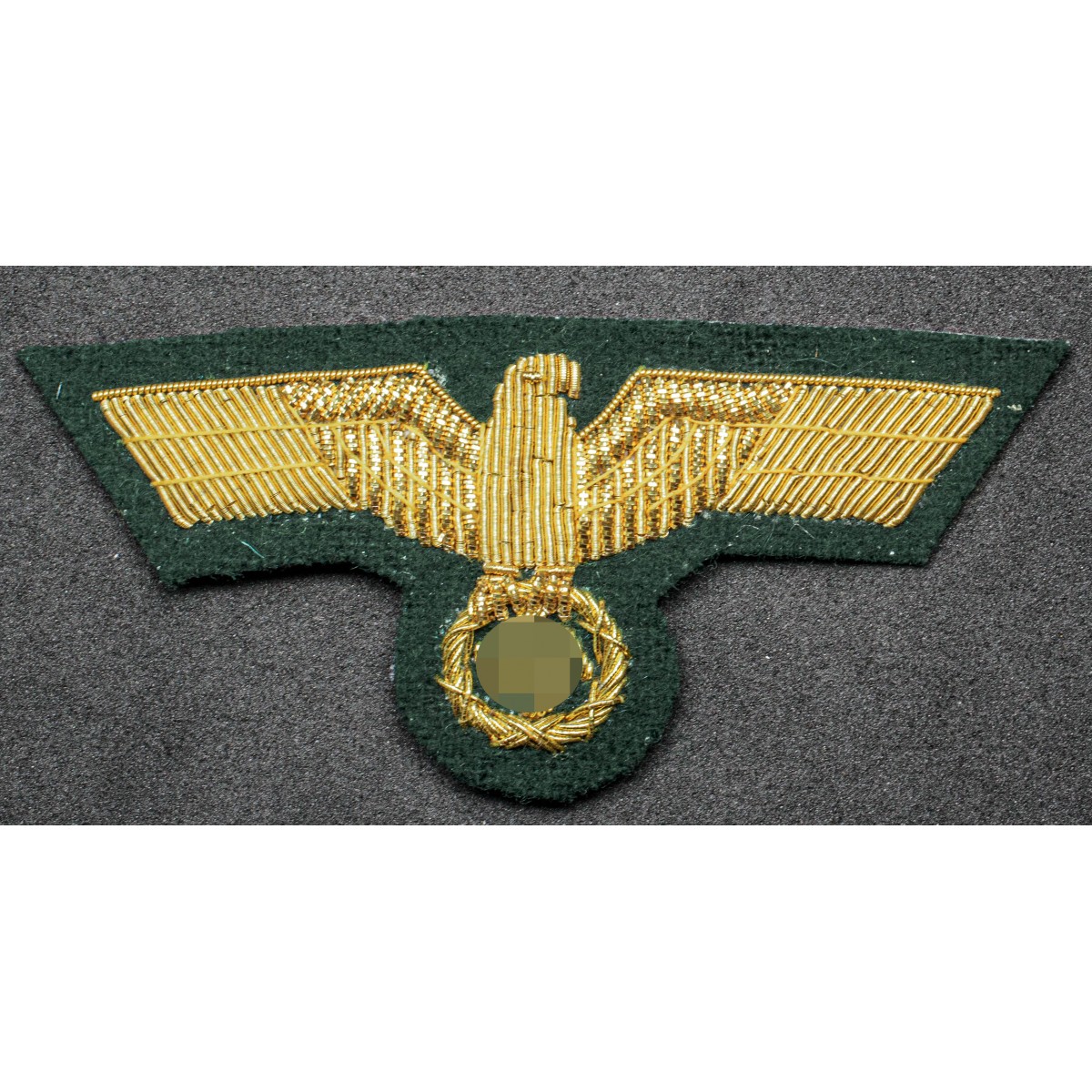
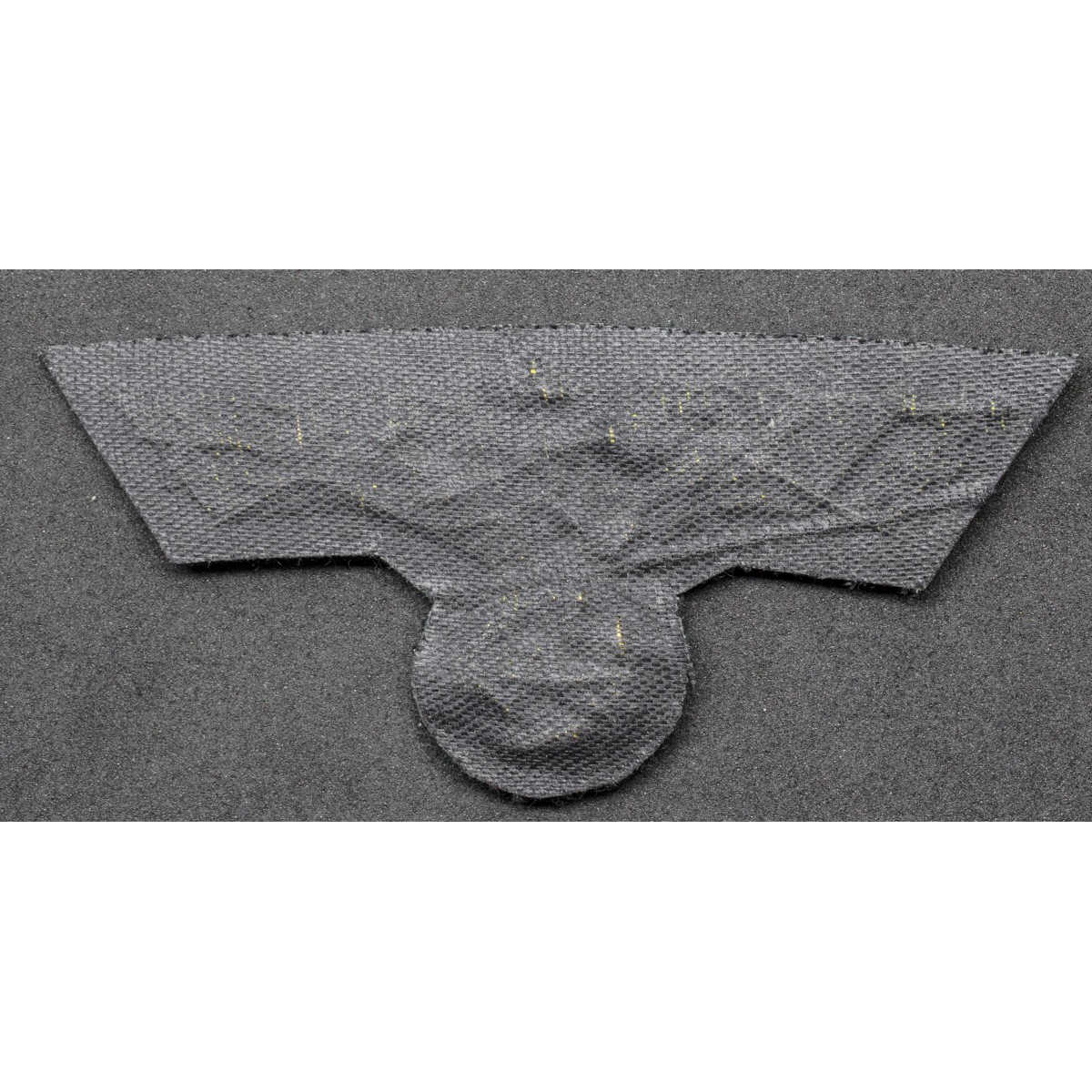
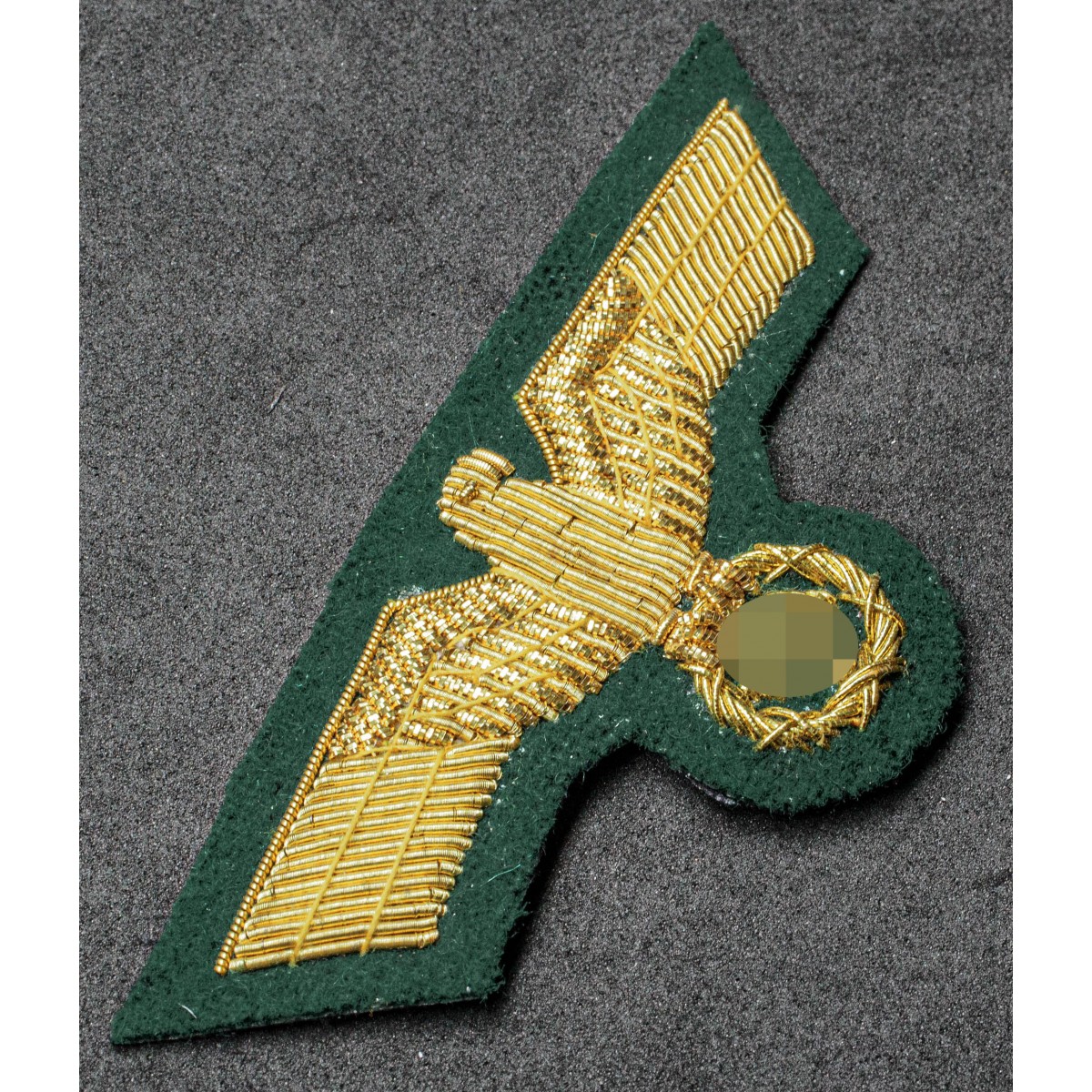
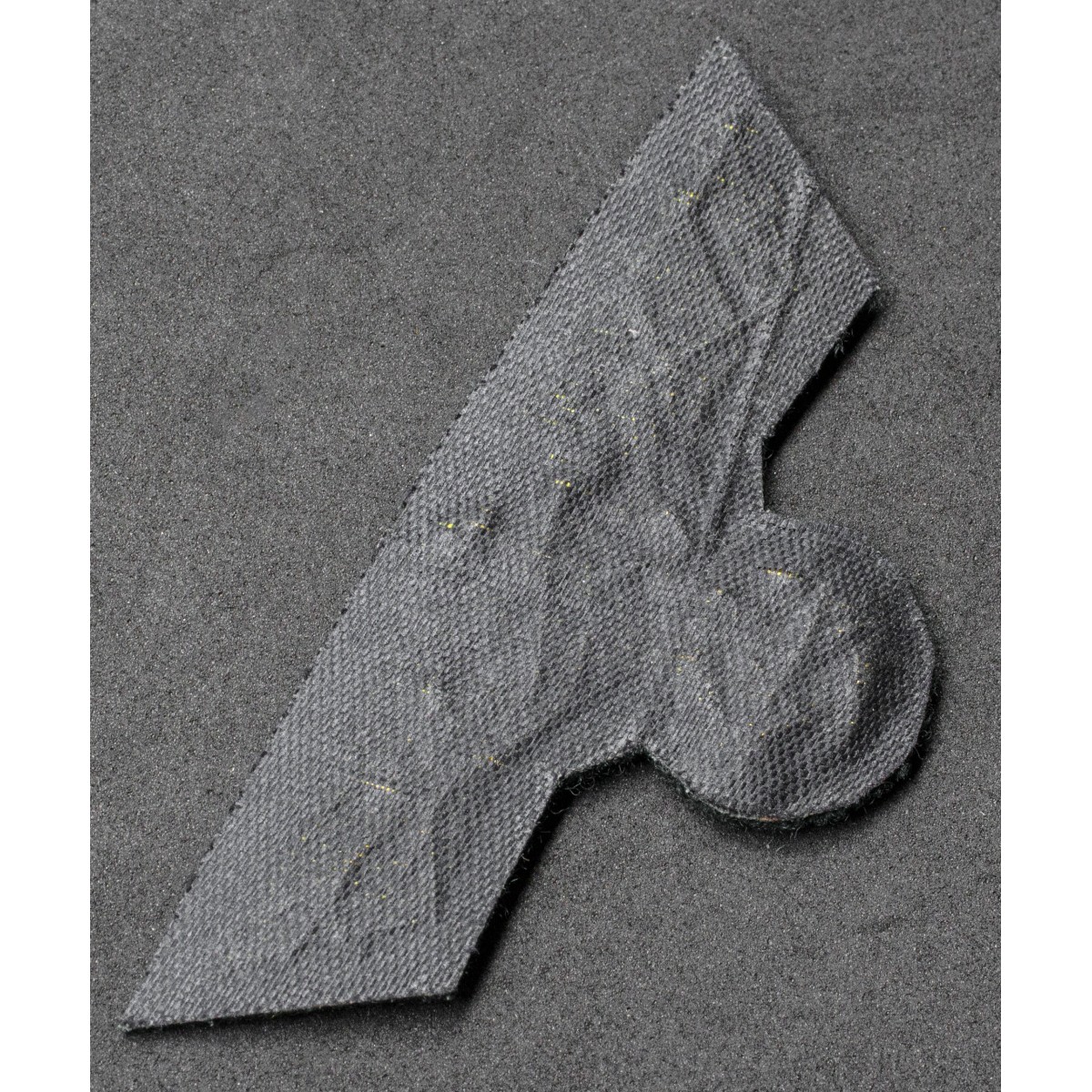
German Army General Officer Breast Eagle – Bottle Green Backing
New
Reproduction German Army General Officer breast eagle, embroidered in gold bullion on a bottle green backing. Worn on the right breast above the tunic pocket, the gold finish distinguished general officers from other commissioned officers, whose breast eagles were normally silver-coloured.
- Satisfied or refunded: we guarantee 100% secure protection on your purchases
- Free return: return your order free of charge within 30 days from receipt
- Secure payments: pay securely online with PayPal or credit cards

More info
The German Army breast eagle, or Brustadler, was the principal national emblem worn on Heer tunics during the Second World War.
It was positioned on the right breast above the pocket and depicted an eagle with outstretched wings clutching a wreath containing a swastika. On uniforms worn by general officers, the breast eagle was immediately distinguished by its gold-coloured embroidery, rather than the silver or aluminium finish normally associated with other commissioned officers.
General officer examples were traditionally produced in elaborate gold bullion embroidery, frequently worked by hand. Different directions of metallic thread were used to define the feathers, body, claws and wreath, creating a pronounced raised surface and varying reflections across the individual sections of the design.
The embroidery was mounted on bottle green badge cloth, known as flaschengrün. This very dark blue-green material replaced the earlier grey badge cloth inherited from Reichswehr practice in late 1935 and became one of the characteristic features of early Heer insignia.
A lesser-known detail is that the gold breast eagle formed part of a broader system used to distinguish German Army general officers: the change from silver to gold was also reflected in several other uniform fittings, including cap insignia, cords, buttons and belt buckles. The breast eagle could therefore identify general-officer status even before the rank shown on the shoulder boards was visible.
Data sheet
| Width | 10 cm |
| Lenght | 4.5 cm |
30 other products in the same category:

Heer and Combat Badges
- Germany
- Uniforms
- Medals, Orders and Decorations
- Badges and Pins
- ID Tags
- Arm Shields
- Helmets
- Helmet Decals
- Visor Caps and Hats
- Cap and Helmet Badges
- Collar Tabs Badges
- Collar Tabs, Shoulder Boards and Epaulettes
- Arm Bands
- Division Cuff Titles
- Buckles And Belts
- Buttons For Uniforms
- Stamps
- Gorgets
- Rings
- SS Honour Ring in 925 Silver - Collector's Set
- Poletops
- Flags
- Daggers and Knives (Ornamental)
- Field Marshal Batons
- Field and Personal Equipment
- Service Watches
- Presentation Cases
- Documents and Award Letters
- Busts, Eagles, Lighters and Miscellaneous
- Croatian and Ustasha Militaria
- Denazified Articles
- Commemorative Necklaces
- Spare Parts, Small Parts and Accessories
- Italy
- Medals and Decorations
- Brevets And Badges
- Battle Shields and Tags
- Gorgets
- Visor Caps and Hats
- Cap and Helmet Badges
- Helmets Decals
- Friezes for Collar Tabs
- Collar Tabs, Shoulder Boards and Epaulettes
- Buckles
- Belts
- Buttons For Uniforms
- Rings
- Poletops
- Italian Resistance
- Keyrings
- Wallshields
- Daggers and Knives
- Flags
- Busts and Eagles
- Souvenirs
- Commemorative Necklaces
- Imperial Germany
- Soviet Union
- Other Countries