
No products
Product successfully added to your shopping cart
There are 0 items in your cart. There is 1 item in your cart.
Republican Gladius Collar Badges with Laurel and Oak - National Republican Air Force
New
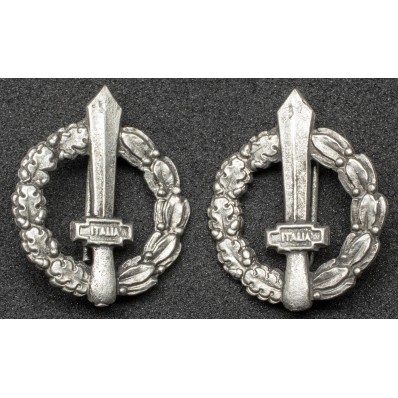
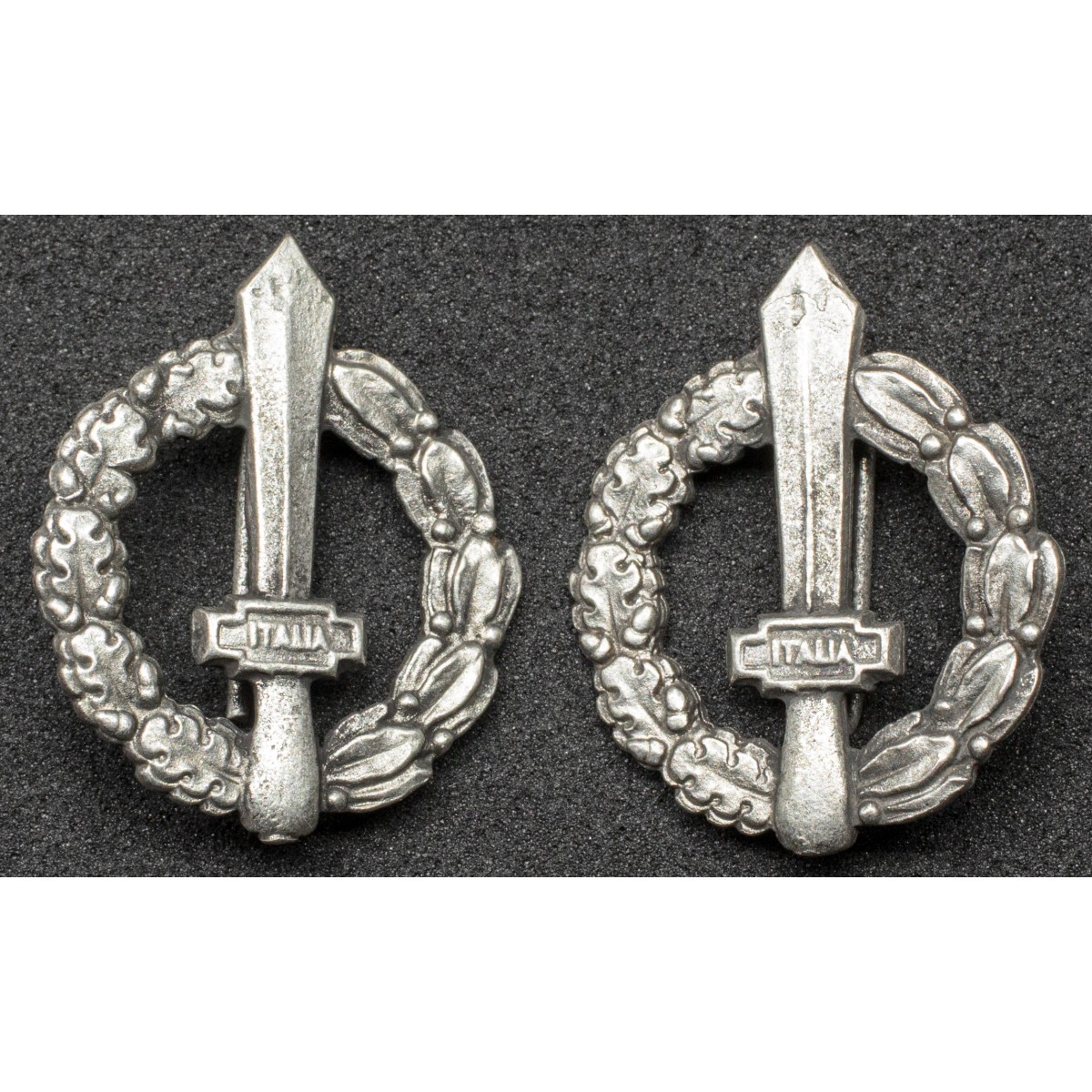
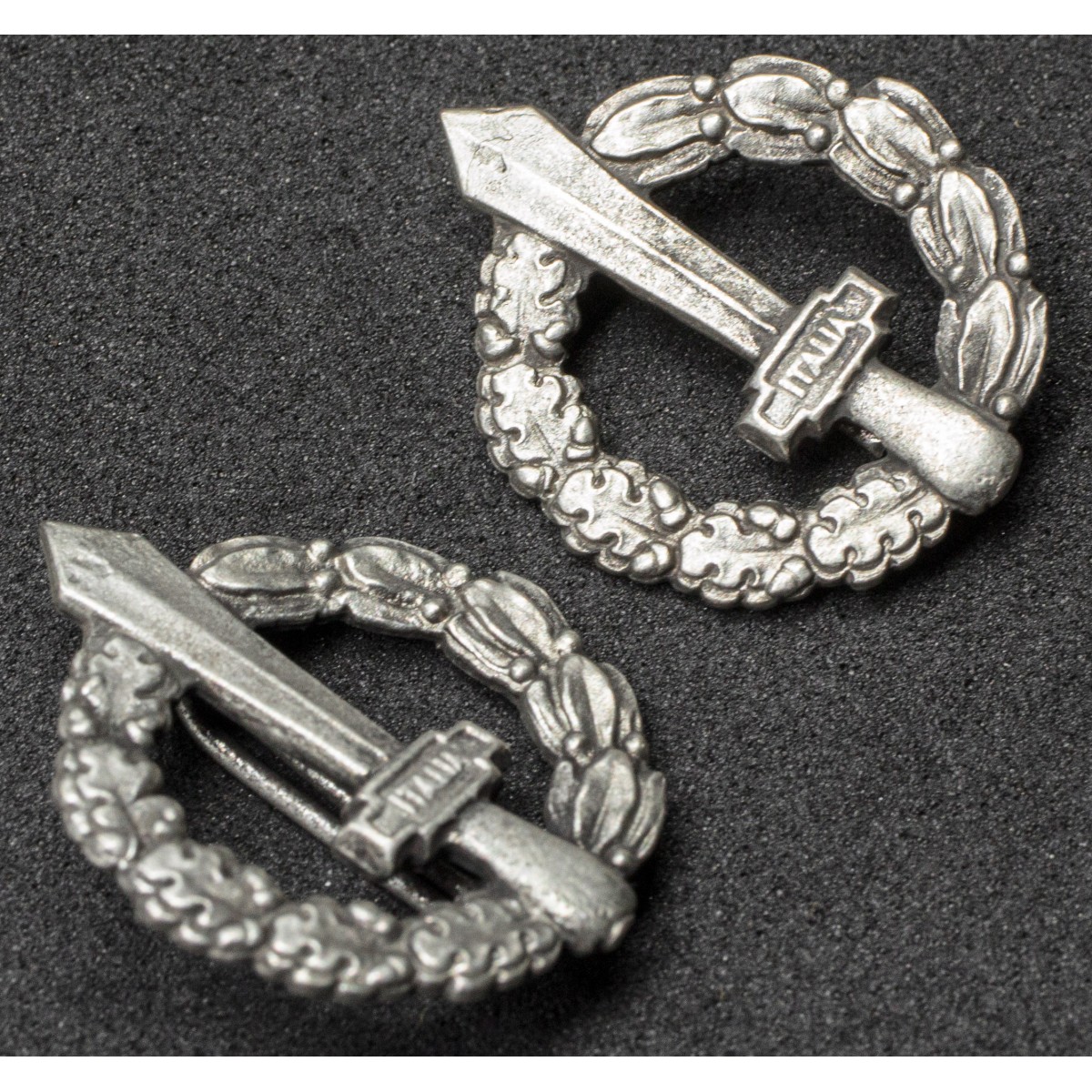
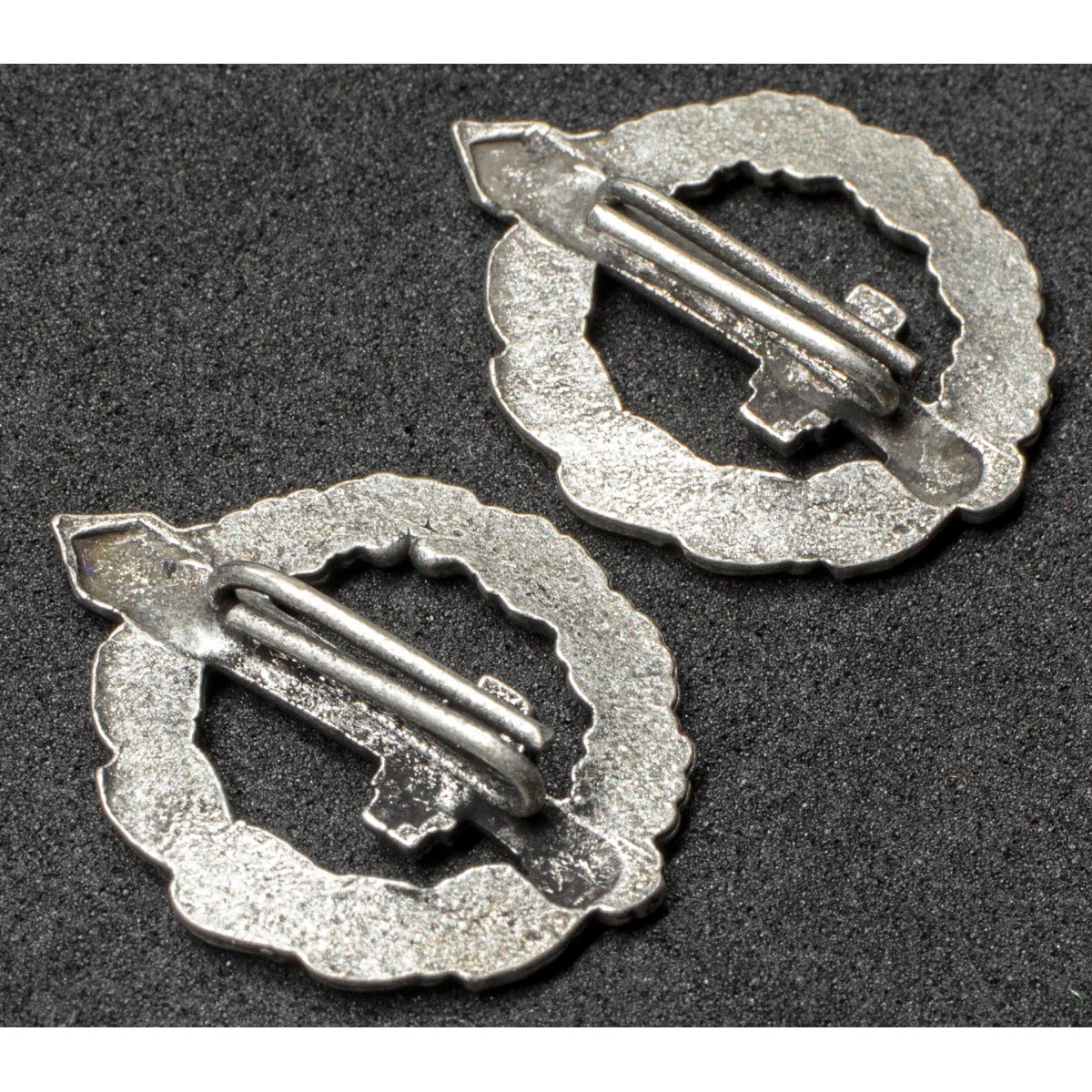
Pair of Republican gladius collar badges for the National Republican Air Force. The upright sword bears “ITALIA” across its crossguard and is enclosed by an asymmetrical plant wreath: oak leaves on the viewer’s left and laurel on the viewer’s right. Pattern worn by the ANR during 1944–1945.
Warning: Last items in stock!
- Satisfied or refunded: we guarantee 100% secure protection on your purchases
- Free return: return your order free of charge within 30 days from receipt
- Secure payments: pay securely online with PayPal or credit cards

More info
The Republican Gladius Collar Badges with Laurel and Oak of the National Republican Air Force belong to the insignia system adopted by the armed forces of the Italian Social Republic during the final phase of the Second World War. They were worn as a pair on the forward sections of the uniform collar, either directly upon the cloth or applied over the prescribed branch collar patches.
The central device consists of an upright Roman gladius with a straight pointed blade, stylised grip and the word “ITALIA” displayed across the crossguard. The sword is enclosed by a composite asymmetrical plant wreath, with a different species represented on each side.
When the badge is viewed from the front, the viewer’s left side carries an oak branch, identifiable by its deeply lobed leaves and acorns. The viewer’s right side carries a laurel branch, characterised by narrower elongated leaves with smoother edges. The surrounding wreath is therefore not composed entirely of laurel.
Within traditional military imagery, oak was commonly associated with strength, steadfastness and endurance, while laurel represented victory, honour and military distinction. These two branches were combined with the gladius, the Roman infantry short sword used here as a symbol of combat and military authority.
The gladius surrounded by oak and laurel was introduced in 1944 as a new identifying device for the Republican armed forces. It replaced the traditional five-pointed star worn on Italian military collars since the nineteenth century. The change formed part of the removal of monarchic devices and the creation of a separate uniform identity for the armed forces of the Italian Social Republic.
Within the Aeronautica Nazionale Repubblicana, active between 1943 and 1945, the gladius appeared on blue-grey uniforms largely inherited from the patterns and existing stocks of the former Royal Italian Air Force. Its introduction accompanied the removal or alteration of Savoy crowns from buttons, flying badges and other Air Force insignia.
The badge did not indicate a particular rank, aviation speciality or operational unit. It was a general military status device also employed by other branches of the RSI armed forces. A specific association with the National Republican Air Force consequently depends upon the surrounding uniform features, including its colour and cut, sleeve rank lace, buttons and accompanying flying or trade badges.
Historical examples were manufactured from different metals and alloys according to the maker, production method and availability of raw materials. Recorded forms include stamped sheet-metal pieces and cast or die-struck versions, with variations in thickness, relief, leaf design and sharpness of the “ITALIA” inscription.
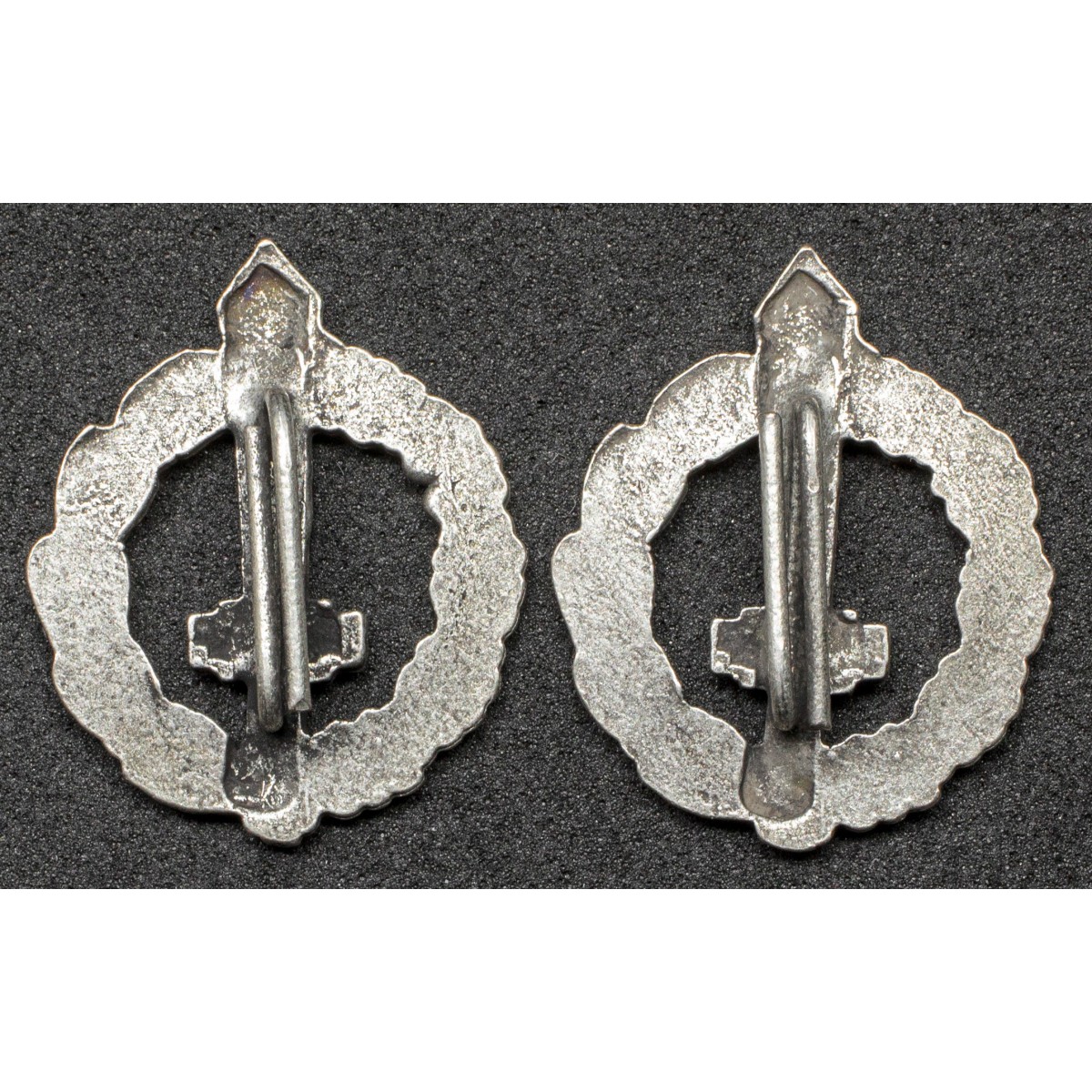
Attachment was normally provided by rear prongs, pins or bendable metal tabs passing through the collar cloth. These were folded or secured on the inside of the garment. The two badges were positioned symmetrically on the opposing sides of the collar, with each gladius blade maintained in an upright orientation.
Known variants differ in the proportions of the sword, the form of the pommel and crossguard, the lettering of “ITALIA,” the number and arrangement of the leaves, the rendering of the acorns and laurel fruits and the construction of the reverse. Different sizes were also manufactured for tunics, overcoats and other garments, reflecting the lack of completely uniform wartime production.
Data sheet
| Width | 20.90 mm |
| Lenght | 25.50 mm |
| Thickness | 1.35 mm |
| Weight | 4.4 gr |
| Material | Zamak, Brass |
30 other products in the same category:

Friezes for Collar Tabs
- Germany
- Uniforms
- Medals, Orders and Decorations
- Badges and Pins
- ID Tags
- Arm Shields
- Helmets
- Helmet Decals
- Visor Caps and Hats
- Cap and Helmet Badges
- Collar Tabs Badges
- Collar Tabs, Shoulder Boards and Epaulettes
- Arm Bands
- Division Cuff Titles
- Buckles And Belts
- Buttons For Uniforms
- Stamps
- Gorgets
- Rings
- SS Honour Ring in 925 Silver - Collector's Set
- Poletops
- Flags
- Daggers and Knives (Ornamental)
- Field Marshal Batons
- Field and Personal Equipment
- Service Watches
- Presentation Cases
- Documents and Award Letters
- Busts, Eagles, Lighters and Miscellaneous
- Croatian and Ustasha Militaria
- Denazified Articles
- Commemorative Necklaces
- Spare Parts, Small Parts and Accessories
- Italy
- Medals and Decorations
- Brevets And Badges
- Battle Shields and Tags
- Gorgets
- Visor Caps and Hats
- Cap and Helmet Badges
- Helmets Decals
- Friezes for Collar Tabs
- Collar Tabs, Shoulder Boards and Epaulettes
- Buckles
- Belts
- Buttons For Uniforms
- Rings
- Poletops
- Italian Resistance
- Keyrings
- Wallshields
- Daggers and Knives
- Flags
- Busts and Eagles
- Souvenirs
- Commemorative Necklaces
- Imperial Germany
- Soviet Union
- Other Countries