
No products
Product successfully added to your shopping cart
There are 0 items in your cart. There is 1 item in your cart.
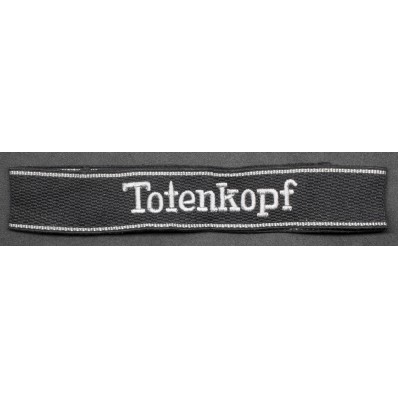


Cuff Title - Totenkopf
New
“Totenkopf” cuff title for uniform wear, made as a black cloth band with Totenkopf lettering in light or silver-coloured thread. Associated with the SS-Division “Totenkopf”, it was worn on the lower left sleeve as a visible unit affiliation insignia.
- Satisfied or refunded: we guarantee 100% secure protection on your purchases
- Free return: return your order free of charge within 30 days from receipt
- Secure payments: pay securely online with PayPal or credit cards

More info
“Totenkopf” Cuff Title – sleeve insignia of the SS-Division “Totenkopf”
The “Totenkopf” cuff title was a sleeve insignia associated with the SS-Division “Totenkopf”, a Waffen-SS formation raised in 1939 and later reorganized as the 3rd SS Panzer Division “Totenkopf.” In German terminology, this type of insignia is known as an Ärmelstreifen or Ärmelband.
The cuff title was made on a black cloth base, with the name Totenkopf woven or embroidered in light grey, white or silver-coloured thread, depending on the production type. It was worn on the lower left sleeve of the tunic and served as a visible indication of unit affiliation rather than as a functional equipment item.
The word Totenkopf means “death’s head” or “skull.” The symbol had earlier roots in German military tradition, but within the SS context it acquired a specific organizational meaning. The “Totenkopf” division became one of the better-known Waffen-SS formations and served on several fronts during the Second World War.
From a technical standpoint, cuff titles could be produced in different ways: machine embroidery, machine-woven BeVoconstruction, enlisted versions or more refined officer-type variants. Differences may appear in lettering style, thread thickness, silver tone, band height, edge construction and end finishing. These details are important when describing historical examples and production variants.
The cuff title formed part of a broader uniform identification system. Collar patches, shoulder boards, eagles, rank insignia and sleeve bands all contributed to the visual identification of rank, service and formation. On the “Totenkopf” cuff title, the unit name itself was the central identifying element.
Collector’s note: Waffen-SS cuff titles can vary significantly even when bearing the same wording. Weave, embroidery, letter shape, thread shade, edge finish and length are all important features in the study and description of historical examples.
30 other products in the same category:

Customers who bought this product also bought:
Division Cuff Titles
- Germany
- Uniforms
- Medals, Orders and Decorations
- Badges and Pins
- ID Tags
- Arm Shields
- Helmets
- Helmet Decals
- Visor Caps and Hats
- Cap and Helmet Badges
- Collar Tabs Badges
- Collar Tabs, Shoulder Boards and Epaulettes
- Arm Bands
- Division Cuff Titles
- Buckles And Belts
- Buttons For Uniforms
- Stamps
- Gorgets
- Rings
- SS Honour Ring in 925 Silver - Collector's Set
- Poletops
- Flags
- Daggers and Knives (Ornamental)
- Field Marshal Batons
- Field and Personal Equipment
- Service Watches
- Presentation Cases
- Documents and Award Letters
- Busts, Eagles, Lighters and Miscellaneous
- Croatian and Ustasha Militaria
- Denazified Articles
- Commemorative Necklaces
- Spare Parts, Small Parts and Accessories
- Italy
- Medals and Decorations
- Brevets And Badges
- Battle Shields and Tags
- Gorgets
- Visor Caps and Hats
- Cap and Helmet Badges
- Helmets Decals
- Friezes for Collar Tabs
- Collar Tabs, Shoulder Boards and Epaulettes
- Buckles
- Belts
- Buttons For Uniforms
- Rings
- Poletops
- Italian Resistance
- Keyrings
- Wallshields
- Daggers and Knives
- Flags
- Busts and Eagles
- Souvenirs
- Commemorative Necklaces
- Imperial Germany
- Soviet Union
- Other Countries