
No products
Product successfully added to your shopping cart
There are 0 items in your cart. There is 1 item in your cart.
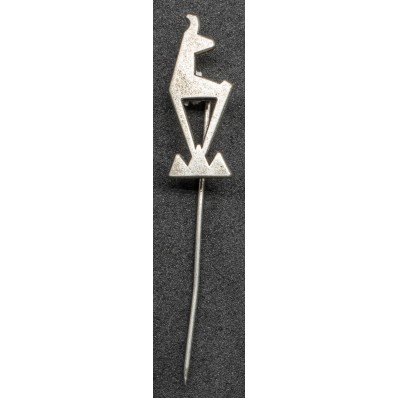


5. Gebirgs-Division Tie Pin
New
5. Gebirgs-Division Tie Pin, linked to a German Army mountain division formed in 1940 in the Salzburg-Tyrol area. The division served in the Balkans, Crete, the Leningrad sector and Italy, carrying the alpine identity of the Gebirgsjäger.
- Satisfied or refunded: we guarantee 100% secure protection on your purchases
- Free return: return your order free of charge within 30 days from receipt
- Secure payments: pay securely online with PayPal or credit cards

More info
5. Gebirgs-Division Tie Pin
This 5. Gebirgs-Division Tie Pin refers to one of the German Army’s mountain divisions of the Second World War. The 5. Gebirgs-Division was formed on 25 October 1940 in the Salzburg-Tyrol area, using elements from the 1. Gebirgs-Division and the former Infantry Regiment 85, which became Gebirgsjäger-Regiment 85. Its organization included mountain infantry, mountain artillery, engineers, signals, reconnaissance, anti-tank and divisional support units.
The term Gebirgs-Division identified a formation trained for mountain warfare. Its soldiers, the Gebirgsjäger, were expected to operate in difficult terrain where movement, supply, communications and artillery support were far more demanding than on open ground. Their identity was shaped by alpine endurance, mobility, terrain knowledge and the ability to fight in isolated mountain environments.
The division served in the Balkan campaign and on Crete in 1941, before being transferred to the northern sector of the Eastern Front. In 1942-1943 it fought in the Leningrad area, including sectors around Oranienbaum, the Neva, Mga, the Volkhov and Lake Ladoga. From 1943-1944 onward, the division was deployed in Italy, where it fought on the Gustav Line, at Monte Cassino, and later in the Alpine regions of northern Italy before surrendering in May 1945.
German mountain troops are closely associated with the Edelweiß, the traditional flower emblem of the Gebirgsjäger. The 5. Gebirgs-Division, however, also had its own divisional sign: the Gämse, or chamois. This animal was an especially fitting symbol for a mountain formation, evoking sure-footed movement, steep terrain and alpine resilience. Because of this emblem, the division was also known as the Gamsbock-Division.
A tie pin of this type should be understood as a small formal item of association and remembrance rather than a combat decoration. Its place on the tie gave it a restrained, orderly appearance, while its reference to the division connected the wearer to the unit’s mountain identity and distinctive symbolism. It represents the visual culture surrounding military formations: compact, recognizable and tied to a specific unit history.
Curiosity: one of the best-known titles connected with the unit’s later memory is “Hurra, die Gams!”, a work devoted to the operational history of the 5. Gebirgs-Division. The phrase shows how strongly the chamois emblem shaped the division’s identity, far beyond a simple tactical marking.
Data sheet
| Lenght | 24 mm (56.20 mm) |
| Width | 10 mm |
| Thickness | 1.50 mm |
| Weight | 1.4 gr |
| Material | Zamak, Brass |
30 other products in the same category:

Customers who bought this product also bought:
Cap and Helmet Badges
- Germany
- Uniforms
- Medals, Orders and Decorations
- Badges and Pins
- ID Tags
- Arm Shields
- Helmets
- Helmet Decals
- Visor Caps and Hats
- Cap and Helmet Badges
- Collar Tabs Badges
- Collar Tabs, Shoulder Boards and Epaulettes
- Arm Bands
- Division Cuff Titles
- Buckles And Belts
- Buttons For Uniforms
- Stamps
- Gorgets
- Rings
- SS Honour Ring in 925 Silver - Collector's Set
- Poletops
- Flags
- Daggers and Knives (Ornamental)
- Field Marshal Batons
- Field and Personal Equipment
- Service Watches
- Presentation Cases
- Documents and Award Letters
- Busts, Eagles, Lighters and Miscellaneous
- Croatian and Ustasha Militaria
- Denazified Articles
- Commemorative Necklaces
- Spare Parts, Small Parts and Accessories
- Italy
- Medals and Decorations
- Brevets And Badges
- Battle Shields and Tags
- Gorgets
- Visor Caps and Hats
- Cap and Helmet Badges
- Helmets Decals
- Friezes for Collar Tabs
- Collar Tabs, Shoulder Boards and Epaulettes
- Buckles
- Belts
- Buttons For Uniforms
- Rings
- Poletops
- Italian Resistance
- Keyrings
- Wallshields
- Daggers and Knives
- Flags
- Busts and Eagles
- Souvenirs
- Commemorative Necklaces
- Imperial Germany
- Soviet Union
- Other Countries