
No products
Product successfully added to your shopping cart
There are 0 items in your cart. There is 1 item in your cart.

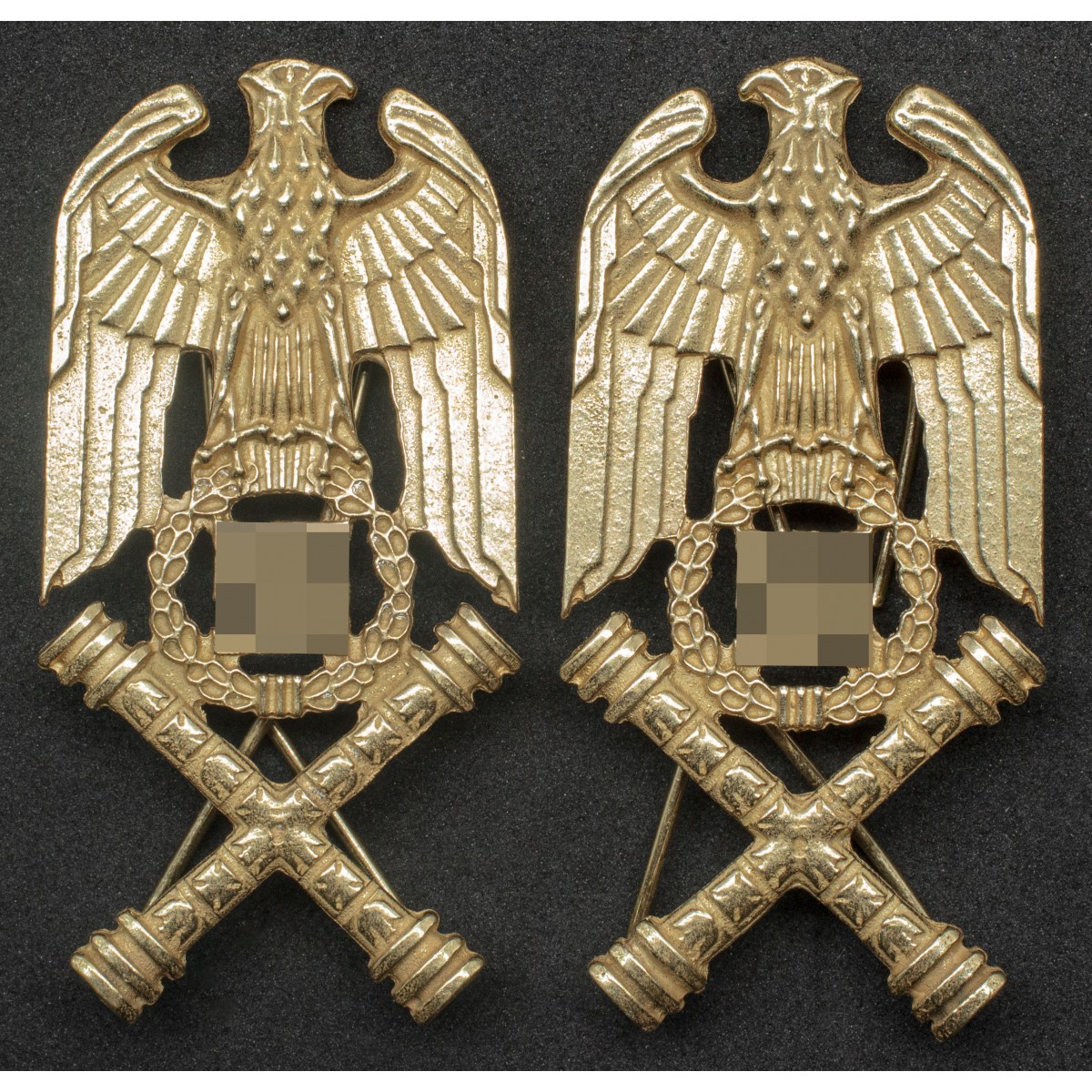
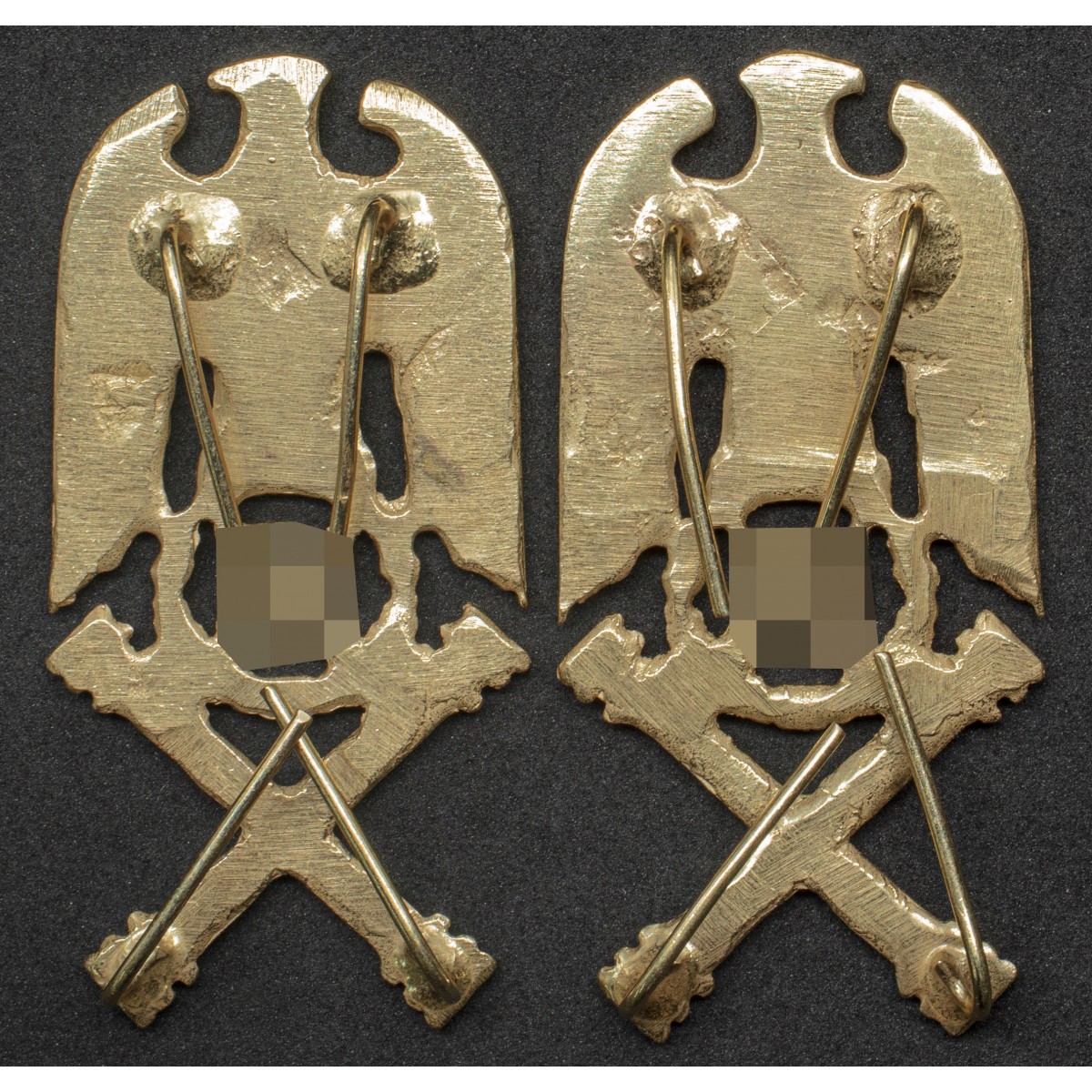
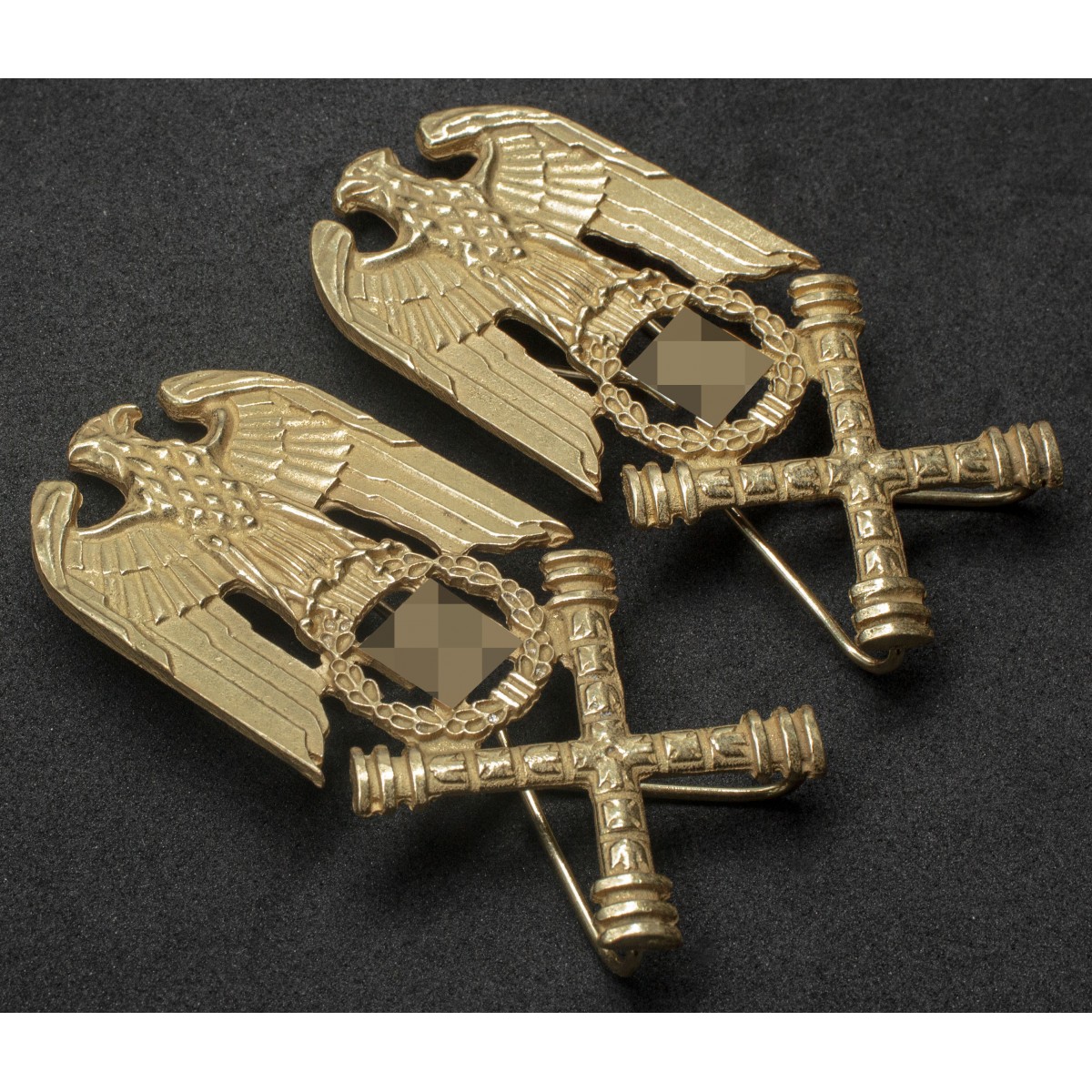
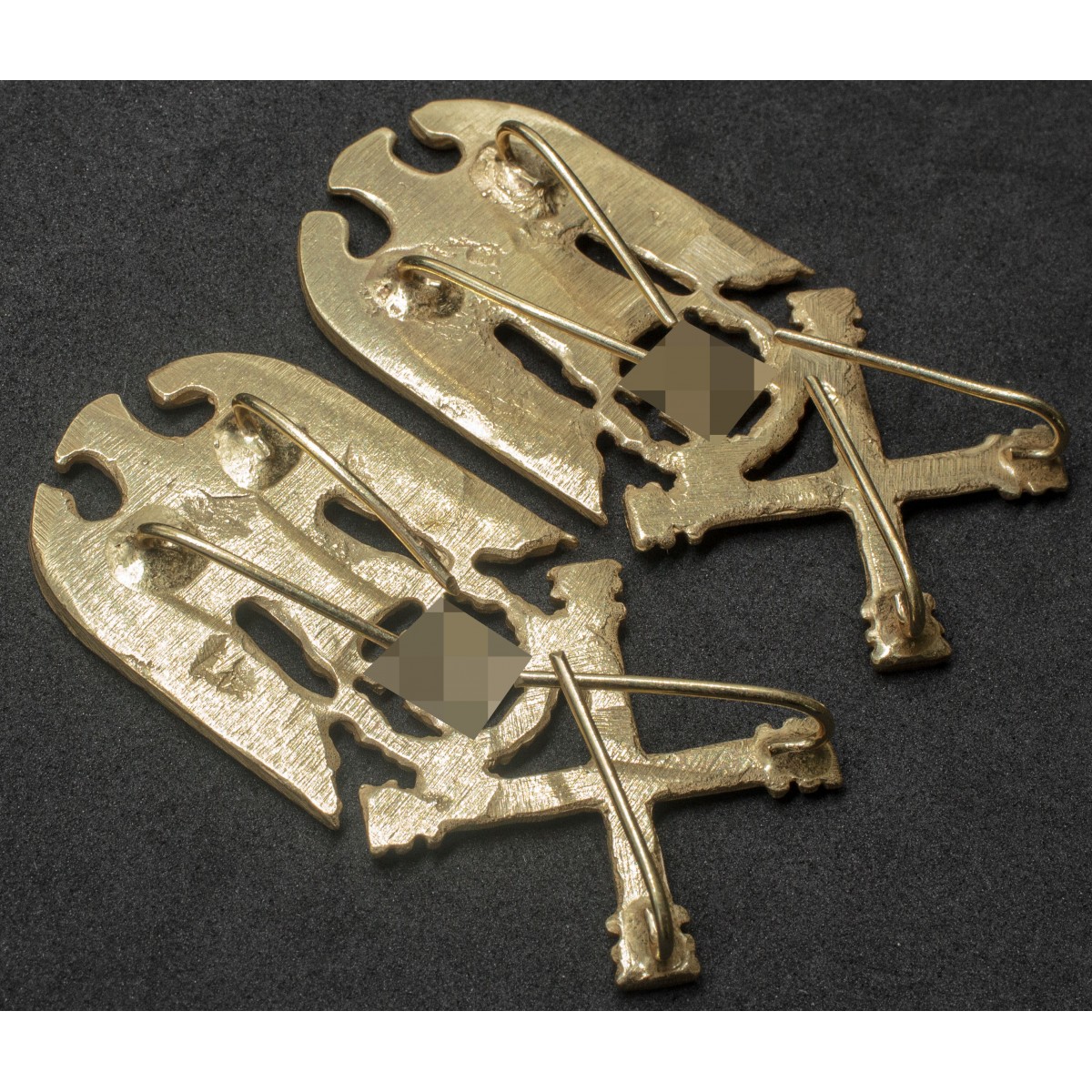
Reichsmarschall Hermann Göring Shoulder Board Badges
New
Reichsmarschall Hermann Göring Shoulder Board Devices, reproduction of the insignia used for the highest Luftwaffe rank. A gold eagle above crossed marshal batons identified the personal rank created in 1940 exclusively for Göring.
- Satisfied or refunded: we guarantee 100% secure protection on your purchases
- Free return: return your order free of charge within 30 days from receipt
- Secure payments: pay securely online with PayPal or credit cards

More info
Reichsmarschall Hermann Göring Shoulder Board Devices, reproduction of the metal insignia mounted on the shoulder boards of the rank Reichsmarschall des Großdeutschen Reiches. This rank was created in July 1940 and awarded exclusively to Hermann Göring, Commander-in-Chief of the Luftwaffe. It stood above Generalfeldmarschall, making it the highest military rank established within the German armed forces of the period.
The device consisted of a gold-coloured eagle placed above two crossed marshal batons. The eagle connected the insignia to the Luftwaffe and the official symbolism of the Reich, while the crossed batons represented the traditional European emblem of supreme military command. On complete shoulder boards, these devices were mounted on braided gold cords, often described as three gold bullion cords or “Russian braid”, set over a white or off-white cloth backing.
From a technical point of view, original and accurate reproduction devices normally feature a gilded or gold-plated finish, raised detailing and rear attachment systems such as prongs or pins for fixing them to the shoulder board. Modern reproductions may differ in the tone of the gilding, the sharpness of the eagle, the modelling of the marshal batons and the textile base, but the essential design remains unmistakably tied to Göring’s personal rank.
Their historical importance lies in their unique rank association. These devices did not belong to a standard grade held by multiple officers; they represented a special rank created for one individual. For this reason, Reichsmarschall shoulder boards and their metal devices are among the most distinctive and unusual insignia within the Luftwaffe uniform system. Specialist references also note that Göring’s Reichsmarschall insignia appears to have evolved through several variations, known mainly from period photographs and a very small number of surviving examples.
Curiosity: Göring had several uniform pieces made specifically for him, including white summer tunics and dove-grey variants. Some details were altered according to personal preference, making his uniforms an exceptional case within German military tailoring of the Second World War.
Data sheet
| Width | 40.50 mm |
| Lenght | 81 mm |
| Thickness | 3.12 mm |
| Weight | 61 gr |
| Material | Zamak, Brass |
27 other products in the same category:

Customers who bought this product also bought:
Collar Tabs Badges
- Germany
- Uniforms
- Medals, Orders and Decorations
- Badges and Pins
- ID Tags
- Arm Shields
- Helmets
- Helmet Decals
- Visor Caps and Hats
- Cap and Helmet Badges
- Collar Tabs Badges
- Collar Tabs, Shoulder Boards and Epaulettes
- Arm Bands
- Division Cuff Titles
- Buckles And Belts
- Buttons For Uniforms
- Stamps
- Gorgets
- Rings
- SS Honour Ring in 925 Silver - Collector's Set
- Poletops
- Flags
- Daggers and Knives (Ornamental)
- Field Marshal Batons
- Field and Personal Equipment
- Service Watches
- Presentation Cases
- Documents and Award Letters
- Busts, Eagles, Lighters and Miscellaneous
- Croatian and Ustasha Militaria
- Denazified Articles
- Commemorative Necklaces
- Spare Parts, Small Parts and Accessories
- Italy
- Medals and Decorations
- Brevets And Badges
- Battle Shields and Tags
- Gorgets
- Visor Caps and Hats
- Cap and Helmet Badges
- Helmets Decals
- Friezes for Collar Tabs
- Collar Tabs, Shoulder Boards and Epaulettes
- Buckles
- Belts
- Buttons For Uniforms
- Rings
- Poletops
- Italian Resistance
- Keyrings
- Wallshields
- Daggers and Knives
- Flags
- Busts and Eagles
- Souvenirs
- Commemorative Necklaces
- Imperial Germany
- Soviet Union
- Other Countries