
No products
Product successfully added to your shopping cart
There are 0 items in your cart. There is 1 item in your cart.
Necklace with Miniature 1939 Iron Cross
New
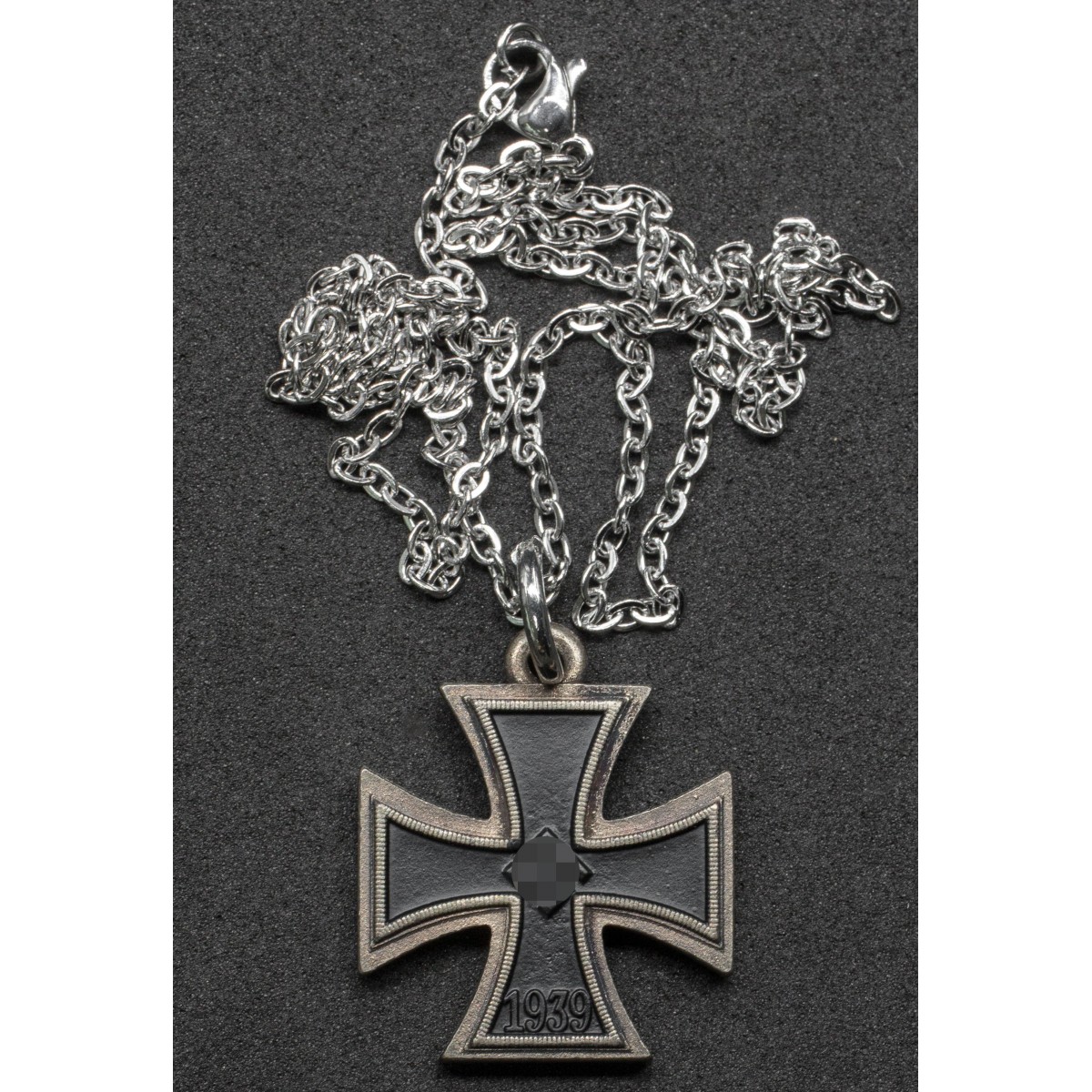
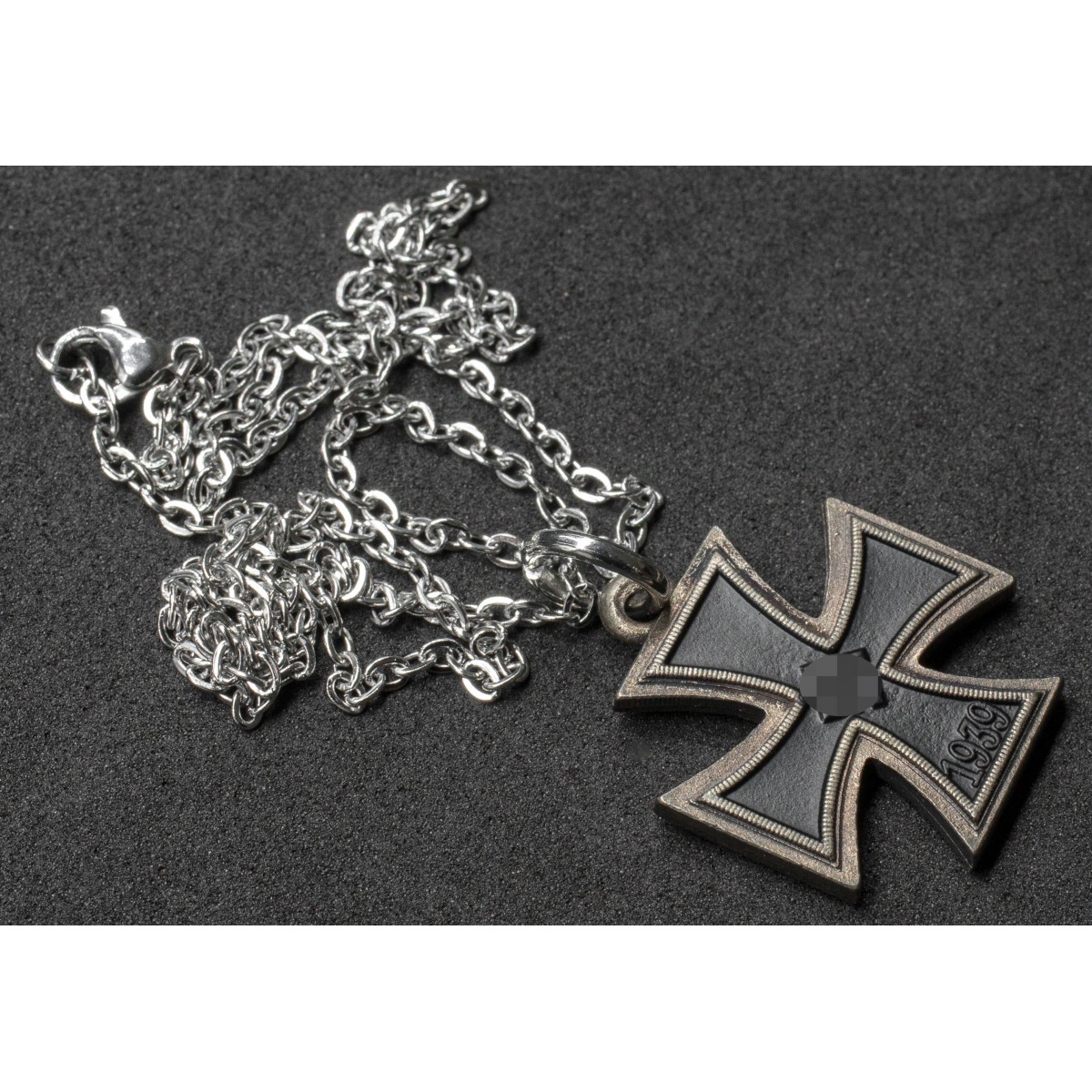
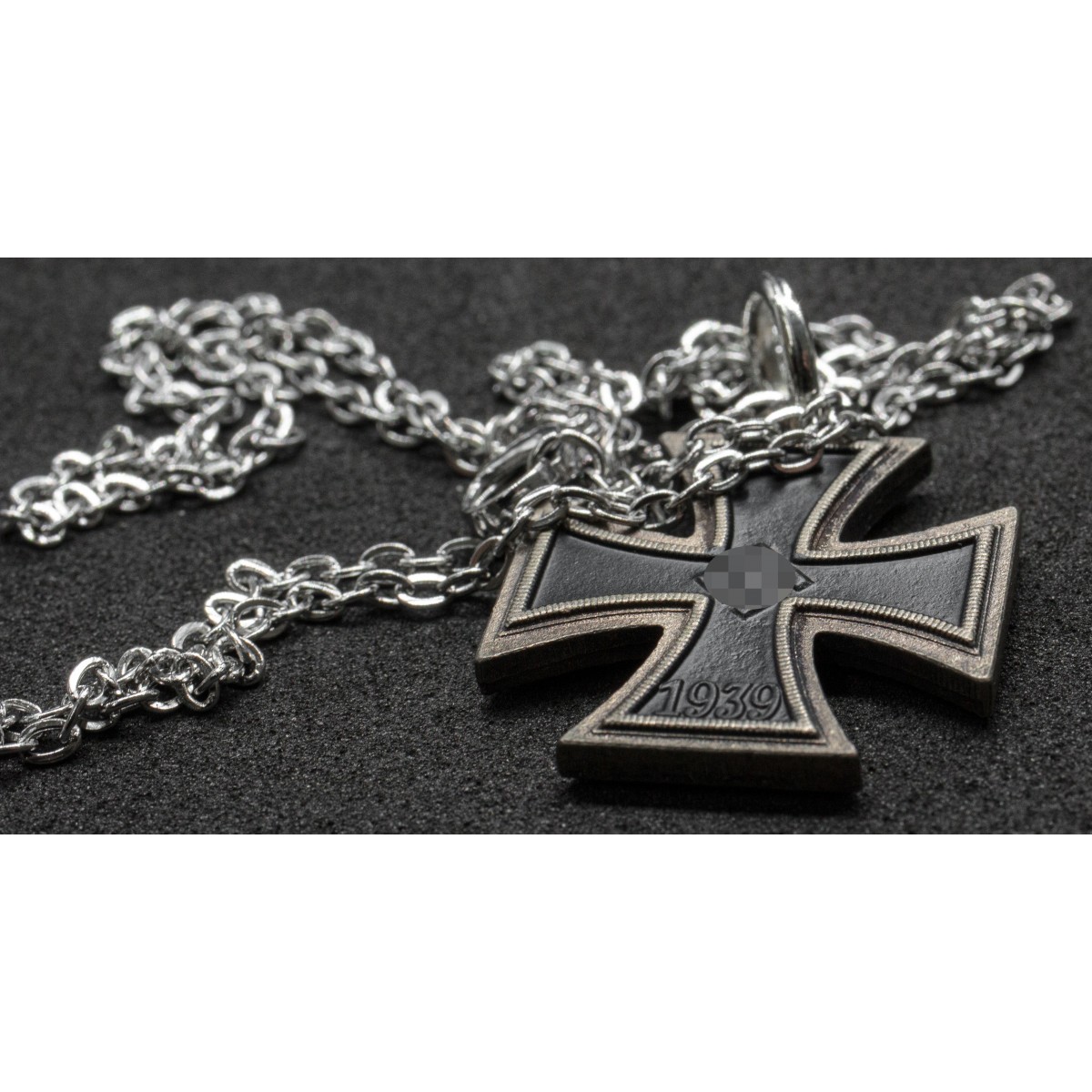
Necklace with a double-sided miniature 1939 Iron Cross pendant, featuring a dark central field, metal border and the date 1939. The same design appears on both sides, identifying it as a commemorative jewellery form based on the historic German decoration.
- Satisfied or refunded: we guarantee 100% secure protection on your purchases
- Free return: return your order free of charge within 30 days from receipt
- Secure payments: pay securely online with PayPal or credit cards

More info
This necklace features a miniature 1939 Iron Cross as its pendant, constructed as a double-sided piece and suspended from the chain through an upper ring.
Its form follows the traditional cross pattée associated with the Iron Cross, with expanding arms, a dark central field and raised metallic double border. The central device corresponds to the pattern introduced in 1939, with the year of institution positioned on the lower arm.
The history of the Iron Cross predates the Second World War by more than a century. It was first instituted by King Friedrich Wilhelm III of Prussia in 1813 during the wars against Napoleon and was subsequently renewed in 1870, 1914 and 1939.
The 1939 version retained the traditional visual contrast between a black centre and light-coloured metal frame. The 2nd Class was normally worn suspended from a ribbon, while the 1st Class was a pin-back decoration worn directly on the left breast.
Alongside full-size awards, there was also an extensive tradition of miniature and jewellery versions intended for civilian clothing, formal social occasions or private wear. Their manufacture was considerably less standardised than that of official award pieces and was often undertaken by private jewellers and specialist medal manufacturers.
This pendant follows that jewellery tradition by repeating the 1939 design on both faces. The arrangement ensures that the same design remains visible even when the pendant turns while being worn.
This differs from the regulation 1939 Iron Cross 2nd Class. On the official decoration, the obverse carried the central device and the date 1939, while the reverse carried the date 1813, commemorating the original Prussian institution of the award. The reverse design is therefore one of the most useful details when distinguishing regulation awards from jewellery and commemorative adaptations.
Period miniatures existed in many forms. Some were extremely small and mounted on long lapel pins, while others formed part of miniature medal chains or reduced dress arrangements.
Major German manufacturers associated with Iron Crosses and miniature decorations included firms such as Steinhauer & Lück of Lüdenscheid and Klein & Quenzer of Idar-Oberstein. Their products could differ in frame construction, numeral shape, materials and surface finish.
A lesser-known detail concerns miniature decorations themselves: while regulation Iron Crosses were manufactured to comparatively strict specifications, privately purchased miniatures allowed much greater freedom in construction and presentation. As a result, surviving examples range from tiny lapel devices to miniature medal chains and fully wearable jewellery pendants.
Data sheet
| Lenght | 27 mm (Necklace 42 cm) |
| Width | 22.90 mm |
| Thickness | 2.91 mm |
| Weight | 5.2 gr |
| Material | Zamak, Steel |
12 other products in the same category:

Commemorative Necklaces
- Germany
- Uniforms
- Medals, Orders and Decorations
- Badges and Pins
- ID Tags
- Arm Shields
- Helmets
- Helmet Decals
- Visor Caps and Hats
- Cap and Helmet Badges
- Collar Tabs Badges
- Collar Tabs, Shoulder Boards and Epaulettes
- Arm Bands
- Division Cuff Titles
- Buckles And Belts
- Buttons For Uniforms
- Stamps
- Gorgets
- Rings
- SS Honour Ring in 925 Silver - Collector's Set
- Poletops
- Flags
- Daggers and Knives (Ornamental)
- Field Marshal Batons
- Field and Personal Equipment
- Service Watches
- Presentation Cases
- Documents and Award Letters
- Busts, Eagles, Lighters and Miscellaneous
- Croatian and Ustasha Militaria
- Denazified Articles
- Commemorative Necklaces
- Spare Parts, Small Parts and Accessories
- Italy
- Medals and Decorations
- Brevets And Badges
- Battle Shields and Tags
- Gorgets
- Visor Caps and Hats
- Cap and Helmet Badges
- Helmets Decals
- Friezes for Collar Tabs
- Collar Tabs, Shoulder Boards and Epaulettes
- Buckles
- Belts
- Buttons For Uniforms
- Rings
- Poletops
- Italian Resistance
- Keyrings
- Wallshields
- Daggers and Knives
- Flags
- Busts and Eagles
- Souvenirs
- Commemorative Necklaces
- Imperial Germany
- Soviet Union
- Other Countries