
No products
Product successfully added to your shopping cart
There are 0 items in your cart. There is 1 item in your cart.
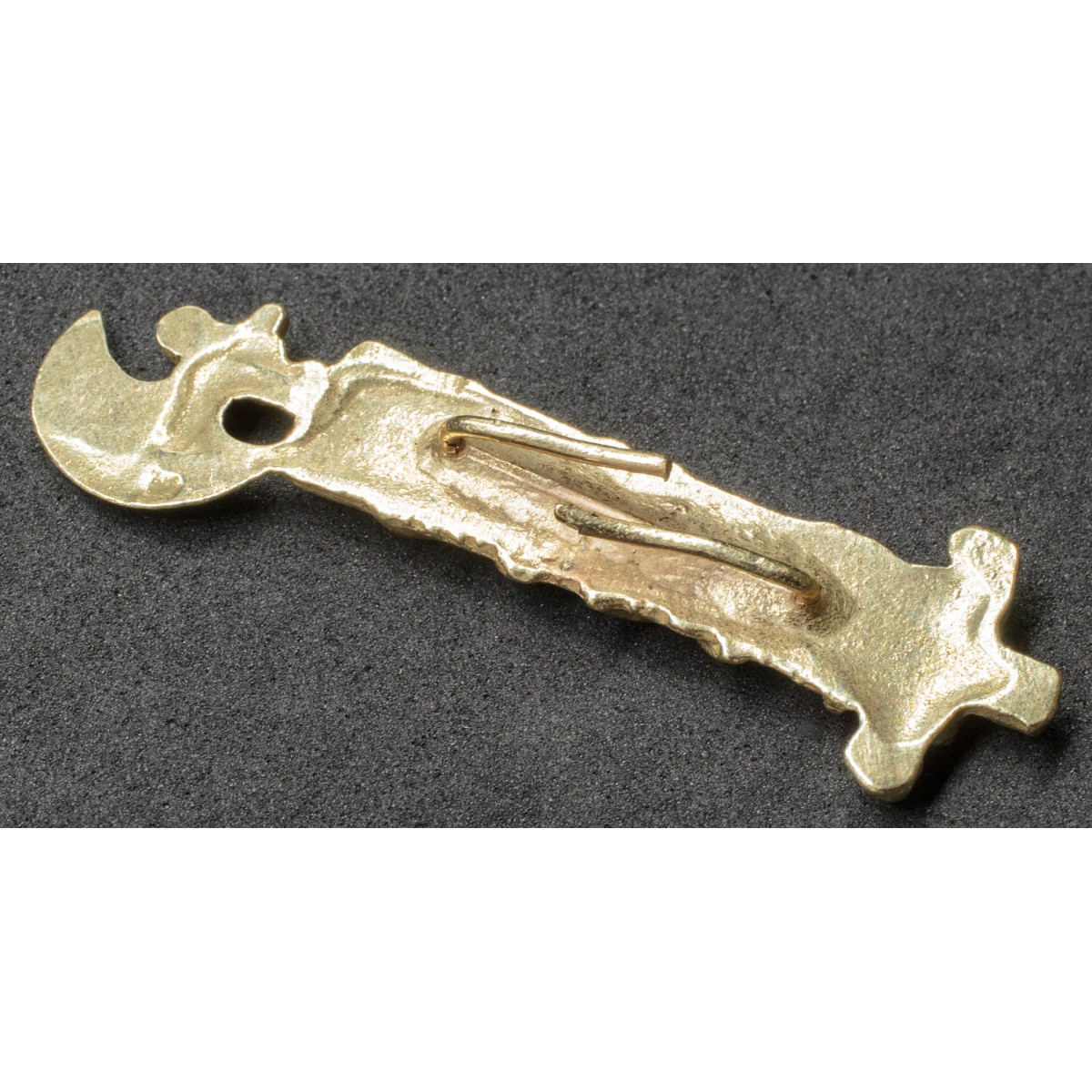
Republican Fasces Helmet Badge
New
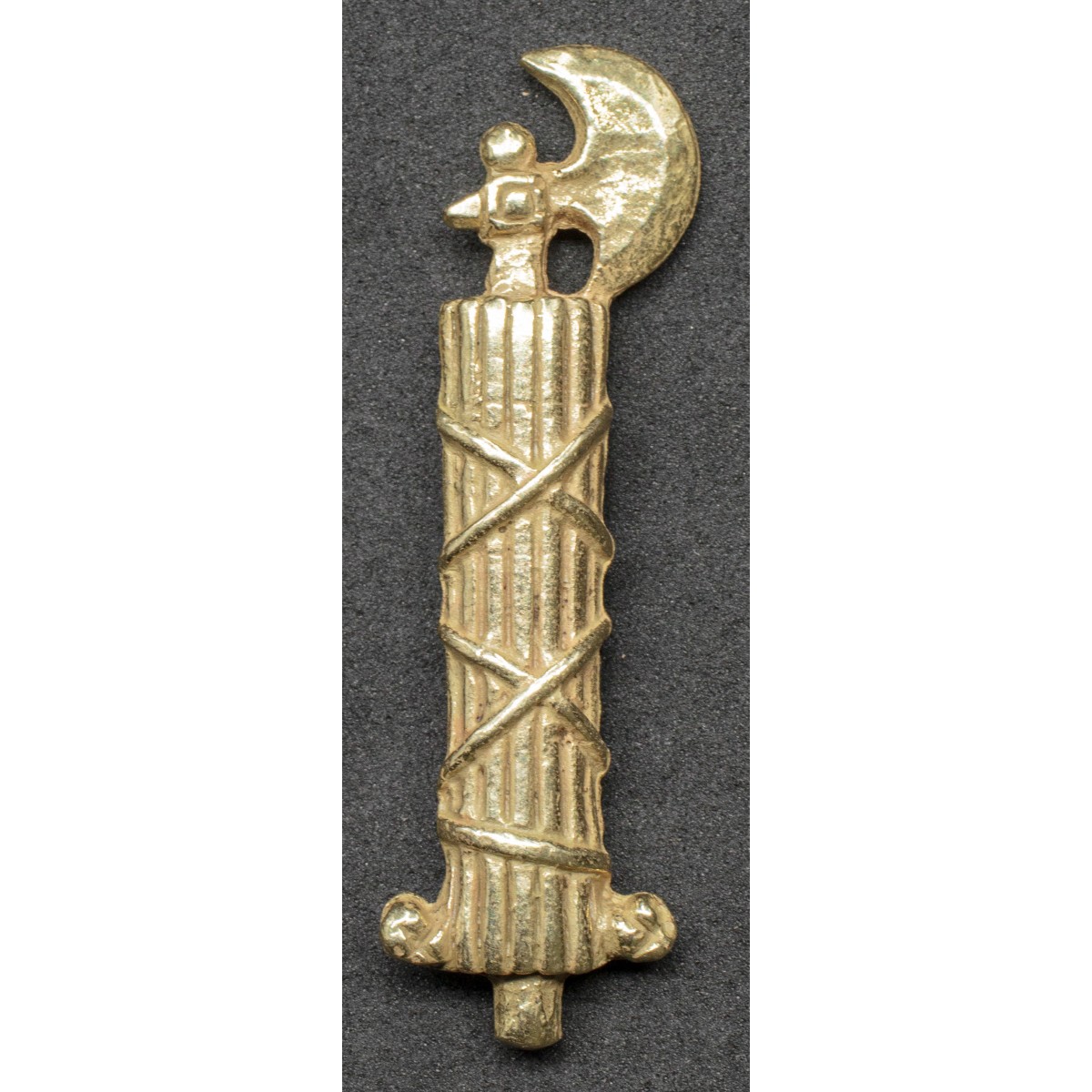
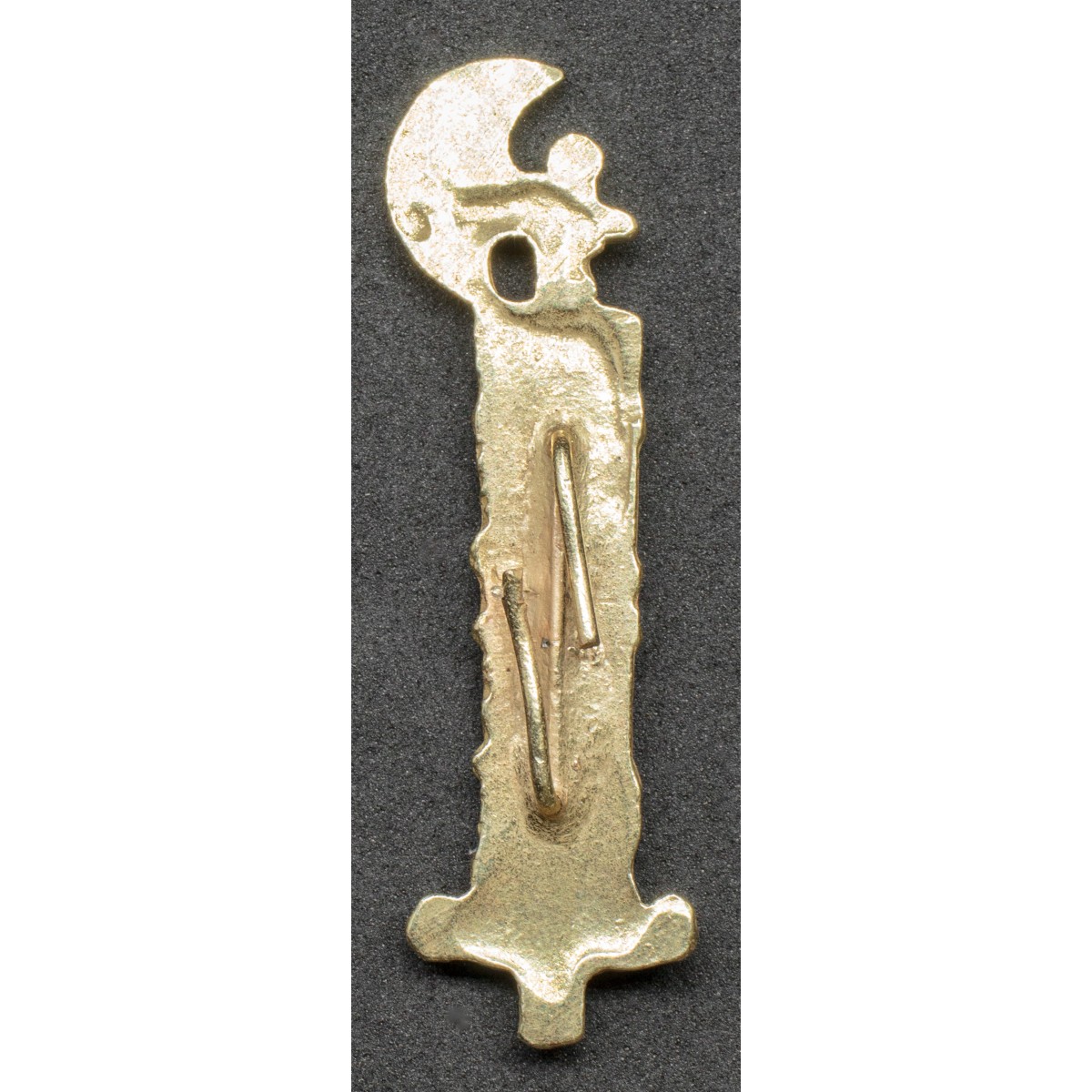
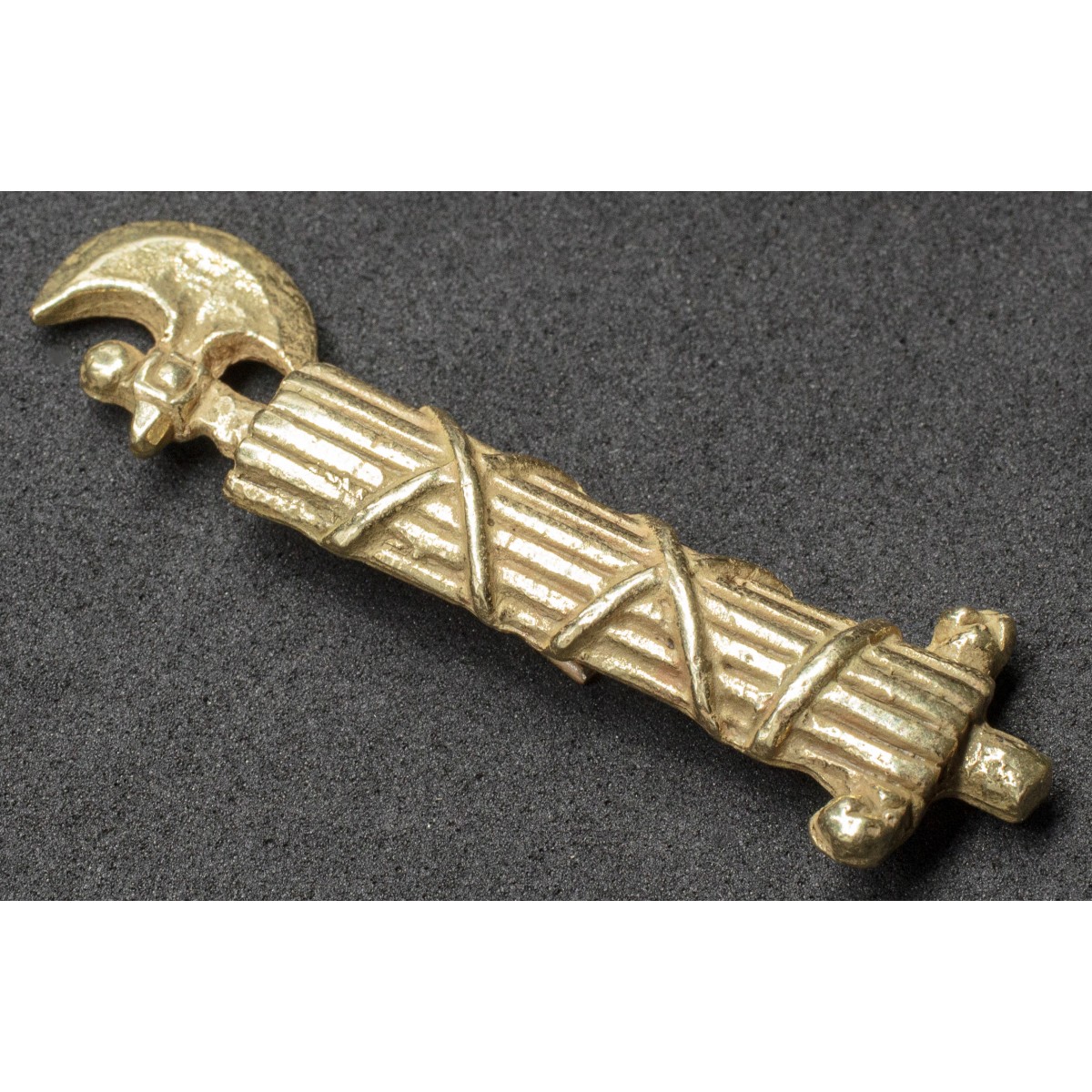
Brass helmet badge associated with the Italian Social Republic and shaped as the Republican fasces, distinguished by its centrally positioned axe and the blade emerging at the top of the bundled rods. The reverse is fitted with two bendable metal prongs used to secure the badge to the headgear. Type dating from the 1943–1945 period.
- Satisfied or refunded: we guarantee 100% secure protection on your purchases
- Free return: return your order free of charge within 30 days from receipt
- Secure payments: pay securely online with PayPal or credit cards

More info
The Republican Fasces Helmet Badge belongs to the group of metal insignia associated with the uniforms and equipment of the Italian Social Republic, or Repubblica Sociale Italiana (RSI), between 1943 and 1945. Made of brass, the badge reproduces the outline of the so-called Republican fasces. Two bendable metal prongs are fitted to the reverse and were intended to be inserted through prepared attachment points before being folded against the inner side of the support.
The design derives from the fasces carried by the lictors of ancient Rome. These consisted of a group of rods bound around an axe and were carried before magistrates who possessed imperium. In Roman public imagery, the fasces represented lawful authority, coercive power and the union of separate elements within a single body. During the nineteenth century, the symbol was adopted by republican, revolutionary and national movements, acquiring political meanings that differed from its original Roman function.
In Italian uniform terminology, the expression “Republican fasces” identifies a specific graphic arrangement. The axe handle forms the central axis of the bundled rods, while the blade appears at the upper end of the emblem. This distinguishes it from the Roman-style fasces that became prevalent during the monarchic phase of the Fascist regime, in which the axe was tied to one side of the bundle. The position of the axe blade is therefore the principal visual feature used to distinguish the two forms.
The Republican form had already appeared in the imagery of the early Italian Fascist movement after the establishment of the Fasci italiani di combattimento in 1919. At that stage the movement included republican, syndicalist, interventionist and national-revolutionary elements. Following its transformation into the National Fascist Party and its integration into the institutions of the Kingdom of Italy, the Roman-style fasces with a lateral axe gradually became the more common form in official state and party imagery. The republican character of the early movement is also examined in the Treccani historical entry on Italian Fascism.
After the armistice of 8 September 1943 and the creation of the Italian Social Republic, the Republican form of the fasces was restored to official imagery. Its reintroduction emphasised the formally republican nature of the new state and its rejection of the dynastic symbols of the House of Savoy. The emblem appeared on seals, documents, flags, collar insignia, headgear badges and numerous other items of uniform and equipment. Depending on the organisation, it could be displayed alone or combined with eagles, swords, letters, wreaths and unit-specific devices.
The helmet badge belongs to the wider process through which earlier monarchic insignia were removed, altered or replaced. RSI formations used Italian helmets, particularly the Model 1933, alongside German or German-derived helmets and various captured or reissued foreign models. This mixture of equipment prevented the establishment of an entirely uniform system of helmet insignia. Emblems could be hand-painted, applied with stencils, manufactured as decals or attached as separate metal fittings.
Helmet insignia recorded during the RSI period include earlier devices stripped of their monarchic elements, Republican eagles, revised assault-troop emblems, skulls, lateral shields, letter monograms and composite badges incorporating the Republican fasces. The fasces could therefore appear as an independent emblem or as one element within a larger design. The simultaneous use of Italian, German and captured helmets, together with the fragmentary nature of the regulations, is documented in the institutional publication I 100 anni dell’elmetto italiano 1915-2015.
A fasces badge without a number, branch device or lettered monogram primarily performed a political and institutional identification function. Traditional Italian Army badges frequently incorporated flaming grenades, crossed weapons, regimental numbers or symbols identifying a particular service branch. The Republican fasces alone did not provide an equally precise unit identification. More specific recognition depended upon its combination with other insignia, the colour and construction of the uniform or the characteristics of the associated headgear.
The two rear prongs form a straightforward semi-permanent fastening system. Once passed through the prepared attachment points, the prongs were folded in opposite directions against the inner surface. This held the badge at two separate points, reduced lateral movement and kept its vertical axis correctly aligned. The construction differs from a buttonhole stud, a hinged pin and catch or a textile badge intended to be sewn directly to the uniform.
Brass was commonly used for small uniform fittings because of its ductility, resistance to corrosion and suitability for cutting, shaping and stamping. Its natural appearance ranges from yellow to a warm gold colour. Exposure to moisture, handling and age can darken the surface or produce brown and green oxidation. Other Italian insignia of the late-war period were manufactured from thin sheet metal, zinc-based alloys and substitute materials as shortages increasingly affected production.
Variants of the Republican fasces can differ in overall proportions, the width and outline of the axe blade, the number and rendering of the rods, the arrangement of the bindings, the thickness of the metal and the depth of the relief. Rear construction may also vary, with flat or slightly curved bodies, differently shaped prongs and attachment elements either soldered to the badge or formed as part of its construction. Such differences reflect the tools, manufacturing methods and production batches used by individual makers.
The same basic emblem was manufactured in different sizes for collar patches, caps, fezzes, medal ribbons, buttonhole badges and other uniform accessories. These pieces were not necessarily interchangeable. Their intended function is generally indicated by their dimensions, curvature, thickness and fastening system. The pair of bendable rear prongs identifies this type as an applied badge intended to remain fixed to prepared headgear, rather than as a buttonhole pin or a small medal-ribbon device.
An important terminological detail is that the expression “Republican fasces” predates the Italian Social Republic. The same basic arrangement had appeared in nineteenth-century republican imagery and in the symbols of the early Italian Fascist movement. The RSI revived it more than two decades later and assigned it a renewed institutional and uniform function. Consequently, the classification of a detached fasces badge depends not only on the form of the emblem but also on its material, dimensions, relief, manufacturing technique and rear fastening system.
Data sheet
| Lenght | 60.30 mm |
| Width | 16 mm |
| Thickness | 4.40 mm |
| Weight | 10.3 gr |
| Material | Zamak, Brass |
30 other products in the same category:

Cap and Helmet Badges
- Germany
- Uniforms
- Medals, Orders and Decorations
- Badges and Pins
- ID Tags
- Arm Shields
- Helmets
- Helmet Decals
- Visor Caps and Hats
- Cap and Helmet Badges
- Collar Tabs Badges
- Collar Tabs, Shoulder Boards and Epaulettes
- Arm Bands
- Division Cuff Titles
- Buckles And Belts
- Buttons For Uniforms
- Stamps
- Gorgets
- Rings
- SS Honour Ring in 925 Silver - Collector's Set
- Poletops
- Flags
- Daggers and Knives (Ornamental)
- Field Marshal Batons
- Field and Personal Equipment
- Service Watches
- Presentation Cases
- Documents and Award Letters
- Busts, Eagles, Lighters and Miscellaneous
- Croatian and Ustasha Militaria
- Denazified Articles
- Commemorative Necklaces
- Spare Parts, Small Parts and Accessories
- Italy
- Medals and Decorations
- Brevets And Badges
- Battle Shields and Tags
- Gorgets
- Visor Caps and Hats
- Cap and Helmet Badges
- Helmets Decals
- Friezes for Collar Tabs
- Collar Tabs, Shoulder Boards and Epaulettes
- Buckles
- Belts
- Buttons For Uniforms
- Rings
- Poletops
- Italian Resistance
- Keyrings
- Wallshields
- Daggers and Knives
- Flags
- Busts and Eagles
- Souvenirs
- Commemorative Necklaces
- Imperial Germany
- Soviet Union
- Other Countries