
No products
Product successfully added to your shopping cart
There are 0 items in your cart. There is 1 item in your cart.
-Armband - “Deutsche Luftwaffe” Aircrew Identification
New
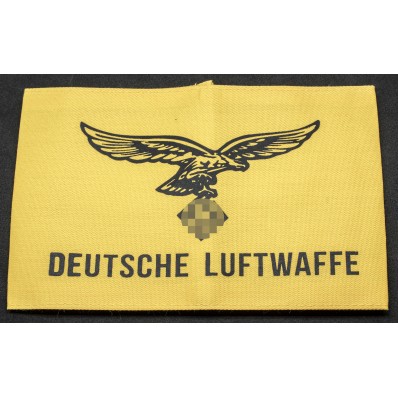
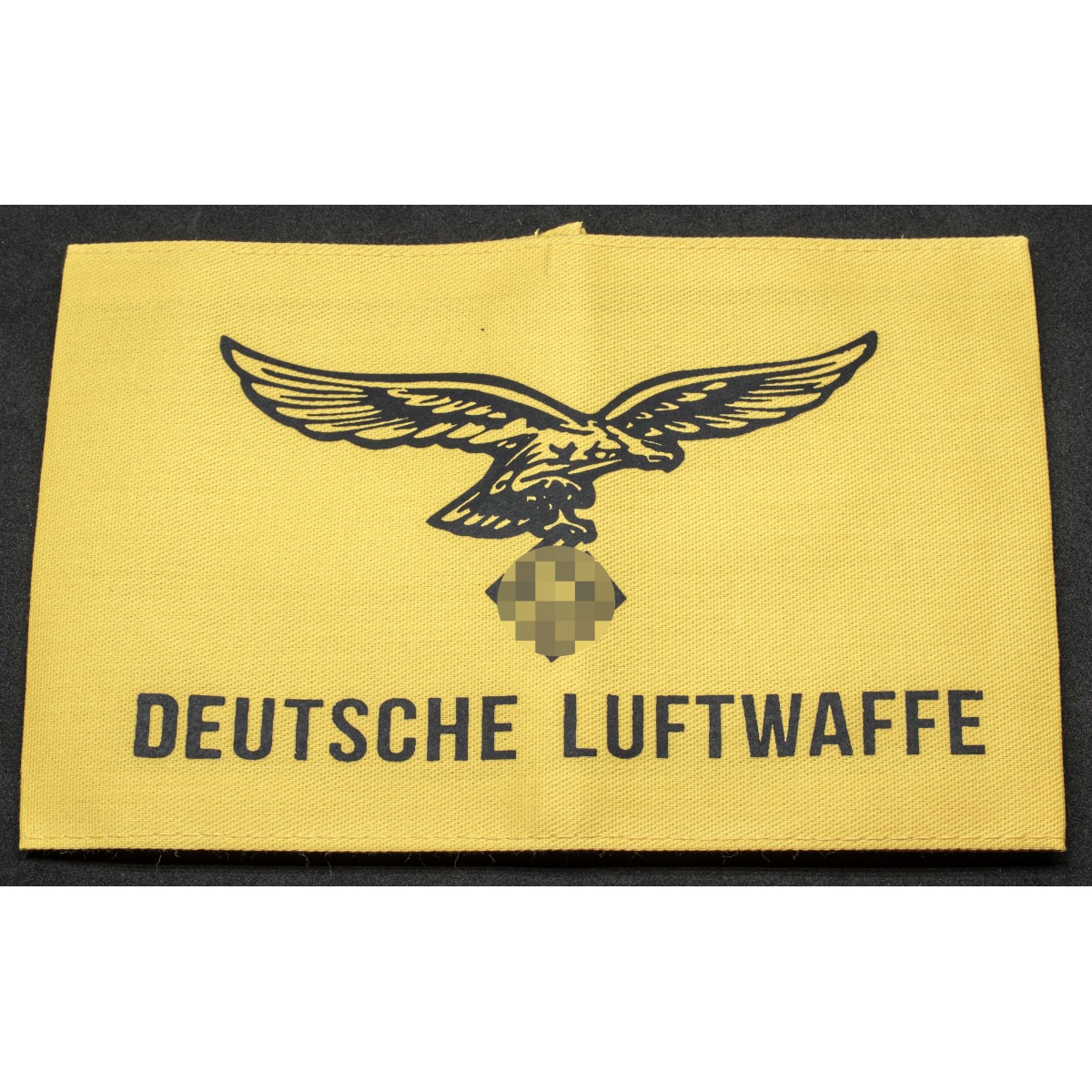
Yellow “DEUTSCHE LUFTWAFFE” armband introduced on 29 December 1944 for German aircrew. The black Luftwaffe eagle and inscription allowed pilots and crew to be quickly identified after bailing out or making forced landings, reducing the risk of being mistaken for Allied airmen.
- Satisfied or refunded: we guarantee 100% secure protection on your purchases
- Free return: return your order free of charge within 30 days from receipt
- Secure payments: pay securely online with PayPal or credit cards

More info
The “DEUTSCHE LUFTWAFFE” armband was a distinctive identification device introduced during the final months of World War II for German Luftwaffe aircrew.
The regulation was issued on 29 December 1944 in the Luftwaffen-Verordnungsblatt. Its purpose was not to indicate rank, unit or specialist branch, but to provide a means of quickly identifying German flying personnel.
During air operations over Germany, pilots and other crew members could be forced to abandon their aircraft by parachute or make an emergency landing. Because flying suits and specialised flight equipment used by different air forces could appear similar, German aircrew on the ground risked being mistaken for downed Allied airmen.
The conspicuous armband allowed German military personnel, police and civilians to recognize the wearer's Luftwaffe affiliation immediately.
Its design was deliberately simple and highly visible: bright yellow cloth, a large black Luftwaffe eagle, and the words “DEUTSCHE LUFTWAFFE” printed directly beneath it in bold capital letters.
The yellow background provided strong contrast against normal flying clothing, while the eagle and inscription clearly identified the wearer.
The armband was normally worn on the upper left arm over flying clothing. It was therefore not a permanent uniform insignia, but a functional identification device associated with flying personnel.
Luftwaffe identification armbands had existed previously. An earlier pattern was introduced in 1938 and featured a different eagle design. The version carrying the explicit “DEUTSCHE LUFTWAFFE” inscription belongs specifically to the closing phase of the war and was introduced under the December 1944 regulations.
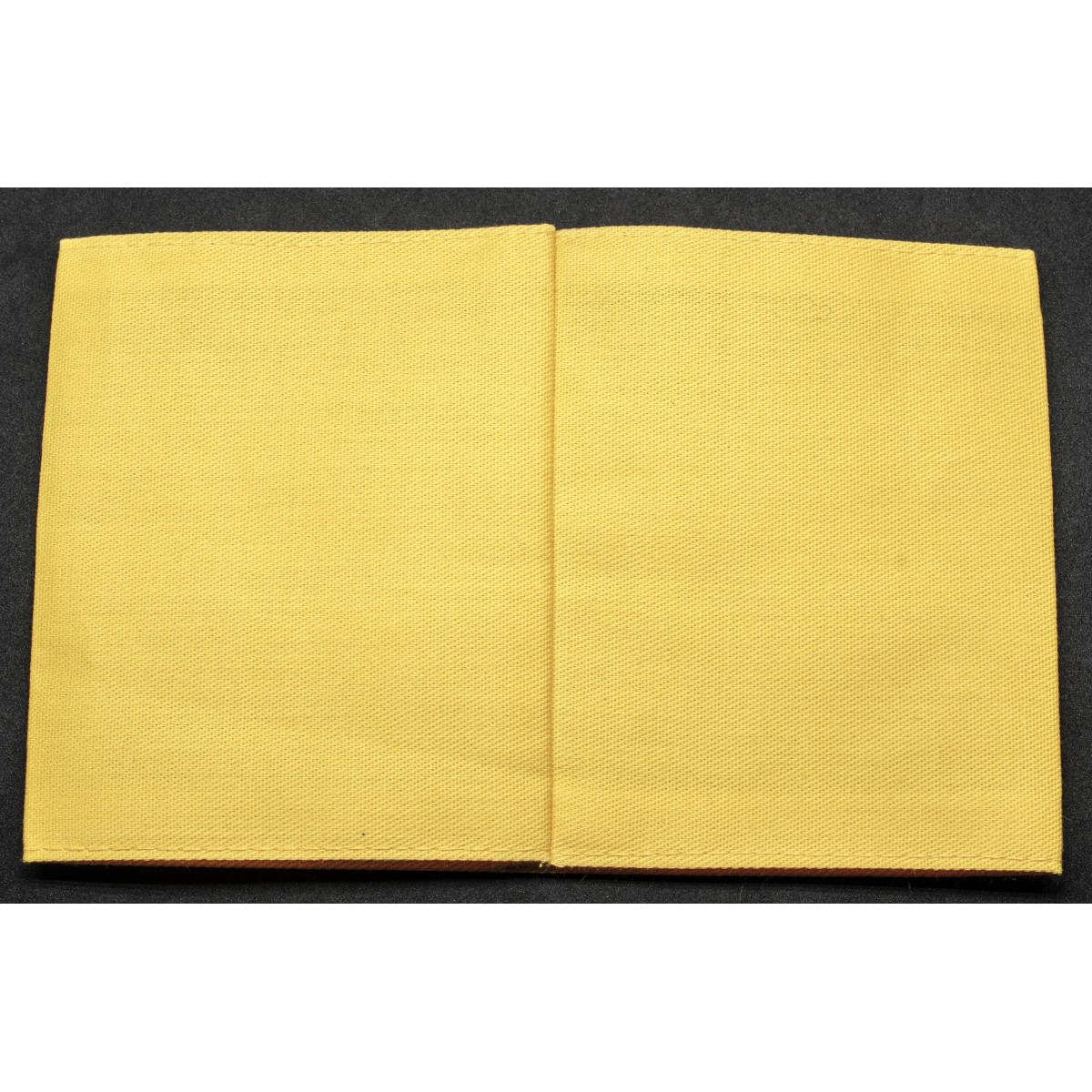
Known original examples are generally made from yellow cotton or cotton/rayon fabric, with the eagle and lettering printed in black. The upper and lower edges were hemmed, while the ends were sewn together to form a closed armband.
Collector's note: unlike many German armbands of the period, this example did not denote a political organisation, unit or duty position. Its purpose was essentially practical: to identify German aircrew immediately following a bailout or forced landing in German-controlled territory.
30 other products in the same category:

Arm Bands
- Germany
- Uniforms
- Medals, Orders and Decorations
- Badges and Pins
- ID Tags
- Arm Shields
- Helmets
- Helmet Decals
- Visor Caps and Hats
- Cap and Helmet Badges
- Collar Tabs Badges
- Collar Tabs, Shoulder Boards and Epaulettes
- Arm Bands
- Division Cuff Titles
- Buckles And Belts
- Buttons For Uniforms
- Stamps
- Gorgets
- Rings
- SS Honour Ring in 925 Silver - Collector's Set
- Poletops
- Flags
- Firearms (Inert Replicas)
- Daggers and Knives (Ornamental)
- Field Marshal Batons
- Field and Personal Equipment
- Service Watches
- Presentation Cases
- Documents and Award Letters
- Busts, Eagles, Lighters and Miscellaneous
- Croatian and Ustasha Militaria
- Denazified Articles
- Commemorative Necklaces
- Spare Parts, Small Parts and Accessories
- Italy
- Medals and Decorations
- Brevets And Badges
- Battle Shields and Tags
- Gorgets
- Visor Caps and Hats
- Cap and Helmet Badges
- Helmets Decals
- Friezes for Collar Tabs
- Collar Tabs, Shoulder Boards and Epaulettes
- Buckles
- Belts
- Buttons For Uniforms
- Rings
- Poletops
- Italian Resistance
- Keyrings
- Wallshields
- Daggers and Knives
- Flags
- Busts and Eagles
- Souvenirs
- Commemorative Necklaces
- Imperial Germany
- Soviet Union
- Other Countries