
No products
Product successfully added to your shopping cart
There are 0 items in your cart. There is 1 item in your cart.
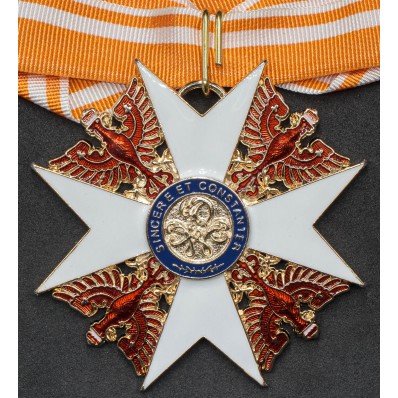
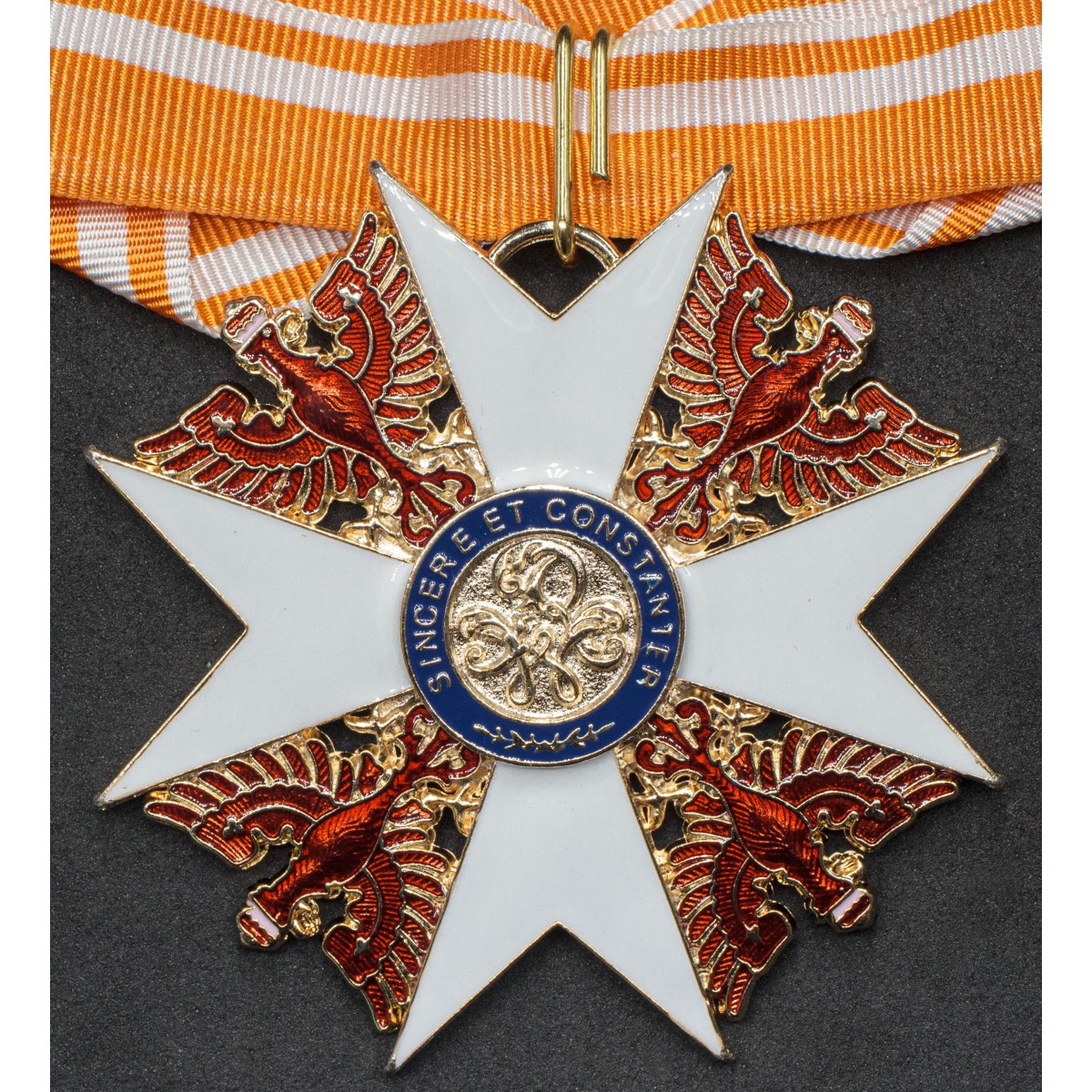
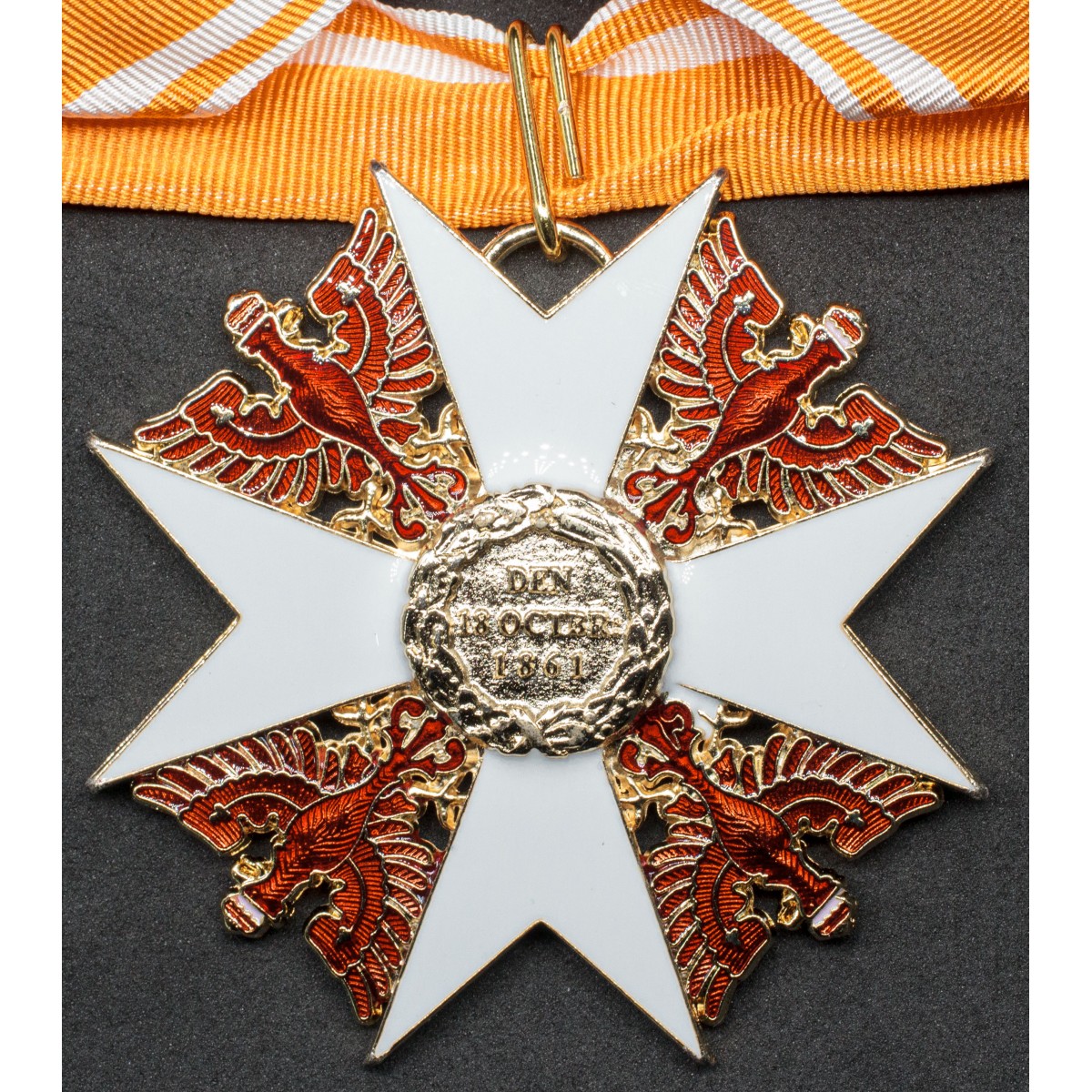
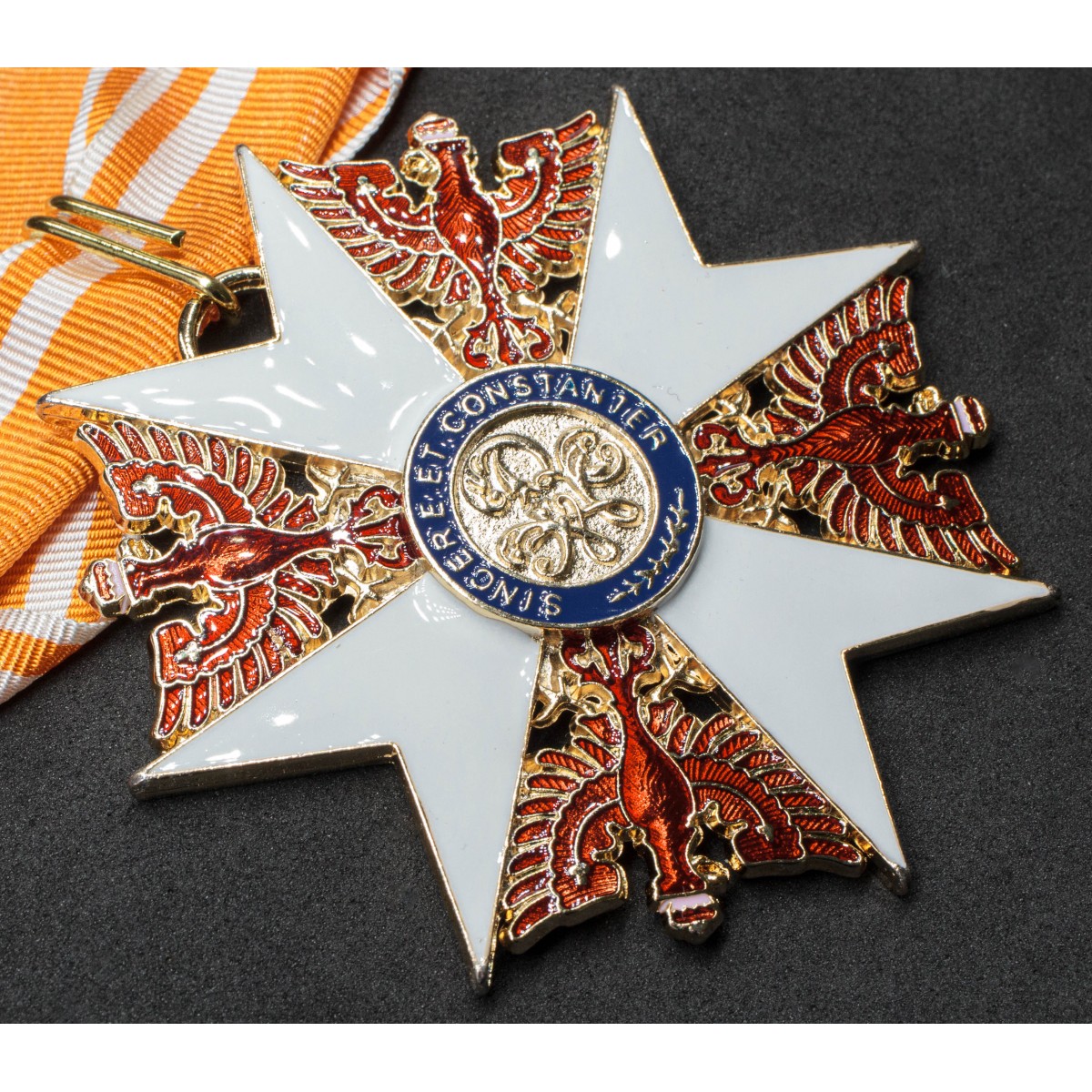
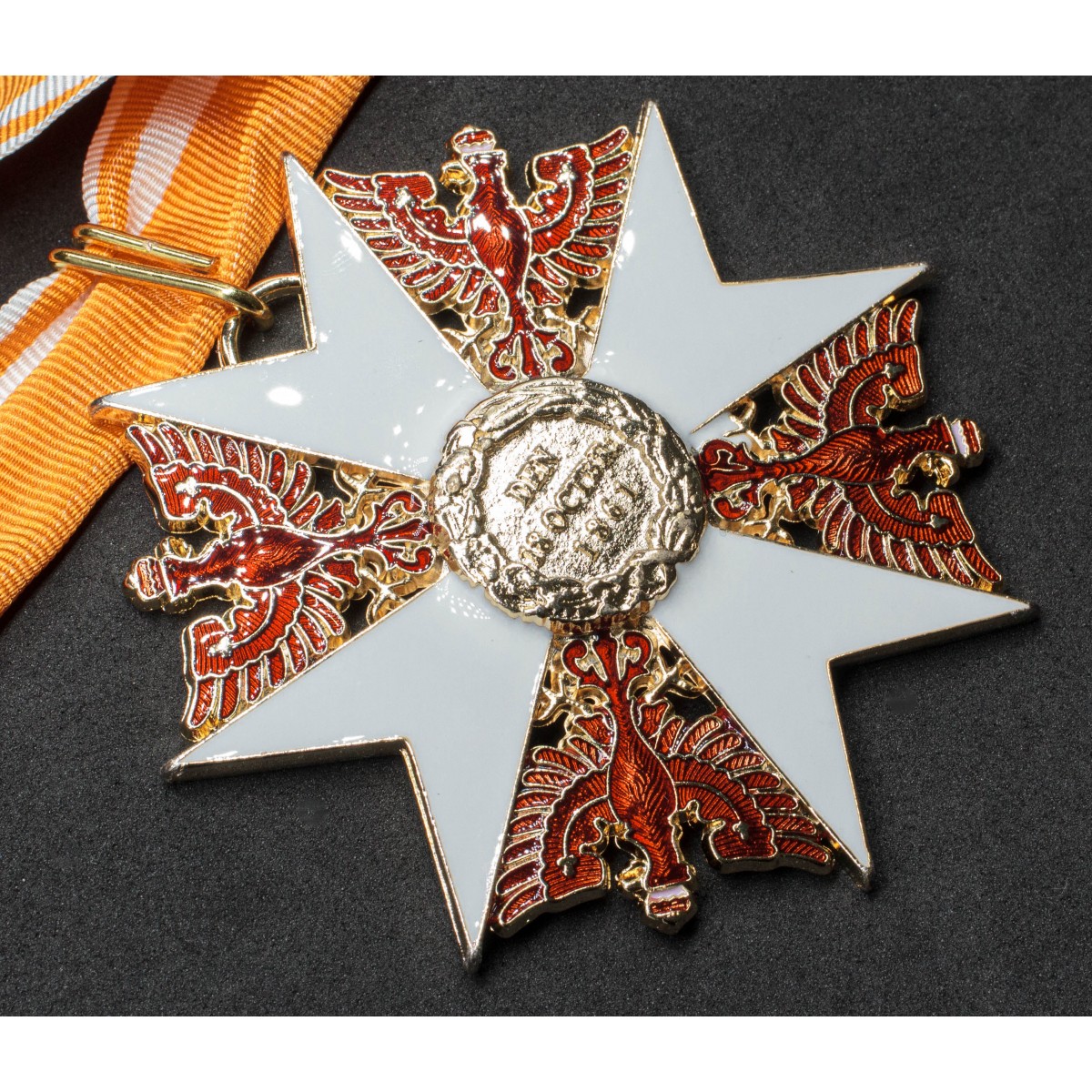
Grand Cross of the Order of the Red Eagle – Prussia
New
Grand Cross of the Prussian Order of the Red Eagle, the highest grade introduced by King Wilhelm I in 1861. Distinguished by its white-enamelled Maltese cross, four red eagles and central WR royal monogram, it was reserved for senior military officers, statesmen, diplomats and high-ranking dignitaries.
- Satisfied or refunded: we guarantee 100% secure protection on your purchases
- Free return: return your order free of charge within 30 days from receipt
- Secure payments: pay securely online with PayPal or credit cards

More info
The Grand Cross of the Order of the Red Eagle represented the highest grade of one of Prussia’s most important orders of merit, ranking immediately below the prestigious Order of the Black Eagle.
The history of the Order can be traced back to 1705, when Margrave Georg Wilhelm of Brandenburg-Bayreuth founded the Ordre de la Sincérité. Following several reorganisations, it became a Prussian royal order in 1792 and developed during the nineteenth century into one of the monarchy’s principal means of recognising exceptional military, governmental, diplomatic and political service.
The distinctive Prussian Grand Cross was instituted by King Wilhelm I on 18 October 1861, the day of his coronation at Königsberg.
Its design was deliberately different from the lower classes of the Order. The badge consisted of a large white-enamelled Maltese or St John’s cross with gold borders, with a crowned red eagle positioned between each pair of cross arms.
The obverse central medallion displayed the royal monogram “WR” – Wilhelmus Rex, surrounded by a blue enamel ring bearing the Order’s motto “SINCERE ET CONSTANTER”, meaning “sincerely and steadfastly”. The reverse medallion carried the date “Den 18. Octb. 1861” within an oak wreath, directly commemorating the institution of the new grade.
The Grand Cross was normally worn from a broad orange sash with white stripes, accompanied by a large golden eight-pointed breast star. For particularly distinguished service, the collar of the Order could also be bestowed.
There was, however, an important exception to the normal method of wear. Knights of the Order of the Black Eaglewere also entitled to the Grand Cross of the Red Eagle and could wear its badge from the neck rather than from the full sash. Surviving Grand Crosses with neck ribbons therefore represent a historically correct configuration rather than an unusual later alteration.
The Order developed an exceptionally complex system of additional distinctions. Grand Crosses could be encountered with swords, swords on the suspension ring, oak leaves, a crown and, in exceptional cases, diamonds. These additions were not merely decorative: they could indicate wartime merit, previous possession of a lower grade or an especially distinguished subsequent award.
Construction also provides an important method of dating surviving examples. From 1861 until the First World War, Grand Crosses were normally made from gold and enamel. In October 1916, wartime shortages led the Prussian authorities to order that decorations previously manufactured in gold should instead be produced in gilt silver of 938 fineness.
There are also more subtle differences between production periods. Early Grand Crosses of the 1860s show slightly different proportions and larger intermediary eagles. From approximately the 1870s onward, the red eagles became somewhat smaller and were positioned more deeply within the spaces between the cross arms.
Known period manufacturers include leading Berlin court jewellers such as Sy & Wagner, Johann Wagner & Sohn and Friedeberg & Söhne. Original pieces may carry discreet maker’s marks including “W”, “S&W” or “S.F.S.”, usually engraved along the lower edge of the cross. Johann Wagner & Sohn became one of the most important suppliers of orders and decorations to the Prussian General Orders Commission.
A particularly interesting feature of the Prussian awards system was the requirement for many valuable decorations to be returned following the death of the recipient. Returned insignia could be inspected, restored and subsequently reissued. As a result, some genuine period Grand Crosses display replacement eagles, repaired enamel or small differences between individual components resulting from official period refurbishment.
The Grand Cross was bestowed upon field marshals, generals, admirals, ministers, ambassadors, members of ruling houses and foreign sovereigns. Notable recipients included Otto von Bismarck, Helmuth von Moltke the Elder, Paul von Hindenburg, Alfred von Tirpitz and Ferdinand von Zeppelin, often receiving different combinations of additional distinctions according to their careers and services.
A particularly unusual detail concerns Otto von Bismarck: the Chancellor possessed an exceptional form of the Grand Cross incorporating a Crown, Sceptre and Sword, a highly unusual configuration closely associated with Wilhelm I. Bismarck was recorded wearing it only on especially formal occasions, making it one of the most remarkable variants within the entire Prussian honours system.
Data sheet
| Lenght | 78 mm |
| Width | 78 mm |
| Thickness | 3.50 mm |
| Weight | 76.4 gr |
| Material | Zamak, Iron, Brass, Enamels |
30 other products in the same category:

Medals, Orders and Decorations
- Germany
- Uniforms
- Medals, Orders and Decorations
- Badges and Pins
- ID Tags
- Arm Shields
- Helmets
- Helmet Decals
- Visor Caps and Hats
- Cap and Helmet Badges
- Collar Tabs Badges
- Collar Tabs, Shoulder Boards and Epaulettes
- Arm Bands
- Division Cuff Titles
- Buckles And Belts
- Buttons For Uniforms
- Stamps
- Gorgets
- Rings
- SS Honour Ring in 925 Silver - Collector's Set
- Poletops
- Flags
- Daggers and Knives (Ornamental)
- Field Marshal Batons
- Field and Personal Equipment
- Service Watches
- Presentation Cases
- Documents and Award Letters
- Busts, Eagles, Lighters and Miscellaneous
- Croatian and Ustasha Militaria
- Denazified Articles
- Commemorative Necklaces
- Spare Parts, Small Parts and Accessories
- Italy
- Medals and Decorations
- Brevets And Badges
- Battle Shields and Tags
- Gorgets
- Visor Caps and Hats
- Cap and Helmet Badges
- Helmets Decals
- Friezes for Collar Tabs
- Collar Tabs, Shoulder Boards and Epaulettes
- Buckles
- Belts
- Buttons For Uniforms
- Rings
- Poletops
- Italian Resistance
- Keyrings
- Wallshields
- Daggers and Knives
- Flags
- Busts and Eagles
- Souvenirs
- Commemorative Necklaces
- Imperial Germany
- Soviet Union
- Other Countries