
No products
Product successfully added to your shopping cart
There are 0 items in your cart. There is 1 item in your cart.

Collar Tabs - Chaplain (Purple)
New
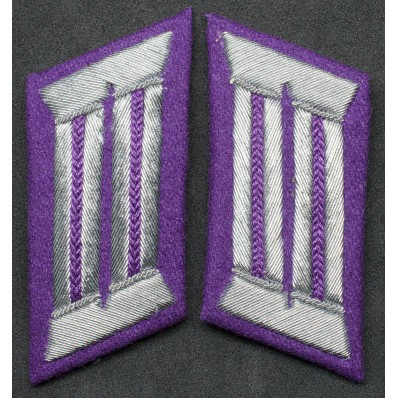
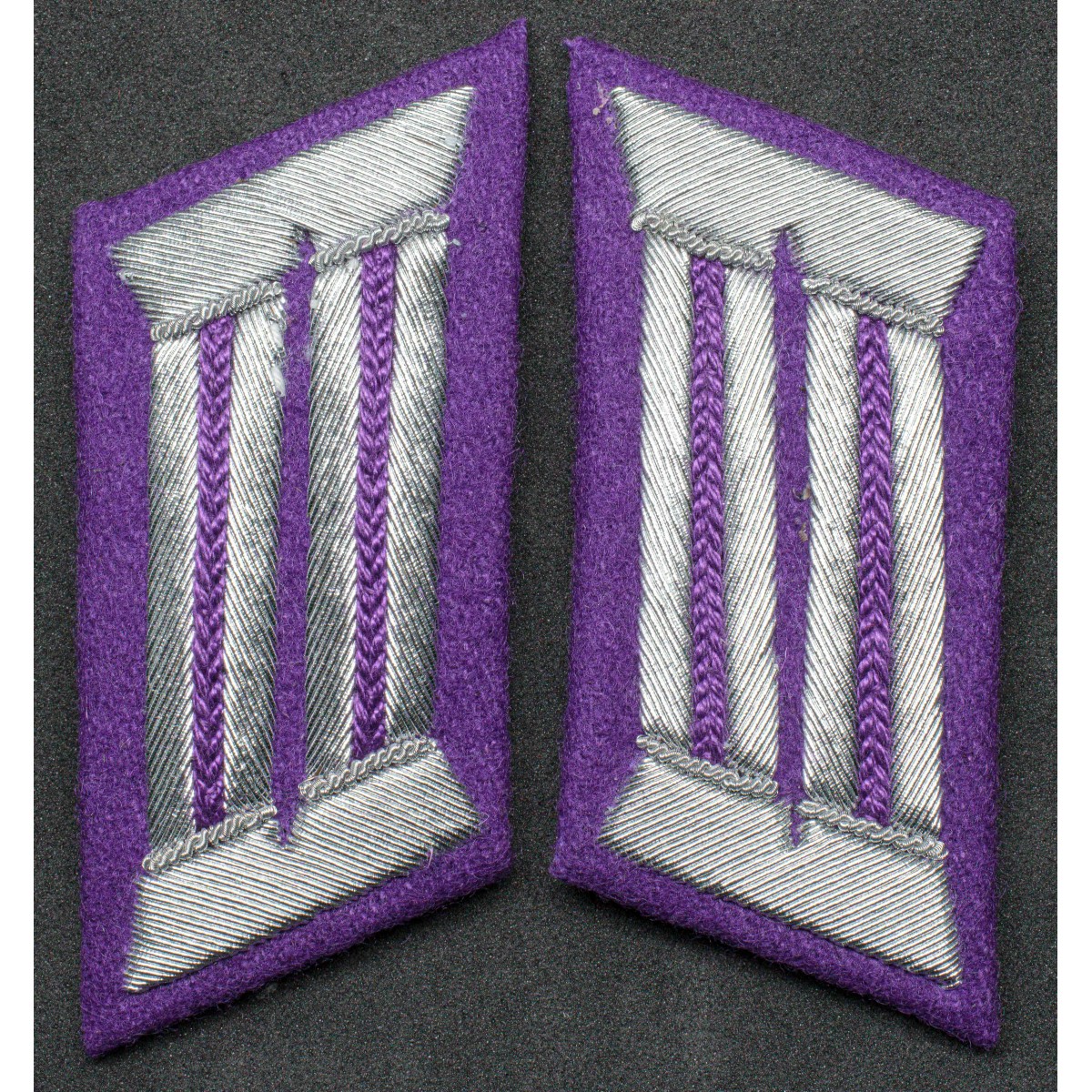
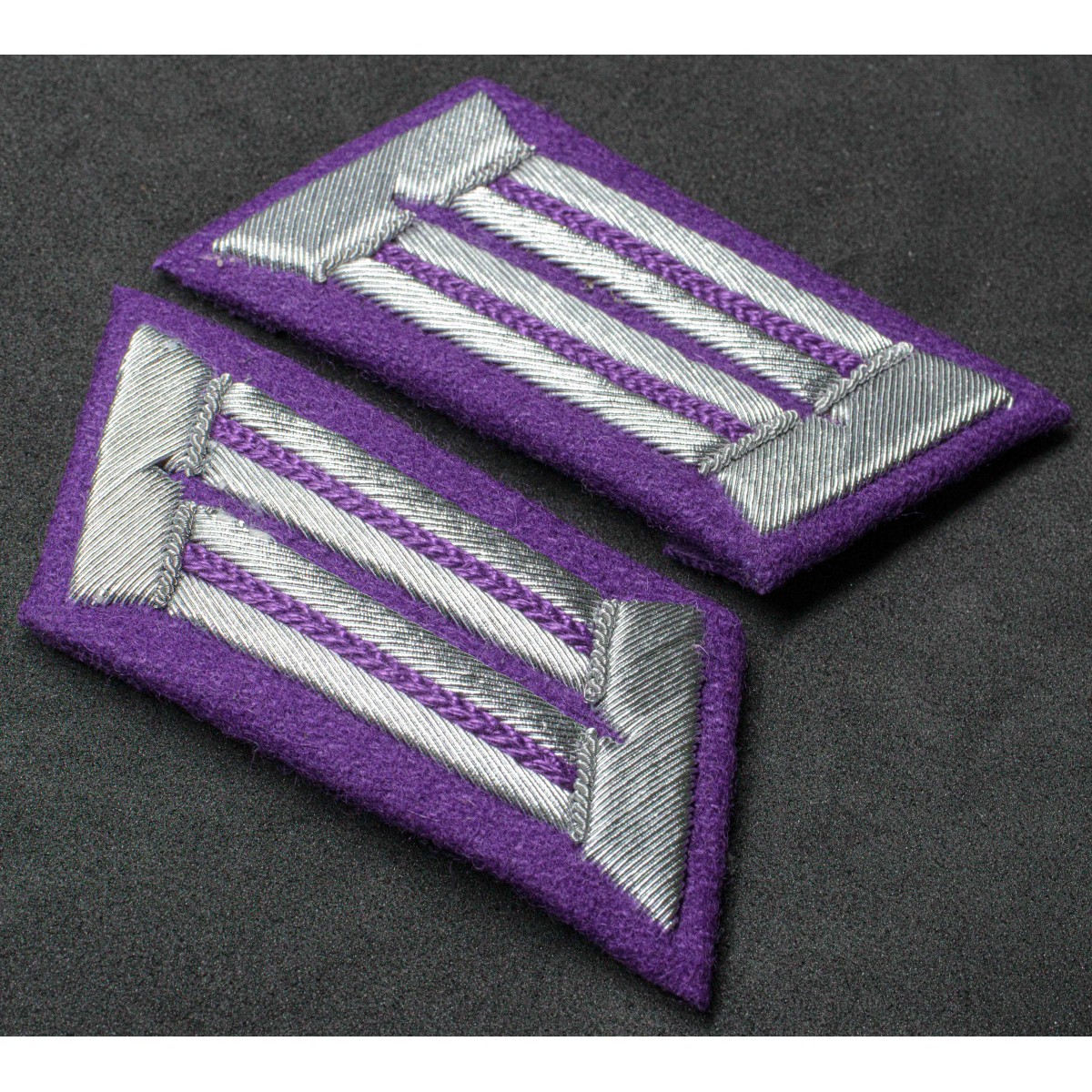
These Wehrmacht chaplain collar tabs feature the characteristic silver embroidered arabesque pattern on a purple backing, the traditional color associated with military clergy. Worn on the collar of the Feldbluse, they identified chaplains serving with the German Army during World War II.
- Satisfied or refunded: we guarantee 100% secure protection on your purchases
- Free return: return your order free of charge within 30 days from receipt
- Secure payments: pay securely online with PayPal or credit cards

More info
The chaplain collar tabs of the Wehrmacht were a distinctive uniform insignia worn by members of the military clergy serving with the German Army during the Second World War.
These insignia were attached to the collar of the Feldbluse, the standard field tunic worn by soldiers of the German Army. Within the Wehrmacht uniform system, collar tabs served as an important method of identifying different categories of personnel and their specific roles within the military structure.
Military chaplains, known in German as Heerespfarrer, were responsible for providing religious services and spiritual support to soldiers serving in the field. Their duties included:
conducting religious services,
offering pastoral care to soldiers,
assisting wounded personnel,
conducting military funerals and memorial ceremonies.
Unlike the Litzen worn by enlisted personnel and non-commissioned officers, chaplains wore embroidered collar tabs featuring an ornamental arabesque pattern, typically produced in silver metallic thread.
The cloth backing of these tabs was purple, a color traditionally associated with ecclesiastical service and clergy.
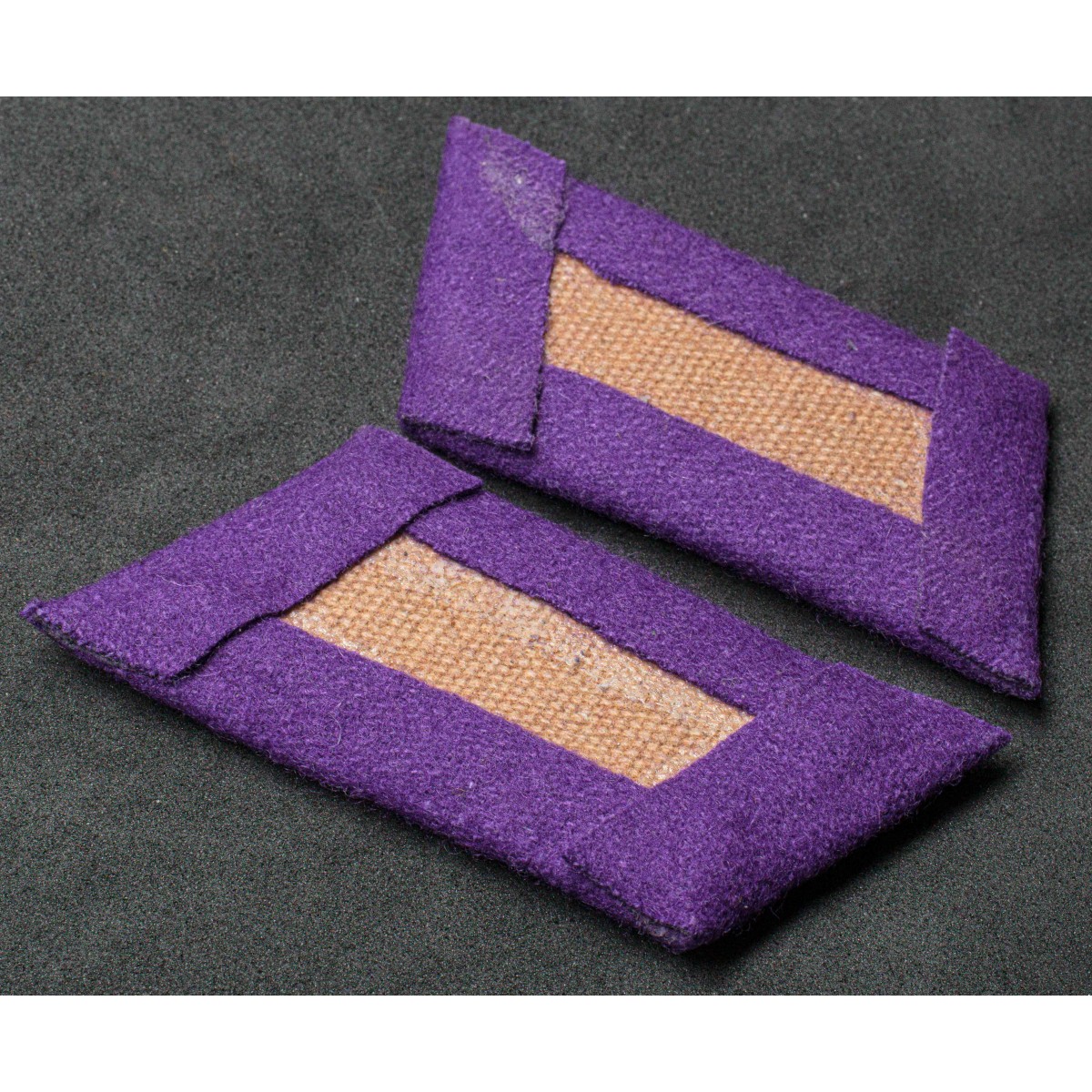
The tabs were usually manufactured using high-quality wool backing with silver metallic thread embroidery, reflecting the distinctive role of clergy within the military hierarchy.
During the war, insignia such as these were produced by various German uniform and textile manufacturers, responsible for supplying uniforms and insignia to the different branches and services of the Wehrmacht.
The purple chaplain collar tabs therefore represent a distinctive element of the uniform worn by military clergy serving within the German Army during World War II.
Data sheet
| Height | 7 cm |
| Width | 4 cm |
30 other products in the same category:

Customers who bought this product also bought:
Collar Tabs, Shoulder Boards and Epaulettes
- Germany
- Medals, Orders and Decorations
- Badges and Pins
- ID Tags
- Arm Shields
- Helmets
- Visor Caps and Hats
- Cap and Helmet Badges
- Collar Tabs Cyphers
- Collar Tabs, Shoulder Boards and Epaulettes
- Arm Bands
- Division Cuff Titles
- Buckles And Belts
- Buttons For Uniforms
- Stamps
- Gorgets
- Rings
- SS Honour Ring in 925 Silver - Collector's Set
- Poletops
- Flags
- Daggers and Knives (Ornamental)
- Field Marshal Batons
- Field and Personal Equipment
- Service Watches
- Presentation Cases
- Documents and Award Letters
- Busts, Eagles, Lighters and Miscellaneous
- Croatian and Ustasha Militaria
- Denazified Articles
- Commemorative Necklaces
- Spare Parts, Small Parts and Accessories
- Italy
- Medals and Decorations
- Brevets And Badges
- Battle Shields and Tags
- Gorgets
- Visor Caps and Hats
- Cap and Helmet Badges
- Friezes for Collar Tabs
- Collar Tabs, Shoulder Boards and Epaulettes
- Buckles
- Belts
- Buttons For Uniforms
- Rings
- Poletops
- Italian Resistance
- Keyrings
- Wallshields
- Daggers and Knives
- Flags
- Busts and Eagles
- Souvenirs
- Commemorative Necklaces
- Imperial Germany
- Soviet Union
- Other Countries